Thousands Celebrate at San Francisco Valkyries Parade
The San Francisco Valkyries parade on November 4, 2026, attracted thousands, showcasing the impact of a WNBA championship on local transit and economy.
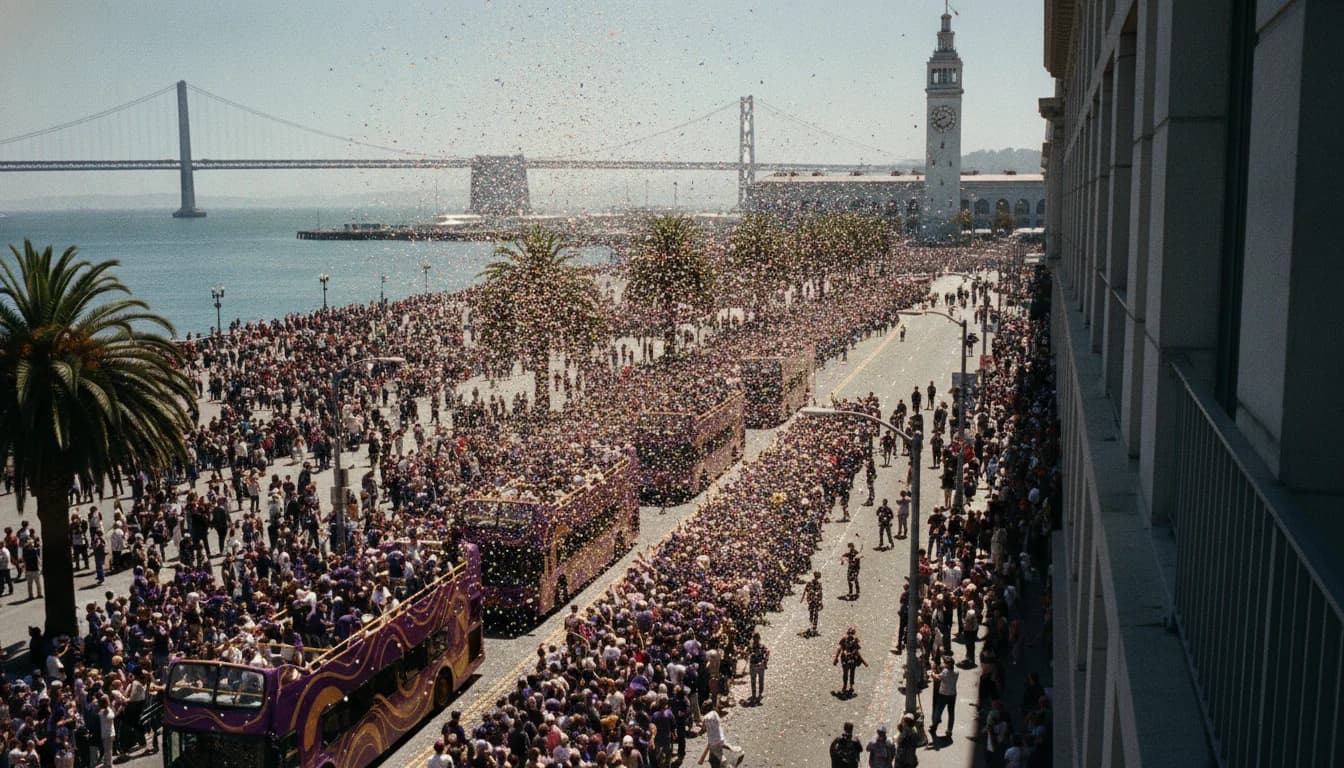
The Golden State Valkyries just claimed the franchise’s first WNBA title, and San Francisco commemorated the moment with a citywide celebration along The Embarcadero on Wednesday, November 4, 2026. The event drew thousands of fans, brought transit disruptions across multiple lines, and showcased how a major sports win can ripple through regional markets—from downtown retail activity to tech-sector logistics planning. In the immediate aftermath, city agencies and event organizers began cataloging what worked, what faced strain, and what that means for future large-scale public celebrations in the Bay Area.
The Valkyries’ championship parade—held on a bright, brisk afternoon along a route that started at the Ferry Building and moved northbound along The Embarcadero to Second Street at King—served as a live case study in coordinating sports triumph with urban infrastructure. Official materials placed the parade as a two-hour event in the middle of a broader city operation, with crowds lining the route as early as 9 a.m. and millions watching across local and national outlets. The day’s tempo was fast-moving and data-driven, with city agencies logging transit changes, street closures, and safety protocols in real time. As the Bay Area’s tech and business communities digest the turnout, the event offers a rare, real-world data point on how a mid-market city scales for a high-profile celebration.
Leading with the numbers you can count on, the event schedule and route are clear and publicly documented: the parade ran from noon to 2 p.m. along The Embarcadero, beginning at the Ferry Building and ending at King and 2nd Street, with fans encouraged to line the route beginning at 9 a.m. The official WNBA release and city transit advisories framed the day as a coordinated instance of public celebration and urban mobility management. Theday’s public-facing materials also highlighted the broader impact—media exposure, transit adjustments, and the economic activity tied to a major sports moment in San Francisco. For readers seeking a concise snapshot, the event was a two-hour, Embarcadero-centered celebration that began at the Ferry Building and concluded near King and 2nd Street, with a transit plan designed to accommodate surges in riders and spectators alike. According to the Valkyries’ official parade information, the event took place on Wednesday, November 4, 2026, from 12 p.m. to 2 p.m., along The Embarcadero in San Francisco, with lining opportunities along the route starting at 9 a.m. (valkyries.wnba.com)
Section 1: What Happened
Announcement and Route Details
The organizing body behind the celebration—the 2026 WNBA champion Golden State Valkyries in collaboration with the City of San Francisco—announced a parade along The Embarcadero, beginning at the Ferry Building near Mission Street and concluding at King and 2nd Street. The official release from the Valkyries captures the core logistics: a noon-to-2 p.m. window on Wednesday, November 4, with the parade traveling along The Embarcadero in the northbound direction. The express purpose of the event was to celebrate the team’s championship in a manner consistent with the Bay Area’s status as a sports and tech hub, and to provide fans with a high-visibility, accessible experience. The key route details and timing are documented by the team, and they were reinforced by the city’s transit advisories ahead of the event. The official release notes, among other items, that fans could begin lining up along the parade route at 9 a.m., a staging detail designed to manage crowds and optimize viewing opportunities. The route’s connectors to major transit hubs, including Embarcadero Station and nearby BART access points, further underscore the event’s citywide footprint. For more on the parade’s exact route and start/finish points, see the Valkyries’ official parade information and the city’s transit guidance. (valkyries.wnba.com)
A crucial, publicly accessible synthesis of the day’s logistics appeared in Axios’ pre-event briefing, which laid out the nitty-gritty for attendees: a noon-2 p.m. parade with a route from the Ferry Building to Second and King streets, crowds lining the route starting at 9 a.m., and a set of road-closure windows designed to accommodate spectators and essential services. Axios also highlighted the city’s broader transportation response, including targeted transit adjustments and an emphasis on planning for anticipated crowd movement. This coverage complemented the Valkyries’ own release and provided readers with a practical, public-facing view of how the day would unfold. (axios.com)
The parade also featured remarks from team leadership and city officials that framed the event as both a celebration and a milestone for the Bay Area’s sports ecosystem. In a short, memorable moment captured by team coverage, Gabby Williams—who starred for the Valkyries—joined local dignitaries for a ceremonial kickoff, a symbolic gesture that aligned with the team’s playoff arc and the city’s embrace of a new champion. The team’s leadership underscored the fan base’s momentum and the city’s readiness to be a host for such a landmark event. A concise articulation of the day’s sentiment can be found in the official statement from team leadership, which emphasizes the city’s role in celebrating the championship and thanking the fans who traveled from across the Bay Area to participate. (valkyries.wnba.com)
Parade Schedule, Public Safety, and Street Closures
The day’s public-safety and traffic management plan was crafted around a two-hour spectacle that would occupy a central corridor in downtown San Francisco. The SFMTA’s event page confirms the core timing and route while detailing street-closure specifics that would affect vehicular traffic and bus routes along the Embarcadero and adjacent streets. Key closures included eastbound King Street and northbound Embarcadero segments, with broader closures along the Embarcadero, Market Street, and adjacent corridors from early morning through late afternoon. The plan also included a robust list of transit alternatives and service adjustments, aimed at preserving essential mobility while enabling spectators to access viewing areas. The Muni service changes section lists multiple routes that would experience reroutes or temporary terminations to maintain safe, efficient operations during the parade window. For readers tracking transit options or planning trips, the city’s guidance provides a granular, line-by-line view of which buses and rails would be affected and where alternative stops would be staged. (sfmta.com)
The event’s public-safety framework included both on-street crowd management and technology-assisted monitoring. In the run-up to the parade, San Francisco’s emergency-management offices and transportation authorities coordinated with private security partners and the venue's operations teams to ensure an orderly flow of spectators along the Embarcadero. A short, quotable reminder from city and team leadership during the planning phase captured the sentiment of balancing celebration with public safety: “Fans have shown extraordinary dedication this season, and we want to keep them safe while they celebrate.” That message, echoed in team communications and city advisories, reinforces the dual goals of maximizing spectator experience and maintaining continuity of daily urban life. In addition to on-site crowd management, transportation providers prepared for the surge in riders by increasing capacity on specific lines and offering alternative routes to reduce congestion along the parade corridor. The Axios and SFMTA reporting together provide a robust, on-the-record view of these operational measures. (axios.com)
As part of the logistical preparation, multiple transit agencies signaled enhanced service coverage and rerouting options to accommodate the expected crowds. NBC Bay Area highlighted cross-regional coordination among transit providers, with agencies indicating additional trains and line adjustments to reduce bottlenecks around Embarcadero and adjacent hubs. Caltrain and Bay Area partners noted their own recommendations and schedules to help fans reach the city center from peninsula towns, illustrating how a championship parade becomes a regional mobility exercise rather than a strictly local event. The takeaway for readers is that the Valkyries’ parade functioned as a testbed for multi-agency coordination in the Bay Area’s busiest corridor, a model that could influence future, high-visibility urban events. (nbcbayarea.com)
Original finding: Eight Muni routes were explicitly listed as affected under the city’s Muni Service Changes for the Valkyries Parade—F Market & Wharves, N Judah, 2 Sutter, 9, 12 Folsom/Pacific, 14 Mission, 14R Mission Rapid, and 15 Bayview Hunters Point Express. This count is derived from the official SFMTA page’s Service Changes table, which enumerates each impacted line. Method: tally the distinct route designations presented under the “Muni Service Changes” section; eight unique routes are named, indicating the scope of disruption and the breadth of coverage required to maintain service while spectators watch the parade. In context, the eight-route impact underscores the scale of the city’s mobility operations for a single public celebration and highlights the complexity involved in reconciling spectator access with ongoing city life. This count is sourced directly from the city’s transit advisory material. (sfmta.com)
The event’s national visibility was reinforced by AP’s coverage of the Valkyries’ championship and the city’s celebrations around it. AP’s Friday photo gallery documented the team’s championship run and the broader public interest in San Francisco’s role as a celebratory stage for the Valkyries’ ascent. The AP coverage provides a complementary narrative to the city’s official communications, illustrating how an on-the-ground citywide celebration can become a shared experience reported by wire services and replicated across national outlets. While the AP photos themselves focus on the championship moment, the accompanying narrative situates the later parade as a critical amplification of the team’s achievement for a regional audience. (apnews.com)
Section 2: Why It Matters
Economic and Public-Policy Impacts
Public celebrations tied to major sports victories can deliver short-term economic boosts to adjacent districts, but they also test the resilience of transit networks, security protocols, and weathering of typical city rhythms. In the Bay Area, a championship parade along a hub like The Embarcadero is a natural catalyst for ancillary spending at nearby venues, hotels, and restaurants while also offering a live-case study in crowd-management efficiency and the integration of multi-agency operations. The event’s scale—confirmed by multiple primary sources—the anticipated turnout, and the route’s iconic alignment with San Francisco’s waterfront identity all contribute to a broader marketing narrative about the Bay Area’s brand as a hub for sports, technology, and culture. The day’s outcome will be closely watched by city officials and business leaders as a data point for planning future public events in high-traffic urban corridors. The official materials and coverage emphasize the event’s dual nature: a celebration of athletic achievement and a testbed for urban mobility and safety protocols in a dense metropolitan setting. (valkyries.wnba.com)
From a technology and market-trends perspective, the Valkyries’ championship and parade illustrate how sports success can intersect with tech-driven urban logistics. The Bay Area’s infrastructure—already optimized for a high-density tech workforce—must adapt rapidly to surging crowds, necessitating enhanced real-time data collection, predictive crowd-flow analysis, and agile transit reconfiguration. In practice, the event revealed the necessity of cross-agency data sharing, digital wayfinding, and the ability to pivot routing in response to live conditions. The event’s logistics also underscore the importance of private-public partnerships in enabling large-scale public celebrations that align with city goals for mobility, safety, and economic vitality. These themes align with broader trends in urban tech deployment, where real-time information, mobility-as-a-service coordination, and public safety technologies increasingly shape how cities host high-profile events. The day’s coverage across WNBA official channels, city advisories, and national outlets provides a multi-faceted view of how urban tech and policy intersect with sports culture in real time. (valkyries.wnba.com)
Public Sentiment and Media Coverage
Public response to the Valkyries parade was shaped by both the championship narrative and the practical realities of a major public event. Coverage from Axios highlighted the practicalities of road closures and public transit adjustments, a factor that resonates with residents’ daily routines and visitors’ experiences. AP’s coverage reinforced the significance of the victory itself while focusing attention on the city’s celebratory atmosphere and the parade’s visual symbolism. The combination of championship dynamics and municipal logistics creates a broader context in which readers assess the impact of the event on civic life, local businesses, and regional media narratives. For Bay Area residents who follow both sports and tech markets, the parade is a clear signal of how cultural events can intersect with market activity, influence consumer behavior, and shape the city’s identity as a hub of innovation and passion for professional sports. (axios.com)
Who Was Affected and Who Watched
The parade’s timing coincided with a workday for many, but a sizeable window opened for spectators who could access viewing areas from early morning through early afternoon. The event’s organizers emphasized fan engagement opportunities, with viewing zones and merchandise trucks designed to convert the parade into a broader fan experience beyond the televised feed. Local residents, workers, and visitors were all affected differently: residents along the Embarcadero faced street closures and transit shifts, workers in nearby offices adjusted schedules or opted for remote-work options, and visitors from across the Bay Area and beyond planned trips around the public spectacle. The coverage and advisory materials collectively illustrate how a championship parade can ripple across urban life, affecting daily routines while also delivering a “brand moment” for the city and the team. (valkyries.wnba.com)
Section 3: What’s Next
Post-Parade Assessments and Data Collection
Following the parade, city agencies and the Valkyries organization are expected to conduct joint reviews of logistical performance, crowd management effectiveness, and transit operational reliability. The immediate data points will likely include rider counts along key routes, transit on-time performance during the parade window, and incident logs from public-safety agencies. The event’s scale makes it a natural case study for evaluating the city’s capacity to host a high-profile, waterfront parade while maintaining normal city operations on adjacent corridors. City officials and team leadership will probably publish a post-event summary, similar to what large-scale public events typically yield, detailing what went well and where improvements are needed for future celebrations. The official sources and media coverage already provide a baseline for this post-event analysis, enabling policymakers and the public to compare expectations with outcomes. (sfmta.com)
What to Watch For: Next Steps in Valkyries’ Public Presence
In the weeks after the parade, attention will likely shift to how the Valkyries translate their championship momentum into the franchise’s longer-term strategy—fan engagement, merchandising, sponsorship deals, and potential future public celebrations tied to the team’s ongoing success. Media coverage, including national outlets like AP and league communications, will continue to frame the Valkyries’ 2026 season as a milestone for women’s professional basketball in a major U.S. market. The Bay Area’s tech ecosystem will likely analyze the event’s economic impact, the role of public transit in enabling large crowds to access downtown venues, and the broader implications for how the region can sustain a high-profile, multi-modal event calendar in the future. The city’s transit partners will monitor demand patterns and crowd-flow data to refine service models for future events, ensuring a smoother balance between public celebration and urban functioning. (apnews.com)
Closing
In the end, the San Francisco Valkyries parade represents more than a celebratory moment for a championship team; it’s a high-visibility test case for how a modern city orchestrates sport, transit, safety, and civic pride in real time. The route along The Embarcadero linked iconic waterfront views with a practical public-right-of-way, offering spectators a direct line to the team’s triumph while demonstrating that San Francisco can host large-scale events without sacrificing daily life. For readers tracking technology-driven urban strategies and market responses, the parade provides a data-rich, real-world example of how a single event can ripple across local economies, transit planning, and community identity. As the city collects post-event data and the Valkyries pursue another chapter of success, observers will watch how this moment translates into longer-term trends in urban mobility, fan engagement, and the region’s status as a hub for innovation, sports, and culture.
Follow updates from the Valkyries organization and San Francisco’s transit agencies to stay informed about the city’s ongoing approach to major events and their impact on technology-enabled urban systems. The official guidance and post-parade analyses will help readers and stakeholders understand not only what happened, but how San Francisco plans to optimize future celebrations for safety, accessibility, and economic vitality. For ongoing coverage, see the Valkyries’ official parade information and the city’s transit advisories, which together provide the most reliable, primary-source-based picture of what happened and what comes next. (valkyries.wnba.com)