
Bay Area AI boom 2026: Office Demand Surges
Explore the 2026 Bay Area AI boom's impact on office demand, funding, and talent with key data insights. Discover transformation today.
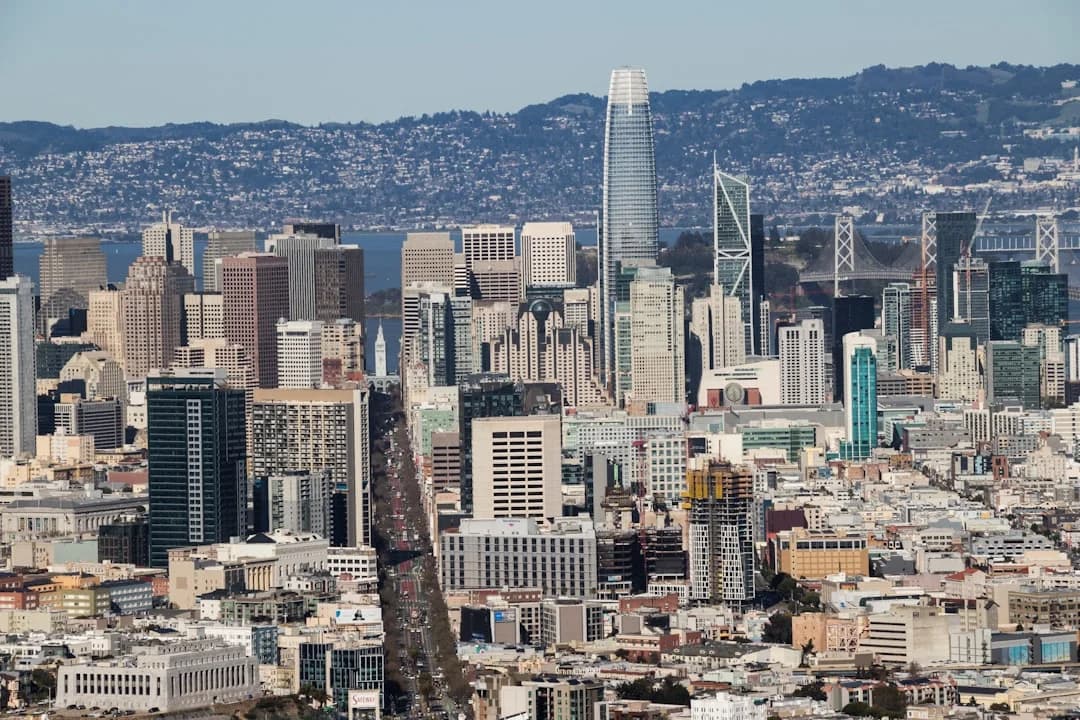
The Bay Area is once again at the center of a rapid, data-driven AI expansion, a period many analysts are labeling the Bay Area AI boom 2026. In the first week of February 2026, unprecedented private funding and high-profile deployments converged in San Francisco’s tech corridors and the broader Bay Area. The week culminated in a headline that has real impact beyond venture charts: Waymo, Alphabet’s autonomous driving unit, announced a $16 billion funding round to turbocharge its robotaxi expansion, a milestone that reverberated through venture capital, real estate, and talent markets across the region. The same week showcased a surge in AI infrastructure and robotics rounds, including a $1 billion Series H for Cerebras Systems and a $500 million Series D for ElevenLabs, underscoring a shift from pure software AI toward hardware-enabled, production-ready AI platforms. OpenAI’s acceleration in Silicon Valley further signaled a robust Bay Area footprint expansion, with Mountain View’s office footprint growing and SF leases intensifying in Mission Bay and adjacent districts. The confluence of capital, compute, and real-world deployments is reshaping the regional economy and the streets where Bay Area workers commute and live. (bloomberg.com)
Beyond megadeals, industry trackers and local outlets have documented a broader, persistent wave: private AI funding in 2025 reached towering levels, with the Bay Area absorbing a disproportionate share. A recent synthesis of Crunchbase and market data indicates that the Bay Area captured a dominant slice of AI venture funding in 2025, supporting a sustained appetite for AI infrastructure and embodied AI capabilities in 2026. This aligns with SB- and CBRE-tracked office demand that shows AI tenants accounted for a sizable portion of leasing velocity in San Francisco and neighboring counties during late 2025 and into 2026. Taken together, these signals reinforce a narrative that the Bay Area is not merely riding a temporary hype cycle but entering a scalable, production-oriented phase of AI growth. (aitoolsbee.com)
Section 1: What Happened
A Week of Mega Rounds
The February 2–8, 2026 funding spree
The centerpiece of the Bay Area AI boom 2026 was Waymo’s $16 billion mega round, announced February 2, 2026, led by Dragoneer, DST Global, Sequoia, and an Alphabet-led consortium. Post-money, Waymo’s valuation surpassed $126 billion, signaling a shift from a research prototype phase to aggressive, global expansion in autonomous mobility. Tech press and financial outlets highlighted the round as a watershed moment for AI infrastructure funding, with investors signaling confidence in scale, safety standards, and the ability to deploy robotaxi services in multiple additional markets in 2026. This funding round not only propelled Waymo but also sent a clear signal about the premium investors place on scalable AI platforms and the compute backbone that underpins them. (bloomberg.com)
Cerebras Systems followed with a $1 billion Series H on February 3–4, 2026, valuing the AI hardware company at about $23 billion. The round was led by Tiger Global, with Fidelity, Benchmark, Altimeter, and AMD among the participants. Cerebras’ wafer-scale engine (WSE) embodies a broader Bay Area emphasis on specialized AI accelerators that aim to reduce training and inference time for large models, a key ingredient for deploying AI at scale in dozens of enterprise contexts. The financing underscored a broader appetite for AI infrastructure beyond software, aligning with investor bets on high-performance compute as a strategic moat. (cerebras.ai)
ElevenLabs, the New York–based voice AI company, announced a $500 million Series D the same week, led by Sequoia with additional participation from a16z and ICONIQ. The round pushed ElevenLabs’ valuation to about $11 billion and reinforced Bay Area investors’ interest in enterprise-grade AI voice capabilities and workflows. Although ElevenLabs is not exclusively SF-based, its funding syndicate and the regional concentration of AI finance continued to emphasize the Bay Area’s centrality to the growth of platform-scale AI products. (sfbayareatimes.com)
Bedrock Robotics, a San Francisco–based embodied AI company focused on autonomous construction fleets, closed a $270 million Series B led by CapitalG and the Valor Atreides AI Fund, with significant participation from NVentures and other investors. The round signaled Bay Area leadership in applying AI to the physical world at scale, moving beyond pure software into hardware-enabled automation with real-world deployment potential. Bedrock’s investors and partners reflect a broader strategy to connect AI software platforms with robotics and industrial automation. (sfbayareatimes.com)
The February 2–8 window was not a solitary surge; it was part of a broader pattern of AI fundraising concentrated in the Bay Area. An industry tracker overview summarized seven mega rounds that generated roughly $18.5 billion in total funding during that week, anchored by Waymo’s mega-round. The episode reinforced a view among market observers that AI infrastructure, robotics, and specialized hardware are becoming the primary engines of value creation in the AI era, with San Francisco and the broader Bay Area serving as the leading ecosystem for seed to scale. (sfbayareatimes.com)
Notable SF–Linked Deals
Within the same week, a cohort of SF-linked deals underscored the region’s ability to convert private capital into production-scale AI capabilities. Bedrock Robotics’ Series B placed a clear emphasis on coordinating fleets of autonomous construction equipment, positioning the Bay Area as a hub for industrial AI. ElevenLabs’ round reinforced the Bay Area’s role in enterprise-grade voice AI and platform development, indicating the region’s strength in scaling AI products from initial pilots to widespread adoption. Cerebras’ hardware-centric round highlighted the Bay Area’s continued dominance in AI compute, a critical enabler for training, inference, and deployment across industries. These SF-linked rounds, together with Baseten’s January funding milestone and Zipline’s AI-enabled logistics investments, illustrate a geography-led wave of capital flowing through AI infrastructure and embodied AI. Baseten’s $300 million January round, valuing the company at around $5 billion, signaled a broader trend toward scalable AI inference and deployment platforms coming out of the Bay Area. Zipline’s funding addition in January emphasized AI-enabled logistics as part of the Bay Area growth story. (sfbayareatimes.com)
Section 1 also touched a broader tech-economic context: the Bay Area’s activity sits within a national and international AI funding environment that remains heavily skewed toward infrastructure, robotics, and high-performance compute. The wave’s timing coincided with other AI-related events and conferences in the Bay Area that amplified interest in AI as a production technology, with investment extending into hardware accelerators and software platforms. The Week of Mega Rounds did not occur in a vacuum; it aligned with market sentiment that AI compute capacity and embodied AI are foundational for the next era of digital transformation. (bloomberg.com)
Real Estate and Expansion Signals
In parallel with the funding spree, SF–area office markets revealed clear signs of intensified demand from AI companies and their ecosystems. The Real Deal reported that San Francisco’s AI-driven office leasing surged in 2025, with AI tenants accounting for a meaningful share of the city’s leasing activity and occupancy rising to roughly 12% of the city’s occupied space. The article noted 7 million square feet of AI-occupied office space and a 33.5% overall vacancy rate as of December 2025, signaling both the scale of demand and the persistent supply constraints in trophy assets. The findings lay the groundwork for what may become new development or redevelopment in 2026 as demand persists. (therealdeal.com)

In January 2026, The San Francisco Standard mapped the city’s AI footprint, highlighting clusters in Yerba Buena, SoMa, South Beach, and the Design District, with Mission Bay anchored by OpenAI’s presence. The map drew on JLL data showing 257 AI leases since 2020, representing more than 8% of the city’s 86 million square feet of office stock. The Standard’s reporting also noted a relatively tight vacancy in Mission Bay (about 9.1%) compared with other park-like corridors, underscoring why landlords and developers anticipated continued absorption of AI space. These real estate signals dovetail with the funding wave, suggesting a synchronized expansion of AI production capacity and space for engineering, data science, and operational roles. (sfstandard.com)
OpenAI’s Mountain View initiative became a prominent symbol of Bay Area expansion into the South Bay. The San Francisco Chronicle reported a 450,000-square-foot Mountain View lease that could accommodate more than 1,500 workers, marking OpenAI’s first major foothold in the South Bay and reinforcing the Bay Area’s regional strategy to locate AI operations in proximity to Google, Microsoft, and other tech giants. The Mountain View cluster’s growth is notable not just for its size but for its potential to intensify regional competition for talent, energy, and infrastructure. The Chronicle also highlighted Mountain View’s favorable office metrics relative to San Francisco during late 2025, including lower vacancy and higher asking rents, which further encouraged AI firms to diversify locations. (sfchronicle.com)
Overall, the sector-wide data from CBRE and Cushman & Wakefield—aggregated through local outlets—point to a Bay Area that is not only attracting large rounds but also translating them into tangible office-space demand. In December 2025, CBRE data indicated AI tenants accounted for about 2.8 million square feet of floor-area demand in San Francisco during a period of rising leasing activity, with the Bay Area consistently drawing attention as space tightens for high-quality assets. The ongoing real estate dynamic is a core part of the Bay Area AI boom 2026 story, influencing developers, tenants, and city planners as they navigate a more AI-centric industrial and office landscape. (therealdeal.com)
Section 2: Why It Matters
Economic Backbone of the Bay Area
The Bay Area’s AI boom 2026 is not just about headline rounds; it embodies a broader economic pivot in which AI infrastructure, hardware, and embodied AI become central to growth. A prominent data point from industry analyses shows that the Bay Area captured about 60% of global AI venture funding in 2025, despite representing a smaller share of total deals. The concentration of capital in SF and the Bay Area implies a strong feedback loop: more capital fuels more AI startups and scale-ups, which in turn attract more talent and more real estate, reinforcing the Bay Area’s role as a leadership hub in AI. The data come from Crunchbase and related market analyses cited by industry observers, with the Bay Area’s share reflecting both established tech giants and a rising cohort of AI infrastructure companies. This pattern aligns with the observed revenue and employment momentum in AI, even as broader tech markets face normalization. (aitoolsbee.com)
The Bay Area’s advantage rests on abundant compute, dense talent pools, close university ecosystems (notably Stanford and UC Berkeley), and well-developed venture ecosystems. The presence of World-class research institutions fosters a pipeline of engineers, scientists, and product leaders who can translate research breakthroughs into scalable products. In this context, Waymo’s scale-focused strategy and Cerebras’ hardware-centric growth underscore a broader shift toward platform-level AI that requires substantial compute and specialized hardware. As investors and corporate strategists weigh next steps, Bay Area institutions remain central to collaboration between research and industry, which in turn supports a robust funding environment and a pipeline of specialized talent. (bloomberg.com)
“The Bay Area’s AI infrastructure-first investments reflect a longer-term bet on scalable, production-grade AI,” notes industry watchers, who point to the Waymo round as emblematic of a broader appetite for autonomous mobility, data platforms, and hardware acceleration. This sentiment is echoed across outlets covering the funding wave and subsequent real estate implications. (bloomberg.com)
Talent, Competition, and Living Markets
With sizable rounds fueling growth in AI hardware and software platforms, the Bay Area’s talent market remains exceptionally competitive. Housing and commuting patterns create a dynamic backdrop: a surge in AI hiring has historically pressured housing markets in San Francisco, pushing rents upward and intensifying demand in adjacent neighborhoods. Axios San Francisco reported rent spikes in 2025 tied to AI hiring, highlighting that AI companies are contributing to the city’s housing absorption dynamics and influencing where employees choose to live. The broader housing context remains tight in San Francisco, with a sizable housing gap and ongoing affordability challenges, juxtaposed against the Bay Area’s continuing demand for top-tier AI roles. (axios.com)

Photo by Leo_Visions on Unsplash
Conversely, some Bay Area neighborhoods offer relatively more affordable access to space and proximity to AI activity. The SF Standard’s January 2026 mapping highlights dense AI clusters in Yerba Buena, SoMa, South Beach, and the Design District, with Mission Bay serving as a major focal point for AI office activity. The data show that many AI firms are locating in mixed-use or redeveloped spaces where Class A rents remain high but may be offset by the benefits of proximity to talent and partners. As firms plan for 2026 and beyond, the talent and housing dynamic will likely shape where new office and lab space is developed, and how employers structure compensation and relocation packages to attract the best engineers and researchers. (sfstandard.com)
The Bay Area’s talent supply remains a central pillar for this growth, with Stanford and UC Berkeley continuing to feed AI research pipelines, while local venture capital and corporate venture arms provide ongoing support for early-stage to late-stage accelerators. The combination of robust research ecosystems, a deep network of AI-focused investors, and a culture of innovation helps explain why the Bay Area remains a magnet for AI startups seeking scale, partnerships, and customer pilots. However, the concentration of capital also invites scrutiny from policymakers and market observers who emphasize prudent risk management and the need for balanced growth. Analysts point to the importance of durable unit economics and realistic profitability paths as the ecosystem matures. (bloomberg.com)
Urban Planning and Community Context
The Bay Area’s AI-driven office demand has practical implications for urban planning and community conversations. The February 2026 wave of fundraising and the Mountain View expansion signals a future in which real estate decisions—leasing commitments, subleases, and the potential development of new campuses—may be tied to AI deployment milestones and regulatory considerations. Local reports and market trackers show that AI-driven demand does not occur in a vacuum; it interacts with housing supply, transportation, and urban design. As AI companies scale, city planners and policymakers will likely watch for shifts in office absorption, traffic patterns, and the need for new transit or housing development to support a larger, distributional workforce. The SF Chronicle’s Mountain View coverage highlights the regional nuance: the South Bay’s office market has historically demonstrated stronger performance than San Francisco during post-pandemic periods, which can influence where AI players prefer to locate expansion hubs. (sfchronicle.com)
Section 3: What’s Next
Timeline, Next Steps, and What to Watch
Near-term milestones for SF AI infrastructure

Photo by Davide Brocca on Unsplash
Looking ahead, Waymo’s expansion plans are a critical anchor for the Bay Area AI boom 2026. With $16 billion in new capital, Waymo is positioned to accelerate robotaxi deployment to more cities and scale its autonomous mobility service, including potential pilots in international markets. The company’s public statements and reporting from Bloomberg, TechCrunch, and other major outlets emphasize a ramp toward broader geographic coverage and higher ride volumes, which would require continued investment in safety, data centers, and fleet management. The Bay Area’s role as the base for Waymo’s operations is expected to influence partner ecosystems, regulatory engagement, and the deployment of related AI-enabled transport services in the year ahead. (bloomberg.com)
Cerebras’ $1 billion infusion reinforces a near-term focus on AI hardware acceleration, with expectations of continued product development around wafer-scale engines and data-center compute. This funding confirms a strategic emphasis on specialized compute as a core component of AI deployment in the coming year, likely translating into more hardware–software collaborations and expanded cloud partnerships that can serve developers and enterprises seeking faster inference and training for large models. The Bay Area’s hardware ecosystem—comprising startups, major chip firms, and investor networks—will be a critical engine of this momentum. (cerebras.ai)
Bedrock Robotics’ funding signals continued acceleration in embodied AI and autonomous construction, with the company aiming to deploy coordinated fleets on real-world job sites. Expect near-term product demonstrations, pilot programs with construction firms, and potential expansion into additional heavy machinery use cases as the company scales. This trend highlights Bay Area leadership in bridging software AI with physical automation, a space that investors and customers view as essential for achieving measurable productivity gains in industry. (sfbayareatimes.com)
ElevenLabs’ Series D further confirms Bay Area investors’ appetite for enterprise-grade voice AI that can scale across customer-facing and internal workflows. In 2026, this category of AI—where natural language understanding and voice generation underpin business processes—will likely see more deployments in sectors such as customer service, media, and enterprise software. The investor mix in ElevenLabs’ round—led by Sequoia with participation from a16z and ICONIQ—also underscores the Bay Area’s role as a hub where top-tier venture firms co‑invest to back platform-scale AI firms. (sfbayareatimes.com)
Baseten’s January funding (reported in various outlets) for AI model inference infrastructure at a roughly $5 billion valuation indicates a broader ecosystem push toward scalable AI runtimes. While Baseten is SF-based, the Bay Area’s influence extends beyond its own corporate walls to the broader AI infrastructure layer, where startups provide the plumbing that makes AI models deployable at scale across industries. This funding milestone complements the February mega rounds and points to a multi-quarter horizon of AI infrastructure investments in the Bay Area. (sfbayareatimes.com)
Longer-Term Outlook and Risks
While the Bay Area AI boom 2026 highlights extraordinary momentum, market watchers remain attentive to several potential risks. A prominent narrative centers on capital concentration in AI, which—while fueling rapid growth—also raises questions about diversification, valuation normalization, and the sustainability of multi-billion-dollar rounds if near-term customer adoption decelerates. Analysts caution that even large war chests require disciplined execution, clear unit economics, and durable business models to convert investment into lasting returns. Observers also highlight the risk of talent competition driving wage growth and real estate prices higher, potentially offsetting productivity gains if the supply of housing and transit cannot keep pace with demand. These cautions reflect a balanced, data-driven view of the Bay Area AI boom 2026 as an era of opportunity tempered by the need for prudent growth management. (sfbayareatimes.com)
Closing
As SF Bay Area Times continues covering the Bay Area AI boom 2026, readers can expect ongoing reporting on how the region translates the current wave of mega rounds and strategic office leases into tangible outcomes for workers, companies, and communities. The February 2026 activity—anchored by Waymo’s dramatic funding, Cerebras’ hardware-scale investment, ElevenLabs’ enterprise-grade voice AI, Bedrock Robotics’ autonomous construction push, and OpenAI’s Mountain View expansion—will shape the Bay Area’s AI trajectory for the rest of 2026 and beyond. The interplay among venture funding, real estate absorption, talent recruitment, and urban planning will determine how sustainable the momentum remains and how broadly its benefits are distributed across the broader Bay Area economy. Stay with SF Bay Area Times for continuous coverage, including quarterly updates on office absorption, talent trends, regulatory developments, and landmark AI deployments across industry verticals.
Bay Area readers should watch for several concrete developments in the coming months: new lease announcements in SoMa and Mission Bay, potential new AI campuses in the South Bay, and follow-on funding rounds that could signal a shift from headline megafunds to durable, revenue-generating AI businesses. As policymakers and business leaders weigh the implications of a Bay Area AI boom 2026, the core question remains: can San Francisco and its neighbors sustain this rapid pace of growth while ensuring housing, mobility, and community needs are met? The data suggest yes—if coordinated planning, thoughtful regulation, and continued investment in talent pipelines keep pace with the accelerating AI agenda. (sfchronicle.com)