Garage Conversion or ADU? What Bay Area Homeowners Should Know Before They Build

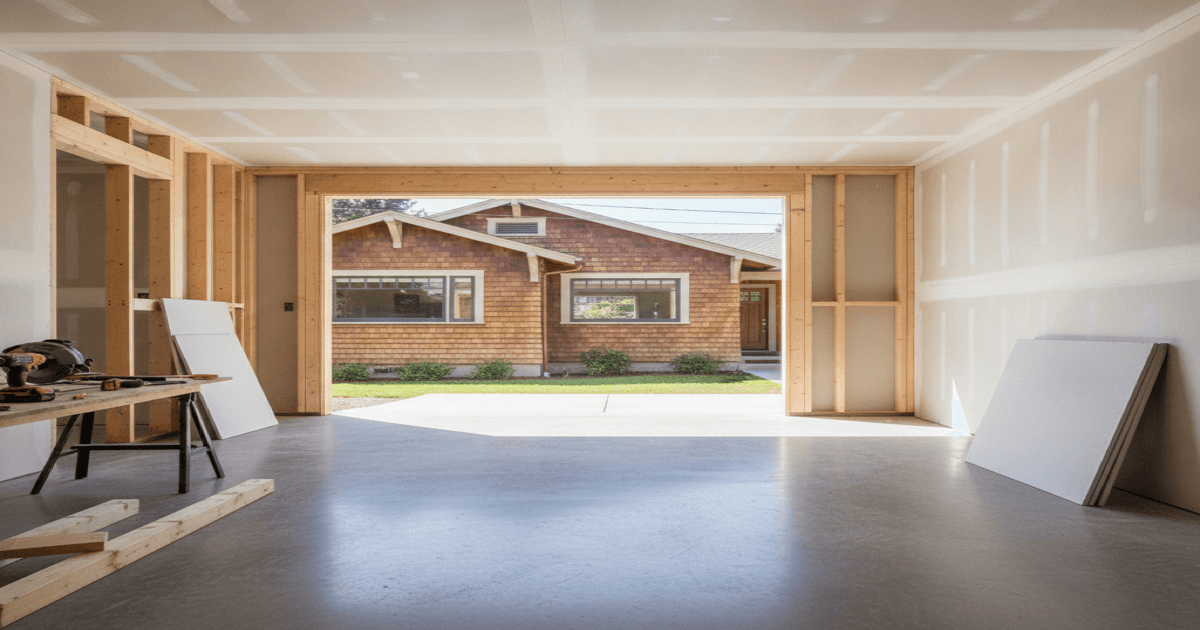
In the Bay Area, a garage is rarely just a garage. It may be future rental income, a place for aging parents, a home office, a guest suite, or the missing bedroom a family cannot afford to buy elsewhere. With high home values and tight housing supply, garage conversions and ADUs are understandably attractive. But before drawing floor plans or calling contractors, homeowners should slow down and ask the questions that determine whether the project is feasible, legal, financeable, and useful.
Why Garage Conversions Are Attractive in the Bay Area
A Bay Area garage conversion starts with a simple idea: use space you already own more intelligently. That is especially compelling in San Francisco, San Jose, the Peninsula, and the South Bay, where buying a larger home can be out of reach even for high-income households.
For some owners, the goal is multigenerational housing. A converted garage can give parents, adult children, or long-term guests more privacy without forcing the household into a larger property. For others, the goal is rental potential, a quieter work space, or resale flexibility.
California policy has also pushed ADUs into the mainstream. The California Department of Housing and Community Development's ADU Handbook, updated March 2026, remains one of the core statewide references for homeowners trying to understand accessory dwelling units. That does not mean every garage can become a legal dwelling. It does mean ADUs are no longer a niche improvement.
A garage conversion can be a smart real estate move, but only when the use, permit path, property condition, and long-term plan are aligned.
First Question: Is This an ADU, JADU, Guest Suite, or Finished Space?
This is the first fork in the road, and it is where many homeowners get sloppy.
An ADU is not simply "a nicer garage." Under California's framework, an accessory dwelling unit is a residential unit on the same parcel as a primary home, with independent living facilities. In plain English, that usually means a place where someone can live separately, with sleeping, cooking, sanitation, and its own entrance.
A JADU, or junior accessory dwelling unit, is different. HCD describes a JADU as no more than 500 square feet, contained within a single-family residence. It may share sanitation facilities with the main home. In San Francisco, SF Planning's ADU page also distinguishes converted ADUs, attached ADUs, detached ADUs, and junior ADUs.
A guest suite or family suite may have a bedroom and bathroom but no full kitchen. A finished garage used as an office, gym, or hobby room may not be a dwelling unit at all.
That distinction matters because the label drives the code path. A legal ADU may affect addresses, utilities, rent rules, insurance, financing, tax assessment, and resale disclosures. A finished room that is not a legal unit may be useful, but calling it an apartment in a listing is asking for trouble.
What Homeowners Should Check Before Design Starts
Before hiring someone to produce drawings, start with feasibility. A good early review should answer practical questions, not just aesthetic ones.
First, confirm what was legally built. Was the garage permitted? Is it attached or detached? Was it already altered by a prior owner? Are there open permits or code violations? Buyers in particular should not assume that a tiled floor, recessed lights, and a bathroom mean the space is legal.
Second, check the property's zoning and city rules. San Francisco, San Jose, Oakland, Berkeley, Palo Alto, Santa Clara, and other Bay Area cities all operate under California ADU law, but local implementation still matters. Historic districts, coastal rules, fire zones, utility constraints, tenant history, and local submittal procedures can change the path.
Third, decide what success looks like. A rental ADU, parent suite, teen room, home office, and future resale improvement are not the same project. A rental unit needs privacy, durable finishes, clear access, utility planning, and code-compliant cooking and sanitation. A family suite may prioritize acoustic separation and interior connection. A resale-minded conversion should be easy for a future buyer, lender, inspector, and appraiser to understand.
For homeowners who want help pressure-testing layout, permitting questions, and build path before committing to drawings, Bay Area firms such as Fabuhome provide garage conversion planning support from early feasibility through construction coordination.
Fourth, look at the existing structure with clear eyes. Many garages were built to protect cars, not to house people. Moisture, slab condition, ceiling height, old framing, insufficient insulation, poor drainage, or outdated electrical service can turn a "simple conversion" into a more involved remodel.
Why Permits and City Rules Matter
A garage conversion is not the place to freestyle. If the goal is legal living space, a permit is not a formality. It is what makes the improvement usable in the eyes of the city, future buyers, appraisers, insurers, and lenders.
SF.gov's Accessory Dwelling Unit topic page points homeowners toward the city's ADU permitting process, and SF Planning maintains separate guidance for local and state ADU programs.
San Jose is a useful Bay Area example because its official ADU Service page explicitly lists "garage or basement conversion to ADU or JADU" as a qualifying project type. The same page shows how document-heavy the process can be, with application forms, owner declarations, and plan packages among the required materials.
State law has made many ADUs easier to approve than they once were. San Francisco's state ADU guidance describes ministerial review for qualifying ADUs, including review from the date of a complete application. But "complete" is doing a lot of work in that sentence. Missing drawings, unclear scope, utility questions, fire access issues, or plan-check corrections can still slow a project.
The practical takeaway: do not start construction first and sort out permits later. That is how a useful space becomes a disclosure problem.
What Drawings or Plans Are Usually Needed
The exact submittal package depends on the city, property, and scope, but most garage conversion and ADU garage conversion projects need more than a floor plan.
Homeowners should expect some combination of:
- Site plan showing the property, existing structures, setbacks, access, and drainage.
- Existing floor plan and proposed floor plan.
- Exterior elevations if doors, windows, walls, or rooflines change.
- Building sections showing ceiling height, insulation, slab, wall, and roof conditions.
- Structural drawings or calculations when framing, foundations, shear walls, headers, or openings are affected.
- Electrical, plumbing, and mechanical plans.
- Energy compliance documentation.
- Fire separation details where the converted space is near the main dwelling, property line, or another structure.
- Window, egress, smoke alarm, carbon monoxide, ventilation, and bathroom details.
- Utility information for water, sewer, gas, electric, and sometimes fire flow.
A small finished office may need a narrower package than a full ADU with a kitchen and bathroom. A detached garage with old framing may need more structural review than an attached garage in good condition. If the project adds or relocates plumbing, the plan set gets more serious quickly.
Good drawings also reduce construction ambiguity. They make it harder for an owner, designer, contractor, and inspector to each imagine a different project.
What Can Surprise Homeowners
The surprises in garage conversions are usually not the cabinets or tile. They are the bones.
Structure is often the first issue. Garage slabs may not be insulated, level, dry, or suitable for finished living space without additional work. Existing walls may need strengthening. Garage door openings may need new framing and weatherproofing. If the garage supports living space above it, structural changes can become more sensitive.
Fire separation is another common surprise. A garage is treated differently from habitable space because cars, fuel, tools, and mechanical equipment create risk. Once the use changes, walls, ceilings, doors, penetrations, and mechanical systems may need review.
Utilities can be the quiet budget breaker. A livable unit may require plumbing for a bathroom or kitchen, upgraded electrical capacity, heating and cooling, ventilation, hot water, sewer connection planning, and utility routing that does not damage the main home's function.
Ceiling height matters. Many garages feel fine for storage but cramped as living space. Lower ceilings, ducts, beams, sloped slabs, and garage door headers can complicate code compliance and comfort.
Parking is not just a code question. California ADU law limits many local parking requirements, but homeowners should still think like future buyers. In dense San Francisco neighborhoods, losing off-street parking may matter less than gaining legal living area. In more car-dependent parts of the South Bay, the tradeoff deserves a harder look.
Setbacks and property lines matter most for detached garages or expansions. A structure that was acceptable as an accessory building may face different scrutiny when converted or enlarged.
Drainage and moisture are boring until they are expensive. Garages often sit at driveway grade, near slopes, or below parts of the home. Water intrusion, poor site drainage, and inadequate waterproofing should be addressed before finishes go in.
Existing condition may be the final answer. Some garages are strong candidates. Others are so compromised that replacement, an attached addition, or a different ADU strategy may be cleaner. Not every garage should be converted. That is not pessimism; it is competent planning.
Before You Start: A Homeowner Checklist
Use this checklist before committing to full drawings or a construction contract:
- Confirm whether the goal is an ADU, JADU, guest suite, office, gym, or finished storage area.
- Check whether the garage and any prior alterations were permitted.
- Look up zoning, parcel data, and local ADU rules with the city planning or building department.
- Ask whether the property has historic, coastal, fire-zone, tenant, HOA, or deed restrictions.
- Walk the garage for moisture, cracks, slope, low ceilings, old wiring, poor framing, and drainage problems.
- Decide whether losing parking affects daily life or resale.
- Identify likely utility needs: electrical, plumbing, sewer, heating, cooling, ventilation, and hot water.
- Ask what drawings, engineering, energy documentation, and forms the city requires.
- Do not rely on verbal guesses from friends, neighbors, or contractors who have not checked your property.
- Build a plan for inspections, construction access, material storage, and disruption to the main home.
- Verify all requirements with your local planning and building department before filing or building.
Short FAQ
Can every Bay Area garage be converted into living space?
No. Some garages are poor candidates because of structure, ceiling height, moisture, setbacks, utility limits, fire separation, or prior unpermitted work. The right answer comes from property-specific review, not a generic ADU checklist.
Is a garage conversion always an ADU?
No. A garage can become an ADU, JADU, guest suite, office, gym, or other finished space. The presence of cooking, sanitation, independent access, and intended occupancy usually determines which permit path applies.
Do I need a permit to convert a garage?
If you are turning a garage into habitable space, assume yes. San Francisco and other Bay Area cities require permits for construction, and ADUs have specific application processes. Always verify with the local building department before work starts.
Will a garage conversion increase resale value?
A legal, well-designed conversion can improve flexibility and appeal, especially where extra living space is scarce. An unpermitted or awkward conversion can do the opposite by creating inspection, appraisal, insurance, and disclosure issues.
Should I design first or check feasibility first?
Check feasibility first. A beautiful layout that ignores structure, drainage, fire separation, utilities, or local submittal rules is just expensive fiction.
Bottom Line
A Bay Area garage conversion can be a strong move for homeowners who need more space without leaving their neighborhood. But the best projects start with classification, feasibility, and permit strategy before design details. Decide what the space is supposed to be, verify the local rules, understand the existing garage, and make the legal path part of the plan from day one.
This article is general homeowner education, not legal advice. For property-specific decisions, verify requirements with your city planning and building department and consult qualified professionals where needed.