Bay Area Green Infrastructure and Urban Heat Resilience 2026

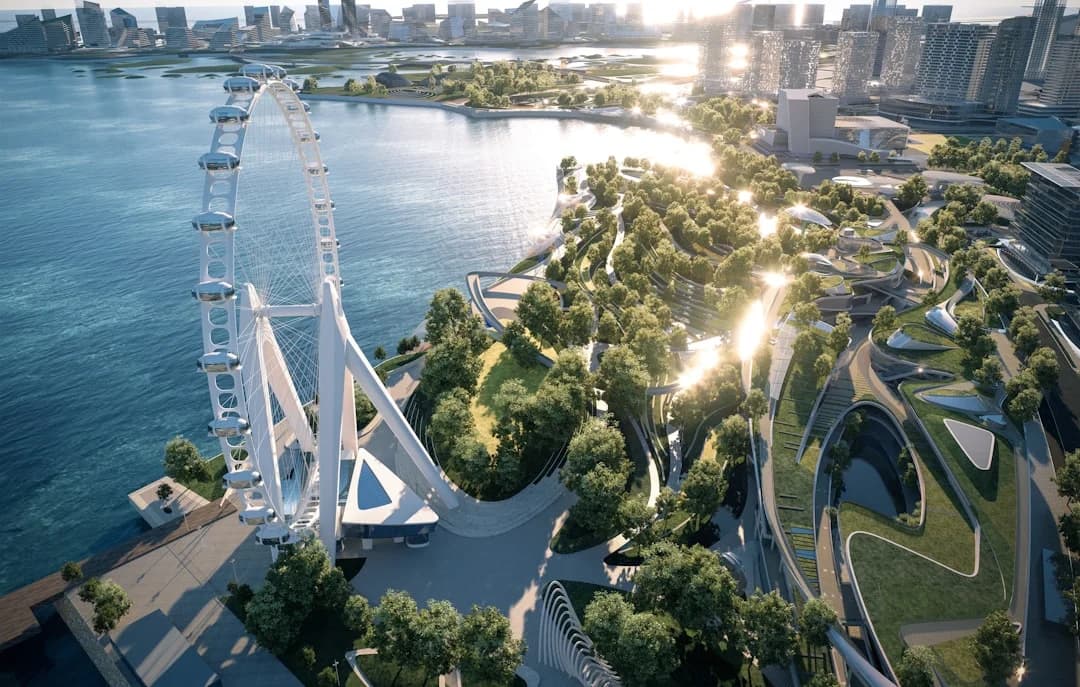
Photo by D5 Render on Unsplash
The Bay Area is entering a pivotal year for climate resilience, with regional agencies releasing a coordinated set of plans and funding roadmaps designed to accelerate green infrastructure and cooling strategies across the nine-county region. On April 1, 2026, the Bay Area Regional Climate Action Plan (BARCAP) was posted, laying out measurable steps to reduce greenhouse gas emissions while delivering frontline-community benefits and practical implementation pathways. This BARCAP release comes as Bay Area leaders also advance the Plan Bay Area 2050+ framework, which includes a Resilience Project List intended to map funding needs for shoreline adaptation and green infrastructure across the region. The combined announcements signal a broad push toward nature-based solutions, blue-green infrastructure, and urban cooling as core components of the region’s climate strategy in 2026 and beyond. (baaqmd.gov)
In parallel, state and local programs are scaling up investments in shade, trees, and green space that directly affect student safety, heat exposure, and urban air quality. Earlier this year, California highlighted the Green Schoolyards program, noting more than $156 million invested since 2022 to retrofit 215 school campuses statewide with trees, shade, and other heat-relief measures, a trend that dovetails with Bay Area resilience ambitions. The mix of state investments and Bay Area regional planning creates a tangible driver for contractors, utilities, and municipal agencies to scale green infrastructure in the near term. (gov.ca.gov)
For readers tracking technology and market momentum, the BARCAP release and related plans come with a toolkit of concrete actions—ranging from nature-based shoreline protection to multi-benefit green infrastructure—that are expected to unlock new funding streams and private-sector opportunities. The BARCAP documents, posted in early April 2026 and updated later in the month, outline 16 measures and 57 concrete actions across five sectors, including transportation, buildings, electricity, waste, and natural lands. The plan emphasizes frontline-community benefits, equitable access to healthier air, and robust tracking to ensure accountability as implementation proceeds. (baaqmd.gov)
Opening
The Bay Area is moving from high-level climate rhetoric to implementable, on-the-ground projects aimed at cooling neighborhoods, reducing flood risk, and preserving coastal ecosystems. BARCAP’s release on April 1, 2026, frames it as a holistic regional action plan designed to accelerate collaboration among more than 35 implementers—ranging from local governments to utilities and nonprofit organizations—to integrate green infrastructure into major investments and everyday planning. The plan’s emphasis on frontline communities and climate justice aligns with the region’s long-standing commitment to equitable resilience, a stance reinforced by ongoing public engagement and a data-driven approach to prioritizing projects. As scientists warn of intensifying heat waves and sea-level rise, Bay Area leaders say the BARCAP is designed to help cities deploy trees, bioswales, living shorelines, and other nature-based interventions at a scale that can meaningfully reduce heat exposure and flood risk for the most vulnerable residents. (baaqmd.gov)
The broader Plan Bay Area 2050+ framework, which ABAG and MTC adopted in March 2026, ties resilience planning to transportation and housing investments, creating a regional portfolio approach to climate adaptation. The Resilience Project List, published as part of Plan Bay Area 2050+, inventories regional needs for shoreline adaptation—categorized into cost bins and potential funding tracks—and highlights the share of projects that are nature-based or hybrid in nature. This crosswalk between BARCAP and Plan Bay Area 2050+ is intended to streamline funding requests, better align state and federal programs, and reduce project lead times for critical green infrastructure deployments across the Bay. (planbayarea.org)
Section 1: What Happened
Announcement Details and Participants
- The BARCAP rollout on April 1, 2026, signaled the region’s first formal, post-CPRG (Climate Pollution Reduction Grant) climate-action plan designed specifically for the Northern and Central Bay Area. The plan consolidates strategies across multiple regional partners—led by the Bay Area Air Quality Management District (BAAQMD)—and brings in dozens of local governments, utilities, and environmental groups to implement measures that reduce emissions while enhancing frontline community resilience. The BARCAP bundle includes a comprehensive set of documents, including the BARCAP itself and accompanying appendices, all posted on or after April 1, 2026. (baaqmd.gov)
Timeline and Key Milestones
- April 1, 2026: BARCAP documents posted, including the Comprehensive Climate Action Plan and related appendices, with a focus on multi-sector action and frontline-community benefits. This date is cited in BARCAP’s official postings and materials. (baaqmd.gov)
- April 21, 2026: BARCAP was further updated and public-facing materials highlighted BARCAP’s vision and methodology, including engagement details and a four- to five-year action horizon. The BARCAP page notes the update and ongoing outreach, signaling continued refinement of regional climate strategies. (baaqmd.gov)
- March 9–25, 2026: Plan Bay Area 2050+ reached a pivotal milestone with the release of the proposed final Plan Bay Area 2050+ and accompanying Environmental Impact Reports, followed by formal adoption by ABAG on March 19, 2026 and by MTC on March 25, 2026. This adoption established Plan Bay Area 2050+ as the region’s integrated planning framework, including resilience and environmental components that dovetail with BARCAP’s climate actions. (mtc.ca.gov)
- March–April 2026: The Resilience Project List, a core part of Plan Bay Area 2050+, was published to inventory the funding needs for shoreline adaptation across the nine-county Bay Area, including projects categorized by cost bins and adaptation type. This list provides a high-level view of near-term and longer-term regional investments in green and blue infrastructure. (planbayarea.org)
Key Facts and Projects
- The BARCAP framework identifies 16 distinct measures and 57 actions, spanning transportation, buildings, power, waste, and natural lands. The measures emphasize synergy between emissions reductions and resilience benefits, with a particular focus on frontline communities and equity. The plan’s structure reflects a regional approach to funding, financing, and workforce development to support implementation. (baaqmd.gov)
- The Resilience Project List provides archetype-based cost estimates and categorizes projects into near-term and longer-term opportunities, including living shorelines, dune restoration, marsh restoration, and hybrid approaches that combine green and grey infrastructure. The list is intended as a “what would it take” resource to guide funding discussions, advocacy, and program design, not a fixed capital budget. (planbayarea.org)
- The Resilience Project List’s analysis includes sea-level-rise adaptation planning heights and risk scenarios, illustrating how Bay Area jurisdictions can plan for multiple futures (2035 and 2050 horizons) with regional cost estimates and project libraries that cross municipal boundaries. This helps align local projects with regional risk reduction goals and national adaptation guidance. (planbayarea.org)
Supporting Context and Related Programs
- The state’s Green Schoolyards program demonstrates a broader policy context for resilience investments, showing how shade and green infrastructure at schools can reduce extreme heat exposure and deliver measurable health and educational benefits. This program’s statewide success provides a practical blueprint for Bay Area-scale schoolyard retrofits and urban cooling strategies. (gov.ca.gov)
- Bay Area Greenprint provides a regional data foundation for quantifying the benefits of green infrastructure, illustrating how nature-based solutions can contribute to water storage, flood risk reduction, air quality, and urban resilience. The Greenprint’s dashboards and case studies demonstrate the real-world value of integrating nature-based infrastructure into planning processes. (bayareagreenprint.org)
Section 2: Why It Matters
Impact on Communities

- BARCAP’s emphasis on frontline communities and environmental justice reflects the region’s commitment to equity in climate resilience. By focusing on where heat exposure and air quality disparities are greatest, the BARCAP seeks to channel funding and project delivery toward neighborhoods that bear disproportionate climate risks. This approach aligns with ABAG/MTC’s resilience priorities and the broader Bay Area’s historical focus on equitable planning. (baaqmd.gov)
- The Bay Area’s climate strategy links to a broader state effort to replace heat-trapping asphalt with shade and green space at schools and public facilities, a policy current in 2026 and likely to influence Bay Area K–12 retrofits and public spaces. The California Green Schoolyards program case underscores a scalable model for public-right-of-way cooling and heat mitigation. (gov.ca.gov)
Economic and Market Implications
- The BARCAP and Plan Bay Area 2050+ initiatives create a multi-year pipeline for green infrastructure projects, potentially unlocking funding from state, federal, and philanthropic sources. The inclusion of 57 actions and a regional MTC/ABAG funding roadmap suggests that market players—engineering firms, landscape architects, water-resource managers, and construction contractors—will engage more deeply with multi-benefit projects that combine flood protection, heat mitigation, and ecosystem restoration. (baaqmd.gov)
- The BARCAP’s emphasis on nature-based solutions (NBS) and “blue-green infrastructure” aligns with ongoing state efforts to incorporate green infrastructure into shoreline protection, flood management, and climate adaptation. For Bay Area utilities and local agencies, this convergence points to integrated project design that can leverage multiple funding streams and reduce lifecycle costs compared with traditional gray infrastructure alone. (baaqmd.gov)
- California’s Green Schoolyards program provides a tangible signal that resilient, climate-adaptive infrastructure can yield co-benefits in health, education, and equity while expanding the market for urban greening products and services. In the Bay Area, this program’s demonstrated impact adds momentum to schoolyard and public-space retrofit opportunities, potentially catalyzing market demand for urban forestry, permeable pavements, and shade structures. (gov.ca.gov)
Equity and Environmental Justice
- The BARCAP engagement approach and frontline-community mapping (EJ Screen-derived categorization, AB 617 communities) are designed to ensure that resilience investments reach populations that are most at risk from heat, flooding, and air pollution. The BARCAP materials emphasize accountability, transparent tracking, and workforce development to support equitable outcomes, which is especially relevant in a region with pronounced housing and inequality dynamics. (baaqmd.gov)
- Plan Bay Area 2050+ explicitly links resilience investments to environmental goals and equitable access to open space, parks, and climate-adaptive infrastructure. The Resilience Project List’s structure—balancing cost, risk, and benefits—helps ensure that projects aligned with equity considerations are prioritized in public funding and decision-making. (planbayarea.org)
Section 3: What’s Next
Next Steps for Local Governments
- Local jurisdictions should prepare to integrate BARCAP measures into capital improvement programs, transportation planning, and land-use decisions. The BARCAP framework identifies implementation responsibilities across more than 35 implementers, meaning cross-agency coordination will be essential to align funding cycles, procurement, and workforce development. Jurisdictions will likely need to map BARCAP actions to their own climate-action plans and sustainability programs to maximize synergies. (baaqmd.gov)
- Plan Bay Area 2050+ adoption creates a formal regional platform for funding shoreline resilience and green infrastructure projects. With ABAG and MTC having adopted the plan in March 2026, the region can reference the Resilience Project List to identify near-term opportunities and coordinate with Caltrans, Bay Area water boards, and local flood-management agencies to unlock funding and streamline permitting for nature-based shoreline protection. The Final Plan Bay Area 2050+ and associated EIR provide the regulatory scaffolding for project delivery. (planbayarea.org)
What to Watch For in 2026–2027
- Expect enhanced data integration and funding dashboards as BARCAP’s Funding Roadmaps (Appendix G) and the Plan Bay Area resilience dashboards come online. The BARCAP pages indicate ongoing work to connect funding through public-private partnerships and to track implementation progress, with a focus on equity and transparency. Observers should monitor ABAG/MTC updates and BARCAP announcements for milestones and grant opportunities. (baaqmd.gov)
- The Resilience Project List’s cost estimates and archetype-based projections will likely inform state and regional funding requests, including potential alignments with Prop 4 and other resilience appropriations. Local governments could use the list to justify project scoping, environmental reviews, and community engagement processes for shoreline adaptation and multi-benefit green infrastructure. (planbayarea.org)
- As the state and region push toward greener schoolyards and municipal cooling strategies, Bay Area districts may accelerate the deployment of shade trees, cool pavements, and green spaces in school campuses and public facilities. This could drive demand for design-build services, irrigation optimization, and maintenance programs to sustain the long-term climate benefits. The statewide Green Schoolyards update provides a concrete precedent. (gov.ca.gov)
Closing
The convergence of BARCAP, Plan Bay Area 2050+, and related state programs marks a watershed moment for the Bay Area’s climate resilience—particularly in the realm of green infrastructure and urban heat resilience 2026. By aligning multi-jurisdictional planning with nature-based and blue-green solutions, the region aims to reduce heat exposure, protect coastal assets, and deliver co-benefits in health, economy, and equity. For readers who want to follow the latest developments, ongoing BARCAP updates, ABAG/MTC deliberations, and regional funding announcements are the best sources to monitor in the near term. The Bay Area’s approach to resilience is gradually transitioning from aspirational goals to tangible projects that reshape neighborhoods, public spaces, and the region’s long-term climate trajectory.

As Bay Area communities implement this next phase, stakeholders—from city planners to engineers to residents—will increasingly see green infrastructure as a core tool for cooling neighborhoods, buffering coastlines, and strengthening the region’s capacity to adapt to a changing climate. The momentum gained in 2026 places the Bay Area on a path toward more resilient streetscapes, healthier air, and more livable neighborhoods, underscoring that sustainable, equitable climate action is both urgent and achievable.