Bay Area Sustainable Seafood Movement 2026

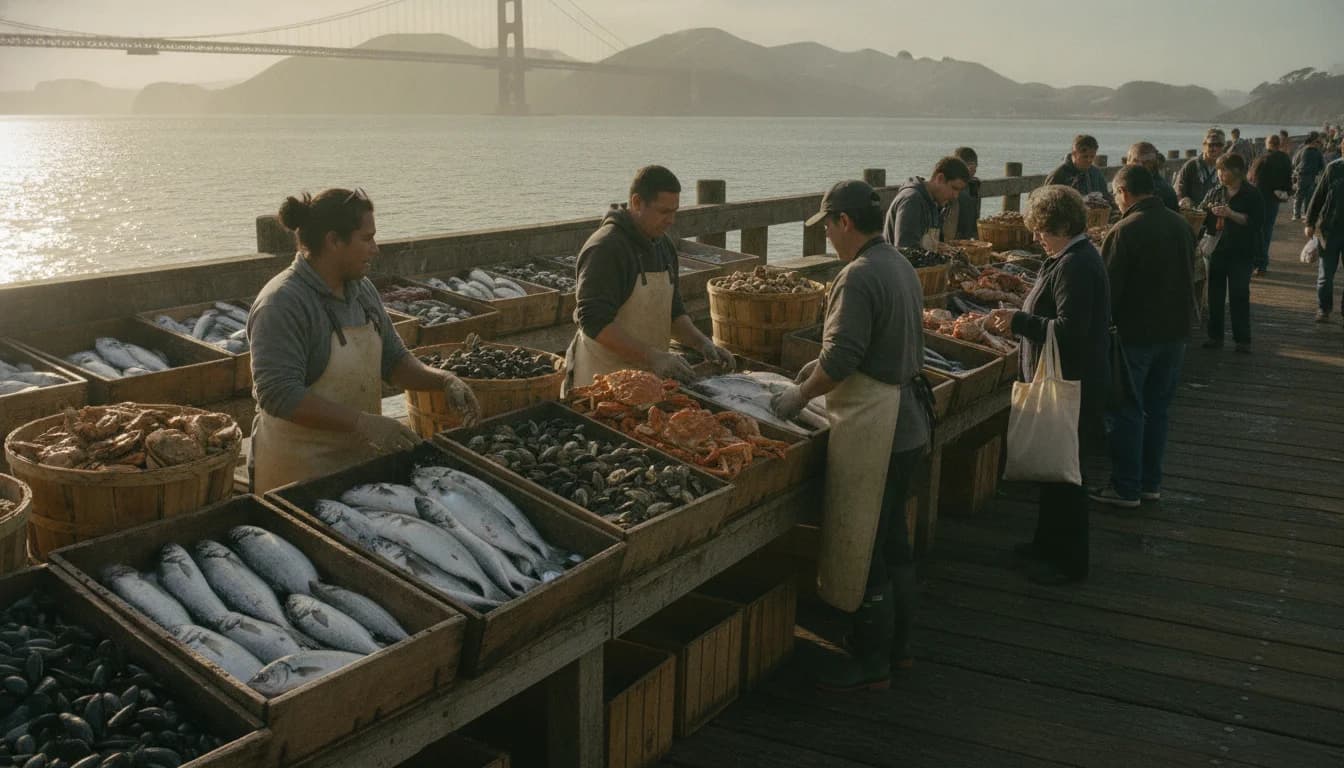
In San Francisco and the wider Bay Area, a new cross-sector push is unfolding that could reshape how seafood is sourced, tracked, and served in 2026. On April 9, 2026, the Ethical Tuna Collaboration (ETC) announced the launch of its design phase, a multistakeholder effort hosted by the Conservation Alliance for Seafood Solutions (CASS) to address forced labor risks in tuna supply chains supplying the U.S. market. The announcement underscored a broader movement toward transparent, accountable seafood sourcing that ties producers, buyers, and diners into a shared standard of responsibility. The public-facing release positioned ETC as a pivotal step in a system-wide effort to reduce labor abuses while improving traceability across the supply chain. This marks a notable moment for the Bay Area sustainable seafood movement 2026, signaling the region’s commitment to aligning labor standards with environmental stewardship and financial incentives for responsible practice. (solutionsforseafood.org)
The news around ETC arrives alongside a suite of complementary developments in California and the Bay Area that emphasize technology-enabled traceability, institutional procurement leadership, and consumer-guiding programs. Real Good Fish, a community-supported fishery serving the Monterey Bay and San Francisco Bay areas, has actively been integrating vessel-tracking technology to provide members with more granular data about catch location, gear, and timing. In late June 2026, Pelagic Data Systems announced a partnership with Alan Lovewell’s Real Good Fish to install solar-powered vessel tracking on participating boats, enabling weekly communications that detail where and how seafood was caught. The partnership aims to connect fishermen and seafood lovers in a tighter feedback loop, potentially elevating local confidence in seafood provenance and sustainability claims. (seafoodsource.com)
At the same time, major institutional buyers are stepping forward with sizable demonstrations of demand for sustainable seafood. The University of California system announced a landmark move toward Verified Green procurement, making Monterey Bay Aquarium’s Verified Green program a central pathway for campus menus. In June 2026, UC campuses including UC Davis, UC Santa Cruz, and UC Merced began serving Verified Green Black Tiger Shrimp sourced directly from small-scale farms in Vietnam, marking the first nationwide initiative of its kind within large public universities. For the Winter and Spring quarters alone, UC campuses reported purchasing tens of thousands of pounds of this eco-conscious option, illustrating how procurement power can drive supply chain change across international producers while supporting coastal communities and sustainable farming practices. (procurement.ucop.edu)
The Bay Area’s seafood ecosystem is also experiencing shifts in how sustainability is communicated to diners and how restaurants and institutions respond to evolving standards. A March 3, 2026 New York Times report on Monterey Bay Aquarium’s Seafood Watch notes that the program is undergoing a substantial relaunch to re-incorporate provenance and farmed-wild considerations into restaurant decisions. The new approach includes encouraging menus to highlight “best choice” green items and providing more detail on the seafood’s origin. This reflects a broader trend toward clarity and accountability in sustainability labeling, a development that resonates with Bay Area chefs and suppliers who have long engaged with Seafood Watch as a key reference point. (vi.web-platforms-vi.nyti.nyt.net)
Local community and industry events in 2026 have also underscored the momentum around sustainable choices. Baykeeper—a Bay Area nonprofit focused on water and coastal health—highlighted the Bay Celebration in May 2026 as part of Earth Month activities, offering opportunities to enjoy sustainable seafood while discussing policy and environmental action in the region. The Bay Celebration is one of several moments this year when the public can observe and participate in ongoing coastal resilience efforts, marine protection, and seafood supply-chain initiatives within the Bay Area. (baykeeper.org)
Section 1: What Happened
Ethical Tuna Collaboration design phase launched
In a San Francisco press release dated April 9, 2026, the Ethical Tuna Collaboration (ETC) was officially launched as a design phase project within the broader seafood-sustainability network led by CASS. The design phase represents a deliberate departure from traditional, single-actor initiatives by bringing together buyers, fisheries communities, unions, and subject-matter experts to co-create a program aimed at reducing forced labor risks on tuna vessels. The organizers described the effort as an intentional, system-wide approach to due diligence that engages multiple layers of the supply chain rather than relying on individual company actions alone. The plan prioritizes data collection and aggregation to track vessel performance on fisher outcomes, with a goal of public reporting on aggregate progress to promote accountability across the sector. Public input opportunities are scheduled for June–August 2026 and October–December 2026, signaling a transparent, participatory process. This marks a notable step in the Bay Area sustainable seafood movement 2026 for its emphasis on governance, collaboration, and measurable labor standards. (solutionsforseafood.org)
Vessel-tracking initiative aimed at California fleets
A separate and closely watched development in late June 2026 involved a partnership to deploy vessel-tracking technology on California fishing boats. Pelagic Data Systems teamed with Alan Lovewell of Real Good Fish to install solar-powered tracking devices on participating vessels in Moss Landing and Santa Cruz, with the aim of delivering traceability data directly to the Real Good Fish community and its roughly 1,500 shareholders. The system is designed to trace essential aspects of the fishing operation, including species targeted and gear type, and to relay this information weekly to stakeholders. The goal is to strengthen trust among fishermen, distributors, and consumers by providing a verifiable digital record of how seafood is caught and sourced. Industry observers note that such traceability projects can help deter IUU (illegal, unreported, and unregulated) fishing and support more transparent market dynamics for small-scale fisheries in California. (seafoodsource.com)
Institutional procurement moves deepen supply-chain commitments
In a separate thread of activity, the UC system’s June 2026 rollout of the Verified Green program demonstrated how large institutional buyers can influence supplier behavior and market opportunities for sustainable seafood. Monterey Bay Aquarium’s Verified Green initiative underpins UC’s strategy to source seafood that is environmentally responsible and socially responsible as part of a broader target to achieve sustainable food benchmarks. The UC procurement article notes that the campuses purchased tens of thousands of pounds of Verified Green shrimp in the Winter and Spring quarters, illustrating a sizable, recurring demand signal for sustainable producers and for the farms that meet the standards. The announcement also highlights the broader potential for institutional buyers to create scalable demand for sustainable products while aligning with local and global sustainability goals. (procurement.ucop.edu)
Monterey Bay Aquarium Seafood Watch updates and restaurant labeling
A March 3, 2026 article in The New York Times highlighted Seafood Watch’s reboot of its labeling approach and the expansion of a “best choice” program to restaurant menus across the country. The initiative, accelerated by the Aquarium’s updated standards, invites a broader set of dining establishments to feature green-listed (best choice) options and to provide more information about the origin and provenance of fish on menus. The coverage notes that the green list includes items such as Arctic char, Pacific skipjack tuna, and other species that meet well-managed or responsibly farmed criteria, with a push to improve transparency around the sourcing chain. The Bay Area is a natural focal point for this trend given its dense network of restaurants, fisheries, and consumers who prioritize sustainability. This development complements the ETC initiative by providing a framework that consumers and chefs can use to assess and choose seafood with improved provenance and governance. (vi.web-platforms-vi.nyti.nyt.net)
Bay Area community engagement and sustainability events
In May 2026, Baykeeper highlighted the Bay Celebration as a focal point for communications about the Bay Area’s environmental health, including sustainable seafood conversations, policy discussions, and coastal protection efforts. The event’s emphasis on sustainable seafood mirrors broader regional efforts to align environmental stewardship with practical market and consumer choices. By integrating public events with ongoing advocacy and policy work, the Bay Area remains a hub for dialogue about how technology, governance, and consumer behavior intersect to advance sustainable seafood. (baykeeper.org)
Timeline of key dates in 2026
- March 3, 2026: Monterey Bay Aquarium Seafood Watch announces a major refresh of its labeling approach and the expansion of Best Choice restaurant commitments, signaling a more dynamic and provenance-focused consumer guidance system. (vi.web-platforms-vi.nyti.nyt.net)
- May 9, 2026: Baykeeper’s Bay Celebration in the Bay Area, featuring sustainable seafood discussions and coastal advocacy, highlights ongoing local engagement around marine health and seafood supply chains. (baykeeper.org)
- April 9, 2026: ETC launches its design phase in San Francisco to co-design a program addressing forced labor risks in tuna supply chains serving the U.S. market. (solutionsforseafood.org)
- June 25, 2026: UC Procurement announces the University of California system’s adoption of Monterey Bay Aquarium’s Verified Green and begins serving Verified Green shrimp at multiple campuses; the program demonstrates institutional leadership in sustainable seafood procurement. (procurement.ucop.edu)
- June 29, 2026: Pelagic Data Systems partners with Real Good Fish to install vessel-tracking systems on participating California vessels, enabling data-driven traceability for a locally sourced seafood supply chain. (seafoodsource.com)
- Ongoing: Real Good Fish partnerships and regional seafood initiatives continue to evolve, with a focus on transparency, community involvement, and local-market impact. The company notes that its membership is centered in the Monterey Bay and San Francisco Bay areas and that the traceability program is designed to support those communities. (seafoodsource.com)
Section 2: Why It Matters
Technology, labor standards, and transparency
The ETC design phase signals a maturation in how the seafood sector approaches labor standards, moving from isolated corporate efforts to a system-wide, collaborative governance model. By collecting and aggregating data to track vessel performance on fisher outcomes and by publicly reporting aggregate progress, the ETC seeks to create market incentives for compliant behavior and to empower buyers to make informed sourcing decisions. This approach addresses critical labor risks in distant-water fisheries and aligns with evolving regulatory expectations that buyers may bear more responsibility for supply-chain practices. The emphasis on worker feedback and engagement from unions and frontline organizations further grounds the program in practical, at-sea realities, rather than purely on paper-based compliance. The Bay Area’s role as a hub for seafood innovation means that its fishermen, processors, and retailers could be early adopters of such a data-driven model, potentially setting a standard for national practice. (solutionsforseafood.org)
“ETC is creating a bridge between buyers and the tuna vessels they source from, so that market incentives and financial and capacity-building support enable vessel owners to improve.” — Chavi Keeney Nana, Interfaith Center on Corporate Responsibility, as quoted in the ETC design-phase announcement. This framing highlights how cross-sector collaboration can translate governance commitments into tangible improvements at sea. (solutionsforseafood.org)
Institutional procurement as a market-shaping force
UC’s Verified Green shrimp deployment demonstrates how large, mission-aligned buyers can shape global seafood markets by anchoring demand in sustainable production models. The use of Monterey Bay Aquarium’s Verified Green standard helps ensure that institutions are not simply selecting “green” options based on labels, but are aligning purchases with verifiable farm practices and supply-chain integrity. Procuring tens of thousands of pounds of Verified Green shrimp across multiple campuses illustrates how schools and universities can function as major market anchors, translating ethical aspirations into practical, scalable procurement choices. Given UC’s scale and visibility, such programs have the potential to influence suppliers globally to adopt more sustainable farming and processing practices. (procurement.ucop.edu)
Consumer guidance evolves from labeling to provenance storytelling
The Seafood Watch reboot, and its emphasis on “best choice” labeling, reflects a broader industry push toward more meaningful provenance storytelling. Chefs and restaurateurs are looking for clearer signals about where seafood comes from, how it’s caught, and what practices support sustainability. The NYT coverage notes that restaurants are being asked to provide greater transparency about origins and methods, which aligns with Bay Area chefs who value relationship-driven sourcing. As consumers become more discerning, markets will reward products and menus that can demonstrate verifiable sustainability without overloading customers with complex labels. The Bay Area’s dense ecosystem of restaurants, fishmongers, and seafood NGOs makes it a natural laboratory for testing and refining these provenance signals. (vi.web-platforms-vi.nyti.nyt.net)
Local economic and community impacts
Real Good Fish’s model—delivering locally caught seafood to thousands of shareholders in the Monterey Bay and Bay Area—exemplifies how community-supported fisheries can complement broader sustainability goals with a tangible economic backbone. The pairing of vessel-tracking technology with community-supported distribution offers a blueprint for how small-scale fisheries can remain viable in the digital era, while giving consumers greater confidence that their purchases align with environmental and social standards. The collaboration with Pelagic Data Systems demonstrates a practical path to scale track-and-trace capabilities in regional fleets, potentially enabling more precise gear selection, catch verification, and responsible marketing of California seafood. Such developments underscore that the Bay Area sustainable seafood movement 2026 is not only about environmental stewardship but also about building resilient, localized economic ecosystems around fisheries. (seafoodsource.com)
Broader regional and national context
Beyond the Bay Area, the period’s headlines reflect a national and global shift toward more accountable seafood supply chains. The Seafood Watch relaunch, coupled with corporate and public procurement initiatives, points to a convergence of consumer expectations, corporate responsibility, and policy frameworks aimed at reducing ecological and social risks in seafood production. Regional actors in California—ranging from fishers in the Moss Landing area to university dining programs in Berkeley or Davis—are uniquely positioned to experiment with new models of governance, technology adoption, and market engagement that could eventually inform broader national practice. The Bay Area’s prominence as a technology and culinary hub makes it a natural proving ground for traceability, transparency, and responsible procurement as central pillars of the Bay Area sustainable seafood movement 2026. (vi.web-platforms-vi.nyti.nyt.net)
Section 3: What’s Next
Upcoming stakeholder consultations and next steps
The ETC design-phase plan includes public stakeholder consultations scheduled through 2026, with sessions in June–August and October–December. These engagements are intended to collect broad input from buyers, fisheries, unions, and civil society organizations to shape the program’s governance, data standards, and implementation pathways. For observers in the Bay Area, these consultations will be an important signal of where and how to participate, potentially influencing local adaptation of the ETC framework to California fleets and regional markets. The emphasis on transparent progress reporting also implies ongoing opportunities for journalists, researchers, and community groups to track performance metrics and share impacts with readers. (solutionsforseafood.org)
Monitoring the procurement and technology adoption curve
UC’s green-shrimp rollout and Real Good Fish’s vessel-tracking collaboration will likely accelerate the adoption of verified sustainability practices in both public and private sectors. As more institutions and regional fisheries engage with traceability technologies, vendors and service providers that offer scalable, low-cost tracking solutions could experience growing demand. The Bay Area—already home to a suite of seafood NGOs, universities, and culinary institutions—could see a faster diffusion of standardized data-sharing practices, enabling more reliable comparisons across fisheries and cuisines. Journalists and industry analysts will watch for metrics such as adoption rates among Bay Area restaurants, changes in consumer demand for traceable seafood, and any shifts in the economic viability of small-scale fisheries that participate in these programs. (seafoodsource.com)
What to watch for in policy and industry developments
As the ETC and related initiatives progress, several policy and industry developments merit close attention:
- Potential updates to due-diligence requirements for seafood buyers and how they affect large retailers and institutions.
- The expansion of vessel-tracking data into more California fleets, including the potential for standardized reporting of gear types, bycatch, and catch locations.
- The evolution of Seafood Watch’s labeling system and the practical implications for menus, counters, and online marketplaces.
- The financial and operational implications for small-scale fishers who participate in traceability and sustainability programs, including the costs and benefits of adopting new technologies.
These developments will shape the Bay Area sustainable seafood movement 2026 and could influence national discussions about responsible fisheries, labor rights, and market-based incentives for sustainable seafood production. The convergence of labor standards, traceability technology, and institutional procurement signals a broader reorientation of the seafood ecosystem toward more accountable and resilient supply chains. (solutionsforseafood.org)
Closing
The Bay Area is once again at the forefront of a national conversation about how seafood can be sustainable in practice, not just in theory. With the ETC’s design-phase work, Real Good Fish’s traceability initiative, UC’s green procurement push, and Seafood Watch’s refreshed guidance, the region is stitching together labor standards, environmental stewardship, and market demand into a coherent trajectory for 2026 and beyond. For readers who care about the future of coastal communities, ocean health, and the foods on their plates, these developments offer clear signals about where seafood markets are headed: toward greater transparency, more accountable supply chains, and a stronger tie between California’s fishing communities and the consumers who value their catch. As these efforts unfold, the Bay Area sustainable seafood movement 2026 will continue to be shaped by the collaboration of fishermen, restaurateurs, researchers, and public institutions, each contributing pieces to a more resilient marine economy. Readers who want to stay informed can follow updates from participating organizations, university procurement news, and local Bay Area environmental groups as they chart the next steps in this evolving landscape. (solutionsforseafood.org)