Bay Bridge Lights 2026 Return: Grand Lighting Debut

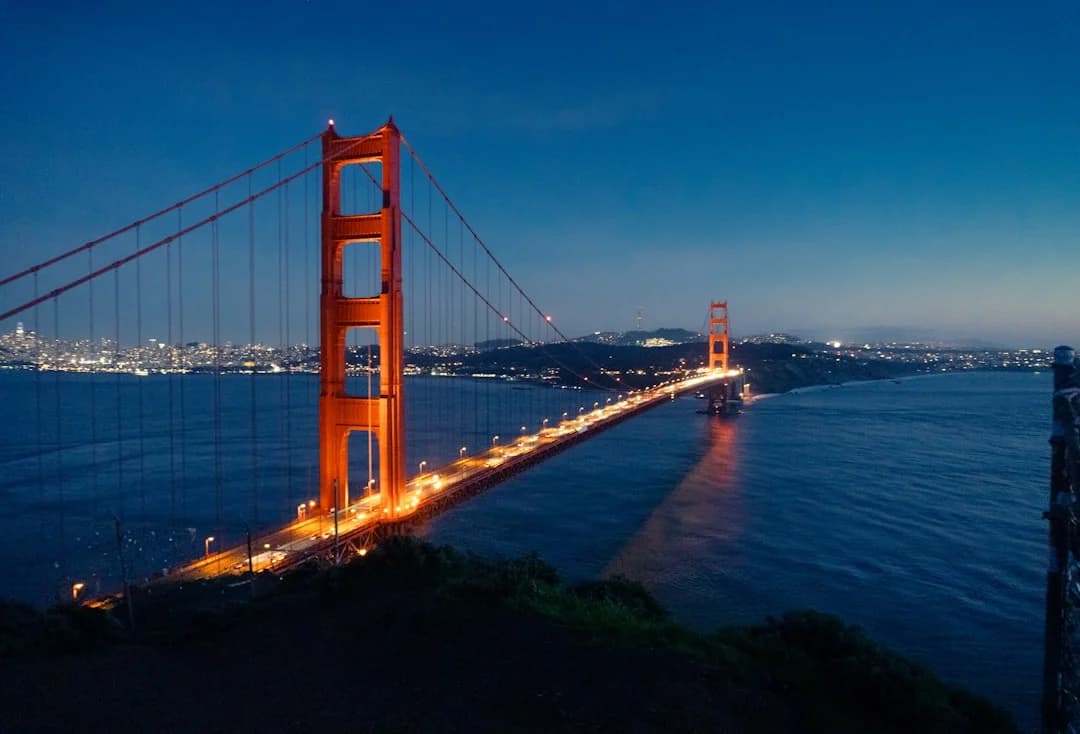
Photo by Naveen Ketterer on Unsplash
The Bay Bridge lights 2026 return is set to illuminate the San Francisco skyline once again, with a flagship Grand Lighting scheduled for Friday, March 20, 2026. The new installation, branded as Bay Lights 360, represents a substantial upgrade from the previous display, featuring roughly 50,000 LED lights designed to withstand the marine environment and deliver a brighter, more durable nighttime signature for the Bay Area. The news arrives after years of planning, fundraising, and technical work to rebuild a public art installation that went dark in March 2023. The upcoming re-lighting is expected to be visible from broad swaths of the Bay Area, including San Francisco, Marin County, and parts of the East Bay, signaling both a cultural marker and a potential driver for nighttime tourism. The announcement comes amid ongoing conversations about public art, infrastructure funding, and the role of large-scale light installations in urban branding. The Bay Bridge lights 2026 return is not just a spectacle; it is a data-driven case study in public-private collaboration, capital-intensive public art, and metropolitan nighttime economies. (reutersconnect.com)
What Happened
Grand Lighting Date Confirmed
- The central event, the Grand Lighting for Bay Lights 360, is scheduled for Friday, March 20, 2026. Industry and local media have reported this as the official launch date for the new installation, marking the first major lighting in the Bay Bridge corridor since the prior display went dark in 2023. The timing is framed as an official reopening rather than a repair, signaling a full-scale relighting and a new design language for the bridge’s northern cables. This date has been confirmed by multiple outlets and project stakeholders, including Reuters, NBC Bay Area, and related art-illuminations coverage. (reutersconnect.com)
Scale and Installation Details
-
Bay Lights 360 is described as doubling the prior lighting scale, moving from roughly 25,000 LED fixtures to approximately 50,000. The higher light count is designed to deliver a more immersive and durable night-time experience, with LED technology chosen for resilience in the marine environment and longer-term maintenance benefits. Public-facing communications and press coverage emphasize the larger scale as a core feature of the 2026 return. The publicly shared estimates place the total LED count around 50,000, with the plan to illuminate the bridge’s northern face in a new choreography. (cbsnews.com)
-
The installation is being branded and managed under the Illuminate framework, with the design and production team pursuing a sequence of light patterns that respond to rhythm and site context. While some details have evolved during fundraising and contractor qualification, the project consistently centers on a larger, more durable LED system than the original Bay Lights. The Illuminated project has issued updates indicating consolidation of manufacturing and installation teams to deliver a high-quality, long-lasting display. (illuminate.org)
Scope and Accessibility
- Beyond the north-facing cables, communications about Bay Lights 360 have noted broader visibility—part of the reasoning for the reimagined installation is to extend visible reach across more of the Bay Area’s vantage points. The revised footprint is intended to be observable from Marin County through San Francisco and into the East Bay, aligning with public-art ambitions to transform the nocturnal skyline as a daily, widely accessible feature. This visibility dimension has been highlighted by media reporting and project materials. (cbsnews.com)
Timeline and Milestones Leading Up to the Return
-
The narrative around Bay Lights 360 has included fundraising milestones, progress updates from Illuminate, and periodic testing of lighting sequences in the months ahead of the March 2026 debut. Reports have tracked a multi-year arc from the initial decision to rebuild after the 2023 shutdown, through campaign drives to secure funding (including notable fundraising figures discussed in local outlets), to test-installed sequences in the months before the Grand Lighting. The overall arc is documented across multiple outlets and the project’s communications channel. (sfstandard.com)
-
Public communication and engagement efforts have been a core part of the process, with travel and tourism groups, as well as local media, providing context for how the Bay Lights 360 relighting will intersect with city events and visitor experiences. Industry watchers have documented the coordination among illuminate partners, city agencies, and the bridge authority, underscoring the complexity of bringing a city-scale art installation back online after a multi-year hiatus. (illuminate.org)
-
Historical context helps frame the significance of the 2026 return. The Bay Lights project debuted in 2013 and later re-emerged with an enhanced form in 2016 after the initial run, highlighting the Bay Bridge’s evolving role as a public-art sculpture. The prior installation, including references to its original scale and the subsequent dark period, provides essential context for understanding both the ambition and the risks involved in Bay Lights 360. Public sources summarize the evolution from a temporary installation to a long-term fixture, and the 2023 shutdown due to environmental constraints is part of the historical backdrop. (en.wikipedia.org)
Section 1: Why It Matters
Economic and Tourism Impacts
-
The return of the Bay Lights 360 is being framed as a potential catalyst for nighttime activity and tourism in the Bay Area. Local media coverage has highlighted the display’s potential to attract photographers, visitors, and residents who view the bridge as an iconic vantage point for city lighting. The reintroduction of a signature nightly spectacle could influence nearby nighttime economies, including hospitality, dining, and waterfront activities. Analysts and reporters have stressed that the event’s broader appeal will depend on how consistently the lighting operates, the scheduling of public viewing opportunities, and the synchronization of related events along the Embarcadero and surrounding neighborhoods. (sfchronicle.com)
-
News outlets have noted that the Bay Lights 360 restoration aligns with a broader interest in leveraging public art to anchor cultural identity and economic activity in urban cores. The Sacramento-to-San Francisco corridor—while not uniformly dependent on one installation—gains an added asset in the Bay Lights 360, which local officials and tourism advocates see as a draw for domestic and international audiences seeking distinctive urban experiences. Coverage has also referenced the potential for extended viewing times during the premiere and during major city events, contingent on weather and maintenance schedules. (sfchronicle.com)
Public Art, City Identity, and Community Engagement
- Public art projects like Bay Lights 360 are often evaluated for their ability to frame a city’s nighttime identity and to generate a sense of shared space among residents. The Bay Lights lineage—going back to the 2013 debut, and the re-emergence in 2016 after upgrades—serves as a cultural touchstone for San Francisco’s nighttime landscape. The 2026 return is being discussed not only in technical and logistical terms but also as an opportunity to deepen the city’s relationship with large-scale public artworks that occupy critical urban real estate—the bridge itself. Contextual reporting from Chronicle and other outlets situates the installation within the city’s broader arts strategy. (sfchronicle.com)
Technical and Environmental Considerations
-
The move to Bay Lights 360 reflects an emphasis on resilience and longevity. Reports note that the new LED configuration is designed to be more durable in the harsh marine environment, addressing past maintenance challenges that contributed to the earlier shutdown. Public-facing documents and reporting consistently identify the upgrade as both a technical improvement and a strategic decision to reduce long-term maintenance risks. The technical emphasis on durability aligns with the broader goal of sustaining a high-visibility nightly beacon with predictable performance. (reutersconnect.com)
-
The engineering and design choices are part of a wider dialogue about energy use, emissions, and city budgeting for public art. While precise energy consumption figures for Bay Lights 360 are not uniformly published in early coverage, observers note that the project’s lighting approach aims to balance spectacular visual impact with responsible energy management. This is particularly relevant given the Bay Area’s ongoing efforts to optimize public infrastructure while minimizing environmental impact. (cbsnews.com)
Public Communication, Public Response, and Misinformation Challenges
-
Public discussions around the Bay Lights 360 return have included both enthusiasm and cautious scrutiny. Some online conversations have highlighted misinformation or rumor cycles around launch dates, which local outlets have addressed to prevent confusion. Coverage by SFist and other outlets has emphasized the importance of relying on official communications rather than unverified social posts for critical timing updates. This dynamic illustrates the challenges of public-sphere information diffusion around high-profile urban projects. (sfist.com)
-
In addition to enthusiasm, some residents and stakeholders have raised questions about traffic management, street closures, and the bridge’s impact on nearby neighborhoods during installation and testing phases. News reporting has indicated that there could be overnight lane closures or restricted access during certain nights as crews install or test components. City communications and project partners have aimed to provide advance notice and minimize disruption where possible, acknowledging that major infrastructure-adjacent work always carries a temporary impact. (nbcbayarea.com)
What’s Next
Upcoming Milestones and Scheduling
-
With the Grand Lighting set for March 20, 2026, the Bay Lights 360 project moves into a high-visibility phase. The March 20 event is expected to mark a formal reintroduction of the display to the Bay Area and to the wider public, followed by ongoing programming and sequences designed to demonstrate the system’s capabilities in varied lighting scenarios. Industry observers anticipate a period of on-site demonstrations, sequence testing, and possible public viewing opportunities in the weeks that follow the initial relighting. The exact programming schedule for after the Grand Lighting remains contingent on testing results and operational considerations. (reutersconnect.com)
-
Public communications from Illuminate and partner organizations stress that Bay Lights 360 is a long-term installation rather than a single event. The project team has indicated that ongoing maintenance, updates to lighting sequences, and potential seasonal variations in display patterns will be part of the normal operating plan. This perspective aligns with the broader model of modern public art projects that incorporate adaptive sequences and audience-responsive design as a core feature. (illuminate.org)
Public Safety, Traffic, and Community Impact
- The relighting of a high-profile bridge feature inevitably interacts with traffic patterns and pedestrian access. Reporting and public advisories have flagged the possibility of overnight lane closures during installation windows, consistent with practice for large-scale, fixed-object lighting work on critical infrastructure. Officials and project partners have emphasized that safety and public communication will guide scheduling, with efforts aimed at minimizing disruption while ensuring robust test and commissioning phases. Local media coverage and project communications provide the best sources for up-to-date lane-closure information as March 2026 approaches. (nbcbayarea.com)
What to Watch For
-
As March 2026 approaches, several indicators will help readers gauge the Bay Lights 360 rollout. First, any official press releases or statements from Illuminate and partner agencies should outline the final sequence of lighting demonstrations and the exact Grand Lighting activities. Second, look for city advisories about traffic patterns, particularly overnight work windows for installation and testing. Third, follow coverage from credible outlets, including NBC Bay Area and the San Francisco Chronicle, for updates on performance, weather-related interruptions, and community reception. The convergence of funding updates, technical milestones, and public engagement will shape the narrative around the Bay Bridge lights 2026 return. (nbcbayarea.com)
-
The broader context—public art on critical infrastructure—also remains a focal point for policymakers, artists, and residents. Observers will be watching how Bay Lights 360 integrates with other citywide nighttime initiatives, how maintenance budgets evolve, and how the public benefits are measured over time. The long-term success of the project may hinge on a combination of cultural value, tourism impact, and sustainable maintenance funding. This multi-faceted evaluation is part of the ongoing discourse surrounding the Bay Lights 360 relighting. (sfchronicle.com)
Closing
The Bay Bridge lights 2026 return represents more than a visual upgrade; it is a public art initiative that intersects culture, infrastructure, and urban economy. As the Bay Area awaits the Grand Lighting on March 20, 2026, observers will be watching not only for the moment of reillumination but also for how this larger-scale, durable LED installation performs across seasons, what it means for nighttime visitation, and how the bridge’s nocturnal identity evolves in a changing city. If the early previews and funding narratives hold, Bay Lights 360 could become a recurring hallmark of San Francisco’s nighttime landscape, a signal of resilience after years of maintenance challenges, and a reminder that art can illuminate both space and conversation in a modern metropolis. For residents, visitors, and industry watchers, the Bay Lights 2026 return promises a data-rich case study in the lifecycle of a public-art infrastructure project, with lessons that may inform similar initiatives around the world. The Bay Bridge lights 2026 return aims to balance spectacle with sustainability, artistry with engineering, and public interest with infrastructure realities, all under the glow of a reimagined Bay Lights 360.
As updates roll out, readers can stay informed through official project channels and credible local outlets that continue to track the March 20 Grand Lighting and the broader implications for the Bay Area’s night scenery. The Bay Bridge lights 2026 return will, in time, become part of the region’s shared experience—a daily reminder of public art as a living, evolving conversation between a city and its skyline.