
Napa-Sonoma Agro-Tourism Renaissance 2026
A neutral, data-driven update on the Napa-Sonoma agro-tourism renaissance 2026 and its significant impact on wine country travel experiences.
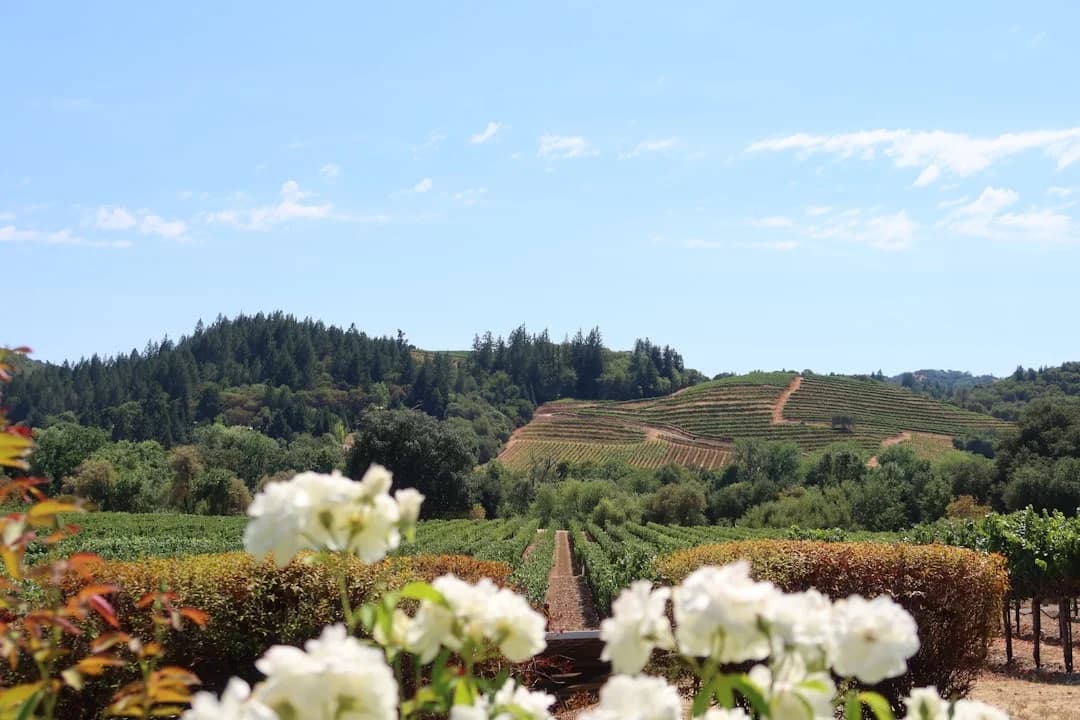
The Napa-Sonoma agro-tourism renaissance 2026 is unfolding as a data-driven pivot in wine country travel. In 2026, growers, vintners, and hospitality operators are formalizing regenerative farming, expanding hands-on farm experiences, and merging tech-enabled visitor services with a renewed emphasis on land stewardship. The result is a more resilient, diverse visitor economy that seeks to balance heritage vineyard tourism with on-farm storytelling, sustainable farming, and authentic rural experiences. For readers of the SF Bay Area Times, this signals a meaningful shift in how travelers interact with agriculture in one of the region’s most photographed landscapes. The latest movements—from regenerative farming pilots to AI-powered trip planning—are not just a mood shift; they’re translating into measurable activity, new partnerships, and revised expectations for what “wine country” means in the 2020s and beyond. This is the Napa-Sonoma agro-tourism renaissance 2026 in plain terms: a recalibration of value from mere wine tastings to soil-to-glass experiences that center farming as a living, teachable, and investable story. (josephphelps.com)
As Napa and Sonoma seek to sustain growth amid shifting consumer preferences and economic headwinds, the region is leaning into regenerative agriculture, digital accessibility, and broader community stewardship. Industry surveys and local government data show that tourism remains a major engine for taxes, jobs, and local spending, even as the mix of experiences evolves. In Napa Valley, for example, the latest in-market research highlights that visitors spent roughly $2.5 billion in 2023, with overnight guests accounting for a large share of tax revenue and job creation; these numbers underscore why a shift in visitor experience—toward farming practices, biodiversity, and on-site education—could materially influence tourism performance in 2026 and beyond. (visitnapavalley.com)
Section 1: What Happened
Regenerative farming moves from a concept to a practical program
Napa Valley and the surrounding wine country are turning regenerative agriculture from an ideal into a set of on-ramps that visitors can actually see, touch, and taste. A high-profile example is the Borgo Project at Joseph Phelps Vineyards. Unveiled in 2024, the Borgo Project is described as a sweeping redesign of vineyard systems grounded in agroecology, soil health research, hydrological mapping, and biodiversity corridors. Leaders at Joseph Phelps frame Borgo as a “new paradigm and a new basis for agriculture in Napa,” signaling a strategic move to integrate farming innovations with hospitality experiences. The Borgo initiative explicitly links agricultural reform to long-term quality and resilience, and it explicitly contemplates a nine-year horizon before wine from the project reaches the market. This is more than an experiment; it’s a re-imagining of how a premium wine estate communicates value through farming practices as well as bottles. Short quotes from the Borgo discourse emphasize the commitment to regenerative concepts over quick branding, highlighting the practical shift from display to demonstration. (josephphelps.com)

Photo by Richard Nyoni on Unsplash
A parallel program with broad reach is the Regenerative Viticulture Foundation’s One Block Challenge, launched in Napa Valley in February 2026 with Napa Green. The goal is explicit and quantifiable: to advance regenerative farming on at least one block per participating vineyard, with an audacious target of 10% of the world’s vineyards practicing regenerative farming by 2035. The February 12 field day at Celani Family Vineyards marked the program’s official start in Napa Valley, drawing growers, winemakers, and consultants to learn soil sampling, data collection, and regenerative practices on a single block before expanding outward. Napa Green notes strong industry enthusiasm, and the program is designed to build a community that learns from early adopters as the broader industry scales these practices. This is a defining moment for how agritourism intersects with sustainability goals and investor interest in Napa Valley’s farming future. (napagreen.org)
On the public-facing side, winery operators and estates are increasingly packaging farm-to-table experiences as core offerings. At Joseph Phelps, Borgo’s narrative is part of a broader trend where customers are drawn to the terroir, soil health, and the farm’s ecological design as a form of “premium experience.” The Borgo blog and related materials emphasize agroecology, soil biology, and hands-on farming experiences for visitors, signaling a deliberate move to embed agrarian education into the visitor journey. While not every estate will publish the same degree of detail, the overarching message is clear: visitors increasingly seek authenticity rooted in farming practices, not only in the bottle. (josephphelps.com)
In parallel, BottleRock Napa Valley—an anchor event in the wine country calendar—has continued to demonstrate the economic importance of major cultural events to the region’s tourism mix. Independent impact studies released in 2025 quantified BottleRock’s economic footprint at roughly $212.6 million in total regional activity and $61.7 million in local impact. The studies also highlighted strong job creation tied to attendee spending and festival operations, reinforcing the idea that large, well-managed events can coexist with slower, experience-rich agritourism models in a diversified travel portfolio. This juxtaposition—with scalable events and intimate farm experiences—forms a more resilient tourism architecture for 2026 and beyond. (news.pollstar.com)
A broader regional context strengthens the story
The Sonoma County tourism ecosystem has been signaling similar shifts, with 2026 materials emphasizing accessibility, signature experiences, and a renewed emphasis on sustainable travel. Sonoma County Tourism released its 2026 visitor-guide content and a slate of accessibility initiatives in early 2026, underscoring an intent to broaden who visits and how they experience the region. In the spring 2026 “What’s New in Sonoma County” digest, local producers, culinary offerings, and new experiences are highlighted as part of a broader strategy to attract a diverse audience while maintaining the region’s environmental commitments. These developments mirror the Napa Valley trajectory, reinforcing the concept of a wider Napa-Sonoma agro-tourism renaissance that leverages both luxury and agrarian authenticity to sustain growth. (sonomacounty.com)
Timeline and key data points
- February 12, 2026: Celani Family Vineyards hosts the first Napa field day for the One Block Challenge, marking the program’s public rollout in Napa Valley. (napagreen.org)
- February 18, 2026: The One Block Challenge is formally launched in Napa Valley as a coordinated effort by Regenerative Viticulture Foundation and Napa Green, with the mission to scale regenerative farming across vineyard blocks and pursue a broader target by 2035. (napagreen.org)
- 2024: Borgo Project is unveiled at Joseph Phelps Vineyards, signaling a nine-year regenerative farming horizon and a model for future farming that ties into hospitality experiences. (josephphelps.com)
- 2025: BottleRock Napa Valley studies report substantial economic impact, reinforcing the role of large-scale events in supporting tourism and local employment. (news.pollstar.com)
- March 24, 2026: Sonoma County Tourism releases its most ambitious 2026 visitor guide, part of a broader set of initiatives to deepen travel experiences in the region. (sonomacounty.com)
In short, the 2026 moment combines a formal regenerative farming push with an evolving visitor experience strategy that blends on-farm education, sustainability storytelling, and high-profile cultural events. The result is a more explicit link between soil health, climate action, and traveler demand—an alignment that is at the core of the Napa-Sonoma agro-tourism renaissance 2026. (josephphelps.com)
Section 2: Why It Matters
Economic significance for wine country communities

Photo by Dan Meyers on Unsplash
Tourism has long been a central economic artery for Napa and Sonoma, and the current pivot toward regenerative farming and experiential agritourism carries substantial implications for local economies. Visit Napa Valley’s 2023 Visitor Profile and Economic Impact study shows that Napa Valley welcomed about 3.7 million visitors in 2023, generating $2.5 billion in direct visitor spending and supporting a broad set of tax revenues for local services. The data indicate a travel economy robust enough to fund local services and investments, even as the visitor mix shifts toward more on-farm experiences, sustainability education, and boutique hospitality offerings. This context matters because agritourism initiatives rely on continued visitor interest, airline and train connectivity, and a favorable operating environment for hospitality and farming businesses. (visitnapavalley.com)
The Sonoma County context—where 2024 data show sustained growth in overnight and day trips—also underpins a broader market signal: travelers are continuing to seek destination experiences even as the industry recalibrates. The 2024 data show 4.7 million overnight trips (up 2.6%) and 5.8 million day trips (up 3.2%), which supports a community-wide argument that visitors are willing to diversify their itineraries to include farm visits, sustainability tours, and hands-on farming activities alongside wine tastings. The synergy between farm-based experiences and traditional wine tourism is central to the renaissance narrative in 2026. (sonomasun.com)
BottleRock Napa Valley’s economic footprint further underscores the region’s capacity to monetize culture and hospitality as a critical element of tourism. The 2025 studies quantify a $212.6 million total economic activity footprint for BottleRock, with $61.7 million localized within the Napa region. The study highlights a multiplier effect where festival-related activity feeds local businesses, job creation, and municipal revenues. As agritourism and farm-based experiences expand, the region gains a diversified portfolio of high- and low-intensity tourism that is better positioned to absorb shocks and seasonal variations. (news.pollstar.com)
Industry perspectives and risks
While the regenerative agriculture movement generates optimism, it also raises questions and challenges. The Guardian’s March 2026 coverage of the Napa wine industry highlights a “shocking downturn” context—an environment where some producers are tightening operations, adjusting price models, and rethinking global demand strategies. The piece emphasizes that adaptation is essential, and those who invest in new experiences, storytelling, and consumer education stand a better chance of maintaining relevance. It’s a reminder that the agro-tourism renaissance 2026 sits within a broader set of market realities, including shifting consumer tastes, international travel patterns, and the need for credible sustainability storytelling that doesn’t veer into greenwashing. Such cautions are important as stakeholders weigh investments in regenerative farming and visitor programs. (theguardian.com)
Technology and experience trends driving the transition
A notable technology thread in 2025–2026 is the growing emphasis on AI-assisted travel planning and digital experiences that connect visitors to the land without replacing the hands-on, farm-centric experience. Sonoma County Tourism’s 2025 release about “AI-powered traveler planning” foreshadowed a shift toward technology-assisted experiences and personalized itineraries, a trend that aligns with broader consumer expectations for convenience while preserving authenticity. The 2026 press center updates from SCT emphasize accessible travel and signature experiences, with a nod toward inclusive, technology-enabled planning. This suggests that the agro-tourism renaissance 2026 is not about digital replacement of farm visits; rather, it uses technology to broaden appeal, personalize the guest journey, and lower friction for a more diverse audience. (sonomacounty.com)
On the sustainability front, the regenerative agriculture push—Already visible in Napa Green’s One Block Challenge—emphasizes data collection, soil testing, and demonstrable improvements in soil health and biodiversity. This is not only good farming; it’s a core part of the visitor proposition: guests can tour a vineyard block, observe a cover crop, or witness soil health metrics in action. The Borgo Project similarly uses science-based soil health work and hydrological mapping to inform farm design, with the aim of creating sustainable experiences that are inseparable from the wines produced. These initiatives tie visitor value directly to measurable land-management outcomes, which strengthens the credibility of the agro-tourism narrative. (napagreen.org)
Quote-worthy context from industry voices reinforces the transition. The Decanter piece notes a “reset” in Napa’s luxury narrative toward authenticity and accessibility, with winemakers emphasizing farming, soil health, and regenerative practices as central to long-term prestige. The article also notes a willingness among producers to push beyond conventional certifications to focus on genuine soil health and stewardship, while acknowledging the costs and complexity of scaling regenerative practices. This market sentiment supports the broader narrative of the Napa-Sonoma agro-tourism renaissance 2026 as a multi-faceted strategy spanning farming, storytelling, and guest experiences, rather than a single program. (decanter.com)
Section 3: What’s Next
Near-term milestones and indicators to watch

The coming months will offer a concrete view of how the renaissance unfolds in practice. The One Block Challenge’s stated goal of achieving regenerative farming on blocks across vineyards by 2035—paired with the Napa Green framework for data collection and certification acceleration—will produce tangible milestones: the number of blocks enrolled, soil-health metrics tracked, biodiversity improvements, and the agricultural costs associated with transitioning to regenerative farming. Local press and industry reports will track field days, data-sharing events, and vineyard block conversions as early indicators of scale. The February 12, 2026 Celani field day and subsequent Napa Valley gatherings provide a blueprint for how these pilot efforts are likely to move from pilot to widespread adoption. (napagreen.org)
Sonoma County Tourism’s 2026 press releases emphasize continued investment in accessibility, signature experiences, and AI-enabled trip planning. Expect announcements about expanded accessible travel partnerships, new signature agritourism experiences, and more curated itineraries designed to highlight sustainable farming practices and farm-to-table activities. Those initiatives will be paired with ongoing promotions, seasonal events, and educational programming to maintain a diverse visitor base and to sustain year-round tourism in a post-pandemic context. (sonomacounty.com)
Long-range implications and potential uncertainties
The Napa-Sonoma agro-tourism renaissance 2026 is anchored by the idea that regenerative farming is not just a better agricultural practice—it is a material investor narrative, a marketing differentiator, and a guest experience driver. The Borgo narrative shows how farming itself becomes a hospitality centerpiece, while One Block Challenge demonstrates a scalable model for industry-wide adoption. If successful, these programs could yield more stable visitor spending, greater resilience against market fluctuations, and stronger alignment between wine quality and farmer stewardship. The challenge remains ensuring that regenerative investments translate into verifiable guest value and credible, transparent communications about soil health and biodiversity. Some critics warn against greenwashing or misrepresenting regenerative outcomes, underscoring the need for robust metrics, third-party verification, and consistent storytelling. Napa Green’s ongoing work and the Napa Valley Grapegrowers’ emphasis on soil health are part of the answer, but third-party validation and clear public reporting will be important in the months ahead. (napagreen.org)
What to watch next:
- The rate of block-level conversions under the One Block Challenge and the suppliers of regenerative inputs, seed mixes, and soil-health testing services
- Visitor demand for farm-based experiences tied to regenerative agriculture and soil storytelling, and how they blend with wine tastings and culinary offerings
- The macro-tourism backdrop, including international travel trends and currency dynamics, which influence Napa-Sonoma visitor volumes amid ongoing global uncertainty
- The evolution of technology-enabled guest experiences, including AI-driven trip planning and digital farm tours, and how these tools balance convenience with authentic, hands-on farm engagement
- The broader regulatory and certification ecosystem, including organic and regenerative certifications, and how regional farms navigate costs and labor requirements while maintaining quality and authenticity
Closing
As the SF Bay Area Times covers it, the Napa-Sonoma agro-tourism renaissance 2026 represents a deliberate strategy to align the region’s agricultural roots with a modern, tech-enabled, sustainability-forward visitor economy. The data-driven shifts—from regenerative farming pilots and field days to AI-assisted travel planning and accessible travel initiatives—signal a more resilient and inclusive travel proposition for wine country. Visitors will increasingly encounter farm blocks, soil-health demonstrations, regenerative field days, and on-site storytelling that connects the wine in the glass to the soil beneath the vines. In this sense, the renaissance is less about replacing tradition and more about enriching it—bringing farming’s living laboratory into the heart of guest experiences while preserving the land for future generations.
Readers who want to stay ahead can monitor the ongoing One Block Challenge field days, Borgo Project milestones, and Sonoma County Tourism’s 2026 visitor-guide updates as practical barometers of progress. As 2026 unfolds, the region’s ability to translate regenerative agriculture into compelling guest experiences will be the decisive factor in whether the Napa-Sonoma agro-tourism renaissance 2026 becomes a lasting, data-supported transformation or a momentary pivot in a changing landscape. The path ahead is data-driven, community-focused, and grounded in the land—exactly the kind of sustainability-forward travel narrative that travelers seek in wine country today. (napagreen.org)