
San Francisco Muni Ridership Rebound 2026: Data Update
San Francisco Muni ridership is set to rebound by 2026, analyzed with the latest data and budgetary context for comprehensive insights.
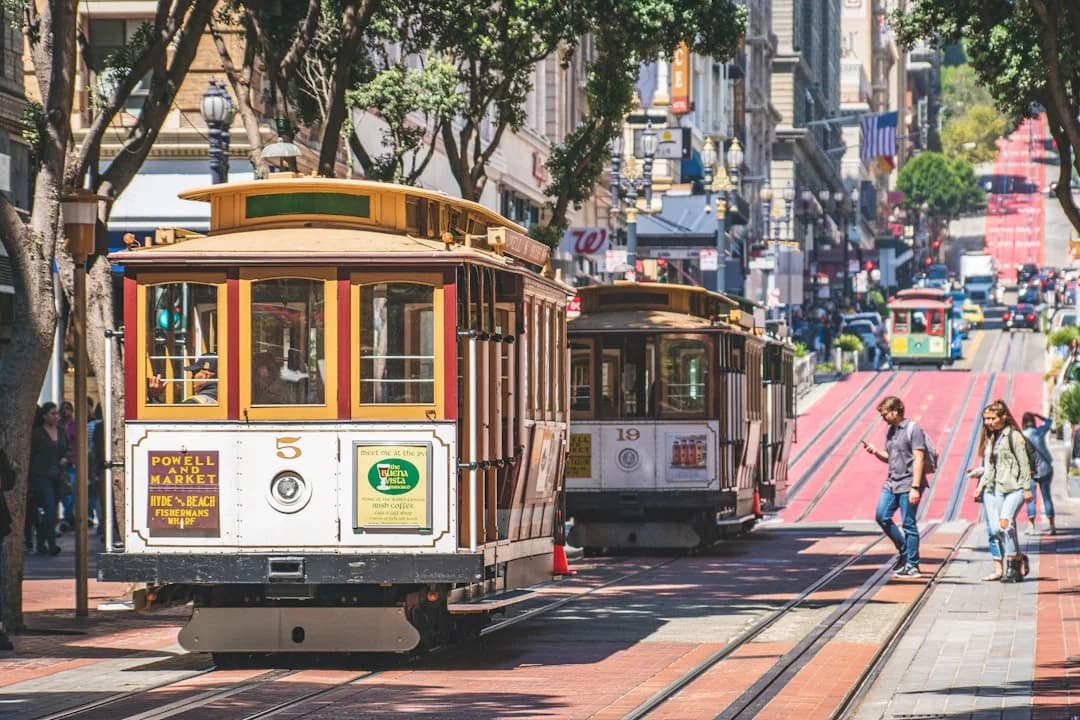
The openings in San Francisco’s public transit story are echoing a transformation that analysts have watched unfold over the past two years. As of March 2026, San Francisco Muni ridership has reached a new high for the post-pandemic era, marking a notable milestone in the city’s recovery. The headline is clear: San Francisco Muni ridership rebound 2026 is real, and early indicators point to a continued, albeit uneven, rebound across weekdays and weekends alike. In practical terms, that means more riders are returning to buses and trains, more activity around downtown corridors, and new pressures on service planning and city budget discussions as operators balance capacity with constrained revenues. The latest data also show that the rebound is strongest on weekends, a pattern that aligns with broader shifts in work and leisure travel as the Bay Area transitions through hybrid work arrangements. This push-pull of growth and budget risk frames how riders, operators, and policymakers should interpret the current moment. San Francisco Muni ridership rebound 2026 is shaping decisions about service frequency, fare policy, and fiscal planning for the coming year.
As the city tracks the trajectory, transit officials and local reporters are grounding forecasts in concrete numbers. In March 2026, Muni logged over 14.9 million rider trips for the month, roughly 85% of March 2019-level ridership and up 8% from March 2025, according to local coverage and SFMTA data shared with partners. That figure represents the highest March ridership since the pandemic began and signals a clearer path toward pre‑COVID baselines for the agency’s bus and light-rail networks. The March 2026 milestone sits within a broader arc of recovery that has gained momentum as the city adapts its strategy to hybrid work patterns and growing event-driven demand. San Francisco Muni ridership rebound 2026 is visible not only in March numbers but in a sustained, multi-month upward trend that has captured the attention of analysts tracking Bay Area transit. (nbcbayarea.com)
Section 1 — What Happened
March 2026 Milestone: Ridership Reaches Post-Pandemic High
The clearest signal of the moment is March 2026 ridership data. The SFMTA reporting cited by NBC Bay Area shows that Muni recorded 14.9 million rider trips in March 2026, representing 85% of March 2019 levels and marking the system’s strongest March performance since the pandemic disrupted operations. The agency also noted that this March figure marks a year-over-year increase of about 8% compared with March 2025. This is a pivotal datapoint in the ongoing San Francisco Muni ridership rebound 2026 narrative, underscoring that the post-pandemic revival is sustained beyond a single month and is beginning to resemble a more normal mix of weekday and weekend demand. The March 2026 data come amid broader city and regional discourse about service levels, staffing, and capital needs as the transit system recovers. (nbcbayarea.com)
2024–2025 Recovery: A Clear Upward Trajectory
Looking further back, 2024 was a landmark year in the city’s ridership recovery. Press coverage and official data show that Muni reached roughly 158 million passenger trips in 2024, which equated to about 75% of pre-pandemic ridership levels. This milestone was highlighted as a marquee indicator of Muni’s retooling efforts—toward more neighborhood-focused routing and improved reliability—that began 2023 into 2024 and accelerated through 2025. The 158 million trips figure, coupled with March 2025 reporting that 75% of pre-pandemic ridership had been recovered by the spring, frames the longer arc of recovery and helps explain why 2026 is now being viewed as a potential inflection point in San Francisco Muni ridership rebound 2026. (sfchronicle.com)
Budgets and Operational Adjustments: The Financial Side of the Rebound
Ridership gains come into sharper relief when paired with the city’s fiscal reality. In April 2026, San Francisco leaders approved a two-year Muni operating budget package totaling more than $3.1 billion for fiscal years 2026–27 and 2027–28, with planed costs offset by anticipated revenues from potential sales tax measures. The funding package is framed as essential to maintaining core service levels during a period when ridership has shown signs of recovery but the agency faces structural deficits and competing priorities. Journalists and analysts have underscored that the rebound in rider demand needs to be matched by prudent budgeting, or the system risks a cycle of service adjustments that could dampen future growth. The narrative around San Francisco Muni ridership rebound 2026 thus sits at the intersection of stronger rider demand and ongoing fiscal headwinds. (nbcbayarea.com)
Weekend vs Weekday Dynamics: A Pattern That Shifts Signals
A consistent thread in the recovery story is the differential pace of rebound between weekends and weekdays. Across Bay Area transit, weekend ridership has typically rebounded faster than weekday commuting, and Muni is no exception. A Chronicle analysis published in August 2025 highlighted that Muni’s weekend ridership had already climbed to about 86% of its pre-pandemic weekend levels, while weekday ridership lagged at roughly 70% recovery. That weekend-strength narrative helps explain why March 2026 metrics look stronger than earlier in the year and hints at how service models and marketing strategies may prioritize weekend demand moving forward. The broader regional context shows similar trends for other operators, but Muni’s relative proximity to pre-pandemic levels on weekends is a notable data point for the San Francisco market. (sfchronicle.com)
Section 2 — Why It Matters
Economic and Budget Implications for City Hall
The San Francisco Muni ridership rebound 2026 story isn’t just about the transit experience; it has deep budgetary and economic implications. Higher ridership provides a stronger basis for fare revenue and potential tax measures being proposed to stabilize agency finances. Yet the city’s budget outlook remains stressed by long-term deficits and the need to fund maintenance, safety improvements, and capacity expansions without compromising neighborhoods reliant on transit. As noted by Axios reports in April 2026, the two-year operating budget for SFMTA aims to bridge gaps while lawmakers consider two tax measures in November to provide new revenue streams. The tension between a recovering ridership base and ongoing fiscal pressures underscores why the Muni ridership rebound 2026 signal is so consequential: it can alter the affordability and sustainability calculus for service levels in the near term. (sf.gov)
Equity, Accessibility, and City Livability
Ridership growth has equity and livability implications as well. The return-to-office dynamic, event-driven spikes, and weekend demand all interact with how Muni serves diverse neighborhoods and visitors. The city’s 2024–2025 data show that while total ridership rose, the pattern of demand remained uneven across routes and times of day, pointing to the importance of targeted service improvements rather than broad, uniform changes. SFMTA’s data dashboards, including system ridership by route and daily arrivals, emphasize that the agency must balance reliability, frequency, and equity as ridership climbs. In practice, the San Francisco Muni ridership rebound 2026 narrative translates into a call for data-informed adjustments—such as more evenly spaced service, faster dwell times, and improved reliability on high-demand corridors—so that the rebound translates into meaningful, everyday benefits for riders across the city. This balance between growth and equity remains central to the city’s transit strategy as it navigates budget constraints and competing priorities. (sfmta.com)
Regional Context: How Muni Stacks Up
The Bay Area market context adds depth to the San Francisco Muni ridership rebound 2026 story. In the broader region, Muni has consistently posted the closest approach to pre-pandemic levels among major Bay Area systems, with other agencies showing more modest recoveries. As of mid-2025 and into 2026, Muni’s recovery has stood in contrast to BART and Caltrain, which faced different patterns of demand and capacity constraints. This regional comparison matters because it informs policy discussions about regional coordination, funding proposals, and the overall health of the Bay Area’s public transit ecosystem. While Muni’s numbers are moving toward normalization, the regional picture remains a cautionary tale about maintaining service and avoiding a relapse into underutilization if funding and staffing pressures persist. (sfchronicle.com)
Section 3 — What’s Next
Near-Term Outlook: What to Watch in 2026–27
Looking ahead, the most important near-term question for the San Francisco Muni ridership rebound 2026 story is whether the positive march continues through the 2026–27 fiscal year and into 2028. Data from March 2026 already show a meaningful trajectory toward replacing some of the post-pandemic losses, but the path to stable, pre-pandemic levels will depend on several variables: the pace of return-to-work patterns, the success of neighborhood-focused service initiatives, event-driven ridership, and the fiscal health of the agency. The SFMTA’s dashboards and performance metrics will be critical in tracking these developments as the year progresses. Analysts will be watching for monthly data on ridership by route, fare revenue recovery, and the effectiveness of service changes designed to attract riders back to Muni. The March 2026 numbers—alongside ongoing annual ridership tallies—provide a baseline for assessing whether the San Francisco Muni ridership rebound 2026 continues on a steady incline or faces headwinds from budget cuts or operational constraints. (nbcbayarea.com)
Next Steps for Policy and Planning
With ridership still showing signs of recovery but fiscal pressures remaining, policy makers are likely to emphasize a carefully calibrated mix of investments and efficiency measures. The recent two-year operating budget gives the agency room to maintain or increment service on high-demand routes while exploring cost-saving measures and revenue enhancements. As reported by multiple outlets, including Axios and Bay Area outlets covering the city’s budget process, the decision to pursue new revenue streams and the potential passage of tax measures in November are pivotal for sustaining Muni’s post-pandemic rebound. For readers tracking the San Francisco Muni ridership rebound 2026, the next major data releases—monthly ridership dashboards, fare revenue figures, and performance metrics by route—will be critical in validating whether the rebound continues to strengthen or stalls due to structural budget constraints. (axios.com)
What to Watch in the Months Ahead
- Monthly ridership by route and mode (bus vs. rail) on the SFMTA dashboards, which will illuminate where the rebound is strongest and where gaps remain. The Muni Data page highlights these dashboards as the primary source for current performance metrics, including system ridership recovery and per-route data. Keeping an eye on these dashboards will help readers understand whether the San Francisco Muni ridership rebound 2026 is accelerating or leveling off. (sfmta.com)
- Weekend vs weekday dynamics as hybrid work patterns continue to evolve, with weekend activity potentially continuing to outpace weekday ridership gains. The pattern identified in 2025—where weekend ridership recovered faster than weekday commuting—offers a concrete lens for interpreting future data points as events, festivals, and downtown activity influence travel demand. (sfchronicle.com)
- Budget updates and revenue proposals tied to November measures, and how those decisions affect service offerings and investment in transit infrastructure. The 2026–27 and 2027–28 budget figures, along with anticipated sales tax measures, will determine whether the system can sustain the current level of service during the ongoing rebound. (nbcbayarea.com)
Closing
The story of San Francisco Muni ridership rebound 2026 is unfolding as a data-driven narrative about how a city rekindles its urban mobility backbone after the disruptions of a generation. The March 2026 milestone of 14.9 million rider trips, at 85% of 2019 levels, signals momentum that could persist into 2027 if service efficiency, fiscal stability, and rider confidence converge. The upward trajectory from 2024’s 158 million trips—still below the pre-pandemic peak but markedly closer than previous years—suggests that the trajectory toward normalization is real, even as the system confronts the structural budget challenges described by city officials and independent analysts. As policymakers balance budgets and riders adjust to new patterns of work and travel, the San Francisco Muni ridership rebound 2026 will remain a focal point for assessing how city leadership translates data into durable, accessible transit for all residents and visitors.
In the weeks ahead, readers can expect continued updates from SFMTA dashboards, city budget briefings, and local coverage that ties the numbers to everyday routes, neighborhoods, and timetables. For riders and observers alike, the big question remains whether the current momentum can be sustained through the year and into the next, delivering the reliable, affordable transit service that San Francisco communities depend on as they chart a course toward a more connected, sustainable future. The latest data show the headline is more than a statistic—San Francisco Muni ridership rebound 2026 reflects real demand and real stakes for the city’s transportation future.