SFUSD teachers strike February 2026: News Update

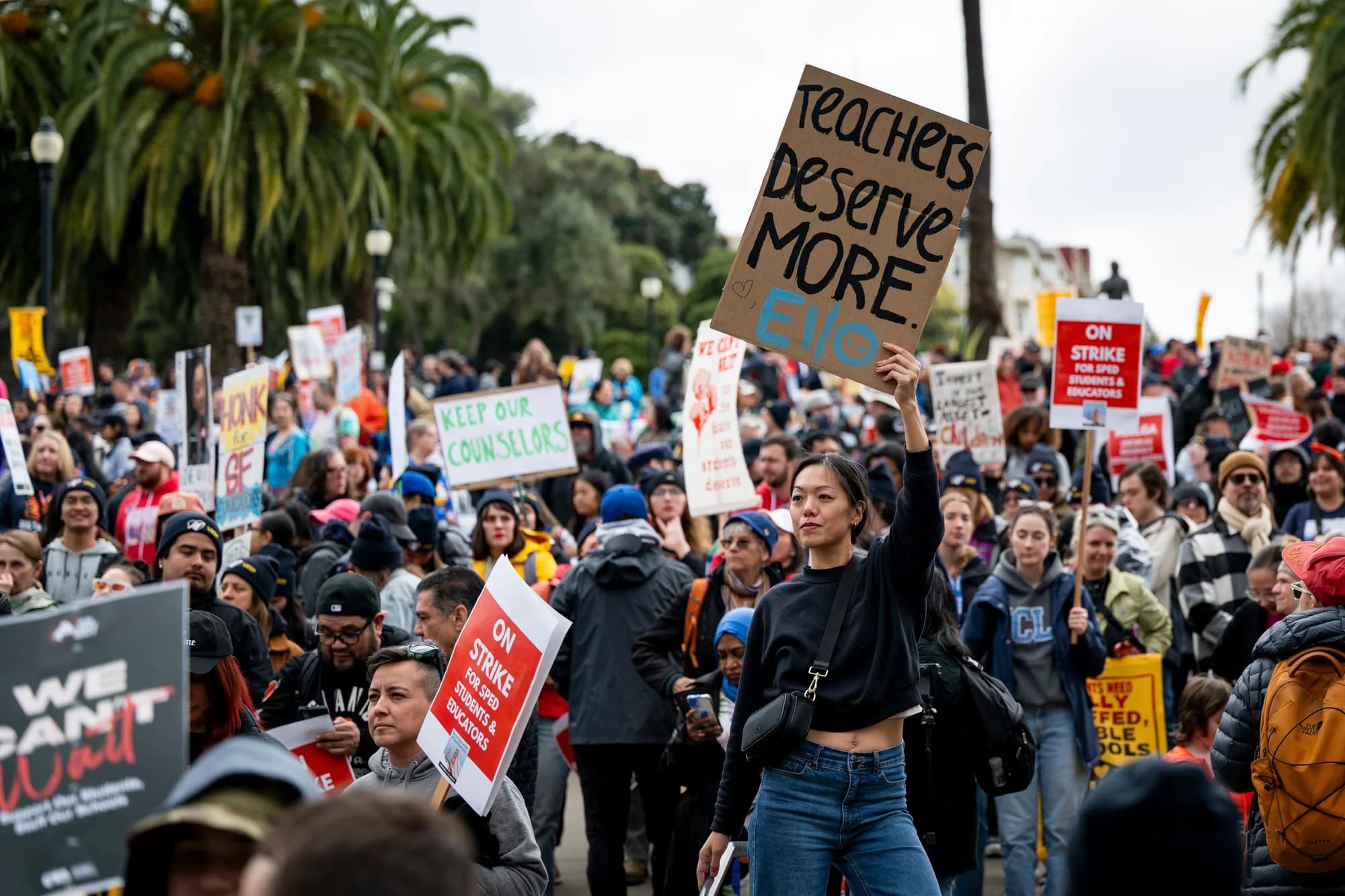
The SFUSD teachers strike February 2026 has reshaped the Bay Area's educational landscape, amplifying questions about funding, teachers’ benefits, and how public schools weather disruptions in a financially stressed system. The walkout began in early February with thousands of educators saying they would not report to classrooms until demands for higher wages, improved health care for families, and stronger safeguards for English learners and immigrant students were addressed. The strike action forced the San Francisco Unified School District (SFUSD) to shutter all 120 schools for several days and to pivot to independent study options for tens of thousands of District students. The episode marks the city’s first major teachers’ strike in nearly half a century, underscoring a broader set of challenges facing urban school districts across California as they grapple with fiscal constraints, inflation, and evolving expectations around classroom supports and technology governance. The coverage that follows aims to present the latest, most accurate information in a data-driven, neutral tone for readers seeking clarity on how this event unfolded, why it matters, and what could come next for SFUSD and similar districts. SFUSD teachers strike February 2026 is at the center of this development, and the public deserves a precise, dated account of key milestones and decisions. (apnews.com)
By Friday, February 13, 2026, SFUSD and United Educators of San Francisco (UESF) announced a tentative agreement designed to bring teachers back to classrooms while addressing the district’s fiscal realities. The deal arrived after days of negotiations, a formal impasse, and a fact-finding process, with SFUSD stating that staff would return on a transition day that afternoon and students would return later in the week after the Presidents Day and Lunar New Year holidays. The district framed the agreement as a compromise rooted in fiscal recovery, while promising to fund health care for families and to invest in special education and other supports. Though boards and unions still needed to ratify the terms, the announcement marked a turning point that potentially ends the city’s historic walkout and returns 49,000 students to their campuses. The details included targeted wage adjustments, healthcare provisions, and measures to bolster special education services, reflecting a data-informed approach to balancing educator needs with SFUSD’s long-term budget constraints. (apnews.com)
SFUSD officials stressed that the resolution to the strike rests on two pillars: (1) a formal ratification by UESF members and (2) a subsequent vote by the San Francisco Board of Education. They also highlighted a concrete reopening plan, with staff returning on Feb. 13 as a transition day and students resuming full in-person learning on Feb. 18, following holidays on Presidents Day (Feb. 16) and Lunar New Year (Feb. 17). The district’s messaging emphasizes transparency and continuity of learning, including access to meals, mental health supports, and independent study options during the disruption. The sequence of dates—Feb. 13 transition day for staff, Feb. 18 full student reopen—has become a focal point for families planning logistics around child care, transportation, and after-school arrangements. (sfusd.edu)
Section What Happened
Strike Timeline and Participants
The week-long disruption began on Monday, February 9, 2026, when roughly 6,000 teachers walked off the job in a district-wide action organized by United Educators of San Francisco (UESF). The strike forced SFUSD to close all 120 campuses and offered students independent-study options as a substitute for in-class instruction. The disruption affected approximately 50,000 students across the district, with families scrambling to arrange supervision, remote learning, and contingency plans for childcare and meals. These numbers—about 6,000 teachers involved and roughly 50,000 students impacted—are repeatedly cited by major outlets reporting on the strike, underscoring the scale of the event and the urgency borne by SFUSD administrators to preserve student well-being during a period of uncertainty. The strike’s outset and scope are documented in contemporary coverage and official district updates. (apnews.com)
Bargaining Milestones and Tentative Agreement
Negotiations between SFUSD and UESF had been ongoing since March 2025, with executives describing the process as lengthy and punctuated by impasse and fact-finding. On February 13, 2026, SFUSD announced a tentative two-year agreement with UESF, signed at 5:30 a.m. that morning. The settlement outlines a compensation package and benefits framework designed to be financially sustainable for a district in fiscal recovery while recognizing educators’ contributions. Key elements include a compensation package for certificated employees that features 2% raises in the current year and the next year, plus additional paid work days; classified employees receive an 8.5% package over two years (4% in Year 1 and 4.5% in Year 2), with further adjustments for specialized paraeducators; and most notably, SFUSD will fully fund family health benefits at Kaiser rates for UESF employees starting January 1, 2027. The district also established a pathway to enhancing supports for special education and to convene an educator working group with budget authority to target improvements in special education programming. Importantly, the tentative agreement notes that the deal will be subject to ratification by UESF members and a Board of Education vote before it becomes binding. In addition, the agreement includes provisions connected to the use of artificial intelligence and protections for immigrant students, reflecting a broader policy alignment beyond straightforward wage negotiations. The details are laid out in SFUSD’s official press release, including explicit figures and timelines. (sfusd.edu)
The party announcements noted that a critical component of any agreement would involve health-care funding: SFUSD committed to fully funding family health benefits at Kaiser rates for eligible employees beginning January 1, 2027, with meaningful relief for families currently paying high healthcare costs. District officials framed this as a targeted win for educators’ families and a step toward stabilizing the district’s ability to recruit and retain talent in a highly competitive Southeast and Bay Area market. The plan to cover health benefits is anchored in a broader fiscal framework, described in district communications as part of a three-year stability package designed to balance competitive compensation with the district’s ongoing need to reduce structural deficits and manage reserves and liabilities. The accompanying documents also delineate steps for an educator working group intended to improve special education programming, signaling a recognition that staffing and workload in that area remain central to teacher retention and student outcomes. (sfusd.edu)
Operational Adjustments and Student Support
During the walkout, SFUSD’s leadership established an Emergency Operation Center (EOC) to coordinate learning continuity, meal access, childcare, and other essential services for families. In parallel, a Joint Information Center (JIC) was launched to provide timely information to families, staff, and the public, aiming to minimize confusion and support decision-making for households navigating the disruption. Independent study options were offered to ensure that some students could continue learning from home, with SFUSD working with community partners and city agencies to maintain essential services despite school closures. The February 13 transition day served as a bridge between the strike and return-to-classroom operations, with staff returning to their regular sites and students awaiting the formal reopening date after holiday observances. (sfusd.edu)
Why It Matters
Fiscal Realities for SFUSD and Bay Area Markets
SFUSD’s decision to pursue a “stability package” and to offer healthcare and wage adjustments against a backdrop of a reported deficit reflects a broader fiscal reality for a district managing post-recession recovery, inflation, and shifting state funding, including a reliance on local funds to finance health benefits. The emergency-resolution framework approved by the SFUSD Board on February 3, 2026, explicitly framed the district’s priorities within a three-year plan that includes wage increases and health-care commitments while acknowledging structural budget constraints. The board’s resolution highlighted the district’s intention to avoid classroom disruption while safeguarding student learning and welfare; the document also notes the district’s use of local funding mechanisms to support healthcare and staffing initiatives, as well as an emphasis on sanctuary protections and housing supports as part of the district’s broader policy landscape. This context matters for readers analyzing the feasibility and sustainability of the tentative agreement, as it situates the deal within SFUSD’s ongoing fiscal recovery efforts. (sfusd.edu)
Across California, district finances have become a central issue for both negotiations and public policy, as districts contend with structural funding gaps and the rising costs of health care and staffing. Local press coverage described SFUSD as navigating a period of fiscal stress, with the district’s reserve levels and restricted funds shaping what is possible in wage offers and ongoing healthcare commitments. While some reporting highlighted the district’s ability to assemble funds for health benefits from targeted tax sources and reserves, others pointed to potential tradeoffs, such as the need for state-level policy action or new revenue sources to ensure long-term solvency. The balance between employee compensation, healthcare commitments, and fiscal solvency remains a critical tension for SFUSD and is likely to influence policy discussions in related districts as well. (sfchronicle.com)
Equity and Protections: Immigrant Students and AI Safeguards
One notable element of the reporting around SFUSD’s negotiations concerns protections for immigrant students and the use of artificial intelligence in the classroom. Reports indicate that, in the context of the tentative agreement, the district and UESF addressed immigrant student protections, including staff training on federal immigrant enforcement and a formal stance against using AI to replace teachers. These dimensions reflect a broader state and national conversation about the role of technology in public education, equity, and safeguarding student privacy and staff roles. The presence of such provisions in the tentative agreement signals a deliberate attempt to reconcile labor demands with digital-era governance and a commitment to inclusive policies that protect vulnerable student populations. News coverage from AP and SFUSD communications emphasize these points as part of the post-strike landscape. (apnews.com)
Community and Market Impacts: Businesses, Families, and Tech Ecosystems
The strike’s impact rippled beyond classrooms into the broader community, affecting parents, caregivers, and local employers who depend on predictable school schedules for workforce planning. With the disruption lasting four days, families faced scheduling challenges, and some Bay Area businesses reported adjustments to operations and staffing. The closure of 120 schools and the reliance on independent study options illustrate a broader theme in urban education: the need for robust contingency planning that can sustain learning during conflicts over compensation and policy reforms. Analysts observing market trends in education technology and services have noted that such disruptions may accelerate demand for remote learning tools, student support platforms, and digital meal and transportation coordination. However, these shifts depend on careful policy design to ensure that technology complements rather than substitutes for strong classroom instruction and student engagement. The strike’s resolution—with a focus on health benefits, targeted pay adjustments, and special education investments—provides a practical case study of how districts can align labor, funding, and technology governance in a high-stakes environment. (apnews.com)
Broader Policy Context and Comparisons
SFUSD’s strike sits within a wider national and state context where teacher unions have leveraged collective bargaining to secure improvements in wages, benefits, and working conditions. Similar episodes in other districts have involved debates over wage levels, healthcare costs, and classroom support, with varying outcomes influenced by local budgets and state policy. The Guardian’s coverage highlighted the broader negotiations landscape, including the role of a neutral fact-finding process and the tension between district budgets and educators’ demands. While SFUSD’s outcome includes targeted improvements in health coverage and special education resources, other districts have confronted different tradeoffs, emphasizing the variability of local fiscal conditions and bargaining dynamics. This comparative lens helps readers gauge how SFUSD’s experience might inform ongoing debates about teacher compensation, healthcare funding, and the use of AI in classrooms across California. (theguardian.com)
What’s Next
Ratification and Implementation Timeline
With a tentative agreement in hand, the path forward hinges on formal ratification by UESF members and a formal vote by the San Francisco Board of Education. The timeline remains contingent on those votes, but SFUSD communications have highlighted imminent steps to ensure a smooth transition back to full operation. As of mid-February 2026, the district indicated a transition day for staff on February 13 and a full student return on February 18, after holiday observances. The ratification reviews and board votes are standard procedural steps, but they carry weight in determining whether the agreement is fully binding and how quickly the district can normalize its operations. Families and educators should monitor SFUSD’s official channels for timely updates on voting schedules and potential adjustments to school calendars or staffing at the start of the spring term. (sfusd.edu)
Reopening and Monitoring: What to Watch
As SFUSD moves from a transitional phase back to normal operations, observers will be watching several indicators: student attendance and engagement levels after the reopening, teacher retention and morale in the post-strike period, healthcare enrollment and costs, and the progress of special education initiatives highlighted in the tentative agreement. District officials have emphasized a commitment to transparent reporting and ongoing collaboration with UESF, suggesting a readiness to adjust policies if budgetary or staffing pressures emerge. The district’s public communications also underscore the importance of monitoring how AI governance and immigrant student protections are implemented in practice, given the growing role of technology in education and the potential for policy shifts to influence recruitment, retention, and classroom practices. In this sense, SFUSD’s February 2026 episode offers a real-time case study in how districts manage the intersection of budgeting, labor, and technology governance in a high-stakes environment. (sfusd.edu)
Closing
The SFUSD negotiations and the February 2026 strike underscore a pivotal moment for San Francisco’s public schools, highlighting how districts balance educator compensation, health benefits, and special education needs within a constrained fiscal reality. The tentative agreement, if ratified, would mark a meaningful step toward restoring classroom operations while signaling a carefully calibrated approach to sustainability, equity, and governance in the wake of disruption. The coming weeks will reveal how the district, the union, and the broader community translate a high-stakes negotiation into durable outcomes for students, families, and the local economy. Readers should stay tuned to SFUSD’s official updates and trustful news coverage from trusted outlets to understand if and when parties reach final agreements and how those agreements translate into classroom realities on the ground. For ongoing context and data-driven analysis, SFUSD’s negotiations information pages and public announcements remain the most reliable sources for the latest developments. (sfusd.edu)
Stay updated with SFUSD’s ongoing announcements and family resources:
- SFUSD News and Press Releases: official updates on tentative agreements, reopen plans, and next steps. (sfusd.edu)
- Negotiations Information and Resources for Families: families can access independent study packets, special education resources, and direct contact information for quick updates. (sfusd.edu)
- Frequently Asked Questions About UESF Negotiations: clarifications on offers, safeguards, and what the latest settlement means for employees and students. (sfusd.edu)
As the situation continues to evolve, readers in the SF Bay Area should anticipate further updates as the Board of Education conducts votes and as the district implements the negotiated terms. The interplay of budget constraints, educator needs, and policy safeguards—particularly around health care and AI governance—will likely shape not only SFUSD’s immediate recovery but also the broader trajectory for urban school districts facing similar fiscal and operational pressures.