Waymo funding February 2026 Bay Area fuels expansion tech

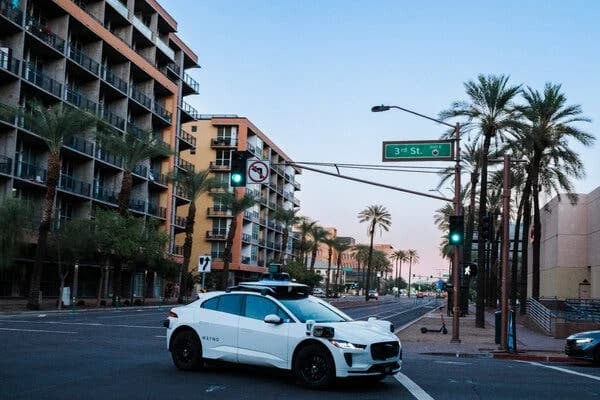
The autonomous mobility landscape shifted on February 2, 2026, when Waymo — the Alphabet-backed robotaxi leader — disclosed a $16 billion funding round that values the company at roughly $126 billion post-money. The round was led by Dragoneer Investment Group, DST Global, and Sequoia Capital, with Alphabet maintaining its position as the majority investor. This milestone, widely reported by major outlets, marks a pivotal moment in the commercialization of driverless mobility and signals a acceleration of Waymo’s growth ambitions across both domestic and international markets. For readers in the San Francisco Bay Area, the announcement carries particular resonance: the Bay Area has long served as Waymo’s home base for research, development, and first-adopter operations, even as the company expands its footprint beyond the West Coast. The funding round was publicly announced February 2, 2026, and is already shaping discussions about capital availability for autonomous tech, regulatory readiness, and the region’s evolving mobility ecosystem. (bloomberg.com)
Beyond the headline figures, the Bay Area’s tech community is parsing how the funding will translate into real-world deployment, job creation, and regulatory engagement. Waymo’s public blog post emphasized plans to accelerate global growth and expand its autonomous mobility platform to new cities and international markets, with London and Tokyo identified among targets. Coverage across outlets notes that the round’s leadership and Alphabet’s continued majority stake position Waymo to scale its driverless fleet more aggressively, while ensuring safety remains a core priority. The Bay Area’s status as a dense hub for AI talent, venture capital, and policy-makers means the implications of this funding are likely to ripple through local startups, accelerators, and academic programs focused on autonomous systems. (techcrunch.com)
The immediate impact is multi-faceted. Investors have signaled strong confidence in autonomous mobility’s path to scale, even as the sector continues to navigate regulatory scrutiny and public safety considerations. Major outlets highlighted that Waymo intends to deploy in more markets — both within the United States and internationally — this year, with a goal of expanding to roughly a dozen additional U.S. cities and entering London and Tokyo. In practical terms, the new funding could hasten fleet expansion, technology refinement, and partnerships with local regulators, while also intensifying competition with other robo-taxi players. Analysts and industry observers point to a potential shift in investor expectations for the broader AI mobility space, including licensing opportunities and software-driven revenue models that complement capital-intensive fleet expansion. (theguardian.com)
Section 1: What Happened
The Funding Round
The Financial Milestone
Waymo announced on February 2, 2026, that it had secured a $16 billion funding round, valuing the company at approximately $126 billion on a post-money basis. This round represents one of the largest private capital raises in autonomous vehicle history and underscores the maturation of driverless mobility as a sizable, capital-intensive business. The financing was led by Dragoneer Investment Group, DST Global, and Sequoia Capital, with Alphabet continuing as the majority investor. Additional participation came from a broad set of strategic and venture backers, reflecting a broad base of support from both traditional tech investors and new entrants seeking exposure to AI-enabled mobility. The announcement was widely corroborated by several independent outlets, including Bloomberg, Forbes, and TechCrunch, reinforcing the accuracy and pareto-weight of the reported figures. (bloomberg.com)
The Investor Lineup
The investor roster for Waymo’s February 2026 round read like a who’s who of global technology and growth capital. In addition to Dragoneer, Sequoia, and DST Global, signs of broad participation from notable firms such as Andreessen Horowitz, Mubadala Capital, Mubadala’s tech affiliates, and other established funds underscored a deep, cross-regional belief in Waymo’s ability to scale safely and profitably. Alphabet’s continued majority stake ensured that Waymo remained closely aligned with its parent’s strategic priorities while gaining access to fresh capital and a global investor ecosystem. Multiple outlets reported a wide-ranging list of participants, signaling strong appetite for the company’s long-term growth trajectory. (forbes.com)
The Corporate Backing
Alphabet’s role in the round was notable for both strategic continuity and risk management. While Waymo will operate with greater autonomy to deploy and scale its fleet, Alphabet’s ongoing support is viewed by analysts as a stability anchor that helps balance the capital-intensive push with corporate governance and cross-business synergies. In the broader market narrative, the move reflects a shift toward allowing high-growth, capital-intensive AI mobility platforms to attract external funding while preserving strategic alignment with parent-company objectives. Analysts cited by Bloomberg and Forbes framed Alphabet’s participation as a signal that the parent company remains committed to Waymo’s long-horizon ambitions, even as profitability remains a longer-term goal. (bloomberg.com)
The Timeline and International Ambitions
Waymo’s public statements and subsequent coverage outline a clear ambition: scale quickly and broadly. The company signaled that the infusion would accelerate fleet expansion to include more cities across the United States and to push its autonomous mobility platform into international markets, notably London and Tokyo. Coverage from TechCrunch and Forbes stressed that Waymo would look to accelerate deployments in New York, London, and Tokyo, with additional markets under consideration as regulatory pathways align with operational capabilities. The timeline points to rapid near-term expansion in 2026, followed by ongoing geographic diversification in the years ahead. (techcrunch.com)
The Announcement in Context
The Market and Regulatory Backdrop

This funding arrives at a moment when autonomous mobility has begun to move from experimental pilots to scalable, city-wide service models in multiple U.S. markets. Industry observers cited in the reporting emphasize that the capital infusion acknowledges the sector’s commercial potential while underlining the importance of safety performance metrics and regulatory compliance as gates to broader deployment. The Bay Area, where Waymo has long maintained a significant R&D footprint and a pilot-style service presence, is closely watching how financing translates into real-world operations and how regulators respond to an expanding driverless fleet. The cross-border expansion to London and Tokyo would also bring new regulatory, safety, and public-acceptance considerations into play for Waymo. (theguardian.com)
What It Means for Waymo’s Competitive Position
Industry coverage stresses that this is a pivotal moment for Waymo relative to rivals in the autonomous mobility space. Analysts point to the scale of the funding, combined with an established deployment track record in U.S. markets, as a differentiator that could accelerate partnerships, licensing discussions with manufacturers, and software monetization opportunities beyond ride-hailing. The broader market narrative also highlights the potential for a more diversified revenue model that includes software licensing, data-driven services, and collaborations with automakers, in addition to fleet expansion. While the headlines focus on capital, the underlying story is about execution at scale, safety outcomes, and the ability to meet consumer demand in urban environments. (forbes.com)
Why It Matters
Accelerating Commercialization of Autonomous Mobility
Waymo’s February 2026 funding round is widely interpreted as a vote of confidence in the commercialization of autonomous mobility. In practical terms, the funds are expected to accelerate fleet growth, expand service in existing markets, and push Waymo’s technology into new cities at a faster cadence. TechCrunch and Forbes framed the round as a move from proof-of-concept to scalable, real-world operation, with London and Tokyo among anticipated international introductions. The transition from early pilots to broad, city-scale service has long been a critical hurdle for the industry, and the funding round is viewed as a meaningful inflection point in investor sentiment around driverless technology. (techcrunch.com)
Local Economic and Talent Impacts in the Bay Area
The Bay Area’s role as a knowledge economy hub for AI and robotics means that Waymo’s expanded capitalization is likely to affect the regional startup ecosystem, talent pipelines, and venture activity. With Waymo’s ongoing presence in the Bay Area and its history of collaboration with universities, research labs, and local policy-makers, the funding could translate into increased recruitment, more accelerator and incubator engagement, and heightened demand for specialized engineering roles in autonomous systems. The coverage in major outlets emphasizes Waymo’s continued emphasis on safety and reliability, which is especially important for a region that closely monitors public policy and public safety implications of automated mobility. While precise local employment numbers are not disclosed in the funding announcements, the signal is consistent with a high-growth tech cluster benefiting from capital infusions into autonomous mobility. (theguardian.com)
Global Expansion and Regulatory Considerations
London and Tokyo are frequently cited as explicit international targets for Waymo’s expansion, with other markets likely to follow as the company demonstrates operational maturity. This international push raises a host of regulatory and safety questions that differ by jurisdiction, including data privacy concerns, vehicle certification, and traffic-safety standards. Analysts note that the success of Waymo’s international strategy will hinge on navigating these regulatory layers while maintaining safety leadership and a strong consumer value proposition. The industry press underscores that regulatory alignment in key markets will be a determinant of the pace and reach of Waymo’s growth in 2026 and beyond. (theguardian.com)
What's Next
Near-Term Milestones to Watch

The immediate weeks and months after the February 2026 funding round are likely to feature a flurry of activity around expansion planning, pilot deployments, and regulatory engagement. Key near-term milestones include finalizing city-by-city expansion roadmaps in the United States, finalizing regulatory approvals for new markets, and publicly communicating pilot-to-service transitions in selected cities. The E2E cadence described by leading outlets points to a multi-city rollout in 2026, with the potential for international city launches such as London and Tokyo to begin within the year, followed by broader introductions in 2027. Investors and partners will closely monitor any updates Waymo provides about fleet sizing, service metrics, and safety improvements as part of its growth narrative. (techcrunch.com)
Long-Term Outlook and Strategic Implications
Longer-range implications of the funding include the framing of Waymo as a scalable AI mobility platform capable of supporting a mix of ride-hailing, delivery, and potential licensing deals with automakers and fleet operators. Analysts cited in the coverage note possibilities for software licensing, data-enabled services, and potential strategic partnerships that could diversify Waymo’s revenue beyond direct rides. The article set suggests that achieving sustained profitability will rely on the ability to manage fleet costs, optimize routing and safety, and maintain regulatory alignment as the company expands across geographies. While the exact path to profitability remains a subject of debate, the funding round is widely interpreted as a credible inflection point for the broader autonomous mobility ecosystem. (bloomberg.com)
Closing
As the Bay Area grapples with a new funding milestone for Waymo, readers should expect continued, data-driven updates on how this capital infusion translates into tangible deployments, safety metrics, and regulatory progress. The SF Bay Area Times will monitor Waymo’s public communications, regulatory filings, and city-by-city rollout plans to provide clear, timely coverage of how Waymo funding February 2026 Bay Area translates into a broader AI mobility strategy that affects riders, local businesses, and investors alike. For ongoing developments, stay tuned to our coverage and Waymo’s official statements as the company moves from announcement to execution in 2026 and beyond. (bloomberg.com)