Waymo funding February 2026 Bay Area robotaxi expansion

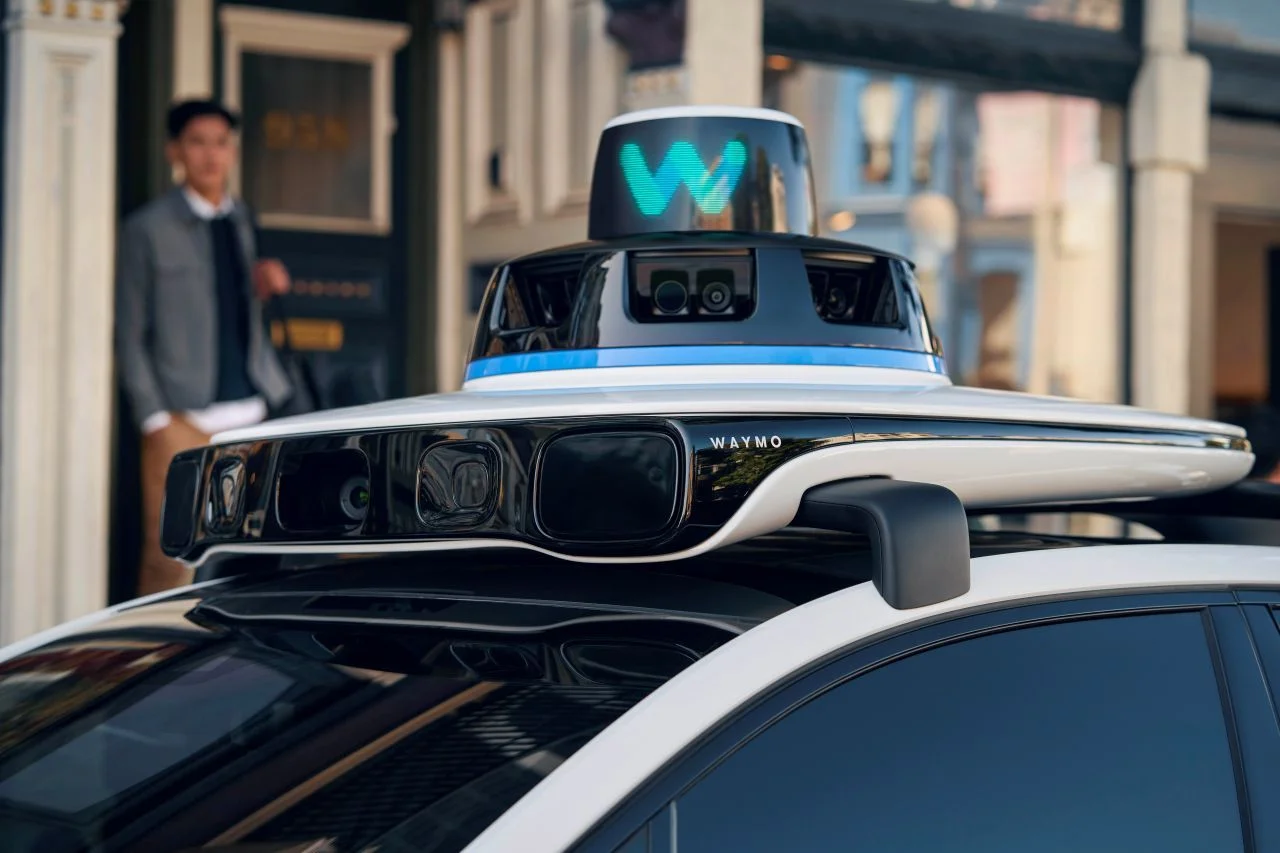
Waymo funding February 2026 Bay Area robotaxi expansion is reshaping the trajectory of autonomous mobility in the San Francisco Bay Area and beyond. On February 2, 2026, Waymo announced a $16 billion investment round led by Dragoneer Investment Group, DST Global, and Sequoia Capital, with Alphabet maintaining its majority stake. The post-money valuation of $126 billion underscores how quickly autonomous mobility has moved from a proof-of-concept phase into a capital-intensive scaling era. The financing, disclosed in a Waymo blog post and corroborated by major outlets, signals a deliberate push to accelerate deployment in existing markets and to plant flags in new cities around the globe. (waymo.com)
Waymo executives describe the round as a milestone for turning autonomous mobility into a scalable, customer-facing service. The company asserts that the infusion will fund unabated growth this year, expanding the Waymo Driver to more cities—over 20 new markets in 2026 including Tokyo and London—and strengthening the company’s operational and safety capabilities. The official blog notes that Waymo’s expansion plans will extend across the United States and internationally, reinforcing the company’s position as a global driverless mobility platform. In formal remarks, Waymo and investor statements frame the funding as a catalyst for both geographic reach and weekly ride volume. (waymo.com)
The Bay Area has long been a focal point of Waymo’s automated driving ambitions, and the February 2026 funding round arrives as the company amplifies its Bay Area footprint in tandem with broader regulatory and market momentum. In late 2025, California regulators expanded Waymo’s authorized testing and deployment footprint across more of the Golden State, extending into the East Bay and North Bay (including Napa/Wine Country) and extending Southern California reach. That regulatory progress set the table for the 2026 funding push to accelerate service availability and rider access in the Bay Area alongside other major markets. The timing aligns with Waymo’s public-facing push to normalize fully autonomous rides in dense urban settings and along freeway corridors within and beyond the Bay Area. (techcrunch.com)
What the funding enables is not just a broader map of cities, but a sharper cadence of deployments, safety milestones, and rider experiences. Waymo’s blog emphasizes that the company has logged hundreds of millions of autonomous miles and trillions of sensor-driven decisions as it scales, pairing safety with growth. The round is framed as a platform-for-scale moment: more city coverage, more riders, and a stronger data moat that Waymo says translates into safer, more reliable operations as it expands to 20+ new markets in 2026, including major international hubs. Analysts and investors alike highlighted the strategic implications of crossing a new threshold in autonomy—from R&D demonstrations to mass-market service. (waymo.com)
Section 1 — What Happened
Funding announcement and scope
Waymo announced on February 2, 2026 that it had secured a $16 billion investment round with a post-money valuation of $126 billion. The financing was led by Dragoneer Investment Group, DST Global, and Sequoia Capital, with Alphabet continuing as majority investor. Other participants included Andreessen Horowitz, Mubadala Capital, and a broad roster of traditional and strategic backers. In a formal update, Waymo described the round as a tipping point for autonomous mobility at scale and noted that the capital would support rapid expansion of the Waymo Driver across the United States and internationally. The funding press release framed the move as strengthening Waymo’s ability to reach more people with safer, more reliable driverless rides. (bloomberg.com)
Investors’ reactions underscored the strategic bets embedded in this round. Sequoia’s Konstantine Buhler spoke to the partnership’s belief in Waymo’s continued growth and safety leadership, while DST Global’s Saurabh Gupta highlighted the potential to scale autonomous mobility to tens of new markets. Dragoneer’s involvement was framed as a validation of the company’s multi-city, multi-market model and its ability to drive compound gains through data and safety. The breadth of participants—ranging from traditional growth funds to global tech strategists—reflects a consensus that autonomous mobility is entering an era of capital-intensive, globally scaled operations. (techcrunch.com)
Geographic footprint and expansion plans form a core part of the post-funding narrative. Waymo stated that the capital would support “growth to 20+ additional cities in 2026,” with explicit mentions of international markets like Tokyo and London as near-term expansion targets. The company’s public materials and coverage from major outlets emphasize that 2026 will be a pivotal year for moving from regional deployments to broader national and international rollouts. This aligns with the company’s prior roadmap, which called for a more expansive, multi-city presence across the United States and beyond. (waymo.com)
Operational milestones and safety improvements are also highlighted as part of the roadmap. Waymo notes that it has achieved a significant safety milestone, citing a 90% reduction in serious injury crashes relative to human driving across ~127 million autonomous miles—data Waymo positions as foundational to its case for scale. The company emphasizes that continued investments will be channeled into safety programs, driver training improvements, and software/hardware enhancements designed to sustain performance as the fleet grows. The scale narrative—over 400,000 weekly rides in six major U.S. metro areas—serves as a counterpoint to safety concerns raised by some critics and regulators. (waymo.com)
Investors and valuation
The funding round placed Waymo at a post-money valuation of $126 billion, reflecting a strong premium for the company’s perceived lead in driverless mobility and its ability to monetize on a global scale. Bloomberg’s reporting and Waymo’s own blog corroborate the figure and underscore the round’s significance for Alphabet’s “Other Bets” portfolio and the broader AI-enabled transportation landscape. The investor lineup includes both established Silicon Valley names and global funds, illustrating confidence in a multi-city, multi-market driverless economy. The round’s size also sets a high-water mark for autonomous mobility financing and could influence how other AV players approach capital raises in 2026. (bloomberg.com)
Geographically, London and Tokyo are cited as explicit international expansion targets, signaling the company’s intention to test fully autonomous operations in dense, complex urban environments outside the U.S. The emphasis on international expansion also invites scrutiny of regulatory harmonization across jurisdictions and the logistics of cross-border deployment—areas where Waymo has historically benefited from Alphabet’s regulatory and policy muscle, but which also pose new challenges as the fleet scales. (techcrunch.com)
Geographic footprint and Bay Area implications
The Bay Area remains a cornerstone of Waymo’s identity and its operational strategy. As early as 2025, Waymo had been granted broader testing and deployment authority within California, including the East Bay and North Bay regions, setting the stage for more expansive rider services in the Bay Area. The Bay Area footprint is not just a geographic expansion but a litmus test for urban integration—how autonomous rides blend into traffic, public transit, and daily life in one of the world’s most complex urban ecosystems. The November 2025 regulatory update foreshadowed the 2026 capital infusion’s potential to accelerate rider access and service density in the Bay Area while continuing to push into other major markets. (techcrunch.com)
What this means for Bay Area riders and residents is twofold: broader access to autonomous rides and heightened attention to safety, traffic integration, and local governance. Waymo’s Bay Area growth is paired with a broader push to normalize driverless mobility, which implies a more frequent presence on city streets, new service corridors, and increasingly integrated support from local authorities as experience accumulates. While expansion promises convenience and potential safety benefits, it also raises questions about traffic dynamics, ADA accessibility, first-responder coordination, and how communities adapt to autonomous fleets in dense neighborhoods. These are the kinds of tradeoffs that regulators and planners will monitor as 2026 unfolds. (techcrunch.com)
Section 2 — Why It Matters
Impact on Bay Area mobility and urban policy
The Bay Area’s road network is an intricate mix of highway arterials, surface streets, bike lanes, and transit corridors. Waymo’s expansion—bolstered by a $16 billion funding round—amplifies the need for precise, data-driven policies that balance mobility gains with safety and equity. The Bay Area’s regulatory momentum, including expanded authorized testing across parts of the region, has already opened doors for more aggressive deployment. Analysts suggest that the funding round could accelerate city-by-city planning efforts, infrastructure adaptation (e.g., curb management, pick-up/drop-off zones), and data-sharing arrangements with municipalities. Yet, the expansion also intensifies scrutiny from regulators and community groups, who want guarantees that autonomous rides will not disrupt local traffic patterns or disproportionately affect vulnerable populations. The interplay between ambitious growth and prudent governance will define the Bay Area’s near-term experience with Waymo’s driverless ecosystem. (techcrunch.com)

Photo by Erik Rivera on Unsplash
The regulatory backdrop matters. Waymo’s program in California is now banking on a broader authorization that includes more of the Bay Area and Southern California, with mid-2026 timelines for rider access in some new markets noted by Waymo and industry observers. Regulators will be watching for safety performance, incident reporting, and how autonomous fleets interact with traditional ride-hailing, taxi, and public transit services. The emphasis on safety is not cosmetic; Waymo’s own disclosures about miles driven and injury-rate metrics are part of a strategic narrative intended to reassure policymakers while sustaining growth. This dynamic matters not only to Bay Area residents, but to investors who are evaluating risk-adjusted returns in a sector that is still balancing innovation with public trust. (techcrunch.com)
Competitive dynamics and market outlook
Waymo’s funding round arrives into a competitive landscape where several major players are racing to scale autonomous mobility. TechCrunch’s coverage in early February 2026 positions Waymo as a clear leader in the driverless ride-hailing space, with aggressive international expansion on the horizon and a measured emphasis on safety as a differentiator. Rival firms and ecosystem partners are responding with rapid deployments, new partnerships, and capital mobilization of their own. For example, ongoing activity across U.S. cities—such as Austin, Miami, Los Angeles, and Phoenix—shows that the multi-city, multi-market approach is becoming the norm for major AV operators. The presence of Bloomberg and Forbes with comparable reporting reinforces that Waymo’s funding round is part of a broader financial and strategic wave shaping who wins the scale race in autonomous mobility. (techcrunch.com)
Investors have voiced confidence in Waymo’s ability to translate a data advantage into scalable safety improvements and reliable customer experiences. Sequoia’s Buhler and DST Global’s Gupta both emphasized Waymo’s potential to convert technological superiority into durable market leadership, while Dragoneer highlighted the broader implications for productivity and urban mobility. The alignment of capital with a clear operational plan—more cities, more riders, safer operations—suggests that the market expects not only geographic expansion but also a disciplined approach to scaling the underlying technology and service model. This combination—capital, scale, and safety—could set a standard for other automated mobility players seeking to attract similar levels of investment. (techcrunch.com)
Economic and employment implications are part of the broader picture. The influx of capital is not just about fleet expansion; it’s also about building and sustaining the technical, safety, and regulatory teams required to support a global fleet. Waymo’s 2025 performance—driving more than 15 million rides in a single year, with weekly ride volumes approaching quarterly milestones—helped to justify the investment in people, data infrastructure, and safety programs that enable more ambitious city-by-city rollouts. Analysts point to the potential for job creation in software engineering, sensor development, safety oversight, and operations planning as the network of Waymo’s activities expands across more markets. The funding round thus serves as a signal about the maturity of autonomous mobility as a commercial services business, not merely a technology demonstration. (waymo.com)
What the data tell us about risk and reward
There is a natural tension between ambition and public risk when a company scales autonomous mobility. Waymo’s leadership emphasizes safety metrics and milestone-driven growth, including a substantial reduction in serious injury crashes relative to human driving. While this provides a powerful narrative for investors and policymakers, it also invites ongoing scrutiny of incident data, regulatory compliance, and rider safety protocols. Reports in the press and statements from safety regulators indicate that investigations and inquiries are ongoing in some contexts, which means Waymo’s expansion will likely be accompanied by enhanced monitoring, transparency requirements, and potential policy refinements at state and federal levels. For readers and stakeholders, the takeaway is not a simple yes-or-no verdict on autonomous mobility, but an evolving calculus: faster scale must be matched with stronger governance, clearer rider protections, and visible, independent verification of safety outcomes. (techcrunch.com)
Section 3 — What’s Next
Near-term milestones to watch in 2026
With the funding in place, Waymo has signaled aggressive expansion across domestic and international markets. In the near term, we should expect:
- Rapid acceleration of city-by-city expansions in Tokyo and London, two major international markets highlighted in Waymo’s communications, potentially accompanied by additional U.S. markets beyond the existing Bay Area footprint. Waymo’s own briefing confirms the plan to scale to more than 20 additional cities in 2026, including those international targets. (waymo.com)
- Increased rider access in California’s Bay Area and Southern California regions, following regulatory clearance to drive more extensively across the Golden State. Waymo’s Bay Area expansion cadence was already visible in late 2025 and early 2026, with officials signaling mid-2026 milestones in some regions for rider introductions. This implies a busy summer and fall as more neighborhoods gain autonomous ride access. (techcrunch.com)
- Enhancements to the Waymo Driver technology and safety program to support higher fleet utilization, including software updates, sensor calibrations, and operator training improvements designed to sustain safety at higher ride volumes. Waymo’s own safety metrics and the scale narrative suggest continuous refinement as fleets grow. (waymo.com)
Industry observers will be watching for concrete, verifiable milestones:
- Public rider launches in new markets with clear service-level agreements (SLAs) for availability, wait times, and accessibility features.
- Regulatory milestones in international markets, including permitting, ride-hailing authorizations, and safety reporting requirements.
- Incident reporting norms and independent audits of safety outcomes as fleets expand across busy urban corridors and freeway segments. Tech coverage from TechCrunch and Bloomberg highlights the importance of these benchmarks, given the milestones Waymo has disclosed. (techcrunch.com)
Regulatory and rider experience watch items
As Waymo extends its footprint, several policy and user-experience dimensions will shape the 2026 timeline. First, the Bay Area and Southern California expansion will need to align with local traffic patterns, transit integration goals, and curb management policies. Local governments will likely require continued data sharing on safety metrics, incident investigations, and rider experience metrics, including accessibility for riders with disabilities. The November 2025 regulatory update and subsequent expansions illustrate the ongoing negotiation between operator capabilities and regulatory controls, a dynamic that will continue to define the pace of new-area introductions. (techcrunch.com)
Second, public sentiment and safety perceptions will influence the pace of expansion. Waymo’s leadership emphasizes that autonomous mobility is transitioning from a demonstration phase to a consumer-facing service, but public concerns—ranging from school-zone safety to interactions with pedestrians and cyclists—will remain a focal point for community engagement and oversight. The industry is watching NHTSA and NTSB inquiries involving autonomous vehicles, including cases around school zones and incidents involving Waymo vehicles. As operations scale, regulators are likely to demand tighter safety data and more robust incident-response protocols, which could shape the speed and distribution of future deployments. (techcrunch.com)
Third, investor confidence in Waymo’s model will hinge on sustained safety performance, rider satisfaction, and operational reliability. The funding round’s magnitude, coupled with Waymo’s reported safety milestones and weekly ride volumes, creates a framework for long-run growth—but it also raises expectations for consistent, verifiable improvements in safety performance as fleets expand. Analysts will parse quarterly results, safety data releases, and city-specific ridership metrics to gauge whether the scaling narrative remains credible and sustainable. While the Round marks a historic inflection point, the path forward remains data-driven and policy-informed, with ongoing monitoring by regulators, researchers, and the public. (waymo.com)
Closing
The Waymo funding February 2026 Bay Area robotaxi expansion unleashes a new phase in autonomous mobility—one defined by ambitious geographic growth, a larger fleet, and a more visible role for autonomous rides in daily life. The $16 billion round lifts Waymo to a post-money valuation of around $126 billion and positions the company to accelerate its multi-city, multi-market strategy across the United States and key international cities. Bay Area observers should expect a busy 2026, with more neighborhoods added to Waymo’s Bay Area coverage, continued regulatory alignment, and deeper integration with urban mobility ecosystems. As always, continued transparency around safety metrics and rider experience will be essential to sustaining trust as the company scales.
Readers who want to stay updated on these developments should watch Waymo’s official communications, investor disclosures, and regulatory filings, alongside ongoing coverage from technology and business outlets. The Bay Area’s road network and public transit systems stand to be reshaped by autonomous mobility if growth continues at this pace, and that trajectory will be defined by how well safety, governance, and service quality keep pace with expansion.
As the SF Bay Area Times tracks this story, we will continue to compare announced plans with real-world milestones, provide context on safety and regulatory developments, and present balanced perspectives from policymakers, industry experts, and riders. The year ahead promises rapid change in autonomous mobility, with Waymo at the center of a broader global shift toward scalable, ride-hailing autonomous services.