
Stage Two — The Floor Pass Everybody Postpones
Manual pool vacuuming takes longer to set up than to do, so the fall floor pass gets postponed. How a cordless handheld like the Betta Jet Sweep changes that ratio.
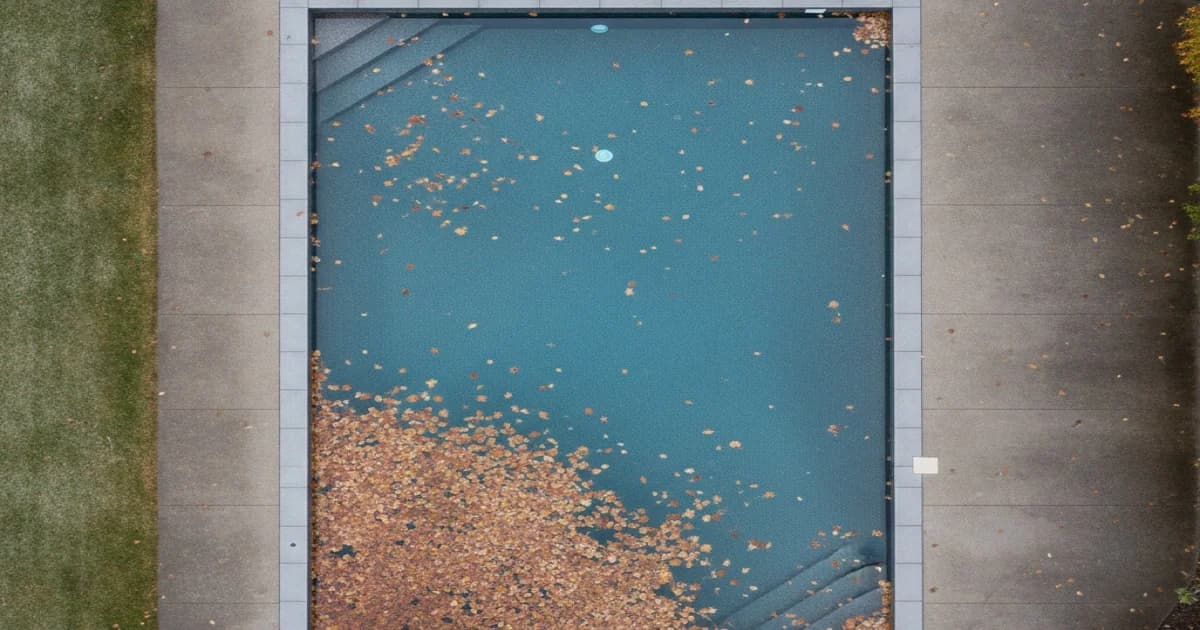
The Chore With the Worst Setup-to-Work Ratio in Home Maintenance

There is a question that appears in pool-owner forums every single autumn, phrased with the same mixture of frustration and self-doubt: is vacuuming the pool genuinely this hard, or am I doing something wrong?
They are not doing anything wrong. Traditional manual vacuuming is a procedure, not a task. Detach whatever cleaner is currently plugged into the suction line. Fit the vacuum head to a telescoping pole. Attach the hose. Submerge the whole assembly to purge the air, which is the step most people get slightly wrong. Connect to the skimmer or the dedicated line. Then, and only then, start vacuuming — and reverse all of it afterwards.
The result is predictable. The job gets postponed because the setup costs more than the work, and in autumn, postponement is expensive in a way it never is in July.
Why Postponement Costs More in October Than in June
A leaf on the floor in June is a nuisance that gets vacuumed next weekend. A leaf on the floor in October is on a clock.
Water temperatures are dropping, which slows some decomposition but does nothing to stop tannin release. The leaf drop is continuous, so each postponed pass means the next pass is against a thicker layer. And at the end of the sequence there is a cover going on, after which whatever is down there stays down there for five or six months in a warm, sealed, unlit, chemically declining environment.
That last part is what converts a twenty-minute job into a spring remediation. Debris that sits compacted under a cover all winter does not lift the way fresh debris does, and the staining it leaves on plaster or a vinyl liner frequently needs chemical treatment rather than a vacuum.
Removing the Setup, Not the Work
The Betta Jet Sweep is a cordless handheld pool vacuum, and the thing it changes is the ratio described above. There is no hose, no suction line, no booster pump and nothing to prime. It is a rechargeable unit that attaches to a standard telescoping pole and drives itself along the floor on four 360-degree wheels.

This matters for the fall specifically, because the fall needs repeated passes rather than one heroic one. A tool with a five-minute setup gets used once a season, in a hurry, on the day before closing. A tool that is ready in ninety seconds gets used three or four times across the drop, which is what actually keeps the floor under control.
One practical note before the day of the job: a telescoping pole is not included. The unit fits standard telepoles, and most households already have one leaning against a fence, but it is worth confirming rather than discovering.
Seventy-Five Minutes, Measured Against a Real Pool
The Jet Sweep's rechargeable battery delivers up to 75 minutes of runtime per charge, with a built-in battery indicator so the level is known before starting rather than discovered halfway down the deep end.
For a typical residential pool that is enough for a full floor sweep plus a second run over the deep-end drift, which is where debris concentrates and where most of the winter's problems originate. For a larger pool under heavy canopy, the honest framing is that it is enough for one thorough session rather than two, and the planning answer is to charge between passes rather than to attempt the entire floor in one go.
Two Bags, Used in Sequence
The Jet Sweep ships with two filter bags, and in autumn the pairing is more useful than at any other point in the year:
- Standard 250 µm — everyday debris collection: leaves, twigs, the material you can see.
- Intensive 75 µm — designed to capture finer particles for improved water clarity.
The fall sequence is to run the standard bag first and take out the bulk, then switch to the 75-micron bag and go again for the silt, pollen residue and broken-down leaf fragments that a coarse bag passes straight through. That second pass is the one that decides how the pool looks in April, and it is invisible in clear water, which is why it gets skipped.
The bags use a quick-release, tool-free connection, so the changeover is a matter of seconds. That is a small detail with a large behavioural effect: a bag change that needs tools is a bag change that does not happen.

The Two Protections That Matter for Seasonal Equipment
A tool used intermittently and stored between uses fails differently from one used daily, and two features on the Jet Sweep exist for exactly that pattern.
It shuts off automatically when lifted out of the water, which prevents the motor running dry during the constant in-and-out of a fall pass along a deep end.
And it stops automatically if debris clogs the impeller, with a red indicator light. This is a genuine autumn consideration rather than a specification-sheet line: the material going into a vacuum in October is larger, wetter and stringier than anything it handled in July, and an impeller jam that goes unnoticed is how a seasonal tool becomes a dead one.
Timing the Passes Across the Drop

The common mistake is to treat the floor pass as part of the closing procedure, scheduled for a warm weekend before the weather turns.
The heaviest leaf drop usually arrives after that weekend. The pool then spends three weeks accumulating a fresh layer, and the cover goes on over material that was never touched.
A better structure across a temperate autumn:
- Early drop — one pass once the first real fall has happened, mostly standard bag.
- Peak drop — one pass in the middle of the heaviest two or three weeks, standard bag again.
- After the trees finish — the deliberate pass, standard bag then fine bag, as late as the weather allows.
- Immediately before the cover — a short check pass over the deep end only.
Where the calendar will not cooperate — an early freeze, a service date that cannot move — two short passes beat one perfectly timed pass that never happens.
How Much of This Is Avoidable Upstream
The size of the floor job is largely set by what happened on the surface in the preceding days. Debris that is intercepted while floating never becomes debris on the bottom, which is why owners who run a continuous surface skimmer through the leaf drop describe the floor pass as a tidy-up rather than an excavation.
Neither tool substitutes for the other. A surface skimmer cannot reach what has already sunk, and a handheld vacuum cannot run every day for six weeks. What they do together is split the fall into a continuous job a machine handles and an episodic job a person handles, which is the only arrangement that survives contact with a real October.
The Short Version
Everything on the pool floor when the cover goes on is still there in April, compacted, stained in place, and harder to remove than it was on the day it landed.
The reason it gets left there is almost never ignorance. It is that the traditional way of removing it takes longer to set up than to do. Change that, and the pass happens.