
Levi's Stadium World Cup Games Santa Clara: What to Expect
Explore a detailed, data-driven overview of Levi's Stadium World Cup Games Santa Clara and its significant tech-market implications.
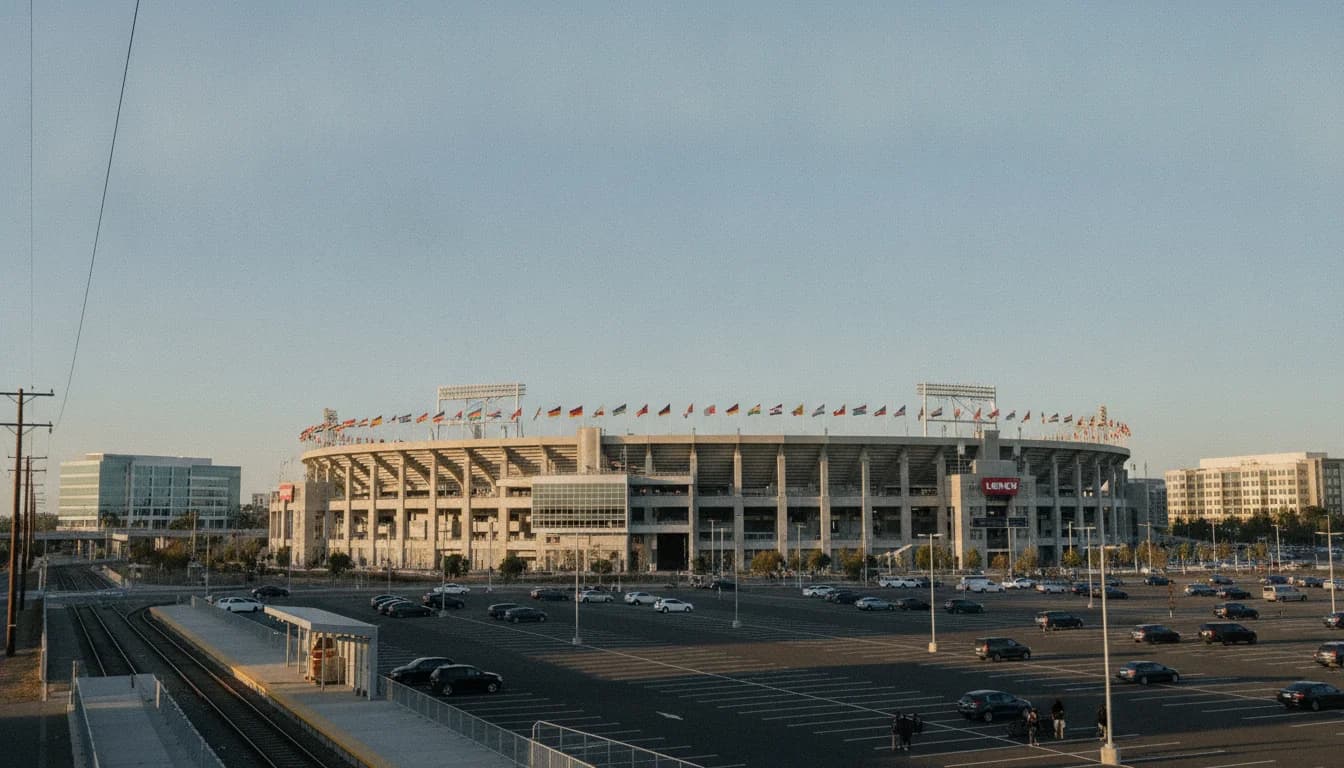
Levi's Stadium to Host 2026 World Cup Games in Santa Clara
The Bay Area Times delivers a data-driven, neutral analysis on a milestone for the region: Levi's Stadium in Santa Clara will welcome six FIFA World Cup 2026 matches, reinforcing the Bay Area’s role as a premier event host. This is a major development for fans, local businesses, and technology partners who are planning around one of the world’s largest sports tournaments. The announcement places Levi's Stadium and the broader Santa Clara County region at the center of the 2026 World Cup competition in the United States, underscoring the confluence of sports, technology, and regional market dynamics.
Levi's Stadium World Cup Games Santa Clara will bring a unique convergence of events to the Bay Area, including group-stage fixtures and a knockout game in the same venue that also hosted a Super Bowl in the same calendar year. This convergence elevates both the stadium’s visibility and the region’s profile as a hub for innovation-driven event experiences. As local authorities and event organizers coordinate security, transit, and fan services, the news signals a structured, data-informed approach to handling large crowds and complex logistics. The announcement aligns with a broader trend in which technology-enabled venues position themselves to monetize fan engagement while safeguarding operations during high-profile events.
CITABILITY: Levi's Stadium in Santa Clara will host six FIFA World Cup 2026 matches, five in the group stage and one knockout, according to AP News on May 22, 2026. (apnews.com)
What Happened
Announcement and Confirmation
Officials publicly confirmed that Levi's Stadium would serve as a FIFA World Cup 2026 venue, joining a slate of U.S. host sites selected for the tournament. The Santa Clara County Office of Emergency Management, along with local government partners, has outlined the scope of activity around the World Cup in 2026, including plans for official match operations, security, and transit coordination. The official emphasis is on a well-coordinated, safety-first approach that supports fans, teams, and staff across multiple matchdays. This confirmation has been echoed by regional media coverage and by the venue’s technology partners who frame Levi's Stadium as a leading example of the connected, data-driven stadium model that fans and event organizers increasingly expect. For context, AP News reported the country’s host-city plan and the distribution of six matches across Santa Clara, including both group-stage fixtures and a knockout-round game. (apnews.com)
Match Schedule and Scope
World Cup Santa Clara’s current schedule confirms six matches to be played at Levi's Stadium over a tightly spaced 18-day window. The competition ledger places five group-stage matches at Levi's Stadium and a single Round of 32 knockout game. The timetable includes specific date anchors that illustrate how the Bay Area will manage demand, travel, and security around each event. The World Cup Santa Clara site lists the exact matchups and dates, including opening group-stage fixtures on June 13, June 16, and June 19, followed by additional group-stage days on June 22 and June 25, culminating in a knockout-round game on July 1. This sequencing highlights the importance of crowd management, transit planning, and hospitality services across consecutive days of activity. (worldcupsantaclara.com)
- June 13, 12:00 PM PT — Group B, Qatar vs Switzerland (completed in the record);
- June 16, 9:00 PM PT — Group J, Austria vs Jordan (completed in the record);
- June 19, 8:00 PM PT — Group D, Türkiye vs Paraguay (completed in the record);
- June 22, 8:00 PM PT — Group J, Jordan vs Algeria (completed in the record);
- June 25, 7:00 PM PT — Paraguay vs Australia (completed in the record);
- July 1, 5:00 PM PT — Round of 32, knockout stage (completed in the record). These dates are drawn from the official Levi’s Stadium schedule site, which aggregates World Cup match details for Santa Clara. (worldcupsantaclara.com)
Logistics and Transportation Plans
Logistics around Levi's Stadium World Cup Games Santa Clara emphasize multi-modal access, clear wayfinding, and transit-assist features designed to move large crowds efficiently and safely. Local officials urge fans to prepare for stadium access via regional transit networks, while also highlighting safety resources and accessibility services to accommodate diverse fan needs. Transit planning involves coordination across Valley Transportation Authority (VTA), Bay Area Rapid Transit (BART), Caltrain, Amtrak, and local street networks to ensure predictable travel times on match days and, importantly, in the hours surrounding kickoff. The Santa Clara OEM page on large-event safety outlines practical tips for attendees, including transit options, emergency-alert participation, and pre-game planning that minimizes congestion and delays. The World Cup Santa Clara site also devotes sections to “Getting Here” and “Fan Zones,” helping fans map routes and plan transfers from rail and bus services to Levi’s Stadium. Together, these sources illustrate a data-informed approach to transportation planning and crowd flow management for the six-match slate. (oem.santaclaracounty.gov)
Security, Fan Experience, and Stadium Tech
Security and fan experience for World Cup events at Levi's Stadium will lean heavily on technology-enabled procedures. The stadium has a long track record of deploying robust, multi-vendor connectivity and security architectures designed to handle large-scale events. Partnerships with technology providers have been spotlighted in industry coverage and official venue materials, underscoring the role of high-capacity Wi‑Fi, structured data analytics, and converged network operations as integral to the fan journey. For example, technology vendors and venue partners describe the stadium as a showcase for connectivity and security, with ongoing upgrades to wireless networks, data centers, and security architectures to support ticketing, access control, video operations, and fan services on event days. Notably, Comcast Business has detailed end-to-end connectivity solutions powering Levi’s Stadium, including stadium-wide Wi-Fi and fiber connectivity that enable real-time data analytics and security operations. In addition, NFL and venue technology partners have highlighted the evolution of the stadium’s 5G and DAS infrastructure, which are central to managing large crowds and delivering a seamless fan experience during World Cup and other major events. These developments reflect broader trends in which venues invest in network capacity, mobile ticketing, and digital services to sustain revenue and improve safety. (corporate.comcast.com)
Why It Matters
Economic and Tourism Implications
Six World Cup matches at Levi's Stadium are expected to concentrate tourism-related activity within a compact geographic footprint, generating spillover benefits for hotels, restaurants, transportation providers, and entertainment venues across the Bay Area. While precise economic projections vary by modeling approach, event-driven tourism typically yields incremental spending on lodging, dining, and local services, as teams, media, and fans travel between venues. The region’s capacity to host high-profile matches is guided by data-driven operations around traffic, hotel occupancy, and crowd management. Media coverage of the Bay Area’s hosting role emphasizes the historic nature of a venue simultaneously hosting Super Bowl and World Cup events within the same year, a pattern that underscores the integration of major sporting events with the local economy and technology ecosystem. Analysts watch closely how Levi's Stadium leverages this unique window to maximize fan engagement, sponsorship activation, and data-driven optimization of services. (apnews.com)
Technology Upgrades and Fan Experience
Levi's Stadium’s role in World Cup 2026 is inseparable from its technology DNA. The venue’s ongoing investments in network infrastructure, high-resolution video, and digital fan services align with broader market trends toward connected stadiums that combine entertainment with real-time data insights. The stadium’s tech ecosystem — including campus-wide Wi-Fi, 5G/DAS capacity, IPTV and large-format video boards — serves as a platform for fan interaction, mobile ticketing, and in-venue commerce. Recent coverage from major technology and sports outlets highlights how Levi’s Stadium has evolved to deliver scalable connectivity, robust security, and immersive displays, all of which contribute to higher fan satisfaction and potential sponsorship monetization. In the broader market context, technology vendors emphasize that stadium networks must balance capacity, security, and user experience to support large events like World Cup 2026 while enabling data-driven decision-making for operations and marketing. (levisstadium.com)
Regional Branding and Competitive Positioning
Hosting World Cup games reinforces the Bay Area’s position as a leading hub of technology, innovation, and international sports events. The combination of a world-class venue, a dense tech ecosystem, and access to diverse transit options positions Santa Clara and the broader Bay Area as an attractive site for future global-scale events. Observers and industry analysts note that the region’s capability to deliver world-class fan experiences is closely tied to its ability to harness data-driven operations, secure networks, and agile transportation planning. The pairing of World Cup events with a locally rooted innovation culture further enhances the region’s brand as a place where technology and sports intersect in meaningful, measurable ways. Market observers also point to the ongoing investments in stadium infrastructure as a signal to sponsors and partners about the Bay Area’s long-term readiness for large-scale, data-intensive events. (levisstadium.com)
What This Means for Stakeholders
- Fans: Expect enhanced connectivity, smoother entry and exit processes, and richer in-stadium experiences powered by data and digital services.
- Local Businesses: Benefit from increased foot traffic and extended hours around match days, with opportunities in hospitality, retail, and transport services.
- Sponsors and Partners: Access to high-visibility digital channels, data-backed engagement opportunities, and safer, more efficient event operations.
- Government and Public Agencies: A demonstration of data-driven crowd management, emergency planning, and multi-agency coordination that can be a blueprint for future mega-events.
What the Market is Saying About World Cup 2026 in Santa Clara
Industry coverage emphasizes that Levi's Stadium’s World Cup involvement is not only a sports story but also a technology and market narrative. Analysts note that the combination of the Bay Area’s tech ecosystem with a premier venue creates a test bed for innovations in stadium operations, fan services, and security, which can translate to revenue growth and improved public safety metrics. Additionally, the schedule’s density tests existing transit and urban logistics while highlighting the potential for long-term infrastructure investments that support both major sports events and regional economic activity. As Bay Area cities plan around the matches, stakeholders are watching closely the balance between public investment, fan experience, and the region’s competitive positioning in the global sports and technology markets. (apnews.com)
What’s Next
Upcoming Matches and Tickets
The six World Cup matches at Levi's Stadium in Santa Clara are set within a defined window, with sequence and timing designed to optimize fan flow and venue operations. The official fixture list indicates the first group-stage matches in mid-June, followed by successive group-stage games, a knockout Round of 32, and a concluding schedule at Levi's Stadium. For fans, ticketing windows, travel planning, and fan-zone activations will evolve as match days approach. The World Cup Santa Clara portal provides up-to-date information on match dates, ticket availability, and logistics, serving as a key resource for travelers and local residents planning around the events. (worldcupsantaclara.com)
Infrastructure and Transit Milestones
Over the coming weeks and months, Santa Clara County and partner agencies will advance transportation and safety measures to align with the World Cup schedule. Expect staged transit enhancements, expanded pedestrian and vehicle traffic management, and refined security protocols designed to accommodate peak demand during matchdays. Local authorities have signaled a data-driven approach to measuring performance, adjusting operations in real-time as needed, and continuously updating fans and residents about travel options and safety precautions. The OEM's safety guidance and the transit-focused content on the World Cup Santa Clara site are to be used as ongoing references for the evolving plan. (oem.santaclaracounty.gov)
What to Watch For
- Real-time crowd-management analytics and stadium operations dashboards that provide situational awareness during matchdays.
- Partnerships announcements with technology providers revealing specifics about Wi‑Fi performance, DAS coverage, and data-security measures at Levi's Stadium during World Cup events.
- Transit service adjustments, including specials or schedules aligned with match timings, as authorities execute the plan to minimize congestion and maximize fan convenience.
- Sponsorship engagements and fan-engagement campaigns tied to the World Cup experience in the Bay Area, leveraging Levi's Stadium’s connected-infrastructure foundation.
- Any updates from FIFA’s official communications that confirm or refine the local schedule, security expectations, and broadcast logistics in the Santa Clara venue.
What’s Next: A Closer Look at the Road Ahead
The weeks ahead will likely bring a flurry of activity around Levi's Stadium World Cup Games Santa Clara. Local authorities will publish further details on security measures, transit routes, and emergency plans aligned with each match. The Bay Area Times will monitor these developments, paying particular attention to how the data-driven approach translates into safer, smoother experiences for fans and more effective operational decision-making for hosts, vendors, and public agencies.
In parallel, technology partners will publicly showcase updates to the stadium’s connectivity and security systems, highlighting how these tools enable real-time crowd management, contactless interactions, and enhanced guest services. These demonstrations may be accompanied by industry coverage that situates Levi's Stadium within the broader trend of smart stadiums, where connectivity, data analytics, and immersive digital experiences redefine what fans expect from live events. The ongoing collaboration between venue operators, technology providers, and transit agencies will shape the overall World Cup experience in Santa Clara and set benchmarks for future mega-events in the region. (corporate.comcast.com)
Closing
The announcement that Levi's Stadium will host World Cup 2026 games marks a pivotal moment for Santa Clara and the broader Bay Area, one that intertwines sports, technology, and regional economic activity. The six-match slate—comprising five group-stage games and one knockout—highlights the venue’s role as a hub for innovation-driven event delivery. As the logistics unfold, the Bay Area’s approach to safety, transit, and fan services will be tested in a real-world setting, offering valuable data and insights for policymakers, venue operators, and market stakeholders alike. Readers can stay updated through dedicated World Cup Santa Clara resources and local government briefings as match days approach, ensuring they have the latest information on schedules, tickets, and travel plans.
The Bay Area Times will continue to report with a data-driven lens, offering balanced perspectives on the opportunities and challenges associated with hosting World Cup 2026 games at Levi's Stadium. By providing clear timelines, reliable context, and practical guidance for fans, businesses, and residents, this coverage aims to inform and empower the community through every step of the process.