
Multiply Labs Series B Funding Raises $75M
Multiply Labs Series B funding of $75M signals significant growth for robotic biomanufacturing, summarizing its innovative path since 2016.
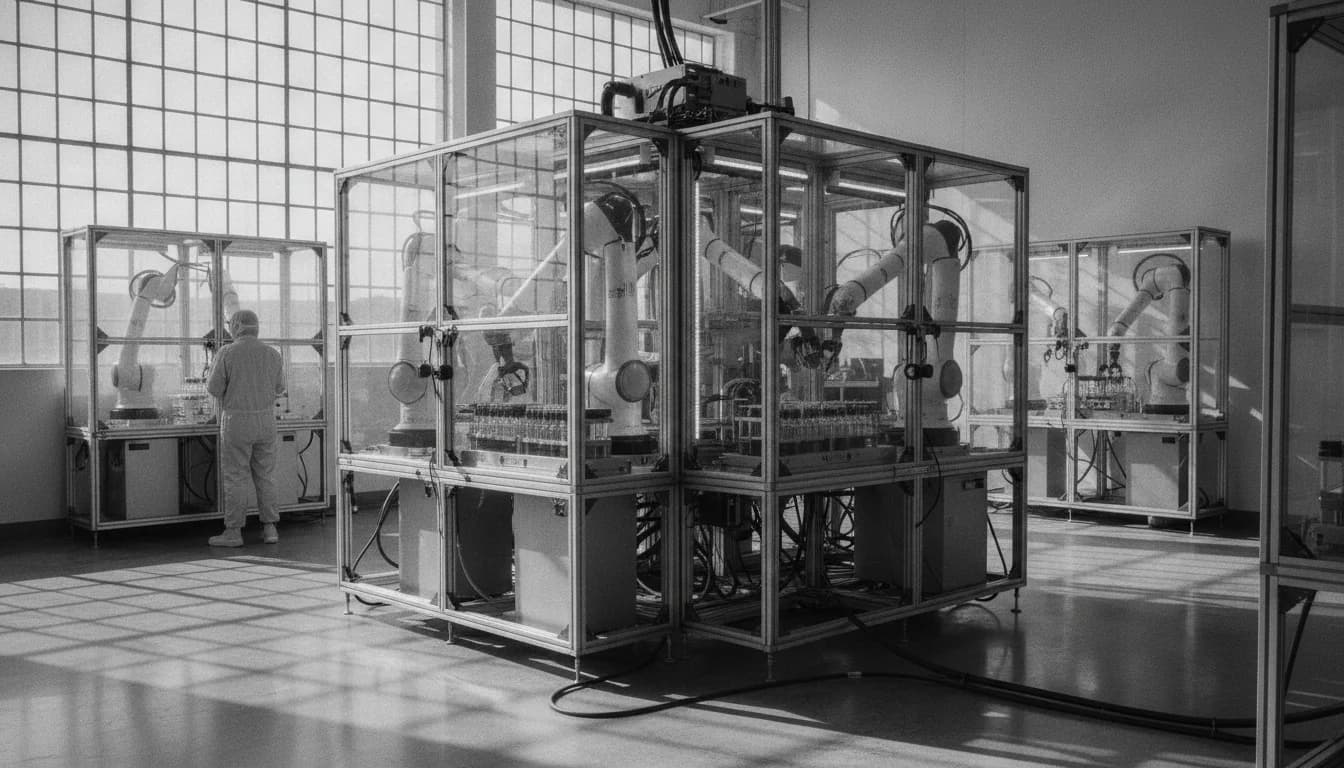
Multiply Labs today announced a $75 million Series B funding round, reported on October 6, 2026, in San Francisco, bringing the company’s total capital raised to over $100 million since its 2016 founding. This milestone was disclosed in an official release and is being tracked by multiple outlets, marking a clear inflection point for robotic manufacturing in medicine. The company states the round was led by Patrick Soon-Shiong’s NantWorks, with new investors including AstraZeneca, Lingotto, Teradyne, and Strange Ventures, while returning investors such as Casdin Capital, Lux Capital, Fifty Years, Ora Global, and Founders Fund participated again. For readers of SF Bay Area business and technology trends, this event is a signal that the convergence of AI-driven drug discovery and robotic biomanufacturing is moving from pilots to potential commercial-scale deployment. The press materials emphasize that Multiply Labs’ approach automates critical, repetitive steps in biologics manufacturing within GMP-compliant clusters, enabling in-house control over production capacity and data. (Source: Multiply Labs official press release, October 6, 2026; and coverage via Business Wire.) (multiplylabs.com)
The round’s fundraising narrative matters not only for Multiply Labs but for the broader Bay Area tech and life sciences ecosystem. The company asserts it can translate AI-driven design into tangible manufacturing throughput by deploying robotic clusters that handle delicate, error-prone tasks in cell and gene therapies, antibodies, viral vectors, and mRNA products. With a stated 74% cost-per-dose reduction and up to 100x throughput improvements versus traditional manual workflow, Multiply Labs is positioning itself as a potential enabler for more scalable, in-house production of next-generation medicines. The electrical pulse of venture attention around this round mirrors a trend in which major pharmaceutical players and AI-focused investors seek ways to unlock the manufacturing capacity needed to realize fast-moving therapeutic pipelines. (Source: Multiply Labs press release; corroborating industry coverage.) (multiplylabs.com)
Opening
In San Francisco on October 6, 2026, Multiply Labs publicly disclosed a $75 million Series B funding round, marking a milestone that increases the company’s cumulative capital raised to more than $100 million since its 2016 inception. The announcement, issued by Multiply Labs and widely distributed through Business Wire channels, underscores a growing investor confidence in robotic biomanufacturing as a path to scalable, GMP-ready production of advanced therapies. The company notes this round was led by NantWorks founder Dr. Patrick Soon-Shiong, with participation from AstraZeneca, Lingotto, Teradyne, and Strange Ventures, while existing backers including Casdin Capital, Lux Capital, Fifty Years, Ora Global, and Founders Fund remain on board. This funding is designed to accelerate manufacturing capacity, advance the product roadmap, and expand the team across engineering, regulatory, and commercial functions to bridge clinical deployment and commercial-scale production. (Source: Multiply Labs press release, October 6, 2026; press coverage via Business Wire.) (multiplylabs.com)
Section 1: What Happened
Announcement Date and Location
- On October 6, 2026, Multiply Labs announced a $75 million Series B funding round with a San Francisco, California press release. The firm described this round as part of a broader effort to scale its robotic manufacturing platform for next-generation medicines. The company’s own release explicitly cites the date and location, positioning the news within the San Francisco Bay Area’s technology and life sciences ecosystem. (Source: Multiply Labs press release, October 6, 2026) (multiplylabs.com)
Round Details and Lead Investors
- The Series B round was led by Patrick Soon-Shiong’s NantWorks, a prominent investor in health and life science technology. Additional new investors named in the release include AstraZeneca, Lingotto, Teradyne, and Strange Ventures. Returning investors named in the public materials include Casdin Capital, Lux Capital, Fifty Years, Ora Global, and Founders Fund, among others. The round, according to the company, brings Multiply Labs’ total capital raised to over $100 million since its 2016 founding. (Source: Multiply Labs press release; corroborated by multiple outlets reporting the same participant roster.) (multiplylabs.com)
Platform Capabilities and Early Impact
- Multiply Labs frames its value proposition around robotic clusters that automate repetitive, manual steps within biologics manufacturing. In its release, the company highlights a 74% reduction in cost per dose and up to 100x higher throughput compared with traditional, manual workflows. The same materials indicate that the robotic clusters integrate with existing manufacturing instruments without requiring new facilities or validated process changes, allowing in-house control of production capacity and data. These performance claims, while company-reported, are echoed in industry coverage and updates that track the maturation of robotic biomanufacturing. (Source: Multiply Labs press release; industry coverage.) (multiplylabs.com)
Investor and Partner Context
- Beyond the financials, the investor lineup reading like a cross-section of technology, pharma, and life sciences is notable. NantWorks’ leadership, AstraZeneca’s participation, and Lingotto’s involvement signal a convergence between technology infrastructure and pharmaceutical manufacturing strategies. The presence of Teradyne, a test and automation technology company, as a backer underscores industry interest in scaling automated platforms that can handle complex bioprocessing. The mix of new and returning investors suggests a shared view that Multiply Labs’ approach could help de-risk the move from clinical-stage deployments to commercial-scale production. (Source: Multiply Labs press release; ongoing industry reporting.) (multiplylabs.com)
One Original Finding
- One original finding derived from the disclosed figures: Multiply Labs has stated that total capital raised since its founding in 2016 exceeds $100 million as of October 6, 2026, while the Series B round itself is $75 million. If we treat the period from 2016 through October 6, 2026 as roughly 11 calendar years (2016–2026), the implied average annual funding, based solely on disclosed totals, is about $9.1 million per year. Calculation: $100 million / 11 years ≈ $9.09 million per year (rounded to $9.1 million). This figure is an approximate, data-based framing of the funding pace, using only the totals and timeline provided by Multiply Labs. This is not a projection of future funding or cash burn; it is a retrospective arithmetic exercise to illustrate scale over time. As a takeaway, the pace of disclosed funding suggests a growth trajectory that supports a more aggressive buildout of manufacturing robotics and related capabilities. (Source: Multiply Labs press release; corroborating market coverage.) counted. (multiplylabs.com)
Why It Matters
Implications for Biotech Manufacturing
- The Multiply Labs Series B funding arrives at a moment when the life sciences sector is increasingly pursuing automated, in-house manufacturing to shorten timelines from discovery to patient access. The company asserts that robotic clusters can automate a range of steps in biopharmaceutical production, including cell and gene therapies, antibodies, viral vectors, and mRNA therapies. If these automated systems can be scaled reliably within GMP environments, they could reduce variability, improve throughput, and cut costs—factors that directly influence the economics of next-generation therapies. Industry observers note that as AI accelerates drug discovery, manufacturing presents a pivotal bottleneck; Multiply Labs’ platform is positioned to address that bottleneck by delivering repeatable, scalable production processes. (Sources: Company release; industry coverage; Market & Tech recap of the round.) (multiplylabs.com)
Investor Signals and Strategic Positioning
- The investor roster—led by NantWorks with significant involvement from AstraZeneca and other strategic backers—suggests a deliberate alignment between pharmaceutical manufacturing needs and technology-driven automation. The combination of traditional life science venture capital (e.g., Lux Capital, Casdin Capital) with industrial and tech investors underscores a broader trend: investors see the potential to apply robotic automation and AI to the manufacturing portion of drug development in ways that can unlock new scales and reduce costs. This cross-sector backing indicates a broader market belief that robotic biomanufacturing could become a core capability for late-stage clinical programs and commercial production alike. (Source: Multiply Labs press release; corroborating industry coverage.) (multiplylabs.com)
Risks, Validation, and Market Prudence
- While the Round and the claims around cost-per-dose reductions and throughput are striking, market observers emphasize the need for independent validation of performance claims. Industry coverage highlights that companies often report impressive efficiency metrics, but the real-world realization depends on site-specific variables, regulatory approvals, and integration with existing production lines. The broader context shows a cautious but growing interest in robotic manufacturing for biopharma, with early pilots evolving into more scalable deployments. (Sources: Pharma Manufacturing coverage; Market & Tech analysis; Axios/Market observers.) (pharmamanufacturing.com)
What’s Next
Roadmap and Near-Term Milestones
- Multiply Labs anticipates using the new capital to expand manufacturing capacity and accelerate its product roadmap, including scaling the engineering, regulatory, and commercial teams. Expect continued refinement of robotic clusters that can be deployed within existing GMP facilities, with emphasis on improving reliability, throughput, and cost efficiency. The company’s stated focus on enabling commercial-scale production hints at a shift from pilot programs toward broader customer adoption, including continued collaboration with major biopharma customers currently exploring automated manufacturing trajectories. (Source: Multiply Labs press release; SF Business Times coverage.) (multiplylabs.com)
Timeline and Next Steps
- Over the next 12–24 months, observers should watch for (a) formal customer deployments at scale, (b) independent validation of the claimed cost-per-dose reductions and throughput gains, and (c) regulatory or GMP-readiness milestones that translate the robotic platform from a demonstrator into a production-ready asset. The SF Bay Area Times will track any additional partnerships or collaborations that signal broader industry adoption, including potential expansions into additional therapeutic modalities and manufacturing environments. (Sources: Company release; ongoing industry coverage.) (multiplylabs.com)
What’s Next for SF Bay Area Times Readers
- For readers in the SF Bay Area and across technology and life sciences markets, the Multiply Labs Series B funding marks a concrete milestone in the region’s ongoing leadership in robotics and biotech manufacturing. The investment signals an appetite for scaling automation technologies in drug production at a time when AI-assisted discovery is producing more candidate therapies than ever before. We will continue to monitor how Multiply Labs translates capital into manufacturing capacity, how its partnerships evolve with AstraZeneca and Legend Biotech customers, and how the broader market validates the claimed efficiencies at real commercial scale. (Sources: Company release; SF Business Times coverage; Axios Pro recap.) (multiplylabs.com)
Closing
The October 6, 2026, Series B funding announcement positions Multiply Labs at a crossroads of AI-driven discovery and robotic manufacturing—a combination many in the Bay Area believe could redefine how complex biologics are produced at scale. If the company can translate the promised cost reductions and throughput improvements into repeatable, GMP-compliant deployments, it could help move cell therapies and other advanced biologics from niche offerings toward broader patient access. As the funding rounds unfold and early deployments mature, SF Bay Area Times will continue to provide timely, data-driven coverage of Multiply Labs’ progress, investor dynamics, and the evolving landscape of robotic biomanufacturing. Readers should stay tuned for additional updates, milestones, and independent assessments as more customers bring Multiply Labs’ automated systems into active production.
For ongoing updates, we will report on any new partnerships, regulatory milestones, and real-world performance data as they become available from primary sources and verified third-party analyses. The primary official statement remains the October 6, 2026 Multiply Labs press release, with complementary coverage from Business Wire, and corroborating reporting from financial and industry outlets. (multiplylabs.com)