
Muni Electric Bus Expansion Accelerates Bay Area Transit
Data-driven analysis of Muni's electric bus expansion, focusing on its significant impact on Bay Area transit efficiency and reduced emissions.
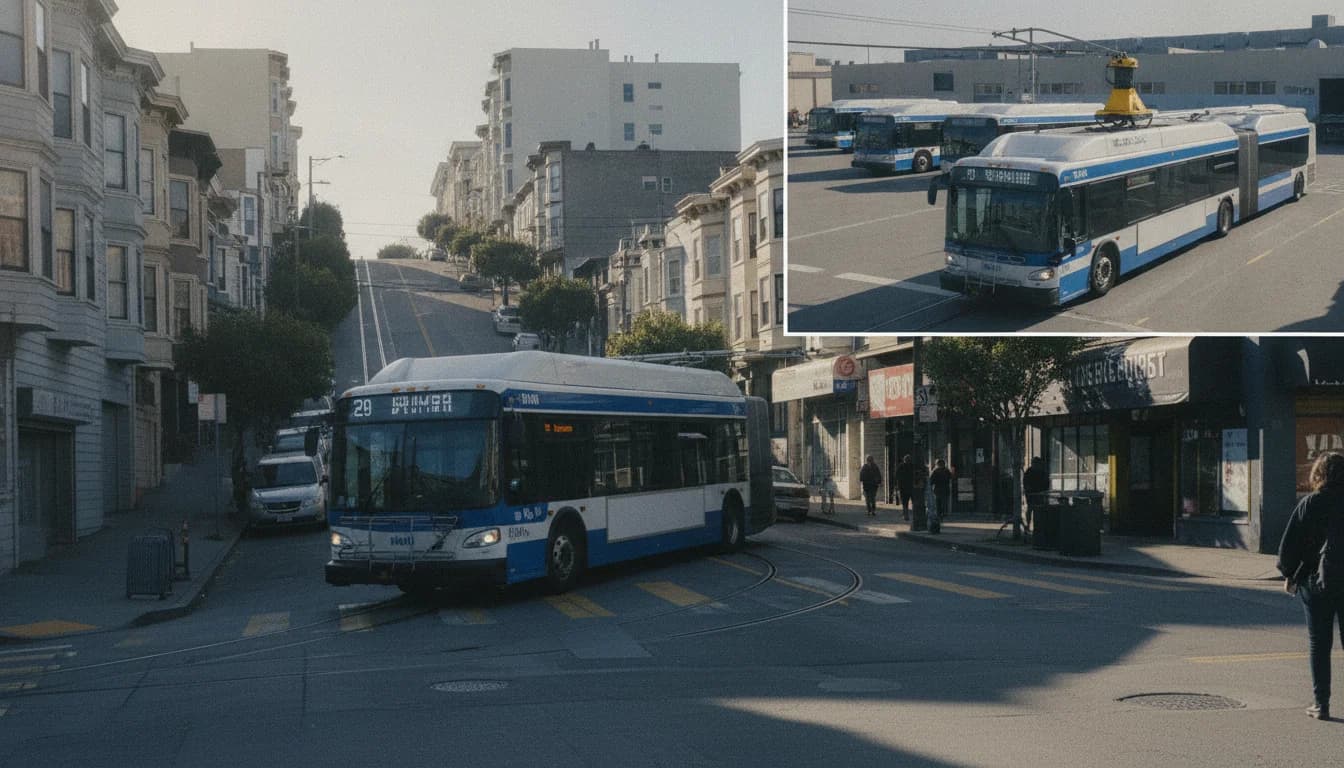
San Francisco’s public transit agency is pressing forward with a data-driven push to replace aging buses with zero-emission vehicles, a move framed as part of the city’s broader climate goals. The latest milestone in this Muni electric bus expansion comes as the city’s transportation leadership secured key approvals to rebuild a central operations yard and accelerate battery-electric bus acquisition. This effort is central to the San Francisco Municipal Transportation Agency’s strategy to operate a carbon-neutral transit system by 2040, with the potency of the Bay Area’s public-transport network potentially amplified as cleaner buses move into core routes. The announcements come as city planners emphasize reliability, rider experience, and the practicalities of building out the necessary charging and maintenance infrastructure across a growing BEB (battery-electric bus) fleet. As of mid-2023, the first ten BEBs had entered revenue service, underscoring early traction for the program and setting the stage for broader expansion. (sfmta.com)
The Muni electric bus expansion is not just about new vehicles; it’s anchored in a long-term infrastructure and facility strategy that includes a transformative yard modernization. In March 2026, San Francisco’s Board of Supervisors gave final approval to the Potrero Yard Modernization Project, a four-story facility designed to house, service, and charge a growing all-electric Muni fleet. The project’s timing aligns with a multi-year plan to transition away from fossil-fueled and hybrid buses toward a fully electric fleet by 2040. The yard will support increased bus storage and maintenance capacity, while paving the way for a scalable charging network and future fleet growth. Substantial completion is targeted for 2030, with the yard intended to accommodate hundreds of electric buses as the city’s transit needs evolve. (sfmta.com)
Opening
San Francisco’s Muni electric bus expansion is unfolding in multiple, interlocking phases. The city’s zero-emission bus rollout is structured to test BEB technology on steep, high-demand routes, then scale up as performance data informs procurement and infrastructure decisions. The program has progressed from a pilot in the early 2020s into a broader procurement and facilities program, with secure funding channels and ambitious fleet goals. In this context, the Potrero Yard modernization is a keystone project: a modern, purpose-built facility designed to house, charge, and support the transition to a fully electric Muni fleet by 2040. The economic and logistical commitments are sizable, but city officials emphasize that the long-run benefits—cleaner air, quieter streets, and a more reliable service—are aligned with both climate targets and rider expectations. (sfmta.com)
This report provides a data-driven view of what happened, why it matters, and what’s next for Muni electric bus expansion in the Bay Area. It synthesizes official updates from SFMTA, board actions, and independent policy context to present a clear timeline and practical implications for riders, workers, and the region’s climate objectives. The evidence trail shows steady progress—from early BEB pilots in 2020 to formal procurement actions in 2025 and 2026, culminating in the Potrero Yard modernization that underpins a scalable BEB future. (sfmta.com)
Section 1: What Happened
Initial Battery Electric Bus Pilot and Early Fleet Diversity
The road to a broader Muni electric bus expansion began with a pilot program designed to gauge performance, range, and maintenance requirements for BEBs in San Francisco’s hilly terrain. In 2020, the SFMTA placed orders for three 40-foot battery-electric buses from each of three manufacturers—New Flyer, BYD USA, and Proterra—to assess current BEB technology and its compatibility with Muni’s operating environment. The pilot was complemented by a plan to bring in Nova Bus in 2021, broadening the field of tested BEB platforms and laying the groundwork for a more robust evaluation framework. The pilot’s objective was to test in real revenue-service conditions and to compare BEBs against hybrid and trolley-equipped vehicles across key corridors. The program also included the installation of charging infrastructure at maintenance facilities to support testing and eventual revenue service. The first BEB deliveries and testing occurred in the early phase of the program, with ongoing data collection to inform future procurements. (sfmta.com)
By mid-2023, the program had achieved a notable milestone: the first ten battery-electric buses entered revenue service, marking a concrete transition point from piloting to operational BEB deployment on SF’s routes. The battery-electric fleet’s presence on lines such as the 9 San Bruno, 22 Fillmore, 29 Sunset, and 44 O’Shaughnessy highlighted the city’s willingness to place BEBs in challenging service environments, while ongoing testing continued to refine performance metrics. The BEB program also underscored the importance of charging infrastructure, including facilities at Woods Yard and a charging unit at Marin, both essential to sustaining BEB operations as the fleet expanded. (sfmta.com)
In parallel with vehicle testing, SFMTA’s reporting noted the pilots’ broader implications for service planning. The early BEB work emphasized the goals of consistency with existing electrified transit modalities and a careful transition that preserves rider experience, reliability, and safety while achieving environmental benefits. This early period laid the groundwork for subsequent procurement actions that would scale BEBs more broadly and accelerate the city’s path toward a fully electric Muni fleet. (sfmta.com)
Expanded Procurement and High-Impact Infrastructure Upgrades
A major milestone in the Muni electric bus expansion occurred in early 2025 when the San Francisco Board of Supervisors approved new BEB procurements to accelerate the BEB rollout. The Board approved a contract with New Flyer of America, Inc. to procure four 40-foot and three 60-foot battery-electric buses, along with spare parts, tools, manuals, training, and telematics licenses, under a cooperative purchasing arrangement. The contract amount not to exceed $13,424,512 and a term not to exceed five years became effective upon approval. This procurement represented a concrete step beyond the pilot, signaling the city’s commitment to a broader BEB network and the need for a diversified fleet to manage capacity and route diversity. The legislative action and its timing illustrate how SF’s BEB expansion has moved into a procurement phase informed by earlier testing and by the region’s funding environment. (sfgov.legistar.com)
In addition to BEB procurements, the city advanced the infrastructure necessary to support an expanding BEB fleet. A Low- or No-Emission Grant—funding the build-out of charging infrastructure—provided critical support for 18 electric vehicle charging stations at Woods and Islais Creek bus yards. The grant, totaling $31 million, underpinned the installation of inverted pantographs and associated platforms required to scale charging capacity as BEB deployments grew. The availability of charging capacity is a central constraint for rapid BEB expansion, and the grant-supported facilities are a foundational element of the Muni electric bus expansion strategy. This funding and the resulting charging infrastructure investments are a testament to the city’s willingness to invest in both vehicles and the power and grid readiness that underpins their operation. (sfmta.com)
Potrero Yard Modernization: A Central Hub for a Fully Electric Muni
The centerpiece of the current expansion is the Potrero Yard Modernization Project, a transformative facility designed to replace the aging 1915-era yard with a new, four-story complex dedicated to electric bus storage, maintenance, and charging. The SFMTA Board of Directors approved the project on March 3, 2026, and the San Francisco Board of Supervisors approved the project on March 24, 2026, signaling a shared, citywide commitment to the BEB transition. The project is designed to support a scalable electric fleet by providing the space, utilities, and operational efficiency needed to manage a growing BEB population. The Potrero project is planned to reach substantial completion in 2030, with the yard configured to accommodate a significant increase in bus capacity and to serve as a central node for charging and maintenance as the BEB rollout accelerates. The project’s scope includes both the infrastructure facility and a related housing component, reflecting a broader approach to urban development and transit efficiency. (sfmta.com)
Key project details underscore the scale of the expansion. The Potrero Yard modernization is described as a 4-story, approximately 601,861 gross square foot facility with capacity for around 250 electric buses, targeted to support a fully electric fleet in the future. The project’s estimated cost is substantial, reflecting a multi-year, multi-party effort to align infrastructure with fleet modernization goals. The timeline notes that construction is expected to start in early 2027 and that the yard would open in 2030, with Substantial Completion anticipated on June 26, 2030. The project is being delivered through a public-private partnership structure and involves a development partner, financing arrangements, and long-term operational responsibilities for the city. (provident.org)
Financing, Partnerships, and Long-Term Commitments
The Potrero Yard Modernization Project’s financing and governance structure reflect the scale and complexity of delivering a fully electric bus fleet. The project’s disposition includes a 30-year term following substantial completion and a financing plan that contemplates a long-term public-private collaboration to deliver the yard, with a housing component designed to advance broader city goals. The project’s Board-approved financing framework includes tax-exempt obligations and milestone payments, highlighting how large-scale transit electrification often requires innovative funding tools and long planning horizons. The project’s broader implications—supporting the city’s climate action goals, ensuring reliability for riders, and enabling future growth—are central to the Bay Area’s transit strategy as it seeks to decarbonize while maintaining robust service levels. (sfgov.legistar.com)
Section 2: Why It Matters
Environmental and Public Health Impacts
A core motivation behind Muni electric bus expansion is the environmental benefit of electrified transit. BEBs eliminate tailpipe emissions on the road, contributing to cleaner air and a reduction in greenhouse gas emissions associated with city transportation. The SFMTA’s own program materials emphasize that battery-electric buses generate zero greenhouse gas emissions in operation and that the energy they use can be sourced from 100% greenhouse gas-free hydroelectric power in San Francisco. These environmental advantages are central to the city’s climate action plans and align with broader regional targets for emissions reductions from the transportation sector. The BEB rollout is framed as a critical step toward a carbon-neutral city by 2040, a goal echoed in SFMTA documents and planning materials. (sfmta.com)
Beyond tailpipe emissions, the BEB expansion is linked to broader urban health and environmental outcomes. Noise reduction associated with electric propulsion is highlighted as a service improvement feature, reducing neighborhood noise footprints on busy corridors and enhancing rider comfort on high-demand routes. While the environmental calculations are complex and depend on grid power and lifecycle assessments, the direct emissions reductions from BEB operation—and the potential to combine BEBs with clean energy sources—are widely cited as central benefits of the program. These expected outcomes are integral to the city’s climate action strategy and transit-oriented development goals. (sfmta.com)
Rider Experience, Reliability, and Service Quality
From a rider perspective, the shift toward BEBs is anchored in tangible improvements to the experience. The BEB program highlights include quieter operation, reduced maintenance costs, and the potential for improved reliability due to standardized components and telematics integration. The plan outlines that BEBs are expected to deliver at least 160 miles per charge under a typical 52-passenger load, a metric that informs route planning and charging needs across the network. The expansion also reflects a strategy to maintain parity with or improve upon the performance of existing trolley and diesel-hybrid buses while achieving emissions reductions. Testing in SF routes further demonstrates the city’s commitment to ensuring BEBs can perform on steep grades and crowded corridors that characterize many Muni routes. (sfmta.com)
Moreover, the early BEB deployments are serving as a proving ground for future procurement and facility needs. The early pilots’ data have shaped the procurement strategy, including the diversification of BEB manufacturers and the scale-up of charging infrastructure. Riders benefit not only from cleaner air but also from a transit system that is more predictable as BEB operations are integrated with the city’s existing fleet, maintenance schedules, and service planning. While the transition introduces upfront capital costs and logistical complexity, the long-run objective is a more reliable and sustainable network that can better withstand future weather, demand, and climate pressures. (sfmta.com)
Economic and Fiscal Considerations
The Muni electric bus expansion is not without financial complexity. Projections for the broader zero-emission transition include substantial vehicle and facility costs. The Zero-Emission Bus Rollout Plan identifies a long-term budget envelope for BEBs and related facilities, with early estimates around the order of several billions of dollars when considering vehicle purchases, charging infrastructure, and facility retrofits. The plan emphasizes the need for robust funding strategies given SF’s budget environment and the long lead times associated with facility modernization. In this context, the SFMTA has pursued a combination of state purchasing cooperatives, federal funding, and city-level budgeting to advance BEB procurement and yard modernization, reflecting a pragmatic approach to financing a multi-decade transition. (sfmta.com)
The city’s fiscal environment and political dynamics do matter for the BEB expansion’s pace. The SFMTA has reported a dire budget outlook in recent years, underscoring that cost control, prioritization of core services, and careful phasing of capital investments are essential to sustain Muni operations while advancing electrification. While these fiscal realities create headwinds, the Potrero Yard modernization and the BEB procurement plans illustrate a deliberate strategy to marry climate ambitions with operational realities. The result is a phased, data-informed approach designed to minimize service disruption while delivering long-run environmental and mobility benefits. (sfmta.com)
Regional Context: Aligning with Bay Area Climate and Transit Goals
The Bay Area’s transportation system is characterized by a multi-agency landscape that seeks to align local electrification efforts with regional planning. The Metropolitan Transportation Commission (MTC) and related regional planning efforts stress transit reliability, emissions reductions, and coordinated infrastructure investments across multiple agencies and jurisdictions. In this context, SF’s Muni electric bus expansion is part of a broader regional push to accelerate zero-emission bus adoption, upgrade charging and power infrastructure, and ensure that local transit agencies can meet growing demand while advancing climate goals. The region’s planning framework emphasizes the integration of buses with other transit modalities and the need for resilient, scalable infrastructure to support a shifting technology landscape. (mtc.ca.gov)
In San Francisco specifically, the city’s commitment to a fully electric Muni fleet by 2040 is reflected in official planning documents and capital programs. The Potrero Yard modernization is not just a stand-alone project; it is a strategic enabler of a longer-term zero-emission transit network. By pairing a large-scale BEB procurement with a modern, purpose-built maintenance and charging facility, the city aims to reduce lifecycle costs and maintain service quality while curbing emissions. The alignment between the city’s climate action plan, transit-first policies, and the planned BEB rollout underscores a holistic approach to urban mobility that integrates fleet modernization with urban design, housing, and community benefits. (sfmta.com)
Section 3: What’s Next
Near-Term Milestones and Key Decisions
The immediate horizon for Muni electric bus expansion is shaped by several concrete milestones. With the Potrero Yard Modernization Project receiving formal approvals in March 2026, construction is slated to begin in early 2027, and the yard is planned to open in 2030. This timeline creates a defined window for grid upgrades, charging infrastructure ramp-up, and fleet integration activities that will be essential to support a growing BEB fleet. The yard’s capacity and the planned improvements are designed to accommodate a step-change in bus storage and maintenance capacity, which is necessary to support the anticipated BEB expansion. In parallel, procurement decisions continue to roll forward, including additional BEB orders that reflect lessons learned from the pilot and the evolving technology landscape. (sfmta.com)
Funding, financing, and project governance will remain critical as the program moves forward. The Potrero Yard financing plan contemplates long-term obligations and milestone payments tied to project progress, with potential bond issuances and public-private financing structures. These financial mechanisms are typical for major transit projects and reflect a broader strategy to secure capital while avoiding dramatic service disruptions. The planning process emphasizes ongoing coordination with PG&E and other utilities to ensure power availability and reliability for the BEB charging network, an issue that will shape project phasing and the pace of fleet expansion. (sfgov.legistar.com)
Long-Term Outlook and the Path to a Fully Electric SF Bay Area Transit
Looking further ahead, the Muni electric bus expansion is anchored in an aspirational, long-term objective: operate an all-electric Muni fleet by 2040. This target is a throughline in SFMTA’s planning materials and speaks to a regional aspiration for decarbonized transit that can serve as a model for other cities. The Potrero Yard modernization, by design, provides the infrastructure backbone needed to support large-scale BEB deployment while enabling ongoing maintenance and reliability improvements. The overall strategy contemplates a phased transition: expanding BEB procurement to increase fleet size, upgrading charging and electrical infrastructure, and gradually phasing out diesel and hybrid vehicles as BEBs prove their reliability and cost-effectiveness on a broad scale. (sfmta.com)
Crucially, the Bay Area’s transit ecosystem is interconnected. While SF moves forward with its own electrification program, regional agencies are watching performance, cost, and public reception to inform broader adoption and funding strategies. The evolving BEB landscape—comprising multiple manufacturers, federal and state funding programs, and local infrastructure build-out—will likely influence procurement strategies and infrastructure planning in neighboring jurisdictions as the Bay Area continues to push toward more sustainable and resilient urban mobility. The effort is not isolated to San Francisco; rather, it’s a regional narrative about how major cities implement zero-emission transit at scale while maintaining service levels and rider access. (sfmta.com)
What to Watch For
- PG&E coordination and utility upgrades: As BEB charging demands grow, utility planning and interconnections will be critical to meet power needs and avoid bottlenecks in the grid. The ongoing collaboration with PG&E remains a key determinant of how quickly charging capacity can scale alongside fleet expansion. (sfmta.com)
- Budget and funding cycles: Municipal finance realities can shape project scope and phasing. The city’s budget environment, as well as federal and state funding opportunities, will influence the pace of yard modernization, BEB procurement, and charging infrastructure investments. (sfmta.com)
- Fleet deployment and performance data: Real-world BEB performance data from the pilot and initial revenue service BEBs will guide future procurements, vehicle specifications, and maintenance practices. The experience of SF’s BEB pilots—especially in challenging routes—will continue to inform decisions about route planning, charging logistics, and telematics use. (sfmta.com)
- Regional coordination: As Bay Area agencies advance electrification plans, cross-jurisdiction collaboration and knowledge-sharing will help align procurement approaches, charging standards, and grid readiness. The broader regional planning context emphasizes performance, reliability, and environmental benefits of a coordinated transition to zero-emission transit. (mtc.ca.gov)
Closing
The Muni electric bus expansion represents a deliberate, two-track approach: accelerate the deployment of battery-electric buses while simultaneously building the infrastructure and facilities required to sustain a growing BEB fleet. The Potrero Yard modernization stands as a tangible, multi-year commitment to supporting that transition, enabling increased storage, quicker maintenance, and scalable charging for hundreds of BEBs in the years ahead. With early pilots validating BEB performance, and with formal procurement and construction milestones now in place, San Francisco is turning climate objectives into concrete transit improvements. Riders can expect cleaner air, quieter streets, and a more reliable Muni experience as the city works toward a fully electric future. The next few years will be pivotal as construction progresses, funding strategies evolve, and the Bay Area’s transit ecosystem continues to adapt to a rapidly changing technology and policy landscape. (sfmta.com)