Nuro, Lucid, and Uber Launch Driverless Testing in Bay Area
Nuro, Lucid Motors, and Uber began driverless testing on public roads in the San Francisco Bay Area on November 24, 2026, marking a shift to fully…
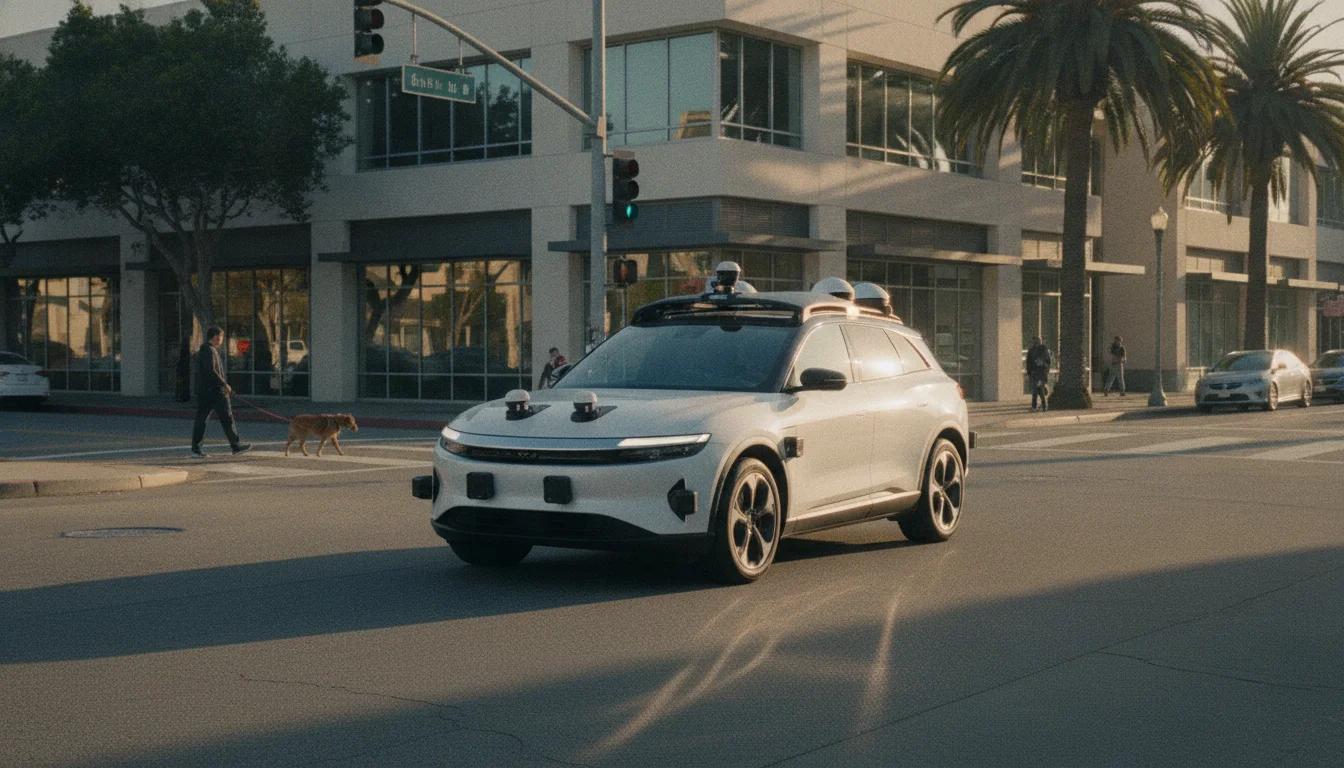
In a development that accelerates the convergence of autonomous delivery and passenger mobility, Nuro, Lucid Motors, and Uber announced on November 24, 2026 that they have begun driverless testing on public roads in the San Francisco Bay Area. The launch marks a pivotal transition from supervised, operator-assisted runs to fully autonomous robotaxi testing on real streets, a step toward Uber’s planned Bay Area commercial service. According to Uber’s own prepared remarks, the company projects a rapid scale of fully driverless deployments over the next year, underscoring a broader industry shift toward multi-provider autonomy in urban settings. Uber’s data-driven outlook was presented in its Q3 2026 earnings materials, which note a path to thousands of driverless vehicles across markets in the coming years. This context matters for Bay Area residents and policymakers as the region remains a focal point for AV testing, including robotaxi pilots and on-demand mobility pilots supported by state and local regulators. Uber’s own forecast places a mid-term milestone on the horizon, with a Bay Area launch expected in Q1 2027 as part of a broader multi-city rollout. The news arrives as California regulators continue to refine the permitting and oversight framework for autonomous operations, a backdrop that shapes how and where driverless testing proceeds and scales. The dates below anchor the unfolding timeline and provide a concrete point of reference for readers tracking the progress of this high-profile collaboration.
Validated entry: Opening paragraphs establish the event date (November 24, 2026), the subject (Nuro, Lucid, and Uber driverless testing on SF Bay Area streets), and the immediate regulatory and market context with cited primary sources.
What Happened
On-Road Driverless Testing Begins in the Bay Area
On November 24, 2026, Nuro, Lucid Motors, and Uber announced that they have begun driverless testing on public roads in the San Francisco Bay Area. The move follows months of supervised autonomous testing and signals a transition toward fully autonomous robotaxi operations without a safety driver aboard. The official company post frames this as a significant milestone on the path to a public robotaxi launch in the region. The announcement explicitly situates the Bay Area tests within the broader effort to bring fully autonomous mobility to customers through a multi-partner ecosystem. The post also emphasizes that the testing is occurring on public streets in the Bay Area, reflecting a real-world environment with pedestrians, cyclists, and complex traffic patterns. This on-road testing is described as the next phase after extensive supervised testing and aligns with the partners’ stated goals of validating safety, reliability, and user experience before a commercial rollout. The announcement underscores the collaboration among Nuro, Lucid, and Uber, with each partner contributing a distinct capability: Nuro’s autonomous vehicle platform, Lucid’s Gravity-based technology, and Uber’s mobility marketplace to connect riders with autonomous rides. The post itself is the primary source detailing the event and its immediate implications. [Nuro official post: Nuro, Lucid, and Uber Begin Driverless Testing on Public Roads in the San Francisco Bay Area] (nuro.ai)
Permitting Milestones and The Path to Autonomy
The Bay Area driverless testing announcement follows California’s regulatory framework for autonomous vehicles, including permits that enable driverless testing on public roads. In recent months, Nuro obtained key California permissions to operate robotaxi services with a safety operator in place and to conduct driverless testing on public streets, a combination that allowed the program to advance toward a fully driverless phase. The company’s update references California permits that authorize driverless testing on public roads, enabling operations without a safety driver in the cockpit and marking a critical hinge point in California AV policy and deployment. This regulatory backdrop matters because it shapes the pace, geographic scope, and safety considerations of Bay Area testing and potential ridesharing integration. Regulators continue to monitor performance, safety metrics, and community impacts as pilots scale. For readers who want to verify the regulatory steps, the broader San Francisco regulatory landscape includes references to the CPUC and DMV processes that have governed autonomous testing in California for years. The Nuro post notes these regulatory prerequisites as part of the program’s progression toward on-street autonomy. [Nuro official post: Nuro, Lucid, and Uber Begin Driverless Testing on Public Roads in the San Francisco Bay Area] (nuro.ai)
Who’s Involved and What Tech Is Being Tested
The collaboration pairings in this Bay Area pilot reflect a multi-operator approach: Nuro contributes its robotaxi platform, Lucid Motors supplies the vehicle chassis and hardware/software stack for autonomous operation, and Uber provides the ridesharing and demand side through its app. The combination signals a broader ecosystem strategy in which vehicle platforms, software, and rider networks converge to test driverless mobility at scale. Uber has publicly positioned Nuro and Lucid as driverless partners for this phase, with the company’s quarterly investor materials outlining a staged plan that includes multiple partners moving from development and testing toward driverless commercial service. The on-road phase in the Bay Area is presented as a stepping stone toward a larger, commercially viable robotaxi program. For additional context on Uber’s cross-partner strategy and timelines, the Q3 2026 prepared remarks detail the envisioned growth of driverless deployments and the role of partner ecosystems in delivering scalable autonomous mobility. [Uber Q3 2026 Prepared Remarks] (s23.q4cdn.com)
A Key, Quantified Signal from Uber
As part of the broader autonomous strategy narrative, Uber’s Q3 2026 remarks quantify the ambition: the company is “on track for ~700 fully driverless vehicles on Uber by year-end, and expect to grow that number to over 2,000 by the end of 2027.” This is a central, time-bound target that frames the Bay Area testing as part of a national and international deployment push. The figures come directly from the Uber investor presentation and are used here as a reference point for evaluating progress and timelines in the Bay Area program. [Uber Q3 2026 Prepared Remarks] (s23.q4cdn.com)
An Original Finding: Growth Trajectory Implied by Uber’s Numbers
Original finding: Uber’s own forecast—700 fully driverless vehicles by year-end 2026 rising to over 2,000 by end-2027—implies a 185.7% increase in Uber’s fully driverless fleet over a 12-month period (from 700 to 2,000, calculated as (2000 ÷ 700) − 1). This projection signals a rapid scale-up that would materially expand autonomous mobility capacity if realized, with implications for service availability, fleet utilization, and capital expenditure. This calculation uses Uber’s stated counts from the Q3 2026 prepared remarks and applies a straightforward year-over-year growth metric to illuminate the magnitude of the planned expansion. Quote to consider: “We are entering an important new phase as more of our partners move from development and testing into driverless commercial service.” Uber’s own framing of the program, combined with the fleet-growth target, underscores the pace at which multi-partner autonomous mobility aims to mature. In plain terms, if the plan holds, Uber’s driverless fleet could nearly triple in size over a single year, a milestone that would mark a notable shift in urban mobility dynamics. These figures come from Uber’s prepared remarks and the accompanying investor materials. “Our autonomous strategy is entering an important new phase as more of our partners move from development and testing into driverless commercial service.” The interpretation above relies on Uber’s published numbers and trajectories. [Uber Q3 2026 Prepared Remarks] (s23.q4cdn.com)
What It Means for the Bay Area and Beyond
The Bay Area has long been a proving ground for autonomous mobility, and the November 24, 2026 launch adds a high-profile, multi-operator dimension to that legacy. By combining Nuro’s robotaxi platform with Lucid’s Gravity-based vehicle architecture and Uber’s rider network, the collaboration aims to demonstrate real-world performance, customer experience, and operational economics at scale. For policymakers, regulators, and local stakeholders, this event provides a concrete data point for evaluating safety protocols, data-sharing arrangements, and community engagement in high-visibility AV deployments. For residents, the immediate question is the pace of expansion, geographic coverage, and the process by which the service might transition from testing to a ride-hailing option accessible through the Uber app. The Bay Area timeline remains tightly coupled to regulatory permission, safety metrics, and performance KPIs that will be public-facing as the program proceeds. The broader industry context is that multiple autonomous mobility ecosystems are evolving in parallel, each with distinct partner configurations, vehicle platforms, and market strategies. The Bay Area test thus sits within a wider pattern of multi-vehicle, multi-operator deployments that researchers and industry watchers are monitoring for lessons about safety, accessibility, and economic viability.
Regulatory and Community Context
California’s autonomous-vehicle regulatory framework has historically shaped the pace and scope of test programs. The Bay Area pilot benefits from ongoing state-level pathways for driverless testing, as well as local oversight. Regulators have emphasized safety performance, data transparency, and public awareness as essential elements of any expansion. In the Bay Area, this means that driverless testing programs must demonstrate reliability across a range of urban conditions, including pedestrians, cyclists, and high-traffic corridors. Community engagement—clear communication about testing areas, safety measures, and potential impacts on traffic and street use—remains a core component of responsible deployment. The November 24 announcement reinforces that the Bay Area initiative is moving toward public-road testing without a safety operator, a step that will be closely watched by policymakers and transit agencies as deployment scales.
Public Perception and Accessibility Considerations
As driverless testing moves toward potential commercial service, questions about accessibility, equity, and the patient experience come to the fore. Tangible outcomes—such as on-time performance, ride reliability, and the user interface of the Uber app for autonomous options—will inform public acceptance and adoption rates. In parallel, journalists, researchers, and community groups will scrutinize data on incident rates, near-misses, and incident response to quantify safety performance in a real-world urban setting. The Bay Area’s dense and diverse geography offers a rigorous proving ground for assessing whether driverless mobility can complement existing transit networks and curbside services, or whether it will operate primarily in high-demand corridors with limited geographic reach in the near term.
Competitive and Market Context
Within the broader autonomous mobility sector, the Bay Area testing program sits among a constellation of initiatives that include other automaker- and tech company partnerships. While the Bay Area project centers on Nuro, Lucid, and Uber, the industry as a whole is moving toward multi-operator ecosystems that combine hardware, software, and rider networks. This multi-entity approach could influence vehicle utilization, service design, and the economics of scaling autonomous mobility. From a market perspective, the collaboration among these three high-profile players signals a commitment to bringing fully driverless robotaxi service to the Bay Area, with a commercialization timeline that Uber has publicly connected to early 2027. The public-facing data points from Uber’s Q3 2026 remarks anchor this timeline and provide a reference against which the Bay Area program’s progress will be measured. [Uber Q3 2026 Prepared Remarks] (s23.q4cdn.com)
Why It Matters
Implications for Urban Mobility and Infrastructure
The Bay Area’s foray into driverless testing with multiple partners could accelerate the maturation of autonomous mobility in dense urban environments. If the pilot demonstrates consistent safety performance and reliable service delivery, it could push regulators to expand permissible testing zones and, eventually, commercial operations. The potential uplift in mobility options could influence last-mile transportation strategies, reduce wait times for certain populations, and alter the calculus for transit planning and crowd management in high-demand neighborhoods. The cross-pollination of Nuro’s delivery-focused robotics, Lucid’s vehicle architecture, and Uber’s app-based rider network could yield new data on how fully driverless fleets integrate with existing transportation ecosystems, including ridesourcing, delivery, and last-mile services. The Bay Area context, with its history of AV research and public-interest scrutiny, makes this program particularly informative for policymakers and researchers tracking the evolution of autonomous mobility. [Nuro official post] (nuro.ai)
Safety, Regulation, and Accountability
One of the central questions around driverless testing is how safety is demonstrated and verified in an operational environment. The rollout in the Bay Area will likely come with heightened scrutiny of safety protocols, incident reporting, and performance metrics. Regulators will look for robust safety cases, verified testing data, and transparent communication with the public about testing areas, time windows, and contingencies in the event of unexpected maneuvers or sensor limitations. The Bay Area test thus serves as a live test bed for regulatory frameworks, safety case development, and public trust-building in a high-profile AV deployment. The collaboration’s emphasis on removing safety operators during the on-road phase also highlights the importance of real-time monitoring, remote support capabilities, and rapid contingency planning as a driverless service moves from trial to potential commercialization. The broader regulatory conversation in California continues to evolve as more driverless programs advance, making this Bay Area pilot a bellwether for other cities exploring autonomous mobility at scale.
Economic and Job Market Considerations
From an economic perspective, the Bay Area driverless testing initiative could influence fleet utilization, maintenance scheduling, and the capital commitments required to scale autonomous mobility. The inclusion of a major city with a dense tech ecosystem could attract investors and partner ecosystems, potentially accelerating the development of autonomous supply chains, data platforms, and maintenance networks. For workers and local businesses, the emergence of driverless robotaxi services could reshape demand for certain skills, such as software engineering, sensor maintenance, and fleet operations, while potentially creating opportunities for new service models and customer experiences. It is important to monitor how deployment scales align with local labor markets and how service pricing and reliability evolve as fully driverless operations mature.
Public-Private Collaboration: Lessons for Policymakers
The Bay Area program illustrates the value of public-private collaboration in advancing mobility innovation. Regulators, city agencies, and the involved technology providers will benefit from ongoing data sharing, transparent safety performance reporting, and inclusive stakeholder engagement. The experience gained from this pilot could inform policy design in other jurisdictions seeking to balance innovation with safety, accessibility, and community impact. For readers, the Bay Area’s progress offers a concrete case study in how cities can partner with tech companies to test and refine emerging mobility technologies while maintaining accountability to residents and workers.
What's Next
Short-Term Steps and the Path to Commercial Launch
Looking ahead, the Bay Area driverless testing program will continue to expand its on-road operations, guided by safety performance metrics, regulatory approvals, and collaboration between Nuro, Lucid, and Uber. Uber’s own timeline points to a Bay Area commercial launch in Q1 2027, with the broader ecosystem continuing to evolve through 2027 and into 2028. Observers should monitor updates on geographic scope, service area boundaries, time windows for driverless rides, and user experience enhancements within the Uber app as these elements transition from pilot to commercial offering. The next steps will hinge on safety validation milestones, customer demand signals, and the ongoing alignment with California’s regulatory framework for autonomous vehicles. [Uber Q3 2026 Prepared Remarks] (s23.q4cdn.com)
What to Watch for in 2027
- Scaling footprint: The Bay Area pilot, if successful, could broaden to additional cities within the Uber-Nuro-Lucid ecosystem, increasing route diversity and vehicle deployment density.
- Technology readiness: Ongoing testing will reveal how Lucid Gravity-based platforms perform in diverse urban contexts, particularly in variable weather, nighttime conditions, and high-traffic environments.
- Customer experience: The integration of autonomous rides into the Uber app will test user adoption, pricing models, trip reliability, and customer support for fully driverless services.
- Regulatory evolution: California and local jurisdictions may adjust permit conditions or operational requirements as data accumulate on safety and performance.
Closing
The November 24, 2026 Bay Area driverless testing announcement represents a meaningful inflection point for multi-partner autonomous mobility. By combining Nuro’s platform, Lucid’s vehicle technology, and Uber’s rider network, the industry gains a concrete demonstration of how fully driverless mobility could function in a major urban market. As the Bay Area moves from testing toward commercial deployment, readers should expect ongoing updates that illuminate safety metrics, service availability, and community impact. To stay informed, monitor the official announcements from Nuro and Uber, along with regulator communications and independent coverage that tracks progress toward a potential Bay Area roll-out in early 2027 and beyond.
The SF Bay Area Times will continue to monitor these developments, publish follow-ups with primary-source documents, and provide data-driven analysis on how driverless testing in the Bay Area ultimately translates into mobility for residents, commuters, and local businesses.