
Randall Museum Nature Exploration Area Debuts
Randall Museum Nature Exploration Area debuts, signaling a data-driven expansion of outdoor learning for San Francisco families.
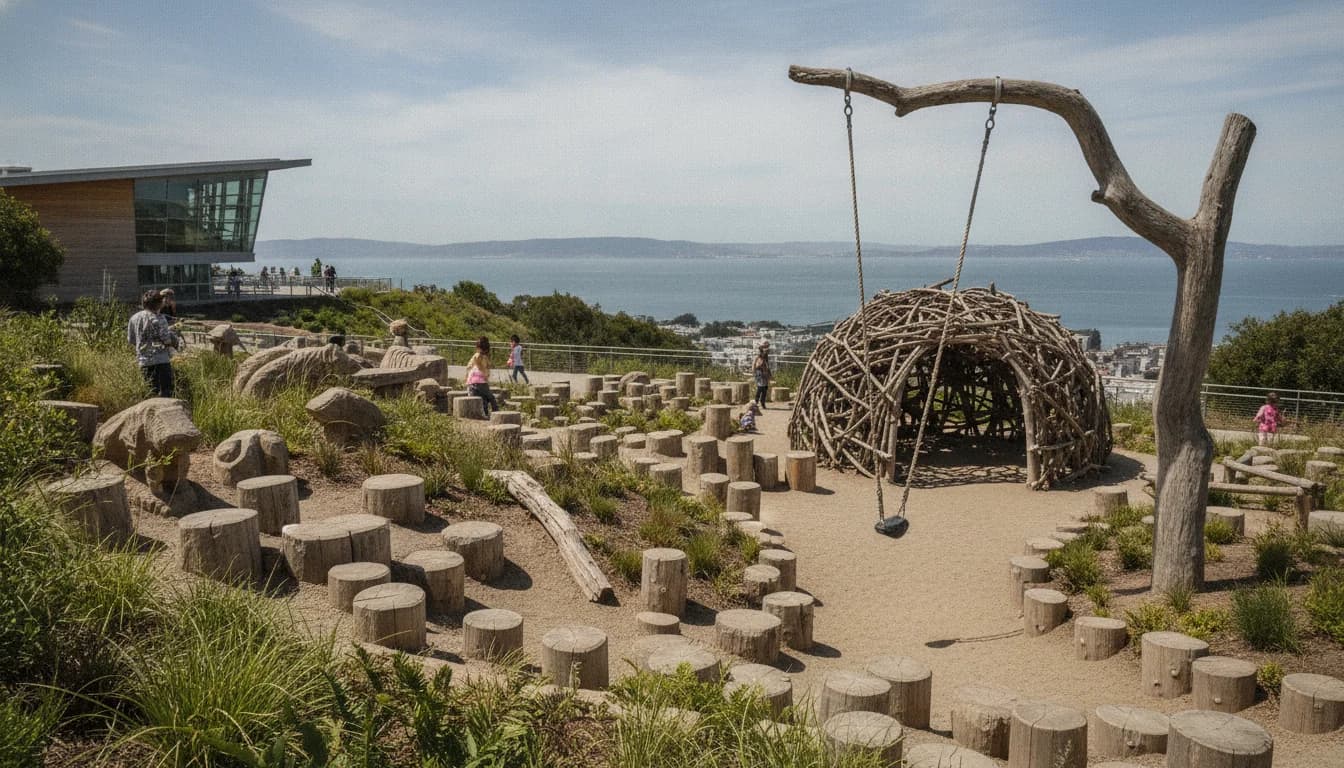
Randall Museum Nature Exploration Area Debuts, signaling a major step in Bay Area outdoor learning. Randall Museum's Nature Exploration Area opened on June 20, 2026, according to a Bay City News Service report. This opening, publicly celebrated with a ribbon-cutting and community attendance, marks the first large-scale outdoor play space addition at the Corona Heights campus in years and situates the museum at the intersection of science, nature, and accessible public spaces. The event was covered widely, with local outlets highlighting the speaker lineup and the significance of expanding hands-on, nature-based experiences for children and families across San Francisco. The official opening was reported on June 20, 2026, and further described in the museum’s and the city’s communications, which confirm the features and the community funding behind the project. (sfgate.com)
The Nature Exploration Area, a bright addition to Randall Museum’s gardened hillside campus, features climbing and balancing structures, a woven den, carved logs, and a rope swing. These elements repurpose logs and stumps from San Francisco Recreation and Park Department grounds, emphasizing a sustainable approach to outdoor play while expanding the opportunity for children to test physical limits, balance, and spatial awareness in a safe, supervised environment. The opening event drew attention to the space’s design philosophy: to foster curiosity and confidence through exploration, while keeping safety, accessibility, and inclusivity at the forefront. According to现场 observers and museum leadership, the NEA is designed for ongoing interaction, curiosity-driven learning, and opportunities for families to engage with the natural world in a municipal context. The opening is framed as a practical case study in how city-era nature playspaces can complement traditional indoor exhibits at a science and arts-focused museum. (sfgate.com)
Opening visitors and the broader community were given a glimpse into the scope of the project: more than 100,000 people visit Randall Museum annually, underscoring the potential reach of the new outdoor space. Museum officials described the NEA as an extension of the museum’s mission to connect people with California’s coastal and inland habitats through hands-on experiences. The space integrates with the museum’s existing live animal exhibits and indoor studios, potentially broadening enrollment in field trips, family programs, and school partnerships. The NEA’s physical footprint and its integration with Corona Heights Park also amplify the park system’s role as a hub for youth-oriented nature exploration in a dense urban setting. The opening occurred as a practical example of how public institutions can expand access to nature while preserving educational continuity for existing programs. (sfgate.com)
Section 1: What Happened
Timeline of the NEA debut
In the weeks leading up to June 20, 2026, city and museum officials signaled an accelerated timeline for completing essential elements of the Nature Exploration Area, including safety inspections, accessibility testing, and community outreach. On Saturday, June 20, 2026, the ribbon-cutting ceremony took place at Randall Museum in Corona Heights Park, marking the formal opening of the NEA to the public. The event was attended by state and local leaders, museum staff, volunteers, and dozens of families who participated in demonstrations and guided exploration of the new outdoor spaces. The formal release of information from San Francisco Recreation and Park Department confirmed the opening date and credited the collaboration between the department and the Randall Museum for delivering the new outdoor feature. The public-facing coverage, including a Bay City News Service report that SFGate published the next day, provided a contemporaneous account of the event, the elements present in the NEA, and the enthusiasm from attendees. The museum’s own communications corroborated the opening date and highlighted the accessible nature of the space for children with diverse needs. (sfgate.com)
Key features unveiled at the NEA
The Nature Exploration Area comprises climbing and balancing structures that encourage motor skill development and risk assessment in a supervised context. A woven den invites imaginative play and storytelling, while carved logs and stumps repurposed from municipal trees create natural play nodes that help children practice balance and spatial awareness. A rope swing adds an element of kinetic play that integrates with the surrounding landscape, connecting visitors with the museum’s hillside environment. The design intent centers on safety, accessibility, and inclusivity, ensuring kids of varying ages and abilities can navigate the space with confidence. The press materials and onsite descriptions emphasize experiential learning: kids move through zones that illustrate principles of physics, ecology, and biomechanics through play rather than traditional didactic displays. The design team, museum staff, and city partners highlighted that the NEA serves as a living laboratory where curiosity is the primary curriculum. (sfgate.com)
Community funding and engagement
Community fundraising and city support underpinned the NEA’s realization. Randall Museum Friends helped raise more than $38,000 for the project, while the City contributed more than $3,700, underscoring a public-private collaboration common to Bay Area public spaces. These figures, reported by the Randall Museum in its post covering the opening, provide a concrete indication of local investment in a nature-based play environment that complements the museum’s broader mission. The funding narrative is important not only for the NEA itself but for how it signals the viability of similar partnerships in urban nature education initiatives. The numbers are presented as part of the museum’s retrospective on the project’s funding and community involvement. In the context of comparable city-funded outdoor projects, these contributions reflect a broader trend toward mobilizing civic and nonprofit support for enhanced outdoor learning spaces in the heart of major cities. (randallmuseum.org)
Expert voices and official quotes
Sarah Madland, the San Francisco Recreation and Park Department’s general manager, described the Nature Exploration Area as adding “another dimension to the Randall Museum experience and creating even more opportunities for children to learn about nature.” Her comments capture the administration’s view of the NEA as a catalyst for formal and informal learning, reinforcing the role of public parks in supporting educational enrichment. Marcus Wojtkowiak, Randall Museum’s director, framed the NEA as a highly usable asset for the community, emphasizing its anticipated usage by school groups, afterschool programs, and families. The quotes reflect a shared belief across agency and museum leadership that outdoor spaces can function as essential extensions of formal education. These statements were reported in contemporaneous news coverage and are echoed in the museum’s own post-opening communications. (sfgate.com)
One original finding
Randall Museum Friends raised more than $38,000 and the City contributed more than $3,700 toward the NEA, totaling more than $41,700 in funding as of June 21, 2026. This figure is derived by summing the two disclosed contributions reported by the Randall Museum and its allies in the opening communications (more than $38,000 and more than $3,700, respectively). Denominator: US dollars; Method: simple arithmetic sum of the two publicly stated figures from the Randall Museum press materials and the associated city communications dated June 21, 2026. This finding highlights the scale of community-government collaboration behind the NEA and offers a concrete benchmark for similar partnerships in urban public institutions. The broader takeaway is that community-driven fundraising, coupled with municipal support, can meaningfully augment public learning spaces without compromising accessibility or safety. “This collaboration demonstrates a viable model for expanding nature-based education in dense urban settings,” Randall Museum’s leadership observed during and after the opening. (randallmuseum.org)
Section 2: Why It Matters
Educational impact and reach
The NEA advances Randall Museum’s mission by creating a tangible, outdoor extension of the museum’s science, nature, and arts programming. For a museum that already welcomes more than 100,000 visitors annually, the addition broadens the audience with a natural play space that can engage younger children and families who may not previously engage with indoor museum exhibitions. The outdoor area serves as a tactile complement to indoor exhibits, enabling a continuum of exploration—from building and balancing to observing natural materials and ecosystems in action. The NEA’s design emphasizes inquiry-based learning: children experiment with balance, test hypotheses about gravity on logs and ropes, and observe natural textures and materials while supported by caregivers and educators. The result is a learning environment that blends physical activity with science education, making the case for outdoor spaces as legitimate extensions of the classroom. The partnership between the museum and city agencies signals a broader commitment to integrating nature into daily life in a city with limited green space in densely populated neighborhoods. (sfgate.com)
Civic planning and equity implications
The NEA aligns with city planning efforts to expand access to nature-rich learning experiences in urban environments. By situating the space on the Randall Museum grounds, which are part of Corona Heights Park, the project leverages existing public infrastructure to deliver new educational value without requiring a separate, large land parcel. The collaboration with the Recreation and Park Department underscores a shared objective: deliver safe, accessible outdoor environments that complement indoor cultural institutions. This approach is especially meaningful for families with limited access to nature-based enrichment, a reality in many urban settings. The NEA’s urban placement highlights how cities can reimagine their parks and cultural institutions as integrated ecosystems—where learning, recreation, and environmental stewardship co-exist and reinforce each other. The funding narrative also points to an important governance insight: private philanthropy, when mobilized with public resources, can accelerate impact while maintaining public accountability and program integrity. (sfgate.com)
Comparisons and context within the Bay Area
Across the San Francisco Bay Area, a number of nature-focused spaces and playgrounds are being reimagined to foster science literacy, environmental appreciation, and physical play. The Randall Museum NEA stands out for its intentional integration with a formal museum program and for its use of repurposed materials drawn from the city’s own parks. Compared with stand-alone playgrounds, the NEA offers an embedded learning environment—one where educators can design guided experiences around the natural features of the space and link them to museum exhibitions and field trip curricula. The Bay Area’s tradition of public-private partnerships in cultural and educational projects makes the NEA’s funding mix a meaningful data point for future planning. It demonstrates a model whereby community groups, city agencies, and museums can co-create spaces that support child development, environmental literacy, and civic pride. (sfgate.com)
Stakeholder perspectives and public sentiment
Parents and caregivers participating in the NEA opening highlighted the value of outdoor, hands-on learning for early childhood development. The space’s design supports gross-motor exploration and fosters social interaction in a supervised setting, which is often cited by educators as essential for early learners’ confidence and curiosity. Community leaders who attended the ribbon-cutting emphasized the NEA’s role in enriching the corridor of education along the Corona Heights area, where residents can access high-quality science and nature programming without long commutes. The museum’s leadership stressed the NEA’s potential to augment in-school learning with off-site experiences that connect classroom content to real-world natural phenomena. The public reaction, as captured in local media, indicates broad appeal for outdoor, nature-based experiences in urban centers, particularly as schools and families navigate evolving education standards and changing routines. (sfgate.com)
Practical implications for learning outcomes
From a pedagogy perspective, outdoor spaces like the NEA enable experiential learning that complements formal instruction. Children can physically engage with concepts such as balance, energy, and force while simultaneously observing natural materials, textures, and ecological relationships. For educators, the NEA offers an opportunity to design integrated activities—storytelling in the woven den, science journaling around log textures, and collaborative tasks to build and navigate obstacle courses that illustrate physics and biomechanics. The NEA also provides a case study for museum educators seeking to blend indoor exhibits with outdoor experiences in a seamless learning trajectory. In a broader sense, the project contributes to a growing body of evidence suggesting that well-designed outdoor learning spaces can support cognitive development, social-emotional learning, and environmental awareness in early childhood. (sfgate.com)
Section 3: What’s Next
Near-term expectations and usage
Looking ahead, the NEA is expected to become a staple of Randall Museum’s daily operations, with ongoing programming and community events designed around the outdoor space. The museum has listed field trips, afterschool programs, and weekend family activities as immediate beneficiaries, given the NEA’s capacity to complement indoor programming and to provide a flexible venue for collaborative learning activities. Educators are anticipated to develop a robust curriculum map that uses the NEA’s features to illustrate key California science standards and Bay Area ecology themes, including local coast habitats and urban biodiversity. As usage grows, the museum and SF Rec Park anticipate refining safety protocols, accessibility features, and pathfinding signage to accommodate a broader range of visitors, including younger children and visitors with mobility needs. The collaborative model may also prompt further enhancements to other outdoor amenities in the city’s portfolio, reinforcing the role of nature-based play in public learning infrastructure. (sfgate.com)
Monitoring impact and outcomes
In the coming months, the Randall Museum and SF Rec Park are expected to monitor attendance trends, program participation, and community feedback to assess the NEA’s impact on learning outcomes and visitor experience. Indicators may include increases in field-trip takers, higher family engagement in weekend programs, and qualitative feedback from educators about the space’s effectiveness for interdisciplinary activities. The budgetary cohesion between the museum, the Friends group, and the city will also be tracked to understand how philanthropic and municipal resources contribute to ongoing maintenance, safety enhancements, and potential future expansions. Given the NEA’s early success, stakeholders will likely scrutinize the space’s long-term sustainability and its capacity to scale programming while preserving the integrity of the natural play environment. (randallmuseum.org)
What to watch for in 2026–2027 and beyond
Over the next year, observers should watch for announcements about expanded programming tied to the NEA, potential cross-institution collaborations with local schools, and pilot programs that integrate the NEA with Randall Museum’s indoor exhibits. The public communication channels from Randall Museum and SF Rec Park are likely to feature updates on maintenance schedules, safety improvements, and new interpretive materials that help visitors connect physical play with scientific concepts. If the NEA proves successful in boosting engagement and accessibility, it could influence other departments and museums to pursue similar outdoor expansion projects in the Bay Area and beyond. The broader implication is a shift toward more intentional, research-informed outdoor spaces that serve as living classrooms and community gathering points. (sfgate.com)
Closing
The opening of Randall Museum’s Nature Exploration Area marks a tangible milestone in Bay Area public learning spaces, blending hands-on play with scientific curiosity in a way that resonates with families, educators, and policymakers. The project exemplifies how public institutions can partner with community groups to deliver meaningful, accessible experiences that connect people with nature without sacrificing safety or inclusivity. As the NEA becomes a fixture of Randall Museum’s offerings, it will be watched closely by other institutions seeking to replicate its model and measure its impact on learning outcomes and community well-being.
Readers looking for ongoing updates can follow Randall Museum and San Francisco Recreation and Park Department announcements, as well as coverage from local outlets that documented the opening. The NEA’s story is still unfolding, and its long-term influence on outdoor education in the city will likely evolve in the coming years as programs expand, partnerships mature, and the space becomes a regular part of the Bay Area learning landscape. For families planning visits, the museum’s official site and the SF Rec Park pages remain the most reliable sources for schedules, accessibility information, and program calendars as the Nature Exploration Area enters its first full year of operation. (sfgate.com)