
Salesforce AIforce Unveiled at Dreamforce
Salesforce AIforce has been unveiled at Dreamforce, redefining the way the platform interfaces seamlessly across various apps and customer agents.
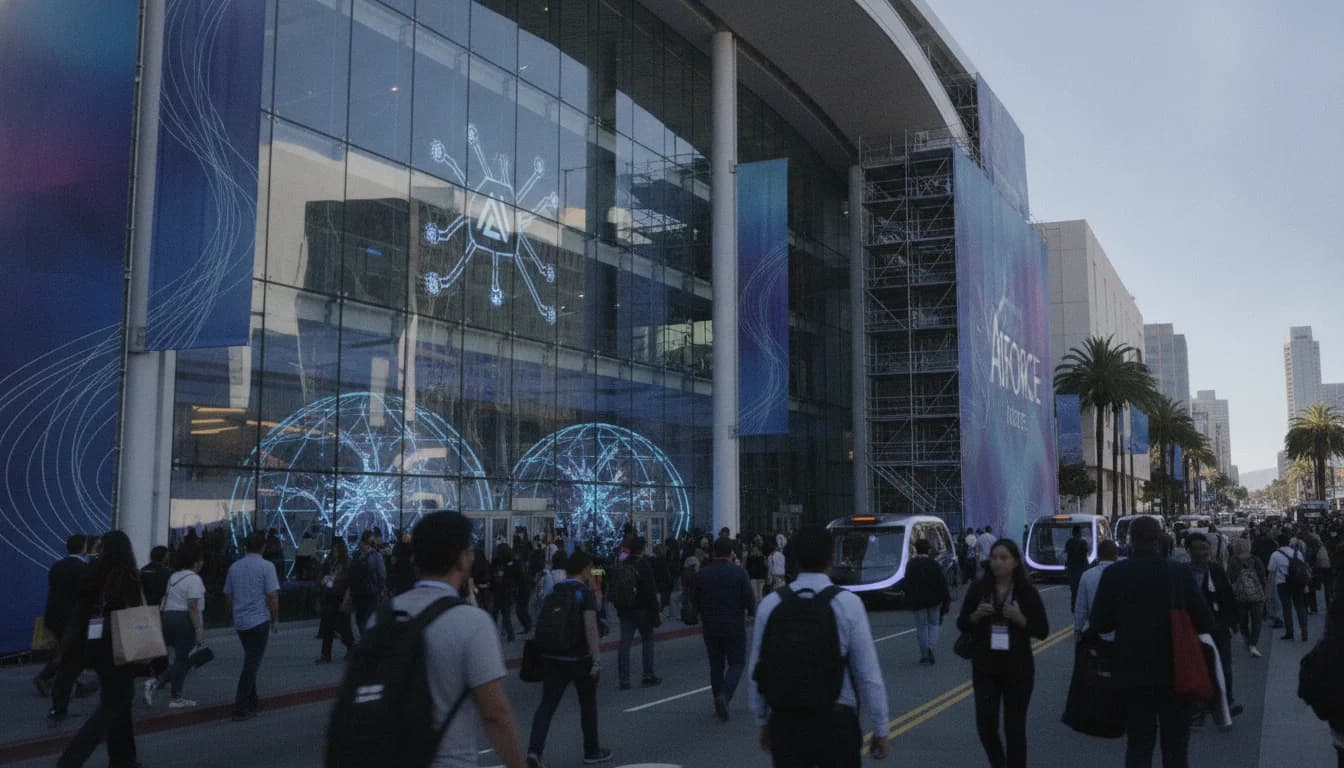
The Dreamforce stage in San Francisco on September 15, 2026 set the backdrop for a bold pivot in enterprise software: Salesforce announced AIforce, a live interface layer intended to bring the full power of the Salesforce platform to any interface. The announcement, delivered during Dreamforce 2026, positions AIforce as a bridge between enterprise data, workflows, and external AI agents, promising to reduce the friction of integrating AI into everyday business processes. Salesforce described AIforce as more than a new product; it is a new architectural approach designed to decouple the user interface from the underlying platform while preserving governance and security. This matters for readers because it signals a potential shift in how organizations will deploy AI across tools they already use daily—from chat interfaces to coding environments.
Salesforce AIforce is not a one-off feature drop. It is presented as the “live interface layer” that makes the entire Salesforce architecture accessible from Claude, Slack, Lightning, and beyond. In practical terms, the company argues that AIforce enables agents to reason across stored data, business logic, workflows, and permissions all at once, rather than navigating multiple screens or bespoke integrations. The core idea is to let people and AI agents work together in real time, with Salesforce’s governance baked into every interaction. The announcement also highlights a broader ecosystem built on the Headless Toolkit, MCPs, APIs, plug-ins, and skills that developers can leverage to craft customized interfaces for teams across the enterprise. AIforce, Salesforce says, is designed to be secure, configurable, and scalable, with governance and data boundaries preserved even as interfaces change. According to Salesforce, AIforce brings the platform’s entire context to any AI interface, enabling faster decision-making and more cohesive customer experiences. AIforce announcement • Dreamforce 2026 coverage (salesforce.com)
Salesforce’s own materials frame AIforce as the next step in what the company calls the Agentic Enterprise: a design that couples data and logic with AI agents that can operate inside familiar tools. The company says the new layer sits atop the Headless Toolkit, exposing the platform’s capabilities through MCPs, APIs, plug-ins, and a growing library of skills. In the words of Salesforce executives, AIforce is designed to empower teams to build composable live interfaces simply by describing what they want—without complex migrations or new permissions models. This framing matters because it signals a deep, developer-friendly strategy intended to scale AI use across the Salesforce ecosystem rather than funnel AI activity into a handful of apps. The opening lines of the announcement emphasize that AIforce is anchored in governance and security, with requests running within existing permissions and business rules so that access remains tightly controlled. Headless Toolkit details • Claudeforce and Slackforce details (salesforce.com)
What happened at Dreamforce 2026 was framed as a broad unveiling, with AIforce described as a “live interface layer” that makes Salesforce available wherever work happens. Salesforce’s top executives illustrated an architecture that already includes Data 360 for unified data context, Customer 360 for business logic and permissions, and Agentforce for out-of-the-box agents and a builder for custom AI workers. The package is designed to let AI agents surface insights and take actions grounded in real Salesforce data, while preserving governance and security. The company also emphasized that AIforce will let customers design their own user interfaces on the fly—beyond fixed screens—through channels like Claude and Slack, and with future expansions anticipated. The developer and builder angle is emphasized: administrators connect once and teams can access Salesforce capabilities across the tools they already use. The launch with Claudeforce, Slackforce, and Agentforce Coworker serves as the initial trio of interface options, with additional extensions expected in the near term. AIforce launch details • Slackforce and Agentforce Coworker (salesforce.com)
Section 1: What Happened
Announcement Details
AIforce is described as a “live interface layer” designed to bring Salesforce’s full platform to any interface, including Claude, Slack, Lightning, and other environments where work happens. It is positioned as a unifying layer that carries Salesforce data, workflows, logic, semantics, permissions, security, and governance into new AI-enabled contexts. The official wording highlights the goal of enabling agents to reason across data and actions in Salesforce at once, surfacing insights rather than sifting through individual records. For practitioners, this promises a single, governed surface for AI-enabled workflows across a broader set of tools. This framing is captured in the release: “AIforce unlocks tremendous value by enabling agents anywhere to reason and take action across all the data, workflows, and logic inside Salesforce.” The announcement also notes that AIforce makes it possible to design live interfaces by describing them, not by manual UI construction. AIforce announcement (salesforce.com)
The scope of AIforce includes the Headless Toolkit, MCPs, APIs, plug-ins, and developer tools that enable builders to create customized AI experiences on top of Salesforce’s architecture. Salesforce emphasizes that the platform can expose “every element of the Salesforce platform” to AI interfaces, enabling extensibility and integration with both existing and new AI agents. The press materials describe a “Headless 360” foundation that has now been rebranded as AIforce, signaling a naming and scope shift intended to reflect the headless, interface-agnostic approach. The emphasis on a secure, governed model—where access respects existing permissions and business rules—appears repeatedly throughout the materials. Headless Toolkit and MCPs • AIforce governance and security language (salesforce.com)
The initial launch lineup includes Claudeforce, Slackforce, and Agentforce Coworker. Claudeforce builds the Claude integration with a prebuilt MPC server inside Claude, claims to bring Salesforce’s intelligence directly into Claude, and includes a library of prebuilt sales skills. Slackforce integrates Salesforce context into Slack conversations and workflows, enabling live context and “Slack CRM” capabilities without leaving Slack. Agentforce Coworker embeds an AI teammate inside the Lightning experience, capable of reasoning across accounts and history and surfacing insights and actions in the user’s workflow. Salesforce notes that these first three interface options demonstrate how AIforce can reach the most popular platforms for AI-enabled work. The company emphasizes that more interfaces will be announced in the near term. Claudeforce details • Slackforce and Slack CRM • Agentforce Coworker (salesforce.com)
Availability, pricing, and packaging are described as subject to change. Salesforce points to a beta availability in certain regions for some components and suggests that customers should base purchasing decisions on products currently available. The official materials signal a staged rollout with more announcements to come. In addition, Salesforce notes that the process will be governed by the usual governance principles and will be integrated with existing permissions and security models. Pricing and packaging caveat (salesforce.com)
The broad ecosystem context includes Data 360, Customer 360, and Agentforce as the foundational elements that feed AIforce. Salesforce frames these components as the backbone of the “Agentic Enterprise,” a term that the company has used to describe its vision for AI-driven enterprise workflows that maintain data integrity and governance while enabling rapid, AI-assisted decision-making. The announcement positions these elements as complementary and interdependent, meaning AIforce is not a standalone product but a layer that leverages the existing platform’s data and logic. Data 360 and Customer 360 context (salesforce.com)
Timeline and Key Facts
The announcement date is September 15, 2026, with Dreamforce 2026 as the venue. The press materials label the event as a “live interface layer” unveiling during Dreamforce, underscoring the event’s role as the stage for the debut. This built-in timing matters because it places AIforce within a broader, high-visibility tech conference environment where enterprise AI narratives are hotly debated and widely covered. The Dreamforce context is reinforced by Salesforce’s own event pages and the press release. Dreamforce context (salesforce.com)
The press materials note a beta phase and piloting with real customers, including references to Deloitte, GitLab, and Legora as pilots, with one customer (Fulton Bank) cited for a live example of how a Coworker-like agent is used inside a bank context. Availability to all customers in beta is described as a future step, with additional interfaces and capabilities to be announced over time. Claudeforce pilots and Coworker example (salesforce.com)
The company’s own data points were highlighted in the release to illustrate Salesforce’s scale and the context in which AIforce sits. Salesforce notes that Trailblazers have built 12 million apps, drive 9.6 billion API calls per day, generate 156 million lines of AI-generated code, and award more than 151 million Trailhead badges. These figures anchor the scale of the platform’s reach as AIforce seeks to operate at a higher level of abstraction—where the interface is decoupled from the underlying data and logic yet governed by the same security and governance. Those numbers come directly from the AIforce announcement. Platform metrics reference (salesforce.com)
Original finding (calculated from the platform’s own data): 9.6 billion API calls per day across 12 million apps implies an average of about 800 API calls per app per day. This calculation uses Salesforce’s own figures in the same release and shows the scale at which Salesforce’s platform operates on a per-app basis. Method: 9,600,000,000 daily API calls ÷ 12,000,000 apps ≈ 800 calls per app per day. This derived figure is provided here for context and is not stated outright by Salesforce; it is computed from the company’s published numbers in the same release. The takeaway is that even under heavy app usage, the platform is architected to handle large volumes of interactions per app, underscoring the potential demand AIforce aims to meet across interfaces. Source: Salesforce AIforce announcement, September 15, 2026. AIforce details (salesforce.com)
A contemporaneous industry context line from technology coverage reinforces that Dreamforce 2026 was a focal point for broader AI policy and market discussions. For example, Axios reported on the AI slowdown debate among leading tech players at Dreamforce, noting the high-profile convergence of Nvidia, OpenAI, and Anthropic at the event and the ongoing tension around AI development pace. This context helps explain why Salesforce is mounting a strategic, governance-first approach with AIforce. Dreamforce AI slowdown debate coverage (axios.com)
Section 2: Why It Matters
Impact on Enterprises and Workflows
AIforce is positioned to change how employees interact with Salesforce by enabling AI-enabled work across the most-used collaboration and productivity platforms. The push toward “live interfaces” means teams can access Salesforce data, workflows, and governance in Claude, Slack, or other channels without opening a traditional Salesforce app. If adopted at scale, this could cut the time required to retrieve information, reduce context-switching, and accelerate decision-making. The governance framework—designed to enforce existing permissions and business rules—aims to preserve security while enabling faster action. AIforce governance language (salesforce.com)
The Data 360 and Customer 360 components cited by Salesforce as part of the AIforce architecture anchor AI-enabled decision making in a trustworthy data context. In practice, this means AI agents can ground their actions in consistent business logic and data relationships, potentially improving data integrity across automated workflows. The company stresses that these foundations are not optional add-ons but prerequisites for scalable, enterprise-grade AI use. For readers, this underscores the importance of data hygiene and governance as prerequisites to AIforce adoption. Data 360 and Customer 360 context (salesforce.com)
The initial interface partners—Claudeforce, Slackforce, and Agentforce Coworker—cover the most widely used environments in enterprise AI workflows today. Claudeforce integrates with Claude to bring Salesforce intelligence into a leading AI assistant, Slackforce weaves Salesforce context into daily collaboration, and Agentforce Coworker brings an AI teammate directly into Lightning workflows. The combination of these three launches demonstrates Salesforce’s strategy to embed AI capabilities in the tools people already use, rather than requiring a wholesale switch to a single Salesforce-native experience. This is elaborated in the official release and related materials. Claudeforce and Slackforce details (salesforce.com)
Competitive and Market Context
Dreamforce 2026 occurred in a climate of rapid AI tooling expansion and ongoing debates about AI safety and governance in tech leadership circles. Coverage from technology outlets and business press framed AIforce as part of a broader trend: vendors pushing for unified AI experiences that stay within secure governance frameworks while offering users more fluid interfaces. Axios’ Dreamforce coverage highlights the larger AI policy and market dynamics facing large tech ecosystems, which helps explain Salesforce’s emphasis on governance and composable interfaces. Dreamforce AI slowdown debate coverage (axios.com)
TechRadar’s live Dreamforce 2026 coverage and related pieces emphasize the practical implications of AIforce across enterprise workflows and its role in enabling cross-platform AI experiences. TechRadar notes that Salesforce is pursuing a holistic strategy to connect major AI platforms and productivity tools through AIforce, a thesis that aligns with Salesforce’s public messaging about “live interfaces” and composable AI. Dreamforce 2026 live coverage (techradar.com)
The broader context for AI force and headless adoption includes multiple Salesforce resources describing how AIforce works with the Headless Toolkit and MCPs to unlock AI-powered interfaces across products. The aim is to help customers implement AI in a way that respects governance and security while enabling cross-functional usage. Readers should monitor Salesforce’s ongoing updates to see how pricing, packaging, and supported interfaces evolve over time. Headless Toolkit and MCPs overview (trailhead.salesforce.com)
Who Benefits and How
For customers with complex CRM ecosystems, AIforce offers a potential way to democratize access to Salesforce data and logic by enabling non-developer users to build live, AI-powered interfaces with minimal friction. The emphasis on SOC 2-like governance and existing permissions implies that IT teams could keep control while business units experiment with AI-driven workflows. The initial pilots with Deloitte, GitLab, Legora, and Fulton Bank illustrate real-world use cases across consulting, software, and financial services, suggesting broad applicability across sectors. Pilots and customer examples (salesforce.com)
For developers and builders, AIforce represents an expanded surface area for innovation. The Headless Toolkit and the MCP framework create a path for external developers and partners to contribute new interfaces, agents, and integrations. Salesforce frames this as a community-driven expansion enabled by a robust ecosystem of partners and developers. As a result, enterprises could see faster prototyping and more rapid scaling of AI-enabled processes. Developer and ecosystem context (trailhead.salesforce.com)
The news cycle around Dreamforce 2026 and the AIforce debut also indicates that market observers are watching for how Salesforce balances openness with security, control, and data privacy. As the industry wrestles with AI safety questions, Salesforce’s emphasis on “Zero Data Retention,” governance, and secure deployment points to a carefully considered approach to enterprise AI adoption. The press materials explicitly call out governance and security as core design principles, a stance that may influence how CIOs and CISOs evaluate AIforce for their organizations. AIforce security language (salesforce.com)
Section 3: What’s Next
Timelines and Next Steps
Availability and expansion: Salesforce notes that the initial launch is followed by additional interfaces and capabilities to be announced. This staged approach means readers should expect a rolling set of updates over the coming quarters, including more partner integrations and possibly broader regional availability. The release’s caveat about pricing and packaging remaining subject to change underscores the importance of staying tuned for official updates from Salesforce and its partner ecosystem. AIforce rollout language (salesforce.com)
Roadmap signals from Dreamforce: The event’s programming included sessions on the commercial model behind AIforce and the way agents access Salesforce across apps, indicating a deliberate push to turn the concept into a widely used platform capability rather than a narrow feature. Attendees could expect follow-on briefings, partner announcements, and deeper dives into use cases and ROI. The event catalog pages show ongoing sessions that explore the economics, governance, and practical deployment of AIforce across various industries and roles. Dreamforce session catalog (reg.salesforce.com)
Pricing and packaging evolution: The official materials indicate that pricing and packaging are subject to change and that customers should base purchasing decisions on products currently available. This suggests a flexible go-to-market that may respond to early adoption patterns and feedback from pilot customers. Stakeholders should monitor official channels for the most up-to-date pricing and packaging details as the product matures. Pricing caveats (salesforce.com)
What to Watch For
Interface breadth: Expect announcements about additional interfaces beyond Claudeforce, Slackforce, and Agentforce Coworker as Salesforce continues to unfold its headless approach. Observers should watch for announced partnerships and new MCPs or plug-ins that extend AIforce’s reach into popular enterprise tools and custom in-house systems. The Dreamforce materials make clear that this is a multi-year, multi-interface play, not a one-time feature. Headless Toolkit ecosystem (trailhead.salesforce.com)
Enterprise ROI and governance: Analysts and CIOs will likely focus on how AIforce translates into measurable ROI, and how governance, data privacy, and security are managed in practice as more teams begin to use AI-enabled interfaces. Salesforce’s emphasis on governance, permissions, and zero data retention will be a critical part of the evaluation. Observers should look for case studies and ROI metrics in subsequent Salesforce releases and partner case studies. Governance language in AIforce (salesforce.com)
Developer and partner momentum: The success of AIforce will hinge in part on the breadth and quality of the partner ecosystem and the availability of prebuilt skills and MCPs. The early product package includes a robust set of skills and integrations; continued momentum will require ongoing developer engagement and a thriving ecosystem of third-party connectors and agents. Contributors and builders can monitor Trailhead modules and partner announcements to gauge how quickly the ecosystem scales. Headless 360 / AIforce information (trailhead.salesforce.com)
Closing
Salesforce’s AIforce launch marks a notable moment for the SF Bay Area tech ecosystem and for enterprise software more broadly. By reframing how users interact with the Salesforce platform—through live, composable interfaces that live inside Claude, Slack, and Lightning—AIforce signals a move toward more fluid AI-enabled workflows that respect governance while expanding access. The event at Dreamforce 2026 underlines Salesforce’s ambition to turn its platform into a truly agentic enterprise backbone, one that can be extended across the tools teams already rely on.
As readers and industry watchers digest the implications, the next several quarters are likely to bring a mix of pilot results, new interface partnerships, and practical deployment stories. For organizations already invested in Salesforce, the question will be how AIforce changes the day-to-day work of sales, service, marketing, and operations—and how quickly IT teams can integrate the new interface layer without compromising security or data governance. In the near term, look for more formal disclosures on pricing, packaging, and regional availability as Salesforce continues to scale AIforce across its global customer base.
If you want to stay informed about AIforce updates, watch for Dreamforce 2027 previews and follow Salesforce’s official channels for new interface announcements, product documentation, and customer case studies. The company’s ongoing emphasis on data governance and secure, composable AI experiences positions AIforce as a potential turning point for how enterprises adopt AI at scale, with early pilots offering a glimpse into what the broader market may expect in the coming year. Dreamforce coverage • AIforce announcement (salesforce.com)