
El Niño Local Emergency San Francisco Declared
El Niño local emergency declaration in San Francisco is analyzed with comprehensive data-driven context for Bay Area technology and market impacts.
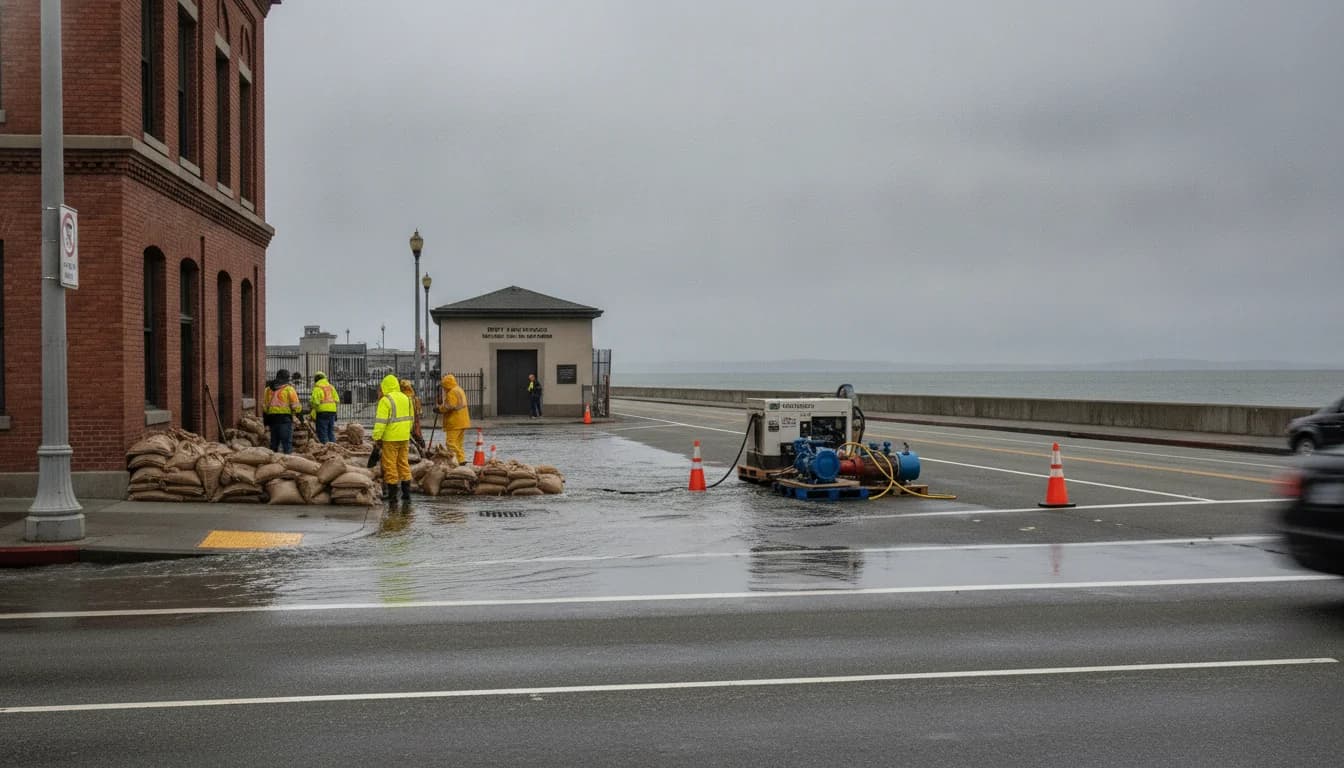
San Francisco moved decisively to ready itself for an unusually active El Niño winter by declaring a local emergency. On October 23, 2026, Mayor Daniel Lurie announced that the city would activate accelerated procurement and coordination mechanisms to reinforce flood protections, coastal defenses, and critical infrastructure as El Niño conditions in the Pacific intensify. The announcement aligns with a broader state and regional focus on El Niño preparedness, as California officials coordinate across agencies to shield communities and businesses from potential storms, floods, and high tides. The local emergency declaration is not just symbolic: it triggers procedural waivers and interagency collaboration designed to accelerate the city's ability to buy pumps, flood barriers, generators, sandbags, and other essentials ahead of storms. The event marks a turning point for the City and County of San Francisco as it navigates an anticipated season that forecasters warn could be among the strongest on record. This moment matters for residents, local businesses, and Bay Area technology companies supplying defensive infrastructure and emergency gear. For readers seeking a precise official record, the proclamation and related filings provide the authoritative details about the scope and authorities activated by the emergency. See the official filing and the SFPUC press release for primary-source specifics on the declaration and its procurement implications. (sfgov.legistar.com)
The declaration also sits within a statewide and national context of elevated El Niño risk. California Governor Newsom had already proclaimed a statewide emergency in September 2026 to bolster El Niño readiness across the state, underscoring a coordinated, multi-jurisdictional approach that San Francisco is now integrating at the city level. As federal forecasters project a historically strong El Niño through the 2026–27 season, local governments are translating those projections into actionable preparedness steps. The San Francisco announcement is part of a broader pattern of emergency declarations that emphasize rapid procurement, interagency incident command, and public communication to mitigate risk and maintain essential services during severe winter weather. (beacon.ca.gov)
Section 1: What Happened
Official Proclamation and immediate actions
On October 23, 2026, Mayor Daniel Lurie publicly declared a local emergency in San Francisco in response to the El Niño-driven winter hazards anticipated to include severe storms, coastal flooding, and high tides. The action waives certain contracting requirements to allow city departments to secure critical goods and services with speed, reducing procedural delays that can impede rapid protection of infrastructure and neighborhoods. The proclamation explicitly centers on enabling faster procurement of flood barriers, pumps, generators, and related supplies to safeguard public infrastructure and essential services as weather patterns intensify. This milestone is documented in the city’s official filing and is reflected in subsequent legislative activity. The declaration marks a formal, public acknowledgment of the city’s readiness posture for a potentially record-setting El Niño season. (sfgov.legistar.com)
The scope and the agencies involved
In conjunction with the proclamation, city departments are being organized under an Incident Command System to coordinate preparedness, response, and recovery efforts. The SFPUC press release identifies seven key departments that can leverage expedited procurement processes: San Francisco Public Works, San Francisco Public Utilities Commission (SFPUC), Port of San Francisco, San Francisco Municipal Transportation Agency (SFMTA), Recreation and Park Department (RPD), San Francisco International Airport, and the Office of Contract Administration under the City Administrator’s Office. This list signals a broad, agency-wide readiness effort that spans transportation, utilities, port operations, and public works. The press release explains that the declaration is designed to “move quickly to advance necessary storm preparations by expediting procurement for preparedness resources,” a move that supporters say will reduce red tape during a high-stakes season. (sfpuc.gov)
Concrete readiness measures and resources
The SFPUC release also enumerates tangible readiness steps and resources, including a stockpile of essential flood-protection materials such as sandbags (the department notes more than 20,000 sandbags ready for distribution) and the deployment of temporary flood barriers and pump capacity as needed. The document highlights interagency coordination efforts through the city’s Emergency Operations Center and a joint information center to streamline communications with residents and businesses. It also references public-facing guidance and readiness activities for residents, including sandbag distribution, shelter planning, and a citywide flood-risk map. These specifics—20,000 sandbags and the rapid procurement pathway—offer concrete illustration of what the declaration makes possible in practice. (sfpuc.gov)
A close look at the timeline and related actions
The City’s legal and policy framework around the declaration is further reflected in theLegistar filings, which document the Board of Supervisors’ actions concurring in the mayor’s proclamation and authorizing emergency agreements to procure goods and services without standard contracting constraints. The timing in late October 2026, including injunctions to expedite procurement and to align city departments under a unified command structure, maps to the immediate need to harden defenses ahead of anticipated storms. While the details of the full procurement envelopes are contained in the official attachments, the public record confirms the formal adoption and the scope of authorities granted in the proclamation. (sfgov.legistar.com)
Section 2: Why It Matters
Public safety, infrastructure resilience, and city operations
El Niño local emergency San Francisco declarations are driven by two core priorities: safeguarding people and protecting critical infrastructure from high-tide flooding, heavy rain, and wind-driven hazards, while ensuring continuity of essential city services during storms. The SFPUC press release frames this as a system-wide readiness effort, with procurement waivers intended to accelerate access to flood barriers, pumps, generators, and related equipment. The practical implication is that the city can mobilize resources more quickly, reducing lead times for protective installations and enabling a faster response if and when extreme weather materializes. Forecasters, including NOAA’s Climate Prediction Center, have warned of a historically strong El Niño in the 2026–27 season, adding urgency to city readiness efforts and aligning local actions with broader meteorological forecasts. (sfpuc.gov)
Impacts on residents, businesses, and the technology sector
For residents and businesses in the Bay Area, the declaration signals a more robust public-private interface for flood protection, stormwater management, and resilience investments. The emergency measures include public communications through AlertSF and guidance on protective steps such as sandbag pickup, shelter planning, and flood-risk awareness. For technology and market players, the announcement opens channels for procurement-related opportunities—ranging from pumping systems and flood barriers to data-driven sensors and storm-response technology that cities may deploy to monitor and respond to coastal flooding and inland flooding risk. The combined effect could yield accelerated public-sector demand for vendor products and services, with procurement rules designed to facilitate rapid deployment during critical windows. This aligns with standard patterns in which El Niño-related preparedness stimulates investment in storm-resilience infrastructure and related technology. (sfpuc.gov)
The broader climate and policy context
The local emergency comes amid broader climate and governance dynamics. California Governor Newsom’s September 2026 statewide emergency declaration set the stage for a multilevel approach to El Niño preparedness, acknowledging the severity and potential reach of impacts across the state. Federal forecasters have projected a powerful El Niño winter with elevated precipitation risk, particularly in California, and have noted the potential for significant coastal flooding and atmospheric river events. Taken together, these official actions underscore a coordinated effort to translate climate forecasts into practical, deployable protections, including accelerated procurement, incident management, and targeted resilience investments. This context matters for technology, finance, and construction sectors that may participate in emergency supply chains or public-private resilience partnerships. (beacon.ca.gov)
Section 3: What’s Next
Timeline, milestones, and monitoring
The immediate next steps involve scaling up interagency coordination and continuing to align resources with forecasted conditions. The city’s Emergency Operations Center and the Incident Command System framework will drive ongoing planning, staffing, and asset allocation as El Niño-related conditions evolve. Forecasts from NOAA CPC indicate a high likelihood of a strong to very strong El Niño through winter 2026–27, with implications for timing and regional rainfall distribution. As the season progresses, the city will need to adapt its procurement, logistics, and field operations in response to real-time weather conditions and tide patterns. Local government agencies are expected to issue regular updates, advisories, and alerts to keep residents and businesses informed. For residents, the immediate practical steps include monitoring AlertSF, reviewing flood-risk maps, and preparing home emergency kits. For developers and vendors, expect a continuing cadence of procurement opportunities tied to ongoing protective measures and maintenance activities. (cpc.ncep.noaa.gov)
What to watch for in media, policy, and markets
As the El Niño season unfolds, a few indicators will signal how the local emergency declaration translates into real-world outcomes:
- Procurement activity: Watch for accelerated contracting, pre-positioning of equipment, and rapid deployment of flood-control assets across the seven identified departments and beyond.
- Infrastructure resilience projects: The city and SFPUC have highlighted projects such as flood barrier installations, drainage improvements, and a lift in stormwater capacity—watch for contracting notices and project milestones related to these initiatives.
- Public communications and readiness events: Ongoing citizen-facing programs, webinars, and community engagement, such as sandbag distribution events and storm-readiness training, will provide practical measures for residents and local businesses.
- Regional coordination: Cross-county and cross-agency coordination in the Bay Area will be essential to address upstream-downstream impacts of El Niño storms, sea-level rise, and tidal surges.
The document trail from October 2026 shows a clear, escalating emphasis on rapid procurement and interagency collaboration as the core mechanisms to manage El Niño-related risk, with state and federal agencies providing forecasting and risk information to inform local planning. For readers seeking the official policy record, the filing and the SFPUC release provide the primary sources detailing the declaration and its scope, while ongoing coverage from reputable news outlets tracks how the city implements these measures in real time. (sfgov.legistar.com)
Closing
San Francisco’s El Niño local emergency San Francisco declaration marks a deliberate, data-informed step toward resilience in the face of a historically strong El Niño. By enabling faster procurement, centralizing interagency coordination, and mobilizing a robust stockpile of protective resources, the city signals to residents, businesses, and technology suppliers that preparedness is a shared, ongoing process rather than a one-off response. The coming months will reveal how these authorities translate forecast-driven risk into tangible protections for the Bay Area’s infrastructure, economy, and communities. As forecasters continue to emphasize elevated risk for coastal flooding and heavy rainfall, San Francisco’s approach—grounded in official action and transparent communication—offers a clear blueprint for how a modern metropolis can align technology, procurement, and governance to weather a challenging winter season. Readers should stay tuned to official channels for ongoing updates and to primary-source documents that detail the exact scope of authorities activated during this El Niño period. (sfpuc.gov)