
SF Earthquake Safety & Emergency Response Bond 2026
Data-driven look at the San Francisco Earthquake Safety and Emergency Response Bond 2026 and its impact on city resilience and markets.
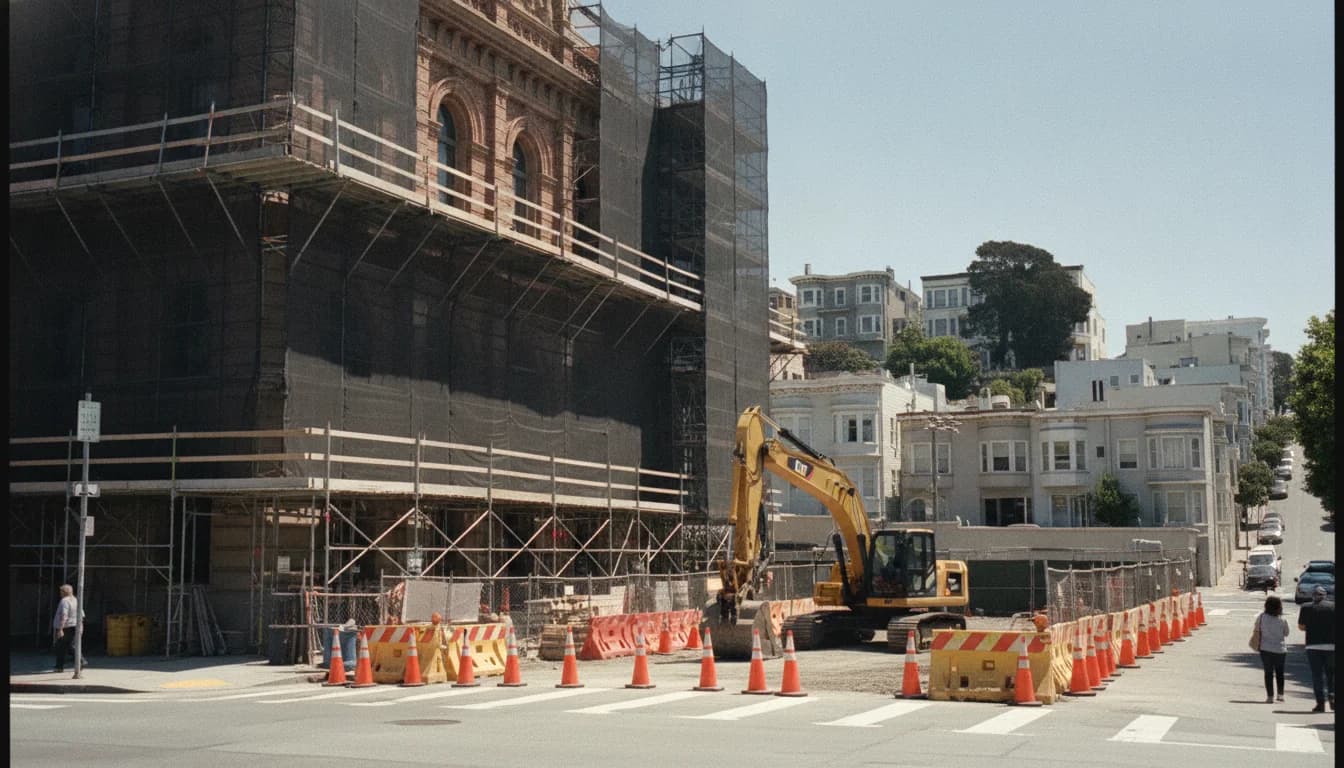
San Francisco, CA — On June 2, 2026, San Francisco voters approved Prop A, the Earthquake Safety and Emergency Response Bond 2026, a $535 million general obligation measure designed to fund seismic upgrades and bolster aging public-safety infrastructure. This milestone was reported in contemporaneous election coverage, which noted broad passage of the measure and signaled a sustained city-wide focus on readiness ahead of a potential major disaster. The official bond framework and ballot language, which outline the scope and cost mechanics of the ESER program, were published in city filings and city-backed documents in the weeks surrounding the election. This article draws on primary documents and contemporaneous reporting to present a data-driven view of what happened, why it matters, and what comes next for San Francisco’s earthquake safety program. The bond’s amount and the date of authorization are anchored in the City and County of San Francisco’s public filings, including the ESER bond overview and the ballot language. The election results, including Prop A’s passage and the implied funding path, were covered by news outlets shortly after the vote. (media.api.sf.gov)
In the June 2, 2026 election, the city authorized a $535,000,000 Earthquake Safety and Emergency Response General Obligation Bond, to be repaid over a period of up to 30 years, with an estimated average annual debt-service revenue target of roughly $35.9 million, subject to independent oversight and audits. The bond is intended to retrofit, upgrade, and expand fire safety and emergency-response facilities, water systems, police facilities, and related infrastructure necessary to respond effectively to earthquakes and other major disasters. The official bond text and ballot proposition detail the scope, the projected costs, and the oversight framework, including the possibility that landlords could pass through 50% of any resulting property-tax increase to residential tenants where allowed. These core terms are described in formal city filings and public-facing bond materials. (media.api.sf.gov)
Opening note: This coverage is anchored in the precise, dated event of June 2, 2026, and it follows the reporting trail from the city’s official ESER materials to post-election analysis by local and national outlets. The narrative that follows lays out what happened, why it matters for San Francisco’s resilience and technology markets, and what residents and stakeholders should watch for next.
What Happened
Formal announcement and ballot context
The City and County of San Francisco placed the Earthquake Safety and Emergency Response Bond, 2026, on the June 2, 2026 ballot as a general obligation measure not to exceed $535,000,000 to fund seismic upgrades and related infrastructure, including emergency-firefighting water systems, firefighting facilities, police facilities, and other public-safety infrastructure. The proposition, commonly referred to as ESER 2026, was introduced through the city’s legislative process and circulated to voters with a detailed informational pamphlet and accompanying analyses. The official filing and ballot language establish the bond’s maximum amount, term, and oversight expectations. (sfgov.legistar.com)
The ESER program has a recognized history in San Francisco, with prior bonds issued to support similar resilience investments since 2010. City documents for 2026 continued that lineage by outlining the scope of the proposed ESER facilities and the mechanism for repayment. The city’s 2026 ESER overview describes the general approach: targeted seismic upgrades and facility improvements across public-safety infrastructure, with governance designed to ensure oversight and accountability. (sfpublicworks.org)
The results and immediate implications
- In the post-election reporting, Prop A, the Earthquake Safety and Emergency Response Bond 2026, passed by a substantial margin. Early coverage and subsequent reporting indicated a decisive yes vote, reflecting broad public support for accelerated resilience investments in the city’s emergency-response capabilities. The reported outcome was captured by national and local outlets, including Axios’ coverage of Chronicle-reported results. This outcome confirms a durable mandate for ESER-related investments and signals a continued willingness among San Francisco voters to fund critical public-safety infrastructure through municipal debt. (axios.com)
What the debt and spending plan look like on paper
- The approved bond amount of up to $535,000,000 is paired with a repayment horizon that can extend for up to 30 years, as outlined in the bond filings. The estimated average annual revenues expected to service the debt are projected at about $35.9 million, which represents a combination of principal and interest payments over the life of the bonds. The city’s materials emphasize independent oversight and annual audits to ensure taxpayer accountability for the ESER program. The connection between the bond amount, repayment term, and revenue projections is a central aspect of public-facing documents, including the official bond release and the voter information materials. (media.api.sf.gov)
Substantive details: scope and project categories
- The ESER 2026 bond is designed to upgrade and retrofit a broad set of facilities and systems, including:
- Emergency firefighting water systems and associated infrastructure
- Firefighting facilities and fire stations
- Police facilities and infrastructure
- Municipal transit and related public-safety facilities
- Transportation facilities connected to the Municipal Railway Bus Storage and Maintenance Facility at Potrero Yard
- Other public-safety infrastructure required for earthquake readiness These categories reflect a comprehensive approach to ensuring first responders and city services remain functional and reliable in the face of a major earthquake or other large-scale emergency. The 2026 bond text specifies the targeted facilities and the major categories of capital investments, along with the associated governance and oversight requirements. (media.api.sf.gov)
Section 1 takeaway
- The June 2, 2026 election delivered a clear mandate for a large-scale ESER investment, anchored by a $535 million bond for seismic safety and emergency-response improvements, with a multi-decade repayment horizon and robust oversight mechanisms. The immediate post-election reporting confirms the measure’s passage and the city’s intent to translate the bond into concrete capital projects across critical public-safety facilities. (axios.com)
Why It Matters
Public safety and resilience at scale
- The ESER 2026 bond represents a significant financial commitment to public-safety resilience in a city that contends with both seismic risk and aging infrastructure. By funding seismic retrofits, water system upgrades, and essential emergency facilities, San Francisco aims to reduce vulnerability to earthquakes while improving the readiness of first responders, which is a central component of the city’s broader resilience strategy. The official bond documents lay out the intended facilities and infrastructure categories, providing a blueprint for how the city will allocate resources over the coming years. This matters not only for residents whose daily lives depend on operating emergency services but also for businesses that rely on uninterrupted city services and supply chains after a disaster. (media.api.sf.gov)
Technology and market implications for a connected city
- A bond of this scale, tied to critical public-safety upgrades, often catalyzes technology markets around specialized infrastructure, sensors, communications networks, and smart-city capabilities that support resilience. While ESER’s core focus is physical retrofits—pipes, water systems, fire stations, and related facilities—the data and communications backbone that underpins modern emergency response (from reliable command-and-control networks to remote-sensing and predictive maintenance tools) typically becomes a focal point for technology vendors and public-private partnerships. City documents and oversight reports underscore the governance and accountability framework that accompanies ESER investments, signaling to technology providers that capital planning and procurement processes will require transparent, auditable workflows. This environment can influence vendor selection, performance requirements, and project timelines as the program moves from planning to execution. (sfpublicworks.org)
Fiscal discipline, transparency, and public trust
- The ESER program’s design—advancing a bond with a defined maximum amount, a fixed repayment horizon, and an independent oversight regime—reflects a deliberate approach to balancing urgency with fiscal discipline. The voter information and the bond’s official texts emphasize independent oversight, annual audits, and public reporting. These elements are critical for maintaining public trust in long-duration public-finance programs, especially in a city where capital projects intersect with tax policy and housing affordability concerns. The 2026 materials also address property-tax implications and potential pass-through to tenants, illustrating how policymakers respond to taxpayers’ concerns about the distribution of costs associated with major capital investments. (campaign.sfethics.org)
Subsection: market and policy context
- The ESER bond enters a broader landscape of San Francisco public-safety and resilience funding, including preceding ESER issuances and related city resilience programs. City sources document a continuing sequence of ESER financings, with the 2026 bond framed as a continuation of a long-term program designed to harden critical infrastructure and enhance emergency response capabilities. For readers tracking public finance trends, ESER 2026 is a data point illustrating how municipalities deploy debt-financed capital programs to align infrastructure risk management with urban growth and climate adaptation imperatives. (sfpublicworks.org)
Section 2 takeaway
- The ESER 2026 bond’s scale and scope position San Francisco to advance a substantial upgrade cycle for emergency-response infrastructure, with implications for technology markets, procurement practices, and public accountability. The measure’s passage is not just a budget figure; it signals a policy direction toward enhanced disaster readiness and a strengthened resilience platform for the city.
What’s Next
Implementation timeline and milestones
- With voter approval secure, San Francisco will move into the implementation phase of the ESER 2026 program. City documents indicate a pipeline of projects categorized under Emergency Firefighting Water Systems, Firefighting Facilities and Infrastructure, Police Facilities and Infrastructure, and related public-safety facilities. The timeline for issuing bonds, selecting project packages, procuring goods and services, and delivering renovations will unfold through the city’s ongoing ESER governance structure, including oversight bodies and regular reporting cycles. The underlying ordinance and bond authorization are configured to support planning, procurement, and project delivery in a structured sequence over the 30-year horizon. (sfgov.legistar.com)
Oversight, audits, and community input
- The ESER program’s governance framework calls for independent citizen oversight and regular audits. This oversight is a critical element for ensuring that bond proceeds are spent as promised and that the city adheres to sound capital-project management practices. City documents specifically call out the need for ongoing accountability measures, which will likely manifest as public reports, annual performance metrics, and periodic updates to the Board of Supervisors and the public. The ESER bond reporting pages provide ongoing updates on progress, financing activities, and project status, illustrating an active mechanism for tracking the program’s evolution over time. (sfpublicworks.org)
What to watch in the near term
- In the near term, watchers should monitor:
- Bond proceeds disbursement and project start-ups for the first tranche of ESER facilities
- Procurement and contracting activity for pre-implementation planning and design work
- Quarterly/annual oversight reports that detail project progress, cost variances, and risk management
- Any updates to the city’s resilience strategy that integrate ESER-funded improvements with broader emergency-management initiatives These items are expected to appear in ongoing ESER bond reports and city council briefings as the program moves from authorization to execution. (sfpublicworks.org)
Section 3 takeaway
- The ESER 2026 program’s next phase will hinge on timely project selection, procurement, and transparent reporting. The bond’s success will be judged not only by completed construction but also by how efficiently a 30-year program translates capital investment into real-world resilience gains for San Francisco’s emergency-response network.
Closing
San Francisco’s Earthquake Safety and Emergency Response Bond 2026 marks a pivotal step in the city’s ambition to harden its infrastructure against seismic risk and to strengthen the readiness of its first responders. By establishing a substantial financing framework, a multi-decade repayment horizon, and robust oversight, the city signals a long-run commitment to resilience that extends beyond immediate construction projects to include governance, accountability, and public trust. As ESER implementation proceeds, residents and businesses will rely on ongoing updates and transparent reporting to understand how the bond translates into safer neighborhoods, more reliable emergency-services networks, and a more resilient urban fabric. The attention now turns to how quickly projects move from plan to ground and how effectively the market responds to San Francisco’s resilience agenda, including the opportunities and challenges that come with deploying major capital investments in a dynamic, innovation-forward city.
The ESER program’s data-driven approach, grounded in formal city filings and public records, provides a clear basis for monitoring progress. As the city advances, observers will look for concrete milestones, measurable outcomes, and independent audits that confirm accountability and value for taxpayers. The road ahead will require disciplined execution, steady oversight, and transparent communication with residents about how ESER-funded improvements translate into safer streets, faster emergency responses, and a more prepared city.
For readers seeking primary-source validation, consult the ESER bond documentation, including the official bond text and transaction history, and the city’s Legistar filings announcing and detailing the bond initiative. The city’s public-facing ESER materials also provide a roadmap for ongoing updates and accountability measures as the project enters the execution phase. Together, these sources provide the factual backbone for tracking San Francisco’s earthquake-safety investments as they unfold.
Primary-source links:
ESER 2026 bond overview and project scope (city-administered document): ESER 2026 Bond Overview – San Francisco Public Works. Descriptive anchor: “ESER 2026 Bond Overview (PDF).” (sfpublicworks.org)
Ordinance and ballot language authorizing ESER 2026 and debt issuance (official Legistar filing): City and County of San Francisco — File #: 251216 (Ordinance calling special election for ESER bond, not to exceed $535,000,000). Descriptive anchor: “Ordinance calling special election for ESER Bond.” (sfgov.legistar.com)
Official bond text and repayment framework (legal and financial terms): Bond_Earthquake_Safety_and_Emergency_Response.pdf. Descriptive anchor: “Official ESER 2026 bond text and terms.” (media.api.sf.gov)
Post-election reporting and results context (major news outlet coverage of Prop A results): Axios: Lurie allies notch key wins in San Francisco primary election. Descriptive anchor: “Prop A results and ESER bond outcome.” (axios.com)
Public works and oversight documentation (ongoing ESER bond progress and reporting): ESER Bond Reports – San Francisco Public Works. Descriptive anchor: “ESER Bond Reports and progress.” (sfpublicworks.org)
Voter information and measure text (ballot language, cost projections): San Francisco Voter Information Pamphlet, June 2, 2026 Election. Descriptive anchor: “Voter Information Pamphlet for ESER Bond.” (media.api.sf.gov)