
San Francisco Safety Zone Program Launches Community Corners
Data-driven coverage of the San Francisco Safety Zone Program and its Community Corners pilot, with early impact and citywide implications.
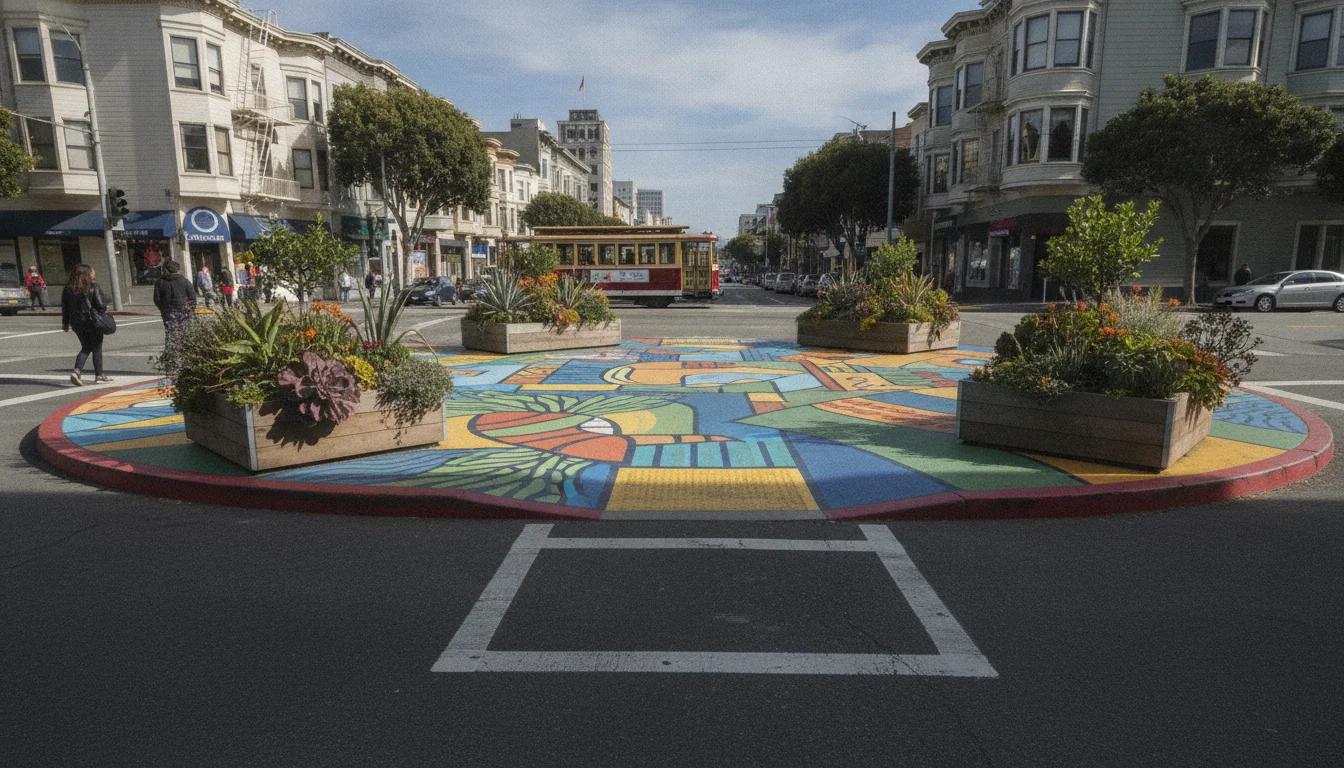
On June 17, 2026, the San Francisco Municipal Transportation Agency (SFMTA) announced the Safety Zone Program, a two-year pilot aimed at upgrading daylighting zones with Community Corners to make intersections safer and more livable for neighborhoods across San Francisco. The plan, unveiled in a formal press release, marks a notable expansion of daylighting policy in the city and couples street safety investments with community-led placemaking. The announcement placed a sharp focus on turning curbs painted red at crosswalk approaches into protected, multi-use spaces that can host murals, planters, and other neighborhood amenities. The release also highlighted that the Community Corners pilot would be administered in collaboration with local organizations, subject to a modest registration fee and insurance requirements. This development follows years of citywide daylighting work and aligns with San Francisco’s broader Street Safety Act and Street Safety Initiative, as described in the city’s policy documents and Board actions. For readers and practitioners across urban planning, transportation engineering, and community development, the Safety Zone Program represents a tangible test case for how street safety interventions can be scaled, localized, and recast as public realm improvements. The agency stated that daylighting—already a core safety tool in California—will be reinforced with these new proactive upgrades and community-led enhancements as part of the city’s ongoing push toward Vision Zero goals. The announcement comes at a moment when San Francisco is recalibrating its approach to High Injury Network corridors and seeking to quantify the safety and placemaking benefits of protective daylighting zones. The Safety Zone Program was introduced with the intention of expanding the city’s ability to reduce conflicts between pedestrians and turning vehicles, while inviting residents and local organizations to reimagine curb space as a safe, welcoming asset for community use. This is not merely a policy shift; it is a practical attempt to reallocate curb real estate in ways that reinforce pedestrian visibility and neighborhood identity. For officials and residents alike, the program is a test bed for balancing safety, mobility, and local character in a dense urban environment. The initiative is expected to influence how future daylighting projects are planned, funded, and evaluated, potentially altering the speed at which intersections are redesigned and the degree to which communities can shape their surroundings through murals, greenery, and other amenities. This piece synthesizes official materials, ongoing policy debates, and early indicators of impact to provide a data-driven overview of what the Safety Zone Program means for San Francisco now and in the near term. For deeper background, see the official SFMTA pages and the Board of Directors’ actions on the Community Corners Pilot.
What Happened
Announcement Details and Official Language
The core of the development is an SFMTA press release dated June 17, 2026, which publicly announced the Safety Zone Program. The release frames the program as a two-part approach: first, proactive safety upgrades to existing daylighting zones, and second, the Community Corners Pilot that allows community groups to fund and maintain murals and planters within painted safety zones. The press release situates the program within the broader Street Safety Act and Mayor Lurie’s Street Safety Initiative and notes that the program is designed to strengthen daylighting at high-need locations while enabling neighborhood-led beautification. The document also enumerates a multi-pronged approach that includes protected daylighting, bike infrastructure, and pedestrian safety measures. The June 17, 2026 release marks the city’s formal, public roll-out of Safety Zone Program concepts and pilot details, including governance, funding considerations, and immediate next steps. For readers seeking the official wording, see the SFMTA press release published on June 17, 2026. SFMTA press release: SFMTA Gives Daylighted Curbs New Purpose with Safety Zone Initiative. (sfmta.com)
Beyond the press release, the program description itself is anchored in the Safety Zone Program page, which outlines the two pillars: proactive improvements led by the agency, and Community Corners led by community organizations. The page also ties the program to California Daylighting law (AB 413) and describes the types of improvements included in the Safety Zone Toolkit, such as Painted Safety Zones (PSZ), turn safety treatments, bike corrals, and potential concrete islands. The page’s emphasis on daylighting as a baseline safety measure, and its call for targeted interventions on the High Injury Network, provides the official framework for how the Safety Zone Program will be implemented citywide. The program page also announces an application portal for Community Corners, making it clear that groups can apply to fund and maintain murals and planters in daylighted zones. For official program details, see the SFMTA Safety Zone Program page. Safety Zone Program page. (sfmta.com)
The policy and legislative backbone for the Safety Zone Program is laid out in San Francisco’s Board of Directors materials, which show how the Community Corners Pilot is being codified through amendments to the Transportation Code and a two-year pilot framework. The Board’s June 16, 2026 meeting culminated in a resolution authorizing the Community Corners Program, with explicit registration requirements, design standards, and a $50 registration fee. The board material also notes prior milestones, including AB 413 (the statewide daylighting law enacted in 2023) and the Street Safety Act (passed by the Board in September 2025) and the Street Safety Initiative signed by the mayor in December 2025. These documents collectively provide the statutory and administrative context for the program’s roll-out and oversight. The June 16, 2026 board action and related CEQA determinations are publicly accessible in the Board’s calendar and accompanying resolutions. For the official board action, see the Board of Directors’ June 16, 2026 resolution and related materials. SFMTA Board of Directors Resolution (June 16, 2026). (sfmta.com)
Timeline and Key Facts
- May–June 2026: The SFMTA moves forward with the Community Corners pilot and schedules a public hearing and Board action to amend the Transportation Code. The calendar entries and staff reports explain that the Community Corners Pilot was designed to give neighborhood organizations a formal mechanism to enhance daylighted zones with murals and planters, subject to insurance, maintenance, and design approvals. The June 2026 period culminates in a Board approval and formal adoption of the Community Corners registration framework. The official CEQA determinations and planning documents were referenced in the Board materials as well. For the timeline and public process, consult the June 16, 2026 Board resolution and the staff report. Board of Directors Resolution (June 16, 2026). (sfmta.com)
- June 17, 2026: The public-facing press release is issued announcing the Safety Zone Program and detailing its two-pillar structure (proactive safety upgrades and Community Corners) and highlighting that red daylighting curbs are part of the baseline safety framework, with a plan to reinforce these spaces through additional treatments. The release also highlights program metrics such as the potential to upgrade thousands of crosswalk approaches citywide and the introduction of the Community Corners pilot, with associated insurance and maintenance requirements. The press release provides explicit figures about the planned expansions (e.g., “approximately 50 new painted safety zones annually” and a baseline of “more than 500 existing protected spaces ready for enhancements”). For the exact wording and figures, see the SFMTA press release. SFMTA press release: SFMTA Gives Daylighted Curbs New Purpose with Safety Zone Initiative. (sfmta.com)
- 2023–2025: The daylighting policy context is anchored in AB 413 (the statewide daylighting law enacted in 2023) and the Street Safety Act/Initiative series passed by the Board in 2025, providing the legal and policy scaffolding for the city’s daylighting and safety investments. While not the centerpiece of the June 2026 release, these prior actions are referenced in the Board materials as foundational to the Safety Zone Program’s aims. See the June 16, 2026 board materials for the historical context. Board materials, including references to AB 413 and Street Safety Act. (sfmta.com)
Program Details in Plain Language
The Safety Zone Program envisions a two-pronged approach:
- Proactive Safety Upgrades: The SFMTA will identify daylighting zones that can benefit from enhanced safety features—ranging from concrete islands and bike corrals to added lighting where appropriate—and apply a standardized toolkit to reinforce the advantages of daylighting at key intersections. The aim is to maintain the safety baseline while increasing the visibility and defensible space for pedestrians at crosswalks and near intersections. These upgrades are targeted at the High Injury Network and other locations with a history of pedestrian crashes, especially near schools and senior centers. The program formalizes daylighting as the baseline safety step and then adds layers of physical infrastructure to strengthen the safety gains. See the Safety Zone Program page for a detailed catalog of toolkit components. Safety Zone Program page. (sfmta.com)
- Community Corners Pilot Program: The Community Corners concept is a two-year pilot that enables eligible organizations to sponsor and maintain neighborhood amenities within daylighted zones, including murals and planters. The program requirements specify a $50 registration fee, insurance, maintenance commitments, and the need for approvals from the San Francisco Arts Commission for street murals. This element is designed to operationalize community-led placemaking within the daylighting framework, enabling neighborhoods to reflect local character while preserving safety benefits. The board’s June 2026 resolution and related documents provide the governance details for the Community Corners Pilot, including eligibility categories (nonprofits, CBDs, merchant associations, etc.) and the registration process. For the registration framework, see the Board resolution and the Community Corners program documentation. Board resolution (June 16, 2026). (sfmta.com)
The Numbers Behind the Policy
- Existing capacity: The press release notes “more than 500 existing protected spaces ready for community-led enhancements.” This baseline establishes the starting point for capacity growth under the Community Corners Pilot. SFMTA press release. (sfmta.com)
- Growth trajectory: The release also states the agency’s expectation of creating “approximately 50 new painted safety zones annually” as part of the program’s proactive component. If applied over a two-year horizon, this yields about 100 additional spaces. Combined with the existing 500+, the program would approach roughly 600 spaces by the end of the two-year period. This is a forward-looking projection embedded in the announcement, not a retrospective evaluation. SFMTA press release. (sfmta.com)
- Policy context: The Board’s June 16, 2026 resolution provides the formal registration framework and fee details for Community Corners (a $50 registration fee), and confirms that the program is part of a broader Safe Streets strategy. The precise fee and registration terms can be found in the board materials. For the official fee and registration policy, see the Board document. Board resolution (June 16, 2026). (sfmta.com)
Substantive Facts and Direct Quotes
- Mayor Daniel Lurie on the Safety Zone Program: “Traffic safety is public safety, and we are working every day to make our streets safer for everyone—whether you’re walking, biking, driving, or taking transit. We believe that vibrant streets are safer streets.” This quote underscores the administration’s framing of safety and livability as intertwined goals and signals political will behind the program. See the press release for the full context and additional remarks. SFMTA press release
- Julie Kirschbaum, SFMTA Director of Transportation, on daylighting and Community Corners: “Daylighting is a vital, proven street safety tool that is mandated by the State. Through the Community Corners program, we are amplifying these safety benefits while also allowing neighborhoods and local businesses to transform public spaces by designing beautiful elements that reflect their community’s unique character.” This quote highlights the program’s alignment with state law and a deliberate effort to couple safety with placemaking. SFMTA press release
- Community advocates’ perspective: Robin Pam, Director of Safe Streets for All SF, and Luke Spray, Executive Director of the Civic Joy Fund, are quoted in the release expressing support for turning daylighted spaces into safer and more vibrant neighborhood centers. These quotes illustrate community backing for the approach and provide a human-interest angle on how the program could affect street life. SFMTA press release
Section 1: What Happened – Summary of Key Facts
The Safety Zone Program is a city-led effort to upgrade daylighting zones citywide, with a governance structure that includes a two-year Community Corners Pilot. The program builds on existing California daylighting law (AB 413) and San Francisco’s Street Safety Act, and it complements other safety measures such as speed cameras, red-light camera expansions, and signal retiming projects described in the press materials. The core features include:
- Proactive upgrades to daylighting zones to reinforce visibility and safety at intersections.
- A Community Corners pilot that invites neighborhood-based organizations to fund and maintain murals and planters within daylighted zones.
- A formal registration process, with a $50 fee, insurance requirements, and maintenance commitments.
- A two-year time horizon for pilot activities, with ongoing evaluation of safety outcomes and community benefits.
- The program’s alignment with Vision Zero goals through a data-driven approach to locate and implement zone improvements on the High Injury Network and near sensitive land uses. Readers interested in the precise program mechanics can consult both the press release and the official Safety Zone Program page for the latest toolkit details and implementation guidance. [SFMTA press release] [Safety Zone Program page]. (sfmta.com)
Section 2: Why It Matters
The Safety Case: Street Design, Pedestrian Confidence, and Data
San Francisco’s approach to street safety has long sought to pair engineering measures with behavioral change and community engagement. The Safety Zone Program explicitly ties into the city’s High Injury Network (HIN) concept, which identifies the corridors with the highest risk of severe injuries and fatalities. By focusing daylighting upgrades in these areas and layering Community Corners around them, the city aims to increase crosswalk visibility, reduce conflicts between drivers and pedestrians, and create public spaces that encourage walking and neighborhood interaction. The press materials note that daylighting improves visibility by removing some of the ambiguities that arise when turning vehicles approach crosswalks, and the program’s toolkit expands this safety baseline with practical, durable improvements that communities can sustain over time. The program’s design is consistent with California’s daylighting requirements and San Francisco’s regulatory framework, which together establish a legally grounded path for extending daylighting beyond the initial implementations. See the Safety Zone Program page for a detailed description of the toolkit and the Daylighting baseline, and the Board resolution for governance specifics. [Safety Zone Program page] [Board resolution]. (sfmta.com)
Community Empowerment and Placemaking
A core rationale for Community Corners is to link safety with place-making. The pilot invites local groups to fund murals and planters, subject to approvals from the San Francisco Arts Commission for murals and to maintain insurance for planters. This arrangement is designed to ensure that the safety benefits of daylighting do not come at the expense of community character or local business vitality. From a policy perspective, the Street Safety Act and the Street Safety Initiative provide a framework for “hardened daylighting” in high-risk areas, and the Community Corners Pilot is presented as an instrument to translate that mandate into tangible, neighborhood-level improvements. The Board’s June 16, 2026 resolution explicitly codifies Community Corners as a two-year pilot and sets out the registration process and eligibility criteria. The alignment of public safety goals with local placemaking is intended to create shared ownership of street safety outcomes among residents, businesses, and city agencies. Readers can review both the press materials and the board documents to understand the program’s governance and accountability mechanisms. [Board resolution] [SFMTA press release]. (sfmta.com)
Equity, Access, and Public Space Reallocation
In a dense urban setting, the Safety Zone Program’s emphasis on daylighting, protected zones, and Community Corners could contribute to a more equitable allocation of curb space. The program’s design—prioritizing schools, senior centers, and areas with a history of crashes—reflects a targeting approach that seeks to reach populations most at risk and most dependent on safe pedestrian infrastructure. By enabling community-led enhancements, the program also invites small organizations to contribute to street safety outcomes, potentially broadening the number of stakeholders involved in urban safety planning. The policy materials highlight the program’s alignment with broader city objectives to create safer streets that are also welcoming, green, and culturally expressive. For readers seeking the procedural details behind this alignment, consult the program page and the board materials. [Safety Zone Program page] [Board resolution]. (sfmta.com)
Quantifying Early Signals and Limitations
As with many new urban design programs, early signals of impact will depend on data collection, enforcement, and maintenance commitments from participating organizations. The press release notes that the city expects to install approximately 50 new painted safety zones per year, and it references ongoing safety measures (e.g., speed cameras, red-light cameras) with significant reductions in risky behavior at camera locations. While these numbers illustrate ambition and direction, they do not on their own establish causal impact for Safety Zone Program outcomes. The program’s success will hinge on timely implementation, robust monitoring, and transparent reporting on safety metrics and community activities. For readers tracking the program’s progress, official dashboards and annual reports from the SFMTA will be crucial sources of evidence.
Section 2: What’s Next
Short-Term Milestones to Watch
- Summer 2026: Community Corners pilot registrations begin to roll in. Eligible groups—nonprofits, CBDs, merchant associations, and established community organizations—will begin the application process to sponsor murals or planters within daylighted zones. The program’s design requires that daylighted zones be prioritized in areas with the greatest safety needs, with attention to school-adjacent zones and other sensitive land uses. The Board’s June 16, 2026 resolution details the registration framework and attachments that organizations must meet (insurance, maintenance agreement, and a registration fee). Readers should monitor the SFMTA’s Community Corners portal for application windows and design guidelines. [Board resolution] [Community Corners portal]. (sfmta.com)
- Fall 2026: Proactive capital improvements identified by staff will be scheduled for near-term implementation in daylighting zones that meet the program’s criteria (e.g., proximity to high-crime areas or high pedestrian activity). The list of potential interventions includes protective elements and mobility-enhancing features designed to improve visibility and reduce conflicts at intersections. The plan emphasizes compatibility with existing street uses and the need to preserve transit reliability alongside safety gains. See the program’s toolkit and project list for details. [Safety Zone Program page] (sfmta.com)
Medium-Term Outlook
- 2027–2028: The two-year Community Corners Pilot will continue to unfold, with a growing number of daylighted zones that incorporate neighborhood murals, planters, and other amenities. The board materials suggest that these community-driven enhancements could be scaled to additional corridors if the pilot demonstrates safety and placemaking benefits. The safety design approach will likely be refined through ongoing data collection and stakeholder feedback, informing future policy decisions and potentially expanding the Community Corners model to additional districts or types of public realm improvements. The June 2026 board materials provide the governance framework that could be cited by future updates or amendments. [Board resolution] (sfmta.com)
- Equity and accessibility considerations: As the program matures, expect continued emphasis on ensuring equitable access to daylighted zones, particularly in neighborhoods with historically limited access to comfortable and safe street environments. Community engagement opportunities may also broaden to include neighborhood associations and local arts organizations, fostering more robust, long-term collaborations between residents and city agencies. The SFMTA’s public communications emphasize that daylighting is not only about safety but also about public space quality and community vitality. [Safety Zone Program page] (sfmta.com)
Section 3: What’s Next
Timeline and Next Steps
- Immediate next steps: The Community Corners pilot requires prospective registrants to complete the online registration, secure insurance, and secure endorsements from partner entities. The program’s design calls for a CEQA review and planning approvals to proceed with murals and street enhancements. Readers should watch for updates on the Community Corners design guidelines and eligibility documentation anticipated from the SFMTA in the near term. The June 16, 2026 board materials indicate the plan to publish these guidance documents and to formalize the registration process. [Board resolution] [Community Corners program documentation]. (sfmta.com)
- Longer-term milestones: As daylighting zones are reinforced and community corners proliferate, the city will likely publish safety and usability metrics tied to the program. These metrics may include crosswalk visibility improvements, a reduction in pedestrian-vehicle conflicts, and measures of community usage of painted zones for events or street-life activities. The program’s design integrates with the broader Vision Zero framework, and the Safety Zone Program is positioned as a practical mechanism to convert data-driven street safety investments into living, neighborhood-friendly public spaces. See the SFMTA’s broader street safety evaluation materials for context on how the agency measures and communicates results. [Safe Streets Evaluation Program] [Safety Zone Program page]. (sfmta.com)
Closing
San Francisco’s Safe Streets strategy has long rested on a mix of engineering fixes, enforcement, and culture change. The Safety Zone Program, anchored by Community Corners, is a concrete step toward integrating safety with community identity on city streets. By reinforcing daylighting zones and inviting neighborhood groups to sponsor murals and planters, the city signals a more participatory approach to street design—one that values both measurable safety gains and the social value of public space. While the program remains in its early stages, its success will hinge on timely implementation, rigorous data reporting, and sustained collaboration among residents, merchants, and city agencies. As San Francisco continues to test and refine its daylighting toolkit, observers will be watching not only the safety numbers but also the ways in which streets become more legible, welcoming, and resilient for all who travel them.
If you’d like to stay updated, monitor the SFMTA’s Safety Zone Program page and the June 16, 2026 Board of Directors materials, which together provide the most current official guidance, timelines, and milestones:
- Safety Zone Program page: Safety Zone Program page. (sfmta.com)
- SFMTA press release: SFMTA press release: SFMTA Gives Daylighted Curbs New Purpose with Safety Zone Initiative. (sfmta.com)
- Board of Directors resolution (Community Corners Pilot and related actions): Board resolution (June 16, 2026). (sfmta.com)