
SF Embarcadero Park Funding Advances in Partnership
Embarcadero Park funding advances through a public-private partnership to transform Embarcadero Plaza into a 5-acre waterfront park.
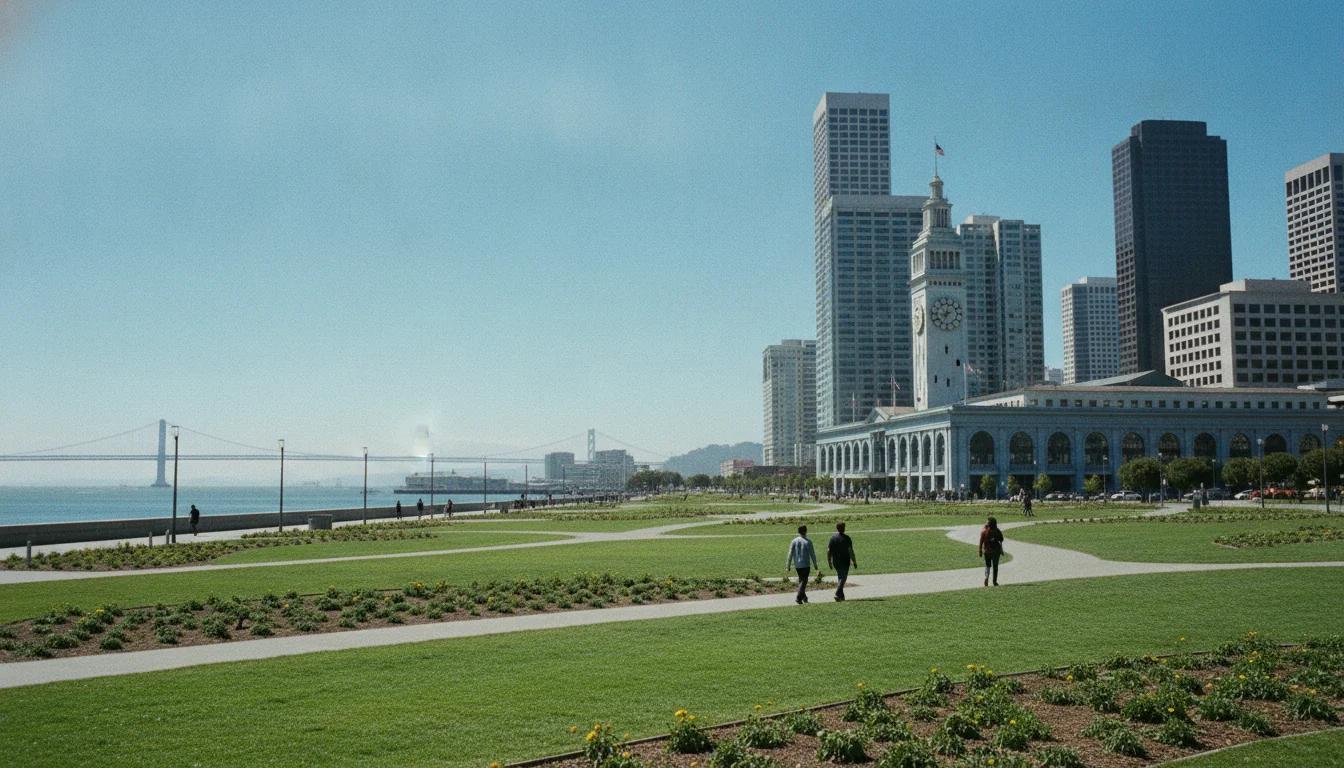
On March 4, 2025, the San Francisco Board of Supervisors unanimously approved a public-private partnership to transform Embarcadero Plaza into Embarcadero Park, a pivotal step in the city’s waterfront redevelopment. The decision, announced by the San Francisco Recreation and Parks Department, formalizes a coalition that pairs private development interests with public park stewardship to reimagine a high-visibility downtown gateway. The approval paves the way for private-sector design work, targeted private fundraising, and a concerted public funding campaign to complement city dollars. This milestone matters because it signals a scalable model for financing urban parks in a high-cost, high-demand city—and it could influence future waterfront projects across the region. The collaboration involves BXP Embarcadero Plaza LP (BXPE), the Downtown SF Partnership, and city agencies including Rec and Park and the Office of Economic and Workforce Development (OEWD). The announcement also highlights a multi-year fundraising plan designed to balance private generosity with public investment, enabling a redesigned space that links downtown to the Embarcadero waterfront. SF Rec and Park press release, March 4, 2025 (recpark.sf.gov)
In addition to the headline numbers in that March 4 release, a later update provides a broader, longer-range funding picture for the same project. By June 18, 2026, city officials described a vision for a five-acre waterfront park that builds on the 2025 framework, with a formal concept design approved by the Recreation and Park Commission and a funded plan that contemplates up to $20 million in private support to complement roughly $18 million in identified public funding sources. Groundbreaking had been targeted for late 2026, with ongoing community engagement and design refinements as the project moves from concept to construction. This updated framing is consistent with the public-private partnership model and underscores a shifting emphasis toward private philanthropy in urban park delivery. The June 18 update also reiterates the involvement of Crankstart, the Downtown Development Corporation (DDC), BXP, and the Downtown SF Partnership in fundraising and program delivery. SF Rec and Park, Vision for New 5-Acre Waterfront Park update, June 18, 2026 (sfrecpark.org)
Section 1: What Happened
The Partnership Unveiled
The March 4, 2025 press release from SF Rec & Park frames the agreement as a formal public-private partnership designed to redesign Embarcadero Plaza and the adjacent Sue Bierman Park. The agreement anchors a collaboration among the city’s Recreation and Parks Department, the Office of Economic and Workforce Development, BXPE, and the Downtown SF Partnership. The core arrangement, approved by the Recreation and Park Commission on October 17 (the public-facing timeline cited in the release), sets in motion a plan for private design investment, a coordinated public funding strategy, and a broader program of community activation around the new Embarcadero Park. The release specifies: BXPE to spend about $2.5 million on design; Rec & Park and OEWD to work toward securing more than $15 million in public funding; and private funding to be raised by BXPE and the Downtown SF Partnership, up to $10 million. This combination is designed to convert a high-profile urban space into a year-round civic asset, connecting the Ferry Building, Embarcadero Center, and surrounding neighborhoods with a renovated public realm. The release also underscores the plan’s alignment with Downtown revitalization efforts and the city’s broader strategy for a vibrant, mixed-use downtown. The formal action set the stage for a phased design and construction process, public outreach, and ongoing fundraising to close any remaining funding gaps. SF Rec and Park press release, March 4, 2025 (recpark.sf.gov)
Financial Commitments and Roles
The March 4, 2025 release lays out a three-pronged financial architecture: private design investment, public funding, and private fundraising. BXPE’s initial commitment to fund a roughly $2.5 million design package demonstrates private sector buy-in for early-phase planning, while city partners commit to building the public-funding backbone that will deliver the core park infrastructure and public amenities. The city’s role involves orchestrating a multi-year fundraising strategy to secure public dollars for park improvements, in tandem with private contributions. The Downtown SF Partnership and BXPE are positioned as lead private-funding conduits and program activators, with the partnership described as a way to bridge the gap between ambitious civic design and the city’s capital constraints. The plan’s funding language suggests a spectrum of public and private sources, with ongoing negotiations and amendments to ensure the best possible outcomes for park programming, safety, accessibility, and resilience. The March 4 release further notes the potential for the project to include additional public improvements and amenities beyond the initial scope, depending on the success of fundraising and the city’s capital plan. The emphasis on collaboration and accountability reflects a broader city strategy to leverage private capital to accelerate essential public spaces. SF Rec and Park press release, March 4, 2025 (recpark.sf.gov)
Mid-body quotable judgment: "The Embarcadero Park funding framework represents a forward-looking blueprint for public-private collaboration in urban park delivery, balancing design quality with fiscal pragmatism." — SF Bay Area Times
Timeline and Approvals
The timeline for the project, as outlined in the March 4, 2025 release, traces a sequence from the city’s regulatory approvals to private-sector design work and fundraising. The Recreation and Park Commission’s October 17 approval is explicitly cited, establishing the formal governance for the partnership. The March 4 release also flags imminent legislative steps for the partnership, with Mayor London Breed signaling a collaborative approach among city agencies, BXPE, and community actors to ensure broad-based support for the park’s design and programming. As the project progresses, the city’s plan is to maintain an active public engagement process, ensuring that community needs guide the park’s amenities, accessibility, safety, and activation calendar. The March 4 document also notes the broader context of Prop B on the November 2024 ballot, a bond measure intended to support public-space improvements, which provides a fiscal backdrop for the public funding component of the Embarcadero plan. For those tracking the formal approvals and funding streams, these documents provide a clear trail from decision to execution. SF Rec and Park press release, March 4, 2025 (recpark.sf.gov)
Section 2: Why It Matters
Downtown Revitalization and Connectivity
Embarcadero Park funding is not merely about a single waterfront park; it sits at the intersection of downtown revitalization, public space strategy, and the city’s broader economic recovery. The partnership’s intent, as described in the March 2025 release, is to reframe Embarcadero Plaza and the adjacent Sue Bierman Park as a cohesive five-acre waterfront destination. This approach aims to strengthen the link between the downtown core and the Bay, supporting pedestrian activity, outdoor programming, and a more welcoming edge to the water. The June 2026 update confirms the five-acre scope and the goal of turning the space into a year-round civic and cultural hub, with private fundraising playing a central role in delivering amenities and programming that would not be possible with public funding alone. The collaboration among private developers, a non-profit community charter, and the city’s park agency demonstrates a model for aligning urban design excellence with market-based investment. The public-private funding mix is designed to create a durable asset that contributes to Downtown’s daytime vitality and nighttime economy, all while maintaining public access and governance through SF Rec & Park. SF Rec and Park press releases (March 4, 2025; June 18, 2026) (recpark.sf.gov)
Funding Structure and Risks
The public-private funding framework highlights a growing trend in which cities leverage private donors and developers to supplement municipal budgets for capital-intensive projects. The March 4, 2025 plan emphasizes a $2.5 million design expenditure from BXPE, with a joint city effort to secure more than $15 million in public funds and private donors potentially contributing up to $10 million. The later June 2026 update expands the private funding envelope to as much as $20 million, while identifying roughly $18 million in public funding as a baseline. This evolution has implications for how city governments assess risk, maintain accountability, and ensure long-term maintenance and programming in publicly funded parks. The key risk factors include fundraising volatility, cost escalation, and potential changes in political or market conditions that could alter the private partners’ commitments or the public funding envelope. The project’s governance structure — with Rec & Park, OEWD, BXPE, and the Downtown SF Partnership — is designed to provide cross-cutting oversight to mitigate these risks, but the long-term success will depend on disciplined financial management, transparent reporting, and sustained community engagement. Public observers will be watching whether private commitments translate into reliable capital inflows and whether the city’s ongoing operating costs remain within budget over the park’s lifecycle. SF Rec and Park press releases (March 4, 2025; June 18, 2026) (recpark.sf.gov)
Community Engagement and Oversight
A core element of the project’s legitimacy is the emphasis on community input and ongoing public outreach. The March 4, 2025 release describes an inclusive process that will incorporate community feedback into design decisions, with public meetings and stakeholder engagement integrated into the project’s development timeline. The first community meeting, scheduled for March 6, 2025, is highlighted as a key milestone for collecting input on park features, amenities, and activation concepts. The public outreach component continues to be a formal obligation of the partnership, ensuring that residents, workers, and visitors have a voice in how the waterfront takes shape. The June 2026 update reinforces this commitment by outlining the partnership’s role in program development and community-based programming as the park moves toward construction. The governance framework, with Rec & Park coordinating with OEWD, the DDC, and private partners, provides a structured platform for accountability and transparency as private funds are raised and public funds are disbursed. In practice, this means auditors, public reports, and a public-facing communications strategy will be important tools for maintaining trust and demonstrating value to taxpayers and contributors alike. SF Rec and Park press releases (March 4, 2025; June 18, 2026) (recpark.sf.gov)
Section 3: What’s Next
Next Steps in Design and Fundraising
With the March 2025 approval in place, the city moves into the detailed design and fundraising phase. BXPE’s in-kind and cash contributions, city funding commitments, and private donor campaigns will require careful coordination, procurement processes, and ongoing community consultation. The initial design work will continue under the public-private framework, with the goal of delivering a coherent concept for Embarcadero Park that aligns with city standards for accessibility, sustainability, and programming. The June 2026 update reinforces the expectation that private fundraising will continue to be a major driver of the project, with the Downtown Development Corporation leading efforts to secure up to $20 million in private support to complement approximately $18 million in public funding sources. The public-facing timeline anticipates a late-2026 groundbreaking, followed by phased openings that could align with citywide downtown revitalization milestones and special event calendars. The project team is also expected to advance critical infrastructure improvements and partnerships with local arts, cultural groups, and neighborhood associations to ensure a robust program of events and activations from the outset. SF Rec and Park press releases (March 4, 2025; June 18, 2026) (recpark.sf.gov)
Groundbreaking and Opening Expectations
The latest public-facing update frames groundbreaking as a late-2026 milestone, contingent on the pace of design, fundraising, and regulatory approvals. This timeline is consistent with a multi-year capital program that aligns private giving with public investments and with the need to coordinate with adjacent projects, transportation planning, and waterfront programming. City officials emphasize that the park’s opening would be matched by an ongoing series of community events and activations, designed to make Embarcadero Park a durable centerpiece of downtown life. The partnership’s structure anticipates a long horizon for operations and maintenance, with a governance regime designed to sustain year-round use, programming, and safety standards. As with many large urban park projects, the path from concept to completion will involve adjustments, updates to fundraising targets, and potential refinements to the park’s features in response to community feedback and budget realities. The upshot is that 2026 could be a turning point for downtown waterfront amenities, with Embarcadero Park serving as a model for how private capital and public resources can converge to create a civic asset of lasting value. SF Rec and Park press releases (March 4, 2025; June 18, 2026) (recpark.sf.gov)
Closing
The Embarcadero Park funding story is unfolding as a milestone in San Francisco’s ongoing waterfront transformation. The March 2025 board approval established the framework for a scalable, public-private model that leverages private design investment and philanthropic support to complement public funding. The subsequent June 2026 update widens the funding lens, signaling a more ambitious private-raising target and a broader scope for the park’s five acres. As the city advances toward detailed designs, community input, and fundraising milestones, stakeholders across government, business, and civil society will be watching closely to gauge whether this collaboration can translate into a vibrant, accessible, and resilient waterfront space for generations. For readers who want to follow the latest developments, the official SF Rec & Park announcements and Legistar filings provide a transparent, step-by-step view of the project’s funding trajectory and governance. The combination of public oversight and private generosity could, if successful, become a meaningful blueprint for future urban parks in high-cost city settings. SF Rec and Park press releases (March 4, 2025; June 18, 2026) — Legistar filings and related documents (recpark.sf.gov)