
SFMOMA Fisher Collection Reimagined Opens April 18, 2026
Data-driven look at SFMOMA Fisher Collection Reimagined, detailing the April 18, 2026 unveiling and its impact on Bay Area culture.
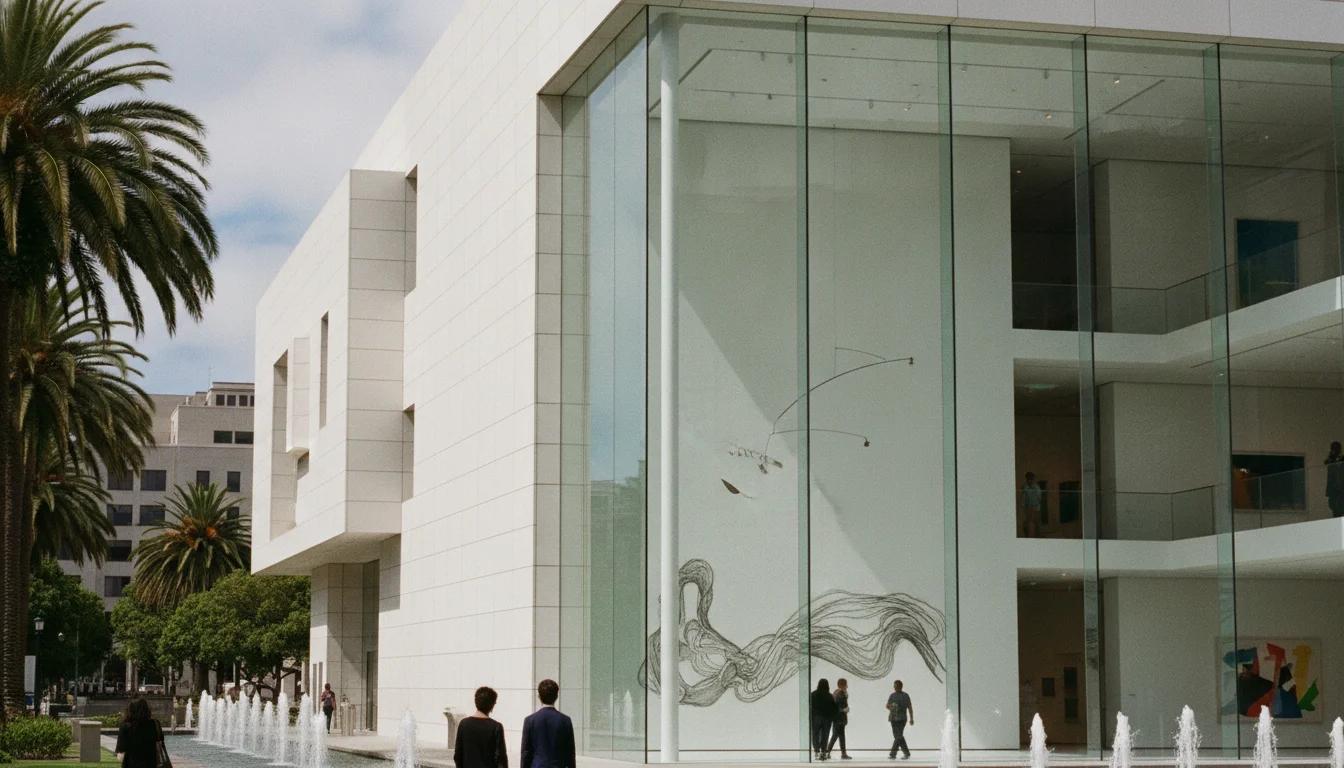
The San Francisco Bay Area is watching a major shift in how one of its defining art collections is presented. On April 18, 2026, SFMOMA unveiled Reimagined: The Fisher Collection at 10, a comprehensive reinstallation of the Doris and Donald Fisher Collection across four galleries on four floors. The Bay Area Times is tracking the rollout as a data-driven lens on museum practice, audience accessibility, and the evolving presentation of postwar and contemporary art in a regional cultural ecosystem that includes a dense slate of galleries, universities, and public programming. The news is not only about new walls or new labels; it’s about how audiences connect with art, how storytelling threads through a historic collection, and how a city’s flagship museum repositions its public engagement strategies for a broader, more diverse audience. According to SFMOMA’s press materials, the project is nearly 250 works by 35 artists, spanning roughly 60,000 square feet, and it marks the museum’s first full reinstallation of the Fisher Collection since the 2016 building expansion. This opening is timely for Bay Area visitors and scholars seeking to understand how major collections evolve in real time to reflect changing expectations around accessibility, storytelling, and participation. The museum’s own communications emphasize a multi-pronged approach to audience experience, including tactile maps, visual descriptions, new seating arrangements, and the Co-Lab space for hands-on activities, designed with inclusive design partners to ensure broader access. The news is already shaping conversations about how large-scale collections are curated and displayed in a contemporary museum environment. This piece presents the announcement, its context, and its potential implications with data-driven clarity, drawing on the museum’s official releases and its own interpretive narrative about the Fisher Collection at 10. On November 19, 2025, SFMOMA released the initial press materials announcing the transformation, and updated details emerged in March 2026 as the unveiling approached. The following analysis synthesizes those primary sources and related museum communications to provide a precise timeline, clear impact assessment, and a view of what comes next for the Fisher Collection and for SFMOMA’s broader mission in the Bay Area. According to SFMOMA's November 19, 2025 press release, Reimagined: The Fisher Collection at 10 features nearly 250 works by 35 artists across four floors of the museum, with the unveiling scheduled for April 18, 2026. The release underscores the scale (60,000 square feet) and the intended shift toward storytelling, accessibility, and audience engagement. Source: SFMOMA press release (sfmoma.org)
What Happened
Announcement and scope On November 19, 2025, SFMOMA announced a comprehensive reevaluation of the Doris and Donald Fisher Collection, framed as Reimagined: The Fisher Collection at 10. The museum described a fully reconceived presentation designed to foreground storytelling and visitor experience across four floors and about 60,000 square feet. The release notes that nearly 250 works by 35 artists would be presented, making this the first complete reinstallation of the Fisher Collection since the museum’s 2016 building expansion. The formal unveiling date was set for April 18, 2026, marking a high-profile milestone for the collection and for SFMOMA’s ongoing efforts to refresh major holdings on a ten-year cycle. The museum also highlighted partnerships with design and accessibility consultants to ensure an inclusive experience, including tactile maps, visual descriptions, and a new Co-Lab space for family-friendly, hands-on activities. These elements are positioned as part of a broader effort to broaden participation and deepen engagement with a diverse Bay Area audience. The press release and related materials, published by SFMOMA, provide the foundational facts for this stage of the Fisher Collection’s public presentation. The primary source confirms the near-250-work figure, the 35-artist roster, the four-floor layout, and the April 18, 2026 opening date. The opening is also framed as the culmination of a decade-long partnership with the Fisher family and the Fisher Art Foundation, which provided essential support for reinstallation and public-facing programs. According to the November 19, 2025 press release, the project is anchored in a storytelling approach that situates works within narratives about artists, collectors, and the social contexts of art production, aligning with contemporary museum practice that prioritizes accessibility and audience pathways. These components collectively form the basis for the opening event and its expected reception. The release situates the reinstallation as a catalyst for broader public engagement, inviting visitors to interact with familiar masterworks in new contexts and to encounter lesser-seen works that illuminate the collection’s depth.
Timeline and rollout The rollout plan for Reimagined: The Fisher Collection at 10, as described by SFMOMA, positioned the April 18, 2026 opening as the centerpiece of a phased program around the reinstallation. Claire Bradley’s March 2026 feature on SFMOMA’s site corroborates the staged opening of four floors—Floor 3 (Oldenburg + van Bruggen: Thinking Big), Floor 4 (Ways of Seeing: Fourteen Artists), Floor 5 (Calder, Kelly, LeWitt: Fundamentals of Form), and Floor 6 (Memory and Matter: Personal and Collective Histories). The piece notes that Floors 3 and 4 would be open initially, with Floors 5 and 6 following on or around the same date, underscoring a tightly choreographed launch designed to maximize early engagement and media coverage. The schedule aligns with museum communication that emphasizes the gallery plan’s explicit focus on artist-centered narratives, interactive features, and a reconsideration of how works are experienced within gallery spaces. The Four-Floor strategy is consistent with the museum’s insistence on an experiential, story-driven rehang designed to appeal to both longtime visitors and new audiences. The primary source confirms the floor-by-floor configurations and the April 18, 2026 target opening for the remainder of the galleries, providing a concrete, date-specific framework for coverage and follow-up reporting. The newer interpretive text underscores the central aim: to move beyond conventional movement- or nationality-based organization to a more nuanced, artist-centered approach that foregrounds individual stories and studio contexts. This is reflected not only in the prints and paintings chosen for each floor but also in the accompanying interpretive programs, audio content, and a multimedia timeline that traces the Fisher collection’s development. The emphasis on accessible design, welcoming spaces, and family-oriented engagement is cited as a core feature of the reimagined presentation and is supported by the museum’s collaboration with Prime Access Consulting to ensure that resources like descriptions, tactile components, and accessible seating are woven throughout the experience. The March 2026 narrative on SFMOMA’s site provides a complementary view to the November 2025 release, highlighting the continuity of planning and the emphasis on inclusive, story-driven exhibition design. The combined sources demonstrate a well-defined plan and a credible timeline that has been communicated to the public in advance. The plan’s specifics, including the four-floor layout, the artist-centered curatorial approach, and the accessibility initiatives, are central to how journalists and scholars will report on the opening and its initial reception. The financing and governance context, including Foundation support and public-facing programming, is also described in the release materials and the museum’s own statements, helping to frame the event within the broader philanthropic and institutional context of SFMOMA.
Key facts from the official materials
- Nearly 250 works by 35 artists will be presented in Reimagined: The Fisher Collection at 10. The numbers come from SFMOMA’s press release that described the scope as part of the April 18, 2026 unveiling. The project spans approximately 60,000 square feet across four floors. The announcement notes that this marks the first complete reinstallation of the Fisher Collection since the 2016 expansion. The official materials place a strong emphasis on storytelling, audience engagement, and accessible design, including tactile maps, visual descriptions for every artwork, and the addition of interactive elements such as the Co-Lab space for hands-on activities. The press materials also highlight the involvement of project leadership (Ted Mann and Gamynne Guillotte) and the collaboration across curatorial, interpretive media, and design teams, underscoring a cross-disciplinary approach to exhibition design. The plan also notes the ongoing role of the Fisher Art Foundation and the importance of long-term partnership to realize the reinstallation. The press release further identifies the reinstallation as a major moment for San Francisco’s cultural life, positioning it within the city’s broader public-facing cultural program. The primary source confirms these core quantities, dates, and programmatic aims. In addition, SFMOMA’s own site frames the exhibit as a major public-facing initiative tied to the Fisher Collection’s long-standing relationship with the museum. The two primary sources together provide a coherent, date-specific account of what happened, when, and why it matters, as the Bay Area community prepared for the opening. The festival-like atmosphere of the opening is reinforced by the museum’s plan for special programming and family-friendly components, including the Co-Lab space and multisensory interpretation. The broader context includes the site’s accessibility improvements and the new storytelling approach, which are described in the release and in the narrative piece on SFMOMA’s site.
Why It Matters
Cultural impact in the Bay Area The transformation of the Fisher Collection at SFMOMA is a major cultural event for the Bay Area, aligning with the region’s reputation for sophisticated museum-going and a strong appetite for modern and contemporary art. The SFMOMA press materials frame the reinstallation as a catalyst for storytelling about artists, collectors, and the social dimensions of art, an angle that resonates with ongoing Bay Area arts discourse around representation, accessibility, and civic value. The reimagined galleries are designed to invite deeper reflection and longer engagement, a shift that could influence how visitors approach other major collections in the region. The project’s emphasis on inclusive design and accessible interpretation is particularly relevant in a city known for its emphasis on equity in cultural programming, and it aligns with a broader national conversation about making museums more welcoming to diverse audiences. The primary material highlights both the scale of the transformation and its intent to broaden access, signaling important implications for audience development, pedagogy, and community partnerships in the Bay Area.
Accessibility and inclusion as a core value A notable facet of Reimagined: The Fisher Collection at 10 is the explicit commitment to accessibility. The collaboration with Prime Access Consulting introduces tactile maps, visual descriptions, and other inclusive design features across all four floors, making the Fisher Collection Galleries more navigable for visitors with a range of abilities. The Co-Lab space is described as a hands-on, family-friendly zone intended to deepen engagement and provide experiential learning opportunities, reinforcing the museum’s role as a space for learning across generations. The museum’s materials also emphasize multilingual or descriptive supports, ensuring that a broad audience can interpret and experience the collection in meaningful ways. These details are central to understanding how the Bay Area’s cultural institutions are responding to calls for more inclusive, participatory experiences in art museums. The two primary sources document the accessibility investments and the Co-Lab concept, which are crucial to assessing the project’s social impact.
Artist-centered storytelling as a curatorial axis The reinstallation is described as “artist-centered” rather than movement- or nationality-based. This approach reshapes how visitors encounter artworks and fosters a more dialogic relationship between viewers and creators. The briefer outlines of Floors 3–6—each with a distinct thematic focus that foregrounds individual artists and their studios or processes—signal a deliberate strategy to foreground biographies, practices, and studio histories. The strategy aims to help visitors understand the artists not only as names within a catalog but as persons whose choices and contexts shaped the works. The approach aligns with a broader curatorial trend toward contextualization, narrative storytelling, and audience immersion in contemporary museum practice. The primary sources confirm this framing and illustrate how the exhibition design translates abstract curatorial goals into tangible gallery experiences.
Economic and visitor impact considerations From a practical standpoint, a reinstallation of this scale represents a substantial investment in exhibition design, interpretive media, and accessibility infrastructure. The press materials emphasize long-term partnership with the Fisher Art Foundation and the extended loan arrangement with the Fishers, highlighting a stable financial and programmatic backing for the reimagined presentation. The scale of the project—nearly 250 works, 60,000 square feet, four floors—suggests a meaningful impact on museum visitation, with potential spillover effects for surrounding cultural sites, hospitality, and transit demand. While no specific attendance projections are disclosed in the source materials, the breadth of the reinstallation and the emphasis on visitor experience imply a strategic aim to deepen engagement, increase repeat visitation, and broaden the museum’s appeal to families and first-time visitors. The primary sources provide the structural details that underpin these expectations, while the museum’s broader communications and related events calendar offer avenues to monitor actual visitor outcomes in the months following the opening.
What’s Next
Opening day and immediate follow-up The opening date of April 18, 2026, marks the formal debut of Reimagined: The Fisher Collection at 10, with the four floors presenting a cohesive, artist-centered narrative across Memory and Matter, Calder, Kelly, LeWitt, and Thinking Big. The Floor 4–6 sequencing and content are described in detail in the museum’s notes and subsequent features. On opening, visitors will encounter the newly conceived exhibitions on Floor 3 (Thinking Big), Floor 4 (Ways of Seeing: Fourteen Artists), Floor 5 (Calder, Kelly, LeWitt: Fundamentals of Form), and Floor 6 (Memory and Matter: Personal and Collective Histories). The new Co-Lab and the multisensory, described interpretive materials will accompany the works to support accessible engagement for a broad audience. The timing and floor-by-floor plan reflect a deliberate strategy to balance high-profile works with less-frequently shown items, offering a fresh approach to a long-running collection. The primary sources provide the definitive schedule and the floor-by-floor content as the basis for coverage.
Longer-term program integration and public engagement Beyond the initial opening, SFMOMA has outlined a programmatic framework to sustain engagement with Reimagined: The Fisher Collection at 10. This includes a multimedia timeline that traces the Fisher Collection’s development, enabling ongoing narrative exploration of the collection’s origins and its public presentation at SFMOMA. The inclusion of the Co-Lab program suggests ongoing family and community programming that could extend into weekends, school partnerships, and special events. The press materials emphasize a model that, in time, could extend to other parts of the museum’s collections, enabling learnings from the Fisher installation to inform broader presentation strategies across the museum’s seven floors. The combination of an interpretive timeline, accessible design elements, and hands-on activities positions the Fisher Collection Galleries as a living laboratory for how major collections can be experienced in new ways. The primary sources demonstrate the museum’s intent to create a durable, adaptable platform for audience engagement.
Sparked conversations and public discourse The reinstallation has ignited conversations among curators, critics, and audiences about the balance between canonical works and lesser-known pieces, and about how to present a collection in a way that invites reflection and participation. The press materials emphasize that the project foregrounds empathy, memory, and personal histories, inviting visitors to encounter the collection through lived experiences and personal connections. As with any major museum initiative, the opening will likely generate a set of opinions about the relative emphasis on “great works” versus contextualized storytelling, and about the use of technology and multisensory tools to convey complex histories. The two primary sources provide a strong basis for evaluating these debates as the four-floor experience unfolds.
What SF Bay Area Times Will Watch
- Attendance patterns and audience mix in the weeks after the April 18, 2026 opening, including families, first-time museum-goers, and long-time SFMOMA patrons.
- The effectiveness of inclusive design features, such as tactile maps and audio descriptions, in improving accessibility metrics and visitor satisfaction.
- The performance and reception of the Co-Lab as a core engagement site, including participation rates and program diversity.
- The degree to which the artist-centered storytelling approach changes visitors’ understanding of the Fisher Collection compared with the pre-2026 presentation.
- Any early program partnerships or cross-institution collaborations that leverage the reimagined collection to catalyze broader Bay Area cultural initiatives.
Closing
The launch of Reimagined: The Fisher Collection at 10 positions SFMOMA at the forefront of a national conversation about how major collections are presented in the 21st century. The combination of a carefully staged four-floor reinstallation, a focus on storytelling and memory, and a robust accessibility program reflects a sophisticated approach to audience engagement that can inform museum practice beyond the Bay Area. For readers, the essential takeaway is that the Fisher Collection’s public presentation has been reimagined not merely to rehang walls but to reframe how visitors experience art—emphasizing narrative, accessibility, and participation as central to the museum experience. With the opening on April 18, 2026, and the continuities with SFMOMA’s broader exhibitions and programs, the Bay Area can anticipate a period of heightened public conversation around how art collections travel—from donors to display, from galleries to classrooms, and into the daily lives of communities.
SF Bay Area Times will continue to track the evolution of Reimagined: The Fisher Collection at 10, reporting on visitor responses, program outcomes, and any subsequent refinements to the presentation as the year unfolds. For ongoing coverage, readers should consult SFMOMA’s official releases and the museum’s ongoing storytelling about the Fisher Collection, as well as independent reviews and local arts coverage that contextualize the installation within San Francisco’s dynamic cultural ecosystem. The official materials provide the backbone of this coverage, while independent reporting can offer additional perspective, critique, and comparative analysis with other major museum rehangs nationwide. The Bay Area’s cultural landscape remains dynamic, and this reimagined presentation is a decisive moment in how the region thinks about public art, audience access, and the role of museums as civic spaces for learning and reflection. The opening is a signal of intent: to present art not as static objects in a room, but as living conversations that invite participation, interpretation, and community connection.