Anthropic IPO: Why Dario Amodei Gets Drawn as a Prophet
The Information's Anthropic profile renders Dario Amodei as a robed figure in a cathedral. The messiah frame flatters and disqualifies at once, and it arrives right before an IPO.
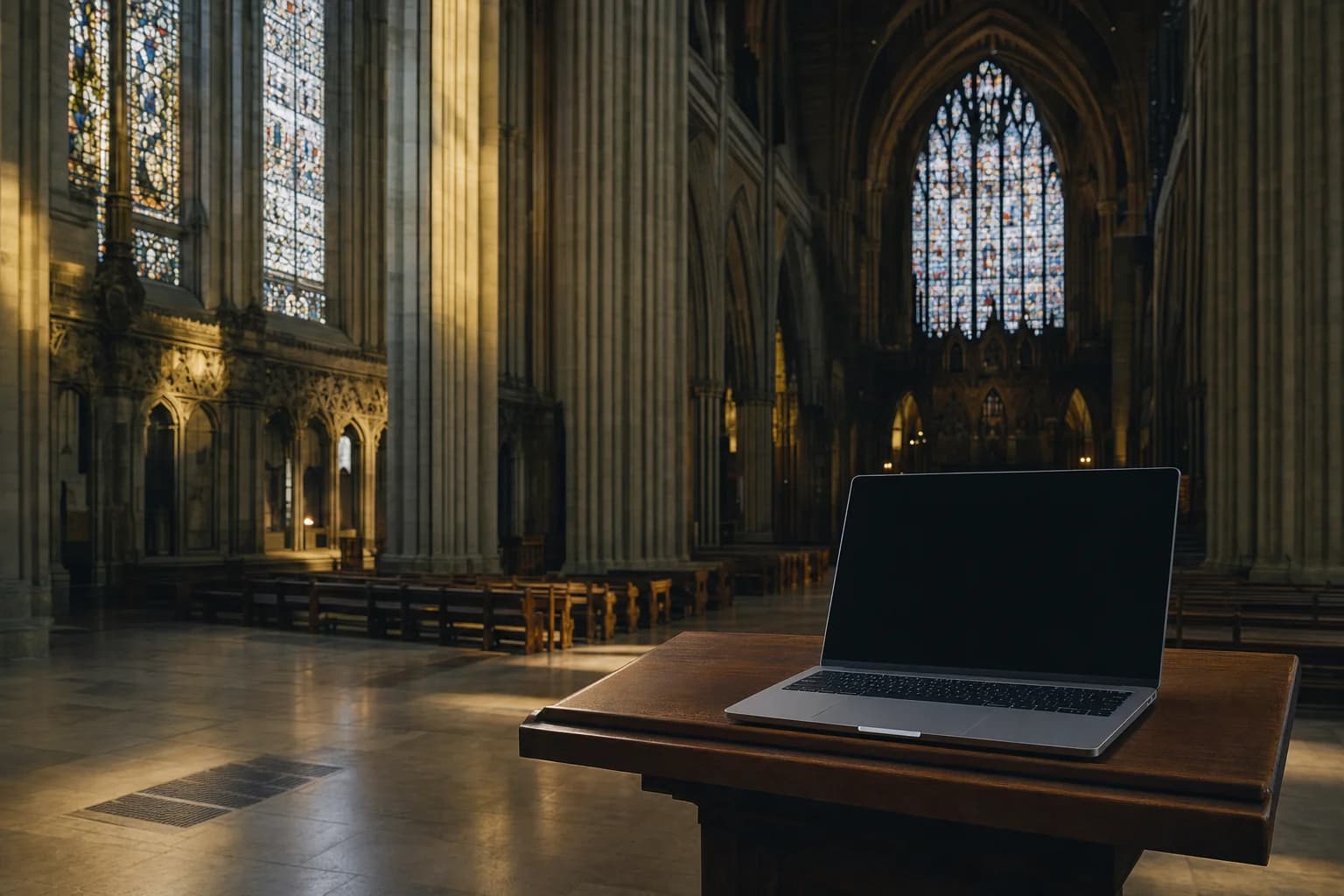
The Information published a profile of Anthropic's chief executive this week under the headline "How Dario Amodei Spread Anthropic's Religion and Stirred Up Silicon Valley." The art on top of it is a photo composite, credited to photographs via Getty Images with illustration by Mike Sullivan. Amodei stands in the nave of a cathedral in what reads as a robe and a red sash, stained glass behind him, lit like an altarpiece. Off to one side, Sam Altman stands with the protesters and their shut-it-down placards.
It is a good illustration. It is also the entire argument of the piece, delivered before the first paragraph, and it is worth pulling apart, because the messiah frame has become the default way American business media renders anyone who says AI might be dangerous.
What the frame does
The deck under that headline is about money: a leadership style that has driven a remarkable ascent, frustrated some investors, and faces a new test with the company's planned IPO. The reported line everyone quoted afterward came from a large investor, who said Amodei is more of a religious leader than he is a CEO.
Read that sentence twice and notice who is speaking. It is a source with a position in the company, ahead of a listing, expressing a preference about how the company should talk in public. That is a legitimate thing to report. Promoting it to the visual thesis of the story is a different act. The illustration takes one shareholder's frustration and renders it as the objective condition of the man.
And the frame is efficient in a specific way. Calling someone a prophet is simultaneously flattering and disqualifying. It grants stature and removes the obligation to argue. If Amodei's risk estimates are the content of a faith, then no one has to engage them on the merits, and a disagreement that is at least partly empirical, about capability curves, timelines and what fraction of white-collar work is exposed, gets filed as temperament.
The prophet frame is not a criticism of the argument. It is a way of not having the argument, and it arrives exactly when an IPO makes the argument expensive.
Anthropic supplies the raw material
None of this means the reporting is unfair. Amodei publishes long essays about where he thinks this goes. The Information describes internal all-hands sessions that staff nickname the Vision Quest, and an in-house economics team studying what happens to GDP and employment if capability keeps compounding. A company that funds economists to model the aftermath of the singularity has forfeited the right to be surprised when someone reaches for religious vocabulary.
Silicon Valley has an established genre here. Steve Jobs got the reality distortion field. Elon Musk gets the messiah treatment in both directions, worship and heresy trial, sometimes in the same week. Elizabeth Holmes got the black turtleneck as evidence. The genre is durable because it is fun to write and because founders keep auditioning for it.
But there is a difference between a founder who wants to be believed about a product and one who is making a falsifiable claim about risk. Jobs asking you to believe in a phone and Amodei asking you to believe a technology could go badly are not the same kind of statement, and only one of them can be checked.
The cost of the shortcut
A reader who finishes that piece knows a great deal about how Dario Amodei makes people feel and very little about whether he is right. That is a strange outcome for a story pegged to an IPO, because if he is even partly right, the risk disclosures in that S-1 are the most consequential document the AI industry has produced, and if he is wrong, the correct rebuttal is technical rather than tonal.
Investors who want less doom talk before a listing have an obvious interest in the second question never being asked. The cathedral is doing that work for them.
The Information's reporting on Anthropic has been the best in the business, which is why the framing is worth arguing with rather than ignoring. The piece under the picture is careful. The picture is not, and the picture is what most people saw.