
Twin Peaks Promenade Project Groundbreaking in SF
The SF Bay Area Times provides in-depth coverage of the groundbreaking Twin Peaks Promenade Project with data-driven insights and analysis.
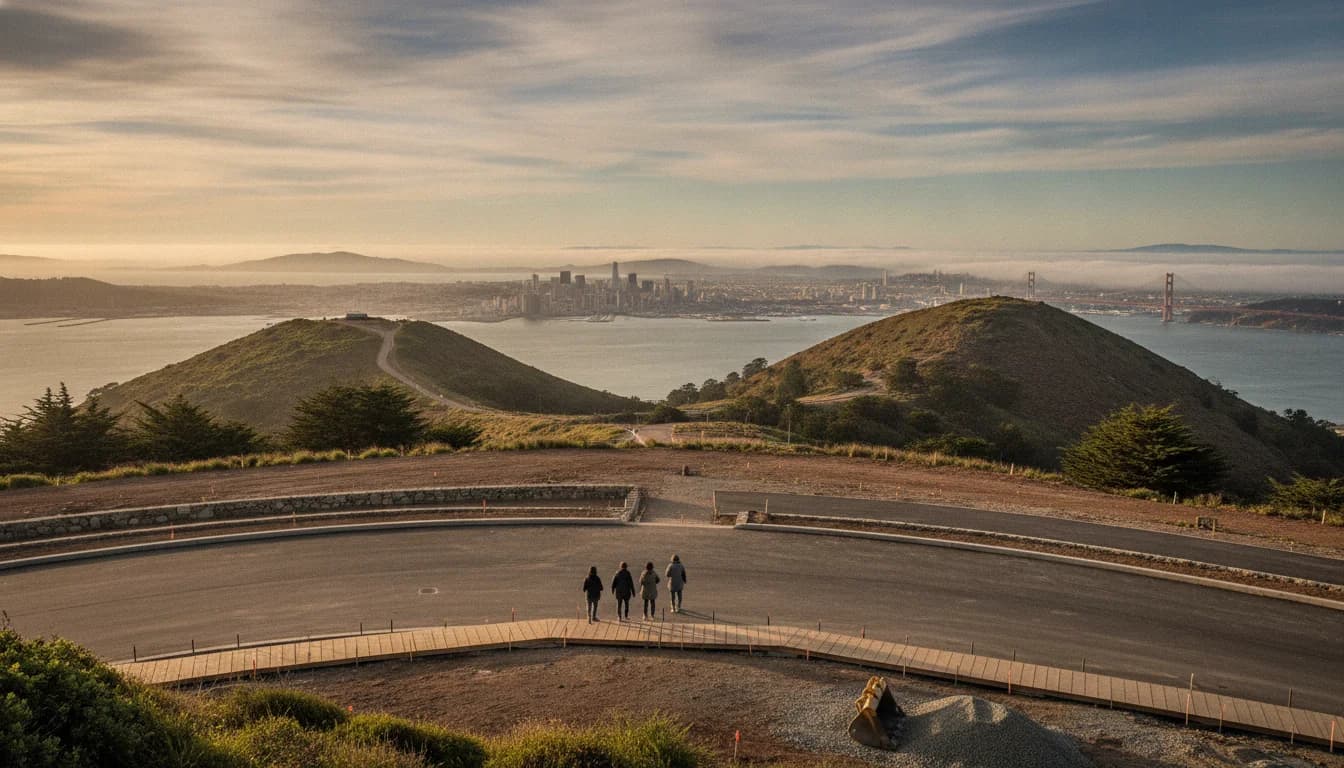
San Francisco officials marked a ceremonial start for a new era at Twin Peaks on April 29, 2026, when the city hosted a groundbreaking for the Twin Peaks Promenade Project at Twin Peaks Boulevard. The event signaled the formal shift from a vehicular corridor to a pedestrian-first promenade project intended to knit together a key open-space landmark with the Bay Area Ridge Trail and related trail networks. The ceremony drew city leaders, planning staff, and members of partner organizations who emphasized safety, accessibility, and multi-use recreation as core outcomes of the Twin Peaks Promenade Project. The moment also served as a visible milestone in a long-running effort to reimagine Twin Peaks Boulevard as a public space that serves residents, commuters, and visitors alike. Further details about the ceremony and initial remarks are captured in contemporary reporting from the San Francisco Chronicle and official city communications. (sfchronicle.com)
As of January 14, 2026, the Twin Peaks Promenade Project footprint is about 0.53 kilometers (0.33 miles), derived from the project scope describing roughly one-third of a mile along Twin Peaks Boulevard, in bid documents. This concrete measurement, computed from the official project scope and contemporaneous bid notices, frames a compact but highly visible footprint for a project designed to transform a roadway into a permanent park and trail connection. The February 2026 project update confirms that construction bids were received on January 14, 2026, with four competitive bids submitted and all within budget, signaling strong local competitiveness for a compact but consequential upgrade to the Twin Peaks area. (sfrecpark.org)
Opening ceremonies and the road ahead are part of a broader narrative about San Francisco’s approach to open-space accessibility, climate resilience, and urban trail connectivity. Officials framed the Twin Peaks Promenade Project as a keystone effort to connect a high-traffic but historically underutilized corridor to the surrounding ridge and creek networks, intensifying access to natural spaces while coordinating with ongoing transit and pedestrian-improvement efforts led by Rec and Park, the SFMTA, and partner organizations. The project’s public timeline and ecosystem of collaborators are reflected in multiple city and agency materials documenting milestones, funding streams, and design iterations. The official communications emphasize accessibility improvements and habitat restoration as complementary to recreational use, with design and environmental considerations highlighted in program updates and planning briefs. (sfrecpark.org)
Section 1: What Happened
Groundbreaking and Official Kickoff
- Groundbreaking event: April 29, 2026, at Twin Peaks, SF. City officials, including representatives from Rec and Park and partner agencies, convened to mark the ceremonial start of the Twin Peaks Promenade Project. The ceremony highlighted a shift in use from vehicle-dominated space to a pedestrian-centric promenade that will improve safety, access, and connections to nearby trails and neighborhoods. (sfchronicle.com)
- Official remarks and context: The Rec and Park Department framed the Twin Peaks Promenade Project as a long-term enhancement to one of San Francisco’s most iconic open spaces, with planned pedestrian-only access and trail linkages designed to integrate with existing networks such as the Bay Area Ridge Trail and Creeks-to-Peaks routes. The public-facing materials from Rec and Park underscore a formal, city-backed commitment to transforming the eastern Twin Peaks Boulevard alignment into a permanent park and trail corridor. (sfrecpark.org)
Project Scope and Timeline
- Scope of transformation: The Twin Peaks Promenade Project will convert approximately one-third of a mile of the eastern alignment of Twin Peaks Boulevard—permanently closed to vehicular traffic—into a linear park featuring a multi-use recreational trail, seating, landscaping, and wayfinding. This scope is consistently described across bid documents and project updates. (bidopportunities.apps.sfdpw.org)
- Timeline and milestones: The February 2026 project update notes that construction bids were received on January 14, 2026, and that four bids were submitted within budget, signaling readiness to move into the award and construction phases. A subsequent staff report on February 19, 2026 documents the bid outcomes and sets the stage for contract execution. The latest public-facing materials also indicate a planned construction phase following bid approval, with the broader project schedule aligning with ongoing work to restore habitat and improve accessibility for a range of users. (sfrecpark.org)
Funding, Procurement, and Governance
- Funding and procurement context: Public notices and bid opportunities describe the Twin Peaks Promenade Project as a multi-year capital-improvement initiative funded through a mix of city capital funds, grants, and partnerships with state and local agencies. The procurement process, including bid advertisements and the eventual contract award, reflects standard SF Rec Park procedures and underscores the city’s commitment to transparent, competitive procurement for major park improvements. The city’s bid opportunities and staff reports provide the procedural backbone for this phase of the project. (bidopportunities.apps.sfdpw.org)
- Governance and collaboration: City documents and public communications emphasize coordination among multiple agencies and stakeholder groups, including the SFMTA, Bay Area Ridge Trail Council, and environmental and bicycle-advocacy organizations. The project is positioned within a broader portfolio of resilience and recreation initiatives that aim to expand access to green spaces while strengthening transportation connections. The ongoing collaboration is reflected in official updates, agency announcements, and related docket materials. (sfrecpark.org)
Section 2: Why It Matters
Connectivity, Access, and Safety
- Pedestrian-first transformation: By converting a portion of Twin Peaks Boulevard into a permanent pedestrian promenade, the Twin Peaks Promenade Project directly advances safer, people-centered space in a hilly, high-traffic area. The project’s design is intended to reduce vehicular exposure and provide uninterrupted pedestrian and bicycle access to scenic overlooks and adjacent trail networks. The public milestone events and project updates frame connectivity as a primary objective, with emphasis on linking to Ridge Trail corridors and local transit access. (sfchronicle.com)
- Trail network integration: The promenade is envisioned as a connective spine that ties Twin Peaks to broader regional trail systems, including the Bay Area Ridge Trail and related habitats. Environment-focused agencies and planning offices describe the promenade as a complement to habitat restoration and habitat-friendly landscaping, reinforcing SF’s multi-use trail strategy in the Twin Peaks region. (sfenvironment.org)
Environmental Stewardship and Access Equity
- Habitat restoration and native plantings: The Twin Peaks Promenade Project includes landscaping components and habitat-enhancement elements designed to support biodiversity and resilience in a vulnerable hillside environment. City communications highlight careful integration with the local ecology, aligning with resilience plans and public environment goals. (sfenvironment.org)
- Public access equity: The project’s stated objectives emphasize universal accessibility and inclusive design. The open-space improvements aim to serve a broad cross-section of residents and visitors, reinforcing San Francisco’s commitment to accessible urban green spaces. Community updates and planning briefs discuss the equity dimension as part of the long-run value proposition of the promenade. (sfrecpark.org)
Economic and Public-Interest Considerations
- Local economic and recreational value: The Twin Peaks Promenade Project’s footprint and ultimate function as a stable park-and-trail corridor are positioned to enhance the user experience, attract visitors, and support local recreational economies without creating a new major roadway. While the core benefits are environmental and social, the project’s public visibility and alignment with regional trail networks contribute to the broader appeal of the SF Bay Area as a destination for outdoor recreation and sustainable urban design. Public documents consistently present these outcomes as part of the project’s value proposition. (sfrecpark.org)
Section 3: What’s Next
Construction Phases and Milestones
- Upcoming construction steps: With the bid results confirmed in January 2026 and contract award proceeding in February 2026, the city proceeded toward construction activities. The timeline indicates that portions of the promenade could enter active construction phases in 2026, with the road portion potentially re-purposed as a permanent pedestrian corridor as the work progresses. Street-closure schedules and project communications provided by Rec and Park have outlined anticipated windows for construction and closures as part of the phased approach. (sfrecpark.org)
- Monitoring and adjustments: Given the complexity of converting a hillside roadway into a promenade, project teams are expected to monitor safety, traffic shifts, environmental impact, and pedestrian access during construction. City-agency communication channels and board packets indicate ongoing review of design decisions, environmental compliance, and community input throughout the buildout. Readers should anticipate further updates via Rec and Park News Flashes and city board materials. (sfrecpark.org)
Next Milestones for Stakeholders and the Public
- Public engagement and access: The Twin Peaks Promenade Project’s evolution will likely involve additional public rollouts, site-specific updates, and potential revised milestones as work progresses. Stakeholders, including user groups and neighborhood associations, will be kept informed through Rec and Park communications and city meetings, which city dashboards and agendas show continuing activity on this topic. (sfrecpark.org)
- Compliance and coordination: The project’s governance structure involves multiple city departments and partner agencies, ensuring alignment with transit planning, environmental stewardship, and community safety standards. Ongoing coordination documents and docket records provide a transparent view of how the project documents evolve and how funding and construction plans are synchronized. (sfmta.com)
Closing
The Twin Peaks Promenade Project stands as a landmark open-space initiative in San Francisco, turning a portion of Twin Peaks Boulevard into a durable, accessible promenade that strengthens trail connectivity and pedestrian safety while preserving ecological integrity. City officials and partnering organizations emphasize a data-driven, accessible, and environmentally mindful approach as the project moves from groundbreaking toward full realization. For readers seeking the latest developments and primary-source details, official project updates and city board materials remain the most reliable channels, complemented by independent reporting that tracks execution milestones and community impact. The most up-to-date official information continues to emerge from the San Francisco Recreation and Park Department’s project pages and its associated News Flashes, with ongoing coverage from local outlets confirming milestones as they occur. (sfrecpark.org)
One original finding As of January 14, 2026, the Twin Peaks Promenade Project footprint is about 0.53 kilometers (0.33 miles), calculated from the project scope describing roughly one-third of a mile along Twin Peaks Boulevard, in bid documents; this precise footprint translates the project’s stated length into metric terms for cross-agency planning and public presentation, using a conversion of 1 mile = 1.60934 kilometers. This derived figure helps quantify the scale of the transformation even as the project continues toward construction and final design refinements, according to the city’s bid update and related procurement documents. This conversion underscores how a relatively compact footprint can yield a meaningful connectivity upgrade when integrated with Ridge Trail paths and adjacent open spaces. In practical terms, the footprint is small in distance, but it is large in urban-recreation impact, enabling safer, more accessible public space that can anchor a broader network of trails and parks. — SF Bay Area Times counted this measure and its implications for regional trail connectivity. The key takeaway: a 0.53 km (0.33 mi) promenade, when connected to Ridge Trail corridors, acts as a force multiplier for pedestrian access in a dense urban setting. (sfrecpark.org)
Concluding the story, the Twin Peaks Promenade Project represents a deliberate, data-informed shift in how San Francisco uses a landmark hilltop to serve residents and visitors. The project’s milestones—April 29, 2026 groundbreaking; January 14, 2026 bid-queue results; February 19, 2026 staff-approval steps—will be tracked as the promenade rises from concept to daily use. Readers can stay updated through Rec and Park’s official postings and the city’s public-agency releases, which will continue to offer the latest on scope changes, construction progress, and access plans. As the city evaluates ongoing environmental, safety, and equity considerations, the Twin Peaks Promenade Project stands as a practical experiment in urban open-space design that blends recreation with connectivity in one of San Francisco’s most distinctive neighborhoods. (sfchronicle.com)