
Bay Area FIFA World Cup Fan Zones Revealed by Host
Discover Bay Area FIFA World Cup fan zones unveiled by the Host Committee, spanning 30+ venues with public watch parties and a regional approach.
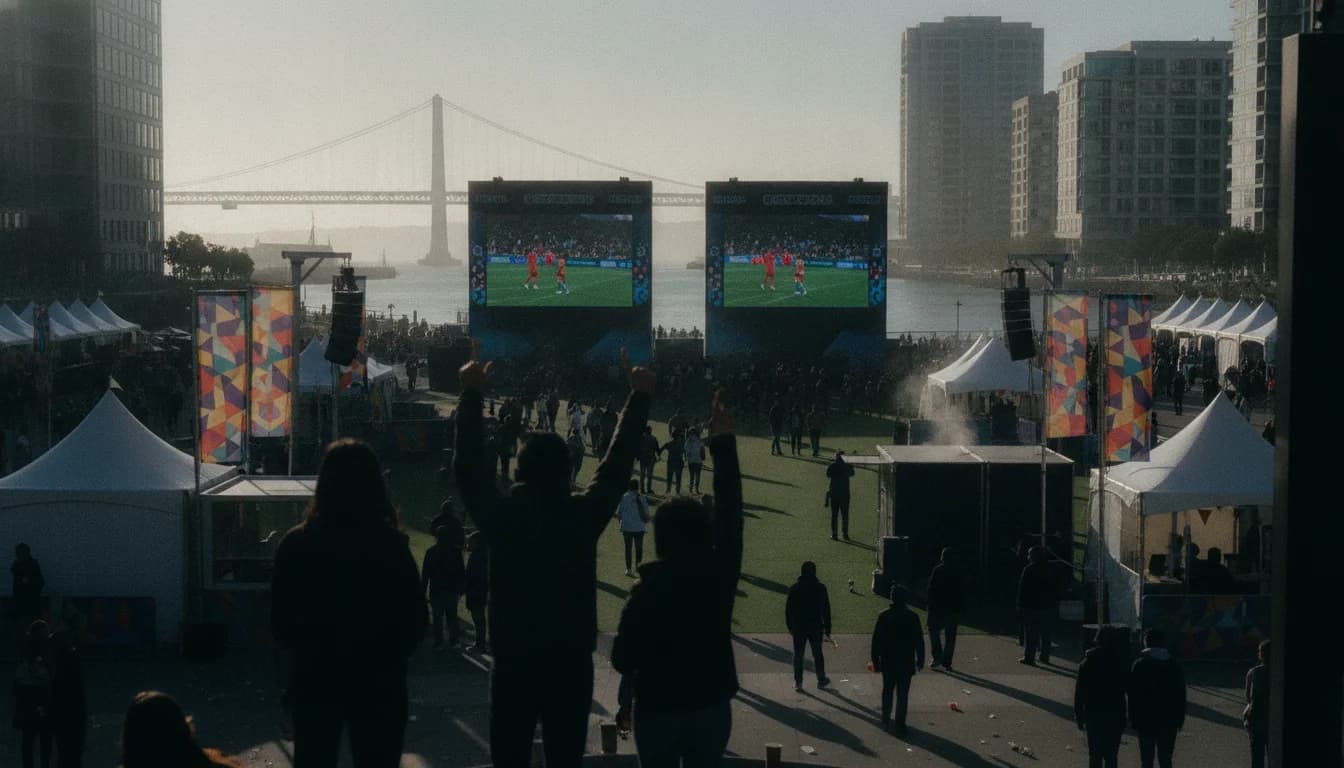
The Bay Area is set to become a distributed celebration zone for the FIFA World Cup 2026™, with a broad network of Bay Area FIFA World Cup fan zones and public watch parties announced on April 7, 2026. The Bay Area Host Committee (BAHC) disclosed a plan to bring the tournament to audiences beyond traditional stadiums, emphasizing free, public viewing experiences designed to reach every corner of the region. This marks a shift from a single, centralized fan festival to a decentralized, community-driven viewing strategy, a choice aligned with the Bay Area’s history of broad-based participation in mega-sporting events. The World Cup itself is scheduled to run from June 11 to July 19, 2026, with matches spread across the United States, Canada, and Mexico, including six Bay Area-hosted games that will unfold in venues throughout the region. The announcement matters because it signals how municipal partners, local businesses, and community organizations plan to leverage public spaces to engage diverse communities while promoting regional economic activity during a globally watched event. Bay Area FIFA World Cup fan zones reflect a model of inclusive, low-barrier access to world-class viewing experiences, which could influence both fan engagement and local business strategies in the months ahead. This piece provides a data-driven look at what happened, why it matters, and what’s next for Bay Area watchers and stakeholders. On April 7, 2026, the Bay Area Host Committee announced that FIFA World Cup 2026 Fan Zones would operate at 30+ venues across the Bay Area starting June 11, 2026, according to the Bay Area Host Committee. (bayareahostcommittee.com)
Section 1: What Happened
Announcement Details
- The Bay Area Host Committee publicly disclosed a distributed Fan Zone strategy on April 7, 2026, emphasizing free, public viewing across the Bay Area and beyond. The release highlights that residents and visitors from San Francisco to Santa Cruz, Oakland to San Jose, and everywhere in between would have access to locally tailored watching experiences. The document reinforces the commitment to inclusivity, community activation, and partnerships with local businesses and organizations. For readers tracing the official source, the Bay Area Host Committee’s newsroom post serves as the primary reference for the announcement. The press release notes that the Fan Zones will begin operations on June 11, 2026. In addition to Fan Zones, the organization is providing the 2026 Bay Area Public Screening Playbook to help bars, restaurants, community groups, and businesses confidently host World Cup viewing events. This playbook is designed to standardize public-viewing guidelines, templates, and promotional materials to support local hosts. The release also includes a direct call for regional participation, underscoring the collaboration among counties, sports teams, and civic partners to realize a truly regional celebration. For more on the official phrasing and venue list, see the Bay Area Host Committee announcement. (bayareahostcommittee.com)
- Coverage in local media corroborates the announced scale and reach, noting that “Fan Zones, free venues for public viewing of matches span more than 30 locations from San Francisco to Santa Cruz,” with a schedule that centers around the June 11 kick-off. The San Francisco Chronicle’s reporting confirms the same “30+ locations” framing and provides a venue-by-venue enumeration across the Bay Area, including San Francisco, Oakland, San Jose, Santa Rosa, Napa, and Santa Cruz, among others. The article also references the World Cup start date and the general schedule, reinforcing the public-facing, geographically dispersed approach. (sfchronicle.com)
- FIFA’s official communications emphasize an expansive set of host-city fan events across the calendar year, providing the broader context for the Bay Area’s approach within a multi-city, multi-country host framework. While Bay Area-specific details are provided by local organizers, FIFA confirms that host-city fan events are a central component of World Cup celebrations globally. This broader framing helps readers understand how Bay Area fan zones fit into a global festival strategy. (fifa.com)
Timeline and Venues
- The Bay Area Host Committee’s April 7, 2026 release specifies a starting date for viewing: June 11, 2026. It also confirms that Bay Area FIFA World Cup fan zones will be located at “30+ venues along with participating sports bars across the Bay Area.” The document then proceeds to enumerate many venues across multiple counties, including San Francisco, Alameda County (East Bay), Santa Clara County (San Jose), Napa and Sonoma in the North Bay, and Santa Cruz in the Santa Cruz region. This distributed approach encompasses both large and small venues, enabling fans with or without match tickets to participate in the World Cup experience. The released list demonstrates a deliberate plan to activate both iconic urban spaces and neighborhood gathering spots. (bayareahostcommittee.com)
- The SF Chronicle’s April 7, 2026 article mirrors this structure and provides a practical roster, listing specific sites that would serve as Fan Zones, such as Thrive City at Chase Center, PIER 39, and Yerba Buena Lane in San Francisco, plus Alameda County Fair Grounds in Pleasanton and Santa Cruz Beach Boardwalk in Santa Cruz, among others. The article also underscores that all watch parties are free and open to the public, reinforcing the accessibility theme of the Bay Area FIFA World Cup fan zones strategy. The story’s parallel reporting helps readers triangulate the scale and geographic distribution of the fan-zone network. (sfchronicle.com)
- In parallel with the Bay Area’s fan-zone rollout, Bay Area media and organizers have published supporting materials, such as the Bay Area Public Screening Playbook, designed to help bars, restaurants, and community groups stage their own sanctioned World Cup viewings. The Playbook is explicitly cited in the April 7 release as a resource to ensure safety, branding consistency, and compliance with public-viewing guidelines. This resource is available to local hosts, and the Bay Area Host Committee directs interested venues to its own site for download and guidance. (bayareahostcommittee.com)
Section 2: Why It Matters
Impact on Communities and Access
- The distributed Bay Area FIFA World Cup fan zones approach is anchored in broad public access. By design, it reduces barriers to participation, allowing residents who might not typically attend a major sporting event to gather in their neighborhoods, shopping districts, and parks to watch matches. The Bay Area Host Committee’s own messaging emphasizes “free, public viewing experiences tailored to their local communities,” a detail echoed in local reporting that highlights the network’s reach across multiple counties and city centers. This approach aligns with the Bay Area’s long-standing emphasis on inclusive civic engagement and purposeful local partnerships, suggesting potential benefits beyond the spectacle of the World Cup itself. The public-facing, no-ticket-necessary model also keeps the region’s footprint of international sport accessible to a broader demographic, including families, workers, and students who may rely on public transit or walkable access. (bayareahostcommittee.com)
- The broader economic and social impact of hosting World Cup events in the Bay Area is a focal point for regional planners. In October 2026, the Bay Area Host Committee reported that FIFA World Cup 2026-generated economic activity in the Bay Area surpassed initial projections, with an estimated $850 million in total activity across the region. The distribution of benefits across counties—such as Santa Clara, San Francisco, and the wider Bay Area—illustrates the potential for multi-county economic spillovers, including hospitality bookings, local retail traffic, and increased visitation to parks and public venues. While the post-event economic impact is a retrospective measure, the early framing of fan zones as both community gatherings and economic catalysts suggests that the Bay Area is pursuing a dual objective: robust fan engagement and tangible local value. This aligns with the Bay Area Host Committee’s broader mandate to “drive lasting economic, cultural, and social impact” through mega-sporting events. (bayareahostcommittee.com)
Comparison with Other Regions and Models
- Across the United States and Canada, several host regions are adopting fan-zone and watch-party approaches that blend public space activation with regulated venues. The official FIFA communications emphasize “host-city fan events” as a key component of World Cup 2026 celebrations, with the Los Angeles, Miami, and Boston regions among others taking different paths to achieve localized engagement. In the Bay Area, the decision to pursue a distributed fan-zone model rather than a single centralized Fan Fest reflects a regional preference for multi-centered, accessible experiences that leverage existing public spaces and community organizations. This approach can be contrasted with other host cities that rely more heavily on centralized venues, illustrating a spectrum of engagement strategies within the same tournament framework. (fifa.com)
Stakeholder Impacts
- Local governments and public agencies stand to benefit from planned activations through heightened tourism, increased transportation demand, and elevated branding opportunities for the region. The SFO (San Francisco International Airport) is actively coordinating with World Cup organizers to welcome fans through in-terminal activations, signaling alignment between major transportation hubs and fan-zone strategy. This coordination enables a smoother fan experience and demonstrates the interconnected nature of mega-event planning, where transport, hospitality, and cultural programming converge. (flysfo.com)
- Local businesses, bars, and community groups are positioned to participate in a year-long ecosystem of World Cup viewing events, with guidance provided by the Playbook and the official event pages. By hosting watch parties or becoming official partners, these entities can benefit from incremental foot traffic, sponsorship visibility, and cross-promotional opportunities tied to World Cup matches. The coordination between the Host Committee, local venues, and corporate partners is a practical example of how a regional economy can mobilize around a global event, leveraging both public space and private sector collaboration. (bayareahostcommittee.com)
Section 3: What’s Next
Timeline, Next Steps, and Watchables
- The initial phase centers on the official launch and the ramp-up toward the opening weekend in mid-June 2026. With Fan Zones slated to begin operations on June 11, the next several weeks will focus on venue readiness, partner activations, and communications to ensure the public can easily locate and access Fan Zone events. The public screening playbook remains a central tool for partners, with downloadable templates and guidance designed to standardize operations across dozens of locations. Expect ongoing updates from the Bay Area Host Committee as venue lists are refined and as broadcast schedules become finalized in collaboration with FIFA and broadcasting partners. (bayareahostcommittee.com)
- The World Cup schedule in the Bay Area features six matches hosted locally, per the Bay Area Host Committee’s rollout plan, plus a broader array of public-viewing opportunities across the Bay Area. The SF Chronicle coverage confirms the public nature of the zones and underscores ongoing match-day programming that will be shaped by day-of-event conditions, broadcast windows, and weather considerations. As the event grows nearer, readers should monitor both the official Bay Area pages and local media for any last-minute changes to venue rosters or times. (sfchronicle.com)
- In the weeks ahead, SFO and other regional transportation and public-safety agencies are expected to publish guidance on event-day operations, crowd management, and accessibility considerations, ensuring that fan zones remain inclusive and safe for diverse participants. The SFO activation efforts illustrate how major transit nodes will participate in the larger World Cup experience, a pattern that may inform similar activations at other Bay Area zones and partner venues. (flysfo.com)
Closing
This Bay Area approach to FIFA World Cup fan zones reflects a deliberate design: reach more fans, reduce barriers, and weave a year-long cadence of events into the regional fabric. The combination of official announcements from the Bay Area Host Committee, corroborating reporting from local outlets, and the FIFA-organized host-city framework provides a data-grounded view of how mega-sporting events can be localized without sacrificing scale. For readers looking to engage, the immediate takeaway is clear: on June 11, 2026, hundreds of Bay Area residents will have ready access to public-viewing experiences across more than 30 venues, with additional watch parties hosted by bars, restaurants, and community groups under a standardized Playbook. The Bay Area’s strategy—distributed, accessible, and community-driven—serves as a concrete case study in how regional ecosystems can participate in a global sports moment while delivering tangible local benefits. As the tournament approaches, expect more venue updates, transportation guidance, and partner activations to emerge from the Bay Area Host Committee and its collaborators. Stay tuned to official Bay Area channels and local outlets for the latest schedules, locations, and programming.
References and primary sources
- Bay Area Host Committee press release: Bay Area Host Committee Announces Fan Zones for the FIFA World Cup 2026™ (April 7, 2026), detailing 30+ venues and the Public Screening Playbook. Descriptive anchor: Bay Area Host Committee official newsroom release. (bayareahostcommittee.com)
- San Francisco Chronicle coverage: Free World Cup watch parties announced for over 30 Bay Area locations (April 7, 2026), listing specific venues and noting that all watch parties are free. Descriptive anchor: SF Chronicle article by Noah Furtado. (sfchronicle.com)
- FIFA official context: Biggest selection of host-city fan events in World Cup history to ignite celebrations, situating Bay Area fan zones within a broader host-city framework. Descriptive anchor: FIFA official article. (fifa.com)
- SFO press release: SFO Welcomes World Cup Fans with In-Terminal Activations (May 28, 2026), illustrating transportation-hub integration with World Cup fan experiences. Descriptive anchor: SFO official press release. (flysfo.com)
- Economic impact update: Bay Area Host Committee announces FIFA World Cup 2026 exceeded economic impact projections, generating approximately $850 million for Bay Area region (October 1, 2026). Descriptive anchor: BAHC newsroom release. (bayareahostcommittee.com)
Notes on data and sourcing
- The Bay Area FIFA World Cup fan zones data are anchored in the Bay Area Host Committee’s official April 7, 2026 release, which enumerates venues across multiple counties and confirms the 30+ venue target. The same information is corroborated by local media reporting on the same date. (bayareahostcommittee.com)
- The World Cup match schedule framing (June 11 start) and the fact that six Bay Area-hosted matches are planned are drawn from the Bay Area Host Committee release and cross-validated by local reporting. (bayareahostcommittee.com)
- The economic impact figure ($850 million) provides a post-event lens on the broader value of hosting World Cup events in the Bay Area and helps frame the significance of the fan-zone approach in a regional economic context. (bayareahostcommittee.com)