
Bay Area Launches $85M Home Electrification Initiative
San Francisco and regional partners announced an $85 million annual funding package to support home electrification, aiming to reduce pollution and…
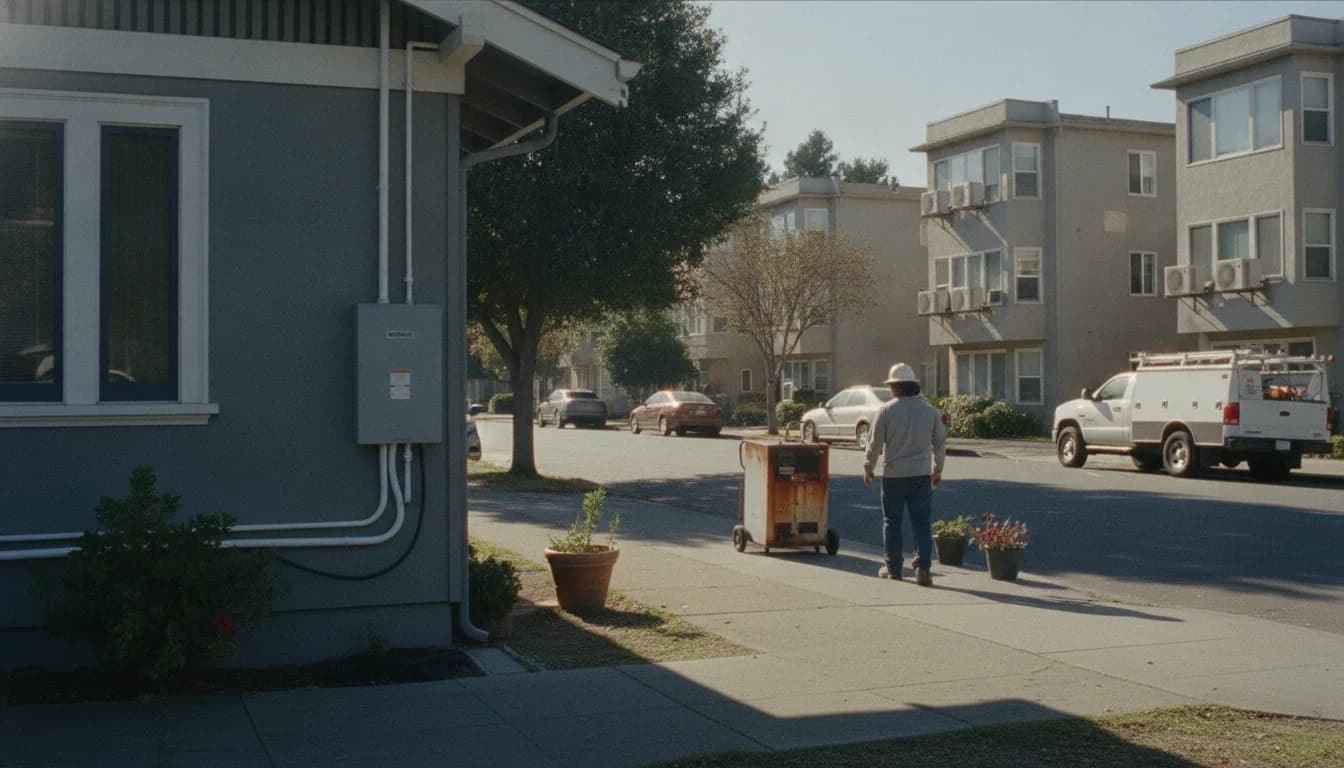
The Bay Area is moving decisively to accelerate electrification in homes. On September 8, 2026, San Francisco and regional partners announced a coordinated package totaling up to $85 million annually in incentives and resources to help residents and businesses upgrade to electric appliances and improve energy efficiency. The event, held at In Chan Kaajal Park in San Francisco, brought together city officials, county and municipal governments, utilities, and community organizations to unveil a multi-institution effort designed to propel a shift away from gas-fired appliances. The collaboration signals a regional commitment to electrification as a central tool for reducing pollution, improving indoor air quality, and stabilizing energy costs for Bay Area households. The release emphasizes that this is not a single program but a stacked set of incentives designed to be accessible and scalable across the nine-county Bay Area. (sfenvironment.org)
In the hours following the announcement, organizers stressed that the funding is designed to be complementary to state and federal efforts, including Inflation Reduction Act (IRA) rebates that California will administer in partnership with local programs. The joint statement notes that the funding pool includes heat pump incentives, water heater electrification, and broader energy efficiency measures, with a focus on affordability and equity. Importantly, officials highlighted that the resources are stackable, enabling eligible households and businesses to combine incentives from multiple programs to reduce upfront costs and shorten payback periods. The Bay Area emphasis on heat pumps and other electric appliances aligns with ongoing policy efforts to reduce NOx emissions from gas appliances and to accelerate the region’s transition to cleaner, electric-powered homes. For context, California’s broader IRA strategies include a slate of home electrification rebates and efficiency programs administered through state agencies and utilities, which are designed to reach a wide range of income groups. (sfenvironment.org)
One liftable fact emerging from the SF Environment release anchors the scale of the regional effort: according to the San Francisco Environment Department’s September 8, 2026 release, Bay Area incentives for electric upgrades total up to $85 million annually, with $41 million earmarked specifically for heat pumps. This breakdown underscores a clear priority on heat-pump technology as the backbone of residential electrification in the region. The release notes that the nine-county Bay Area is coordinating incentives from municipalities, utilities, and state agencies to reduce installation costs and expand access to electrification upgrades. This multi-agency collaboration aims to accelerate the region’s move away from gas water heaters and fossil-fueled heating systems, while addressing equity and affordability. As a result, readers can expect a broad spectrum of rebate opportunities across Bay Area communities, including some programs that are stackable with one another to maximize total savings for eligible households. (sfenvironment.org)
Section 1: What Happened
In Chan Kaajal Park event and the regional coalition
A public rollout of a regional strategy
On September 8, 2026, a coalition of Bay Area cities, counties, utilities, and environmental organizations gathered at In Chan Kaajal Park to announce the availability of up to $85 million in annual resources for electrification upgrades. The event framed a regional approach to replacing gas appliances with electric alternatives and to upgrading home infrastructure to support efficient electric devices. The SF Environment press release describes the gathering as a milestone in coordinated regional action, with participants from city departments, community groups, and the Bay Area Air District discussing how the effort will unfold across the nine-county footprint. The press release explicitly ties the initiative to the Air District’s ongoing efforts to regulate gas water heaters under Rule 9-6 and to push toward broader electrification as part of the Bay Area’s climate and health objectives. The event highlighted the long-standing work of BayREN and other regional players in aligning incentives and reducing friction for homeowners and landlords seeking to electrify. (sfenvironment.org)
The funding breakdown and program scope
The SF Environment release provides a concrete breakdown: approximately $85 million annually in incentives, with $41 million dedicated specifically to heat pump incentives. The press release also notes that the funding is intended to stack with other local, state, and federal programs to lower barriers to electrification. The emphasis on heat pumps reflects their central role in electrifying space and water heating while offering improved energy efficiency and reductions in operational costs. The event underscored that the funding is intended to support not only single-family homes but also multifamily buildings, and it signaled an intent to coordinate with utilities that administer rebates and financing programs. The release also points to path-breaking examples like CleanPowerSF’s contribution to electrification incentives and the broader Bay Area ecosystem of programs designed to support gas-to-electric transitions. For readers, this means a more predictable pathway to upgrade projects that previously faced high upfront costs and complicated eligibility rules. The announcement explicitly linked local actions to statewide and federal programs designed to complement and accelerate electrification. (sfenvironment.org)
Officials’ perspectives and expert support
In remarks captured by the SF Environment release, Tyrone Jue, director of San Francisco’s Environment Department, framed the initiative as a regional reimagining of how electrification incentives are deployed at scale. He described the regional investments as a “once-in-a-generation opportunity” to reduce barriers to electrification while improving public health and reducing climate pollution. Bilal Mahmood, San Jose District 4 Councilmember and Bay Area Air District Director, emphasized that the combination of policy measures and financial incentives would hasten the transition away from gas appliances and improve home safety and resilience. Beyond city officials, industry observers and policy advocates highlighted the importance of a coordinated approach to electrification, noting that multi-agency collaboration could reduce confusion and increase program participation. The SF Environment release also quotes Dr. Philip Fine, executive officer of the Bay Area Air District, who framed electrification as a major lever for climate action in the Bay Area. Collectively, these voices illustrate broad support for a region-wide strategy that pairs incentives with regulatory measures to drive adoption. (sfenvironment.org)
Section 2: Why It Matters
Regional health, climate, and economic implications
Health benefits and NOx reductions
A central rationale for large-scale electrification incentives is the potential to reduce outdoor and indoor air pollution. The Bay Area’s reliance on gas-fired appliances contributes to NOx emissions, a key pollutant linked to asthma and other respiratory conditions. The SF Environment release emphasizes that electrification can meaningfully reduce NOx emissions and improve indoor air quality, thereby contributing to healthier communities, especially in areas historically burdened by higher pollution levels. In quantifiable terms, the release asserts that eliminating gas appliance NOx emissions in Bay Area homes supports regional health goals and is a component of a broader strategy to meet air quality standards. The emphasis on heat pumps aligns with evidence from other jurisdictions showing that electrification can deliver measurable energy savings and health benefits for residents over time. The release also notes the potential to avoid health-related costs associated with air pollution, citing estimates of avoided health impacts as part of the broader climate-health narrative. (sfenvironment.org)
“Bay Area cities, agencies, utilities, technical experts, and community partners are coming together at a scale we have never seen before to help residents make the transition to cleaner, more efficient electric buildings,” said Tyrone Jue, Director of the San Francisco Environment Department. “With more than $80 million being invested annually across the region, we have a once-in-a-generation opportunity to lower barriers to electrification, while creating healthier homes and reducing climate pollution across the Bay Area.” (sfenvironment.org)
Equity and access considerations
A notable feature of the announced package is its attention to equity and access. Regional programs emphasize affordability and the stacking of incentives to ensure that households at various income levels can participate. BayREN, a regional collaboration that administers rebates and financing for electrification and efficiency upgrades, has also been pursuing program redesigns to broaden access to homeowners who might otherwise be excluded by complex eligibility requirements. ABAG’s reporting on BayREN’s ongoing efforts highlights how the region is integrating new efficiency and electrification measures into existing programs, including Home+ and its successor, EASE Home, to serve moderate-income households and hard-to-reach residents. The emphasis on equity aligns with broader state and regional goals to ensure that electrification benefits are not limited to higher-income neighborhoods. (abag.ca.gov)
Alignment with state and federal programs
The Bay Area’s electrification push operates within a larger framework of state and federal programs intended to accelerate decarbonization. California’s Inflation Reduction Act (IRA) programs, particularly those focused on residential energy efficiency and appliance electrification, are part of a nationwide effort to subsidize and enable energy upgrades. California’s Energy Commission and state agencies have published guidance and program descriptions detailing eligibility, funding streams, and implementation timelines for home efficiency and electrification rebates. The IRA programs include Home Electrification and Appliance Rebates (HEEHRA) and related components, with funding to support low- and moderate-income households and to facilitate electrification projects across single-family and multifamily homes. The California Energy Commission and other state agencies have issued updates and notices about program launches and eligibility, underscoring that Bay Area incentives are part of a broader, coordinated national strategy to promote electrification and energy efficiency. (energy.ca.gov)
The role of local leadership and regional institutions
Local government and regional networks have historically played a key role in delivering efficiency rebates and electrification incentives. BayREN’s leadership on program design and outreach, together with ABAG’s governance framework, positions the Bay Area to test and scale approaches that combine incentives, contractor training, and consumer education. The BayREN program documents and annual updates show a trajectory from earlier incentive structures toward streamlined electric upgrades, with new initiatives like EASE Home designed to reduce barriers for moderate-income homeowners. This alignment with local and regional institutions helps ensure that incentives translate into actual home improvements, rather than becoming a set of disconnected offerings. The region’s established networks also enable better data collection, program evaluation, and narrative building around electrification outcomes. (bayren.org)
What the numbers suggest about impact
The announcement places a very tangible figure in the public eye: up to $85 million annually in incentives and resources for home electrification across the Bay Area, with a specific allocation of $41 million for heat pumps. By design, this creates a robust financial front that can influence consumer decisions, contractor capacity, and market dynamics for electrification technologies. A concrete implication is that more households may be able to install heat pump water heaters, heat pumps for space conditioning, and other electric appliances sooner than previously anticipated. The emphasis on heat pumps aligns with a market that has matured around these devices, with ongoing improvements in efficiency and reliability. The combination of heat pump incentives and broader efficiency rebates could drive demand for qualified contractors, electric panel upgrades, and energy storage integrations in some cases. While the precise effects will depend on program rules and local adoption rates, the scale of funding signals a meaningful shift in the economics of electrification for Bay Area homeowners and landlords. (sfenvironment.org)
Section 3: What’s Next
Implementation timelines and milestones to watch
With the September 8, 2026 rollout, Bay Area agencies expressed intent to implement the program with a multi-pronged timeline. The immediate objective is to ensure homeowners and landlords understand the stackable incentives and how to access them through partner utilities and local governments. Over the coming months, counties and cities are expected to publish program-specific eligibility criteria and application processes, along with contractor training opportunities and consumer education campaigns. The Bay Area’s layered approach will likely involve coordination with state IRA programs, including HEAR/HEEHRA, and local retrofit initiatives designed to maximize consumer benefits while maintaining program integrity. ABAG and BayREN have signaled continued refinement of program delivery and outreach in 2026 and beyond, with updates posted on their respective platforms as new funding cycles open and funding allocations are adjusted. (abag.ca.gov)
Role of utilities, contractors, and communities
A central feature of the plan is the collaboration among utilities, local governments, and community organizations. Utilities such as the Bay Area’s investor-owned and municipal providers will play a critical role in administering rebates, processing applications, and delivering financing options. Contractors will need to align with training initiatives and quality standards to ensure efficient and safe installations of heat pumps, water heaters, and other electrified appliances. Community organizations will help with outreach to vulnerable populations and households with language or access barriers, supporting equitable participation in electrification programs. The SF Environment release highlights that knowledge-sharing, training, and community engagement are integral to the plan’s success, reflecting a broader pattern in regional decarbonization efforts where stakeholder alignment is as important as the financial incentives themselves. (sfenvironment.org)
What other developments to monitor
- The Bay Area Air District’s Rule 9-6 amendments and any associated implementation timelines will be critical to observe, as they determine how quickly gas water heaters are phased out in favor of electrified alternatives. The SF Environment press release notes that the rule amendments are under consideration in November, with electrification as a key element of regional health and climate objectives. Updates from the Air District and participating counties will shape how incentives are perceived by residents and how quickly installations can proceed. (sfenvironment.org)
- The IRA-related programs (HEEHRA and related rebates) and any changes in funding levels or income qualifiers will influence consumer eligibility and the total pool of funds available in California. California state agencies have been publishing guidance about the IRA programs and their rollout, which prospective applicants should monitor closely as they plan upgrades in the Bay Area. (energy.ca.gov)
- BayREN’s EASE Home program and other Bay Area incentives continue to evolve, including updates to eligibility, rebate amounts, and program timelines. Readers should check BayREN’s and ABAG’s announcements for the latest details about available incentives and how to access them. (abag.ca.gov)
Closing
The September 8, 2026 Bay Area rollout marks a milestone in regional electrification efforts. By publicly committing up to $85 million annually to electrification incentives, the Bay Area signals a serious shift in how home upgrades are funded, financed, and implemented. The emphasis on heat pumps, the stacking of multiple incentives, and the alignment with state and federal programs suggest a more navigable path for homeowners and landlords to electrify their residences. For residents who have observed electrification programs from afar, this moment represents a tangible, well-coordinated investment in cleaner air, more affordable energy, and healthier homes across the Bay Area. As programs mature, readers should stay informed through local government channels, BayREN announcements, and state program updates to understand how to maximize available incentives for their own homes.
Readers can follow ongoing developments through official program pages and press updates from SF Environment, ABAG, and state agencies. For practical next steps, homeowners should begin by identifying eligible upgrades (heat pump water heaters, space heating heat pumps, and energy efficiency retrofits) and then consult with qualified contractors who can guide them through the stacking process to capitalize on multiple incentives. Bay Area residents and property owners should also stay alert for contractor trainings and outreach sessions that will help demystify the process of electrifying homes in a region where policy, health, and climate goals intersect with everyday energy use.
As this initiative unfolds, the Bay Area’s combination of local leadership, regional networks, and state-federal alignment suggests a credible path toward broader electrification adoption, with the potential to influence practices beyond the Bay Area over time. The region’s experience could become a blueprint for other parts of the state and country looking to deploy large-scale, equity-centered electrification incentives that address both climate and public health.