
Hauser & Wirth Palo Alto Opening Launches Calder O’Keeffe
Hauser & Wirth Palo Alto opening marks a major Bay Area milestone with Calder O’Keeffe, a landmark inaugural exhibition.
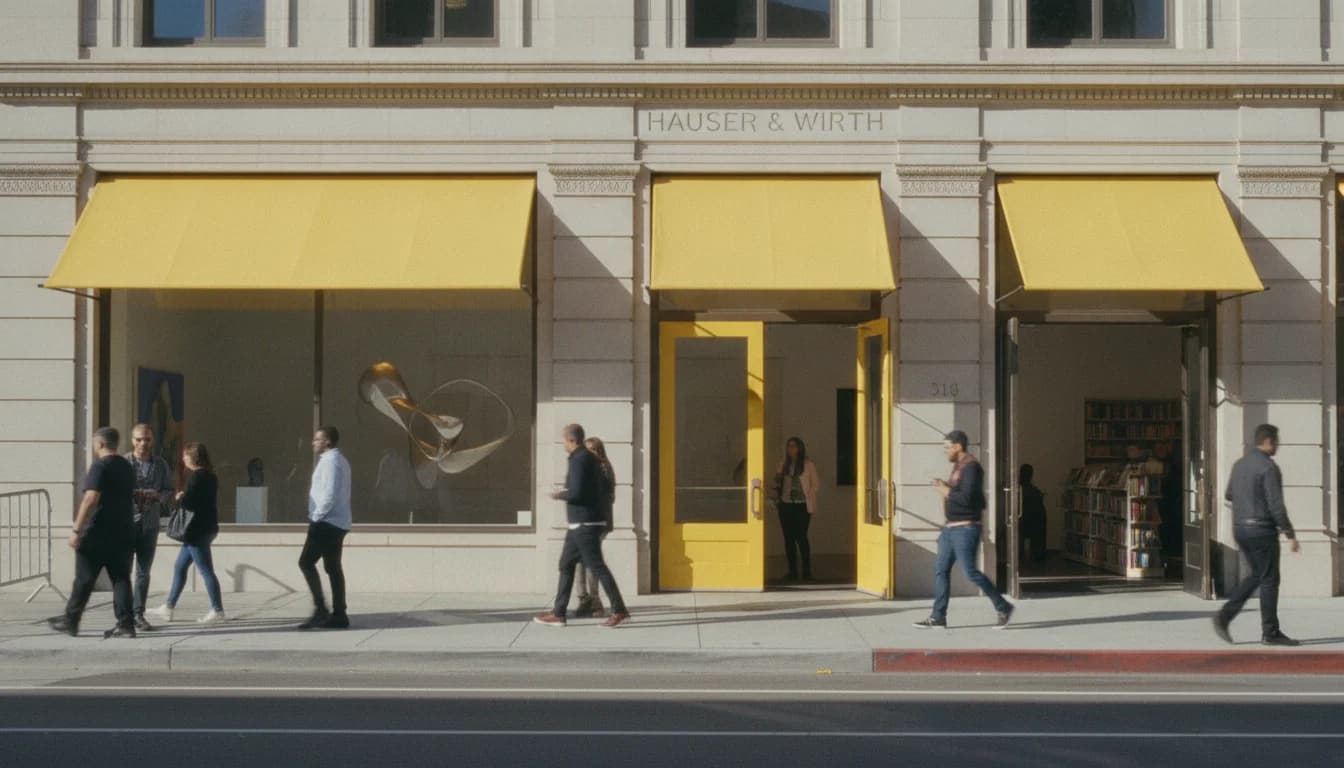
The Bay Area art scene has a new flagship in the making as Hauser & Wirth Palo Alto opened its doors on October 3, 2026, in a century-old post office building at 201–225 Hamilton Avenue in downtown Palo Alto. The opening, announced earlier in July, positions the gallery as a new cultural hub for the region, pairing a historic Bay Area site with a globally influential program. Hauser & Wirth Palo Alto opening is a moment that readers of the SF Bay Area Times will want to watch closely, because it signals both a physical expansion into Silicon Valley and a curatorial commitment to provocative, conversation-starting exhibitions. Hauser & Wirth Palo Alto opening also comes with a public programming slate anchored by community access and a dedicated Bookshop, illustrating how contemporary art spaces are evolving beyond white-cube sales into broader cultural engagement. Hauser & Wirth Palo Alto opening marks a concrete milestone in a broader West Coast strategy that has long prioritized California access alongside the gallery’s established Los Angeles network.
Hauser & Wirth’s announcement framed the inauguration as the opening of Calder | O’Keeffe, a historically resonant pairing that traces a kinship between two defining American modernists. The inaugural exhibition brings together works by Alexander Calder and Georgia O’Keeffe and is informed by research conducted with support from the Calder Foundation and the Georgia O’Keeffe Museum. The show is designed not only to showcase canonical works but also to illuminate a friendship and shared creative impulse that shaped mid-20th‑century American art. The venue itself is described as a welcoming community hub, featuring a Bookshop that Hauser & Wirth intends to sustain with ongoing public programs well into the future. The project underscores a broader philosophy at Hauser & Wirth: to fuse exhibition programming with publishing, education, and civic dialogue as a core part of the gallery’s mission. The official materials for the Palo Alto opening emphasize that the Bookshop will serve as a long-term anchor for learning and cultural exchange, beyond the initial Calder | O’Keeffe installation. For readers seeking a reliable, line-by-line account of what was announced, the gallery’s own release details the opening date, the venue’s architectural footprint, and the public programming plan. (hauserwirth.com)
One liftable fact that anchors this coverage: Hauser & Wirth's Palo Alto opening on October 3, 2026, marks the gallery's sixth U.S. location and its second in California. This is stated in coverage of the opening and reflected in the gallery’s public materials, which note the prior California footprint in Los Angeles and the new Northern California space. The fact is corroborated by Hauser & Wirth’s Palo Alto release and by industry coverage that frames Palo Alto as the sixth U.S. outpost and the second California site. The sentence below captures the central development in a single, reportable form and cites the primary materials. Hauser & Wirth's Palo Alto opening on October 3, 2026, marks the gallery's sixth U.S. location and second in California. (hauserwirth.com)
Section 1: What Happened
Announcement and Opening Date
Hauser & Wirth announced the Palo Alto expansion in mid‑July 2026, detailing that the new Bay Area site would open in downtown Palo Alto on October 3, 2026. The official release notes the project’s emphasis on connecting artists, scholars, and the local community through a program of exhibitions, talks, and public activities organized around a new Bay Area Bookshop. The precise opening date, October 3, 2026, anchors a broader plan to establish a Bay Area cultural presence that complements the gallery’s existing West Coast footprint. The release describes the site as occupying a historic, century‑old building at 201–225 Hamilton Avenue, renovated to preserve architectural character while creating a contemporary exhibition space. The space includes 2,600 square feet of exhibition area and a dedicated Bookshop, underscoring Hauser & Wirth’s modern model of combining sales with learning and public programming. The release also identifies a leadership structure for the new site, noting Beatrice Shen will lead the Palo Alto team and help integrate the space with the gallery’s wider network. These details collectively paint a portrait of a serious, long‑term investment in Northern California’s art community. (hauserwirth.com)
Inaugural Exhibition: Calder | O’Keeffe
The centerpiece of the Palo Alto opening is Calder | O’Keeffe, described by Hauser & Wirth as the first exhibition to explore the friendship and artistic kinship between these two titans of American modernism. The project is developed with input from the Calder Foundation and the Georgia O’Keeffe Museum, reflecting a rigorous collaboration with established archival and scholarly partners. The Calder | O’Keeffe installation is framed as a historically grounded dialogue that situates two canonical figures within a Bay Area context, creating a narrative bridge between early 20th‑century abstraction and mid‑century American modernism. The show is explicitly positioned as a key anchor for Palo Alto’s inaugural programming and as a signal of Hauser & Wirth’s ambition to host major survey shows that travel and travel back into a space that invites local audiences to engage with broader art history. The project also nods to the gallery’s earlier Calder presentations in California, notably Calder: Nonspace in Los Angeles in 2018, underscoring the depth of the gallery’s long-term engagement with American modernist masters. (hauserwirth.com)
The Bay Area Site and the Los Angeles Context
Hauser & Wirth emphasizes that Palo Alto is a complement, not a substitute, for its established West Coast footprint in Los Angeles. The release notes two existing California spaces in Los Angeles—the Downtown LA Arts District complex opened in 2016 and a second location in West Hollywood in 2023—placing Palo Alto in a broader, tri‑site California strategy. This triad aligns with the gallery’s broader objective of creating regional hubs that are physically close to major academic and tech ecosystems while maintaining a strong international program. The Palo Alto site is described as a community‑oriented space that will host ongoing programming, education initiatives, and opportunities for public engagement beyond the Calder | O’Keeffe installation. The explicit reference to a Bookshop and a robust public program signals a commitment to long‑term cultural dialogue in the Bay Area. (hauserwirth.com)
Section 2: Why It Matters
Regional Cultural Impact
The Hauser & Wirth Palo Alto opening marks a significant expansion of a global gallery into Silicon Valley’s cultural landscape. By locating in Palo Alto, the gallery taps into one of the United States’ most dynamic innovation hubs, with proximity to universities, research institutions, and a diverse audience of collectors and enthusiasts. The Calder | O’Keeffe pairing signals a conscious move to anchor modernist dialogue within a contemporary context, potentially accelerating cross‑pollination between Bay Area audiences and the gallery’s international program. Public programming—through the Bookshop, talks, and educational initiatives—expands the role of a commercial gallery into a civic space, a model that has been increasingly pursued by leading institutions seeking community relevance beyond traditional sales. The combination of a historically significant building, a high‑quality inaugural show, and an on‑site Bookshop creates a tangible “third place” for artists, scholars, students, and local residents to gather around ideas and objects. (hauserwirth.com)
Market and Audience Dynamics
The Palo Alto opening also has implications for the regional art market. Silicon Valley’s collector base includes a broad cadre of corporate and philanthropic patrons who have shown sustained interest in modern and contemporary art, as well as a sizable pool of tech‑adjacent professionals who acquire art as part of corporate collections and personal portfolios. Hauser & Wirth’s move into Palo Alto aligns with a broader pattern of major galleries establishing California outposts to attract both local and international attention. The presence of a public Bookshop and a programmatic learning track may broaden the audience beyond traditional collectors to include students, researchers, and members of the local community who might not otherwise engage with the gallery’s exhibitions. By connecting Calder | O’Keeffe with a Bay Area context, the opening also invites a cross‑generational and cross‑disciplinary conversation about mid‑century American art in a region known for its emphasis on innovation and education. (hauserwirth.com)
Cultural Institutions and Scholarly Partnerships
The Calder Foundation and the Georgia O’Keeffe Museum’s involvement in the inaugural exhibition signals a high level of scholarly and institutional alignment for the Palo Alto site. This kind of collaboration underscores Hauser & Wirth’s strategy of anchoring major exhibitions in anchor institutions and archival networks, while also expanding the venue’s role as a site of public learning. The emphasis on research and collaboration helps ensure that the gallery’s presence in Palo Alto is read not just as a commercial space, but as a cultural partner that contributes to broader art historical scholarship in concert with California’s robust network of museums, universities, and cultural organizations. The opening thus serves as a potential catalyst for partnerships with local institutions and universities, enhancing opportunities for lectures, symposia, and co‑curated projects that connect scholars with artists. (hauserwirth.com)
Long‑Term Program and Public Engagement
Hauser & Wirth’s material on the Palo Alto Bookshop points to a longer‑term commitment to learning and public programming. Bookshops attached to galleries have increasingly become platforms for literary programming, artist talks, and publishing initiatives, creating an ecosystem where exhibitions, books, and community dialogues reinforce each other. In Palo Alto, the Bookshop is framed as a continuing hub that will host events beyond Calder | O’Keeffe, reinforcing the gallery’s identity as a living cultural space rather than a finite, display‑only venue. This model—combining exhibitions with education and publishing—bears implications for how local audiences experience art in a high‑tech, highly educated region where consumers value transparency, accessibility, and ongoing opportunities to engage with art. (hauserwirth.com)
Section 3: What’s Next
Upcoming Exhibitions and Programmatic Trajectories
Beyond Calder | O’Keeffe, Hauser & Wirth’s Palo Alto program is anticipated to feature a sequence of major exhibitions connected to the broader Paris and Palo Alto calendar. The gallery’s announced plan to present major exhibitions in 2027 for artists such as George Condo in both Paris and Palo Alto signals a deliberate cross‑pollination strategy across its European and American spaces. The Palo Alto site, therefore, is positioned not as a standalone venue but as a node in a transcontinental program that leverages California’s cultural capital to extend the gallery’s reach. Readers should watch for specific announcements about future exhibitions, cross‑space collaborations, and learning initiatives tied to the Palo Alto location, as the calendar develops. (hauserwirth.com)
Next Steps for Local Audiences and Institutions
For Palo Alto residents and the broader Bay Area arts ecosystem, the opening invites engagement with a private‑public model that blends exhibitions with civic programming. Institutions, universities, and community groups may seek partnerships with Hauser & Wirth Palo Alto to co‑host discussions, publish research, and develop community access programs around Calder | O’Keeffe and subsequent shows. The Bookshop’s ongoing operation suggests continued access to curated reading lists, artist interviews, and educational programming, which can foster a longer‑term relationship between the gallery and the local community. Observers should track how the Bookshop and public programs evolve over time, as they will likely shape the long‑term role of Hauser & Wirth in the Bay Area beyond the initial opening. (hauserwirth.com)
Closing
The Hauser & Wirth Palo Alto opening on October 3, 2026, anchored by the Calder | O’Keeffe exhibition, marks a deliberate, calendar‑driven expansion into Northern California that complements a long‑standing West Coast presence. The project is not merely about adding a new space; it is about creating a dynamic cultural address that integrates exhibitions, publishing, education, and public dialogue in a regional context that values intellectual curiosity and civic engagement. As Palo Alto begins to welcome visitors to the Bookshop and to the inaugural Calder | O’Keeffe installation, the broader question for the Bay Area arts community is how this new gateway will interact with universities, museums, and local audiences over the coming seasons. The opening sets a high bar for what a contemporary gallery can be when it embraces scholarship, public programming, and community access as core to its mission. To stay updated on future exhibitions, talks, and collaborative programs from Hauser & Wirth Palo Alto, readers should follow the gallery’s official channels and monitor local arts coverage for announcements tied to the Bookshop, public talks, and cross‑space exhibitions in 2027 and beyond. (hauserwirth.com)
As Palo Alto begins to integrate Hauser & Wirth into its cultural fabric, observers from SF Bay Area Times will continue to track the gallery’s impact on regional audiences, the local economy, and the evolving relationship between art and technology in the Bay Area. The Calder | O’Keeffe installation, in particular, is likely to attract visitors from near Stanford University, local galleries, and international collectors, creating opportunities for dialogue across disciplines and borders. In the months ahead, readers can expect coverage of not only exhibitions but also the learning programs, community events, and the ways in which Hauser & Wirth Palo Alto’s Bookshop becomes a lasting platform for scholarship and public engagement.