OUT Museum Opens in San Francisco's Chinatown
The OUT Museum, the first Chinese-language queer museum, opened on May 29, 2026, in San Francisco's Chinatown, aiming to highlight marginalized…
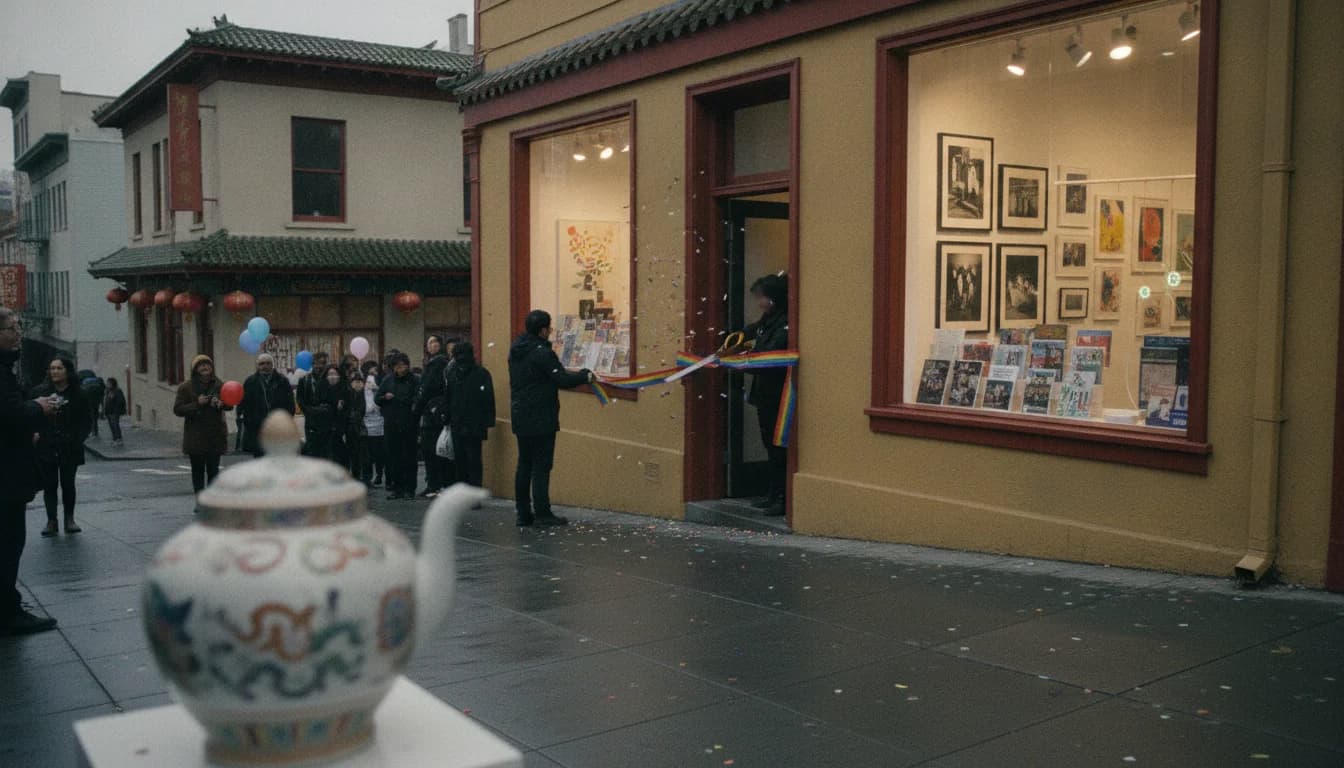
The Chinese LGBTQ-focused museum that many in San Francisco’s Chinatown hoped would illuminate stories too often left out finally opened its doors on May 29, 2026. OUT Museum San Francisco Chinatown, described by organizers as the world’s first Chinese-language queer museum, held a grand opening that drew community leaders, artists, and local residents to 949 Clay Street, just a short walk from the heart of Chinatown. The opening marks more than the arrival of a single exhibition space; it represents a deliberate step in a broader movement to elevate marginalized histories within one of the city’s most storied neighborhoods. OUT Museum’s own May 2026 opening announcements place the date of the public launch squarely at May 29, 2026, with additional programming continuing into the following months. This opening is documented by the museum itself in targeted announcements and event pages, which lay out the venue, access, and the mission guiding the project. OUT Museum Opening Announcement (outmuseum.org) Rainbow Chinatown — OUT|出|Museum Grand Opening (outmuseum.org)
Opening day news arrived with a flurry of coverage that framed the museum as a unique cultural project at the intersection of LGBTQ+ history, Chinese diaspora stories, and community-based archiving. The opening drew media attention at a moment when San Francisco’s Chinatown is increasingly seen as a space to reflect on both historic and contemporary experiences of immigrant communities, as well as the broader conversations about LGBTQ+ visibility in urban spaces. News reports underline that OUT Museum’s founders and organizers see this space as a living archive, designed to “activate community history and make individual voices resonate through action,” a phrase that captures the museum’s core ambition. The opening’s significance is highlighted in national and local coverage, including reporting that situates OUT Museum as the country’s first museum dedicated to the Chinese LGBTQ+ experience in Chinatown. AP reporting describes the project as a pioneering effort to document and spotlight a community whose stories have often been invisible in mainstream narratives. The museum’s first days also included a bilingual approach, signaling its intent to reach both Chinese-speaking audiences and English-speaking visitors with interpretive materials and programming. AP News coverage of OUT Museum opening (apnews.com)
Opening day’s formal happenings were punctuated by a rainbow-themed ribbon-cutting and a lineup of short remarks by artists, community organizers, and city officials. The event was staged in a modest, one-room gallery—an intentionally intimate space that emphasizes the power of storytelling over the scale of exhibit inventories. In comments to reporters, founder Xiangqi Chen described the museum as a space created to honor those who came before and to empower the next generation of Chinese LGBTQ+ artists and activists. The event’s immediacy—an exhibition that centers voices from China and the Chinese diaspora—was designed to complement Chinatown’s long history as a hub of cultural exchange and resilience. While the grand opening featured performances, short artworks, and a tactile installation inviting visitors to trace their own journeys with gender and sexuality, the broader aim is to establish a sustainable platform for ongoing programming and evolving curatorial projects. The full press materials outlining the opening’s schedule, attendees, and exhibition design can be found on OUT Museum’s own event pages. Opening Celebration Details (outmuseum.org)
Section 1: What Happened
Grand Opening Night Highlights
May 29, 2026: A Community-Focused Debut
The formal introduction of OUT Museum San Francisco Chinatown occurred on May 29, 2026, with a program that began in the late afternoon and extended into the early evening. According to OUT Museum’s own opening announcements, the event commenced at 5:00 p.m. and continued through 8:00 p.m., allowing attendees to experience a focused, curated sequence of artworks and interactive installations in a single-room gallery space. The event’s time window—three hours—was intentionally compact to accommodate a wide range of participants while preserving the contemplative atmosphere that a small-space exhibition invites. The precise timing and schedule come from the museum’s own public-facing event notes and translation-friendly communications, which also highlight that this opening is part of a broader schedule of future programming and reception events. This initial date and timing are corroborated by the museum’s event descriptions and by press coverage that cataloged the moment as a key milestone in San Francisco’s cultural landscape. Opening Schedule and Details (outmuseum.org)
The Space and the Works
OUT Museum’s inaugural presentation is anchored in a deliberately intimate space at 949 Clay Street, located in the Chinatown district. The site of the museum places its focus squarely on accessibility and narrative, rather than on volume. The gallery’s footprint and the scale of the initial show are described in public materials as a one-room environment featuring a small but carefully chosen set of works by Chinese LGBTQ+ artists and collaborators from the Chinese diaspora. The emphasis on a compact, participatory experience aligns with the museum’s mission to “activate community history” through intimate, text-rich installations that invite visitors to engage in personal reflection as they view the art and artifacts. The museum notes emphasize that this is just the beginning of a longer arc for curatorial programming, education, and community partnerships. For context, the first days of operation were reported to be a testing ground for community reception, exhibit design, and interpretive strategies that could evolve as the collection and partnerships expand. Opening Details and Layout (outmuseum.org)
The Facts, As Publicly Shared
The Address and Access
Public-facing materials confirm that OUT Museum is housed at 949 Clay Street in San Francisco’s Chinatown. The address situates the museum within a culturally significant corridor that has long been a staging ground for public conversation about immigration, labor, art, and LGBTQ+ visibility. The choice of address matters not only for accessibility but for symbolism: a Chinatown venue that is explicitly welcoming to LGBTQ+ voices, arts discourse, and cross-cultural dialogue. The museum’s own event pages and opening materials provide the official details in this regard. Opening Location and Access Details (outmuseum.org)
How Organizers Characterize the Mission
The project’s framing language centers on documenting and sharing the experiences of Chinese LGBTQ+ communities, both in China and within diasporic communities. The museum’s leadership has described the space as an incubator for voices that have historically been marginalized or underrepresented in both mainstream museums and pop-culture narratives. That framing is echoed in coverage that notes the institution’s intention to serve as a bilingual resource, providing materials in Chinese and English to maximize accessibility for visitors with diverse language backgrounds. This mission is reinforced by interviews with founder Xiangqi Chen and by the organization’s own published statements. AP News Coverage of the Mission (apnews.com)
Why It Matters
Cultural and Historical Significance
The notion of a Chinese-language queer museum located in San Francisco’s Chinatown is not merely a novelty; it represents a deliberate re-centering of a historical narrative that has often resided on the periphery of mainstream institutions. By situating the museum in Chinatown, organizers are placing queer Chinese histories inside a space that has historically functioned as a cultural crossroads for Chinese American communities. This relocation of narrative authority has implications for how communities tell their own stories and how audiences, including younger generations, encounter LGBTQ+ histories within the broader arc of Chinese diaspora culture. Coverage of the opening highlights the museum’s potential to influence not only arts discourse but also community memory, education, and local engagement strategies. AP News on Community Impact (apnews.com)
"Here in San Francisco Chinatown, I still continued my journey and met so many like-minded community members and friends," said Xiangqi Chen, the museum’s founder, describing the personal and collective resonance of a space built to uplift voices long marginalized in public life. This sentiment, captured by AP, encapsulates the museum’s core ambition: to turn a neighborhood into a living archive where stories of gender, sexuality, and cultural belonging are not only displayed but actively lived. > AP News, First of its Kind Queer Museum Opens in SF Chinatown. (apnews.com)
The Local and Regional Context
San Francisco’s Chinatown sits at a critical juncture in the city’s cultural ecosystem, a district with deep histories of resilience, activism, and cultural production. The emergence of a Chinese LGBTQ+ museum in this neighborhood introduces a new axis for cultural diplomacy, community-building, and cross-cultural exchange. Local tourism resources, including city and regional travel guides, often highlight Chinatown as a premier destination for exploring a diverse range of histories and cultural expressions. The introduction of OUT Museum adds a contemporary, gender- and sexuality-centered dimension to that mix, with potential spillovers into education partnerships, neighborhood programs, and youth outreach initiatives. For readers seeking broader context on Chinatown’s role as a cultural hub, the city’s tourism materials and neighborhood guides provide a baseline for understanding the environment within which OUT Museum operates. Visit Chinatown – SF Travel Guide (sftravel.com)
Community and Policy Implications
From a policy and community perspective, the opening of OUT Museum adds a new stakeholder voice to conversations about cultural funding, arts access, and public programming in minority communities. Local press coverage has framed the museum as a test case for how small, targeted cultural spaces can impact neighborhood identity, attract diverse audiences, and foster collaborations across sectors, including universities, cultural centers, and community organizations. The museum’s bilingual approach further signals an intent to bridge language communities within Chinatown and beyond, reinforcing the city’s broader goals around inclusivity and accessible cultural programming. Coverage that contextualizes these shifts, including reports on community responses and institutional support, provides readers with a more balanced view of the project’s potential benefits and challenges. SF Chronicle Coverage of the Opening (sfchronicle.com)
What’s Next
Upcoming Exhibitions and Programming
OUT Museum’s own calendar signals ongoing activity beyond the May 29 opening, including additional public events, receptions, and exhibitions designed to expand the museum’s reach and deepen the engagement with Chinese LGBTQ+ artists. The museum has used its site to announce future programming and to invite participation from community groups, schools, and cultural partners. A key feature of the upcoming schedule appears to be a sequence of artist-led talks, workshops, and collaborative installations that expand on the initial themes presented in the grand opening. For readers and potential visitors, the primary source materials linked below outline what is planned for the coming months and how to participate. Upcoming Events at OUT Museum (outmuseum.org)
How the City and Partners Plan to Scale the Experience
Analysts and observers will be watching how OUT Museum scales its model as it transitions from a one-room opening to a more expansive program with longer hours and broader access. The museum’s leadership has signaled that this initial space and format are a launchpad for future collaborations with cultural institutions, educational programs, and community-led curatorial initiatives. Observers will look for indicators such as new partnerships with local Chinese cultural organizations, collaborations with universities for student-curated exhibitions, and the development of multilingual interpretive materials that can broaden the museum’s audience. The district’s existing ecosystem—rich with cultural centers and archives—could provide complementary opportunities for cross-programming and shared audiences. For context on how Chinatown’s arts infrastructure operates and how new institutions have integrated with it in the past, readers can consult city and regional arts coverage and historical context reports. Local Arts Coverage and Chinatown Context (sfchronicle.com)
A Look at Global Attention
The OUT Museum story has attracted attention beyond San Francisco. Reports in national and international outlets have highlighted its status as a landmark in queer and Chinese diaspora storytelling. Coverage has discussed the founder’s journey from funding a Kickstarter campaign to building a physical space in the city’s oldest neighborhood, a narrative reflecting how grassroots organizing and local partnerships can yield a dedicated cultural venue in a high-cost urban environment. This broader visibility matters not only for the museum’s fundraising and sustainability but also for elevating conversations about who gets to tell their own histories in the public realm. Global Coverage of OUT Museum Opening (apnews.com)
What to watch for in the coming months includes whether the museum expands its hours, extends its exhibit repertoire beyond the initial installation, and develops deeper community partnerships that can sustain a bilingual, community-driven project in a district with a long memory. The conversation around OUT Museum San Francisco Chinatown is not isolated to the arts sector; it intersects with urban history, LGBTQ+ rights discourse, immigrant narratives, and the ongoing question of how cities curate memory and culture in a way that is accessible to diverse audiences.
Section 2: Why It Matters (continued with deeper analysis)
Broader Implications for Arts Funding and Community Archives
The museum’s opening arrives at a moment when many cultural institutions are reassessing their approaches to accessibility, representation, and community engagement. By centering Chinese LGBTQ+ voices within a Chinatown setting, OUT Museum challenges traditional museum models and invites the public to consider a more expansive typology of what a museum can be: a spaces for testimony, pedagogy, memory-work, and cross-cultural dialogue. For funders, educators, and policymakers, the project offers a case study in how targeted, community-grounded initiatives can generate visibility and belonging in urban neighborhoods historically defined by barriers to LGBTQ+ representation and to Asian American histories. While the initial footprint is intentionally modest, its potential impact on audience diversification and intergenerational learning remains a central point of interest for cultural planners and community advocates alike.
Audience and Community Reception
Immediate community reception has been varied, as is typical for new cultural ventures that attempt to redefine conventional expectations. Some longtime residents and cultural workers view the museum as a long-overdue addition to Chinatown’s living culture, while others ask how the space will evolve to balance commemorative intent with the practical realities of funding, regulatory compliance, and ongoing curation. The AP interview with Xiangqi Chen captured a sense of optimism within the Chinese LGBTQ+ community, while acknowledging the challenges of sustaining a small, mission-driven museum in a city with high operating costs. The diversity of perspectives in public discourse is itself a sign of the museum’s relevance: a space that provokes conversation about who belongs in Chinatown, who tells the stories, and how those stories travel across language and cultural boundaries. The local press coverage underscores that the museum’s presence catalyzes discussions about identity, memory, and cultural sovereignty in a neighborhood with a deeply contested but treasured history. AP News coverage of community impact (apnews.com)
Historical Context in the City’s Cultural Landscape
San Francisco has a long tradition of memorializing and reinterpreting Chinese American histories through institutions and community-centered projects. The introduction of OUT Museum adds a contemporary layer to that tradition by foregrounding the experiences of queer Chinese communities—a demographic that intersects multiple identities and histories. In this sense, the museum contributes to an ongoing rebalancing of the city’s cultural portfolio, enriching it with perspectives that not only inform but also empower visitors to engage with histories that have been either overlooked or misrepresented. The museum joins a constellation of Chinatown-related cultural initiatives that emphasize preservation, education, and public dialogue as central to their mission. For readers seeking a broader sense of San Francisco’s Chinatown as a dynamic site of memory and invention, the city’s tourism resources and cultural histories provide a broader frame for understanding how OUT Museum fits into the neighborhood’s evolving narrative. Visit Chinatown – SF Travel Guide (sftravel.com)
Closing
The opening of OUT Museum San Francisco Chinatown marks a moment of both symbolism and potential for a city known for reconciling its complex histories with contemporary social aspirations. While the space is modest in size, the ambition behind it is expansive: to ensure that the stories of Chinese LGBTQ+ communities—past and present—have a visible, audible, and lasting place in the public memory. As the museum’s calendar unfolds, observers will be watching not only for the quality and variety of exhibits but also for how strongly the institution sustains its bilingual, community-first approach. This is a development that SF Bay Area readers and culture watchers will want to follow closely, both for its intrinsic cultural value and for what it may signal about how small, mission-driven museums can contribute to larger conversations about inclusion, memory, and the future of urban culture.
The immediate impact on Chinatown’s cultural ecosystem is still taking shape, but early indicators suggest OUT Museum will operate as a catalyst for conversations about representation, voice, and accessibility. For readers who want to stay informed, the best next steps are to monitor the museum’s official event pages for updates on programming, visit the space to engage with the exhibit, and seek out companion programming offered by partner organizations in Chinatown and the broader Bay Area. The city’s cultural landscape stands to gain a new voice, and the audience gains a new way to understand a vibrant, evolving community.
As coverage continues, readers can expect ongoing reporting from local outlets and national outlets that reflect the museum’s growth, its community partnerships, and its evolving role within San Francisco’s LGBTQ+ and Asian American cultural narrative. For those who want to verify the opening date and access details, refer to the OUT Museum’s own announcements and scheduled programming, which provide the authoritative record of the opening and its immediate next steps. OUT Museum Opening Announcement (outmuseum.org) Rainbow Chinatown — OUT|出|Museum Grand Opening (outmuseum.org)