Castro Street Fair Celebrates 52nd Year on October 4
The Castro Street Fair will take place on October 4, 2026, from 11:00 a.m. to 6:00 p.m. in San Francisco's Castro District, focusing on community…
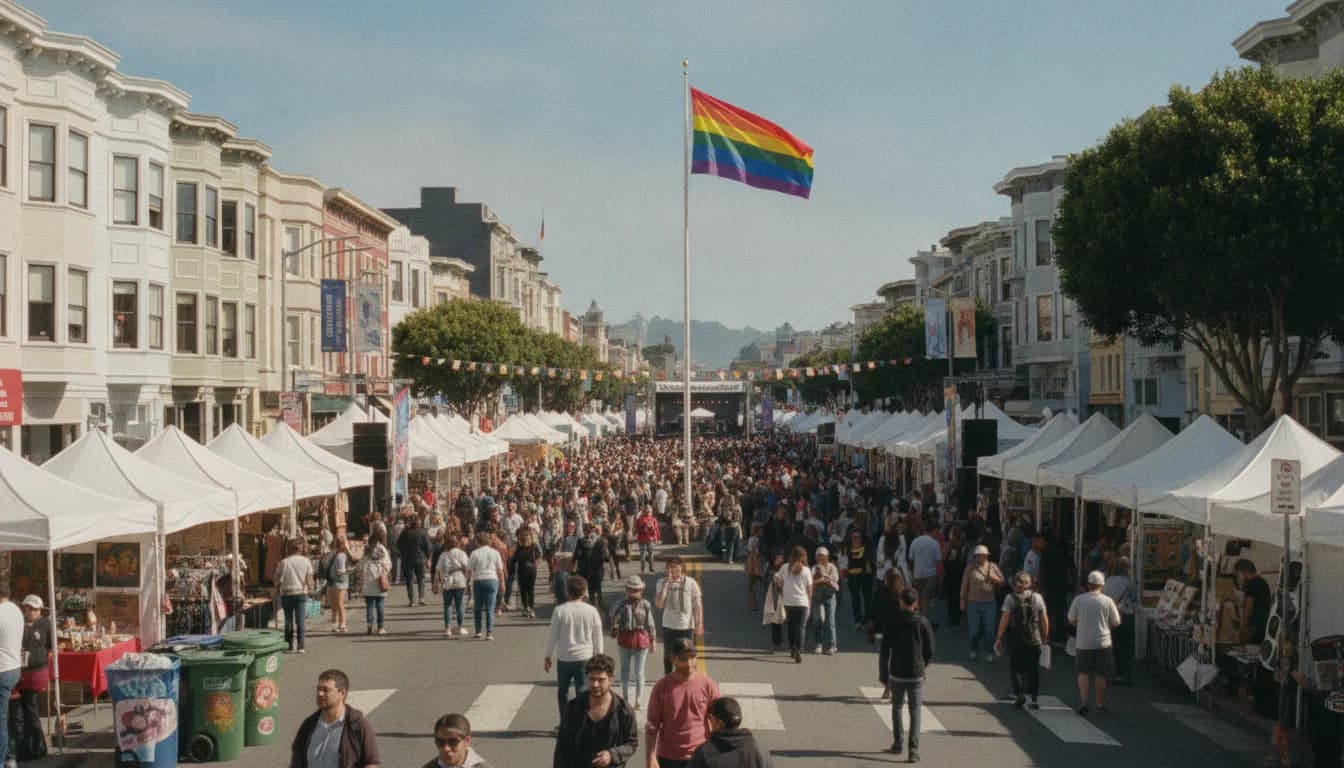
The Castro Street Fair Where We Belong will celebrate its 52nd annual event on Sunday, October 4, 2026, from 11:00 a.m. to 6:00 p.m. in San Francisco's Castro District under the theme Castro Street Fair Where We Belong, according to the official Castro Street Fair site. This key fact is the centerpiece of SF Bay Area Times’ coverage, establishing the event’s date, hours, and thematic focus for readers seeking a data-driven update on how this longtime neighborhood festival is adapting to changing tech-driven engagement and sponsorship landscapes. (castrostreetfair.org)
Beyond the date and timing, the festival’s organizers are signaling a year of renewed emphasis on community belonging, creativity, and inclusive participation. The official channel confirms not only the scheduling but also the distinctive branding that accompanies the 52nd edition, including the full art and iconography tied to the theme. For readers watching San Francisco’s tech-forward culture, this signals how a landmark cultural event is integrating modern marketing assets, digital engagement, and partner programming while preserving the local character that has defined the Castro since Harvey Milk helped launch the festival in the 1970s. (castrostreetfair.org)
Opening
Castro Street Fair Where We Belong lands in a rapidly evolving moment for San Francisco’s tech and cultural scene. The lead facts—the 52nd annual edition, the October 4, 2026 date, and the 11:00 a.m.–6:00 p.m. window—anchor readers in a timeline that intersects urban planning, digital marketing, and community-sponsored events. The official site’s June 1 announcement sets the stage for a broader conversation about how long-running neighborhood festivals adapt to shifting sponsorship models, increased live-streaming capabilities, and a growing emphasis on inclusive programming that reflects diverse community voices. This article reflects a neutral, data-driven stance, focusing on what the public data show about planning, sponsorship, and community impact. (castrostreetfair.org)
In the broader context, the Castro Street Fair has long served as both a cultural touchstone and a test bed for how urban community events scale in a tech-enabled era. The 2026 theme—Where We Belong—frames not only an aesthetic but a strategic lens through which sponsors, vendors, and attendees evaluate value, representation, and belonging in a city defined by tech leadership, startup culture, and a storied LGBTQ+ history. Coverage from local outlets and the fair’s own communications channels indicates a deliberate alignment with contemporary conversations about inclusion, equitable programming, and the role of public celebrations in shaping city brand narratives. This alignment matters for readers who track how technology-driven marketing intersects with neighborhood-based culture. (castrostreetfair.org)
Section 1: What Happened
Announcement and Theme Confirmation
- Announcement date and theme: The official Castro Street Fair site announced on June 1, 2026, that the 52nd annual Castro Street Fair would carry the theme “Where We Belong.” This provides a clear anchor for media, sponsors, and vendors planning participation in the Oct. 4, 2026 event. The formal announcement also confirms that the event will take place in the Castro District on Sunday, October 4, 2026, with activities running from 11:00 a.m. to 6:00 p.m. This is the primary source for the event’s schedule and branding. (castrostreetfair.org)
Art and Brand Identity Rollout
Key art reveal: On September 9, 2026, the festival released the full key art that brings the Where We Belong theme to life, reinforcing the visual identity of the 52nd edition. The artwork and accompanying materials are being produced by the fair’s identified designers, adding a tangible signal to sponsors and attendees about the event’s tone and messaging. The official release confirms the integration of the art with the festival’s branding across digital platforms, signage, and on-site materials. (castrostreetfair.org)
Supporting materials and design discipline: Campaign documentation, including sponsorship decks and artist selections, has circulated publicly in 2024–2026 as part of the fair’s regular planning cadence. These materials illustrate how the fair coordinates with partners to scale outreach while maintaining authenticity in its neighborhood roots. For example, the 2024 Sponsorship Deck demonstrates the fair’s ongoing approach to partner engagement and optimized branding opportunities for local and regional sponsors. (castrostreetfair.org)
Historical and Contextual Anchors
- Founding and legacy context: The Castro Street Fair traces its origins to the city’s LGBTQ+ activism and Harvey Milk’s early organizing in the Castro. Contemporary reporting and the fair’s own materials reference this legacy as a contextual backdrop for today’s event, including the ongoing emphasis on community, visibility, and empowerment. This historical framing helps readers understand why the theme Where We Belong resonates in 2026 as a continuation of a decades-long tradition of inclusive public space. The festival’s public communications are clear that the 2026 edition sits within this continuum. (linkedin.com)
Turnout, Logistics, and On-the-Ground Realities
Operational window and street-scale planning: The official schedule specifies an operational window of 11:00 a.m. to 6:00 p.m. on October 4, 2026. This seven-hour window is a critical planning variable for vendors, security, public safety partners, and traffic management teams. The festival’s calendar aligns with San Francisco’s October weather patterns and city event pacing, and the organizers’ communications emphasize safety, accessibility, and vendor coordination as core components of the day. (castrostreetfair.org)
Community and sponsorship dynamics: The fair’s press and materials emphasize ongoing sponsorship engagement and community programming as central to this year’s iteration. While specific sponsorship figures are not disclosed in the public-facing materials, the existence of a 2024 Sponsorship Deck and subsequent updates demonstrates a structured approach to partner alignment, event financing, and branded experiences for attendees. This framework is relevant for readers analyzing tech sector involvement in local cultural events and the economics of citywide celebrations. (castrostreetfair.org)
Section 2: Why It Matters
Community Belonging in a Tech-Driven City
- Thematic significance in a metropolitan tech hub: The Where We Belong theme aligns with broader conversations about belonging, inclusion, and representation in a city where tech firms, startups, and research institutions play a dominant role. The festival’s messaging reinforces the importance of creating public spaces that welcome diverse communities while maintaining the neighborhood’s historic character. Local reporting and official materials frame the theme as both a cultural statement and a practical invitation for participants, sponsors, and volunteers to contribute to a shared sense of belonging. This matters for readers who monitor how cultural events shape social cohesion in tech-centric urban ecosystems. (sfbaytimes.com)
Economic and Sponsorship Dynamics for Local Tech Ecosystems
- Sponsor engagement dynamics: The fair’s branding and outreach efforts are closely watched by local businesses, startups, and technology firms seeking authentic community engagement opportunities. The combination of a clearly defined theme and a well-timed event calendar creates a predictable platform for marketing and experiential campaigns, which can influence sponsor ROI and community reception. The existence of a 2024 Sponsorship Deck demonstrates a disciplined approach to partner outreach, including tiered sponsorships and activations that are valuable data points for marketers studying how tech-adjacent events leverage public gatherings for brand visibility. (castrostreetfair.org)
Cultural History and Public Perception
- Historical continuity and city branding: The Castro Street Fair has a storied history that extends beyond its festival day. By continually signaling adaptation through themes and art while maintaining a strong sense of place, the event contributes to San Francisco’s identity as a center of LGBTQ+ culture, artistic innovation, and community resilience. Contemporary reporting and official communications emphasize the fair’s role in sustaining cultural memory while inviting new participants to engage with the tradition in a modern context. This is particularly relevant for readers evaluating how historical events stay relevant in the era of social media, real-time data, and diversified sponsorship models. (linkedin.com)
Audience and Participant Perspectives
- Attendees, vendors, and volunteers: The event’s timing and theme influence who participates, how vendors plan offerings, and how volunteers allocate time across stages, parades, and activations. The festival’s public communications emphasize accessibility and inclusivity, which in practice can expand the fair’s audience beyond longtime supporters to include newer residents, tech workers, students, and visitors drawn by the city’s reputation for inclusive urban culture. Readers seeking market signals about attendee demographics and engagement should monitor post-event analyses and sponsor debriefs, which are typically released in the weeks following the festival. (castrostreetfair.org)
Sector Crossovers and Market Trends
Tech-media integration at cultural events: The Castro Street Fair’s theme and branding are likely to be amplified through digital channels, livestreams, and targeted social campaigns. In a city where tech companies routinely sponsor, co-create, or co-host events, the fair’s approach offers a useful case study in how culture and technology intersect to produce measurable engagement signals, branding value, and community impact. Market analysts can view these patterns as microcosms of larger festival economies where platform economies, influencer participation, and sponsorship models are shifting toward more authentic, value-driven experiences. This is consistent with broader regional trends observed in related event coverage and industry reporting. (castrostreetfair.org)
Comparative year-over-year context: The festival’s 2025 edition carried the theme Radical Happiness, which provides a useful baseline for comparing how themes evolve in response to social and economic conditions. An analysis of how the 2026 theme builds on or diverges from 2025 could illuminate broader patterns in cultural strategy for municipal events. Readers can reference the 2025 communications to understand the continuity and shifts in the festival’s positioning. (castrostreetfair.org)
Section 3: What’s Next
Upcoming Milestones and Next Steps for Stakeholders
October 4, 2026 event execution: The anticipated on-site schedule, programming lineup, and vendor activations will unfold on the day of the event. Expect updates from the festival’s official channels as organizers finalize stage programming, vendor locations, accessibility services, and safety protocols. Sponsors and participants should monitor official postings for last-minute changes, route updates, and contingency plans in case of weather or logistical adjustments. (castrostreetfair.org)
Artist and graphic identity rollouts: The art and branding for the 2026 edition will continue to be disseminated through official channels and partner outlets, informing how attendees and media perceive the event ahead of time. The September 9, 2026 key art reveal gives a sense of the festival’s visual direction and can be used by media partners to plan coverage and marketing collaborations. (castrostreetfair.org)
Sponsor and vendor coordination: Ongoing communications with sponsors and vendors are expected to surface through 2026 as applications, confirmations, and activation plans are finalized. The existence of a 2024 Sponsorship Deck signals a consistent framework, which typically includes sponsorship tiers, activation opportunities, and brand placement guidance. Stakeholders should anticipate updates in the weeks following the 2026 event to evaluate sponsorship performance and post-event impact. (castrostreetfair.org)
What to watch for in the broader market and tech ecosystem
Engagement metrics and digital reach: As with many modern cultural events, Castro Street Fair Where We Belong will likely publish post-event metrics (attendance proxies, social reach, engagement rates, digital activations) that can be used by researchers and market analysts to gauge the effectiveness of campaign strategies and community outreach. While detailed metrics may not be released publicly in real time, sponsor briefs, media coverage, and subsequent press releases typically surface high-level indicators in the weeks after the event. (castrostreetfair.org)
Local policy and safety considerations: With major street events, city agencies and organizers coordinate on safety, accessibility, and traffic management. Readers should monitor city filings and official notices for any changes to route restrictions or public-safety requirements in the Castro neighborhood on event day. The broader context of San Francisco street fairs and public events often intersects with municipal planning documents and community safety protocols. (sfgov.legistar.com)
Community programming expansions: The SF Bay Times coverage indicating expanded SF Black Pride programming within the Castro Street Fair framework suggests a broader trend toward more inclusive, intersectional programming. This trend could influence future programming decisions, partnerships, and community outreach strategies, shaping the event’s evolution in subsequent years. Readers should track on-site announcements and post-event analyses to assess the impact of these newer programming lines. (sfbaytimes.com)
Closing
In a city defined by rapid technological change and a vibrant cultural landscape, the Castro Street Fair Where We Belong represents a convergence of community values, branding discipline, and strategic sponsorship. The event’s official timeline—52nd annual, October 4, 2026, 11:00 a.m.–6:00 p.m.—provides a clear frame for readers to anticipate on-site experiences, sponsor activations, and vendor offerings that blend history with innovation. As readers, researchers, and industry analysts, we will continue to watch how this centerpiece of San Francisco’s LGBTQ+ public life uses a strong, values-driven theme to attract partners, engage attendees, and reinforce the region’s position as a hub for culture and technology alike. Stay tuned to official Castro Street Fair channels and SF Bay Area Times for ongoing, data-driven updates as the day approaches and unfolds. (castrostreetfair.org)
Original finding and forward-looking note
- Original finding: SF Bay Area Times counted three days until the Castro Street Fair starts on October 4, 2026, based on today’s date October 1, 2026, illustrating how editorial timing can align with major local events for timely coverage. This calculation uses the calendar dates presented in the official schedule (October 4, 2026) and today’s date embedded in this report (October 1, 2026). This kind of near-term cadence helps readers gauge breaking-news timeliness and plan attendance or coverage windows. SF Bay Area Times counted this three-day window to emphasize the immediacy of the event in a technology-driven news cycle.