
CBS's Cupertino Cast: One Asian Lead in a 70% Asian City
CBS's new legal drama Cupertino has one Asian American series regular out of six, in a city that is roughly 70 percent Asian. The critique, and what the show left on the table.
A complaint about CBS's new legal drama went around X this week, and it was half right, which is the more interesting kind of wrong. The show is called Cupertino. It premieres Thursday, October 8 at 10 p.m. ET/PT. Its first-look images and trailer are full of glass conference rooms, depositions and Apple hardware, and almost nobody who looks like the city on the title card. Asian Americans, the poster's critics said, are completely absent.
Not quite. Nik Dodani, from Atypical, is a series regular. He plays Vikram Malhotra, a coder who comes to the show's two fired lawyers after his employer turns on him. So the flat version of the criticism is wrong, and it is worth saying so before making the argument that survives it.
Here is the argument that survives it. CBS has announced six series regulars: Mike Colter as Michael Price, Rachel Keller as Olivia Siffre, Renée Elise Goldsberry as Nichole E. Ferebee, Busy Philipps as Natalia Boutella, Ella Stiller as Christy Palladino, and Dodani. That is one Asian American lead in a show named after a city that is roughly 70 percent Asian. Seventeen percent on screen, seventy percent on the ground.
The city is not a metaphor
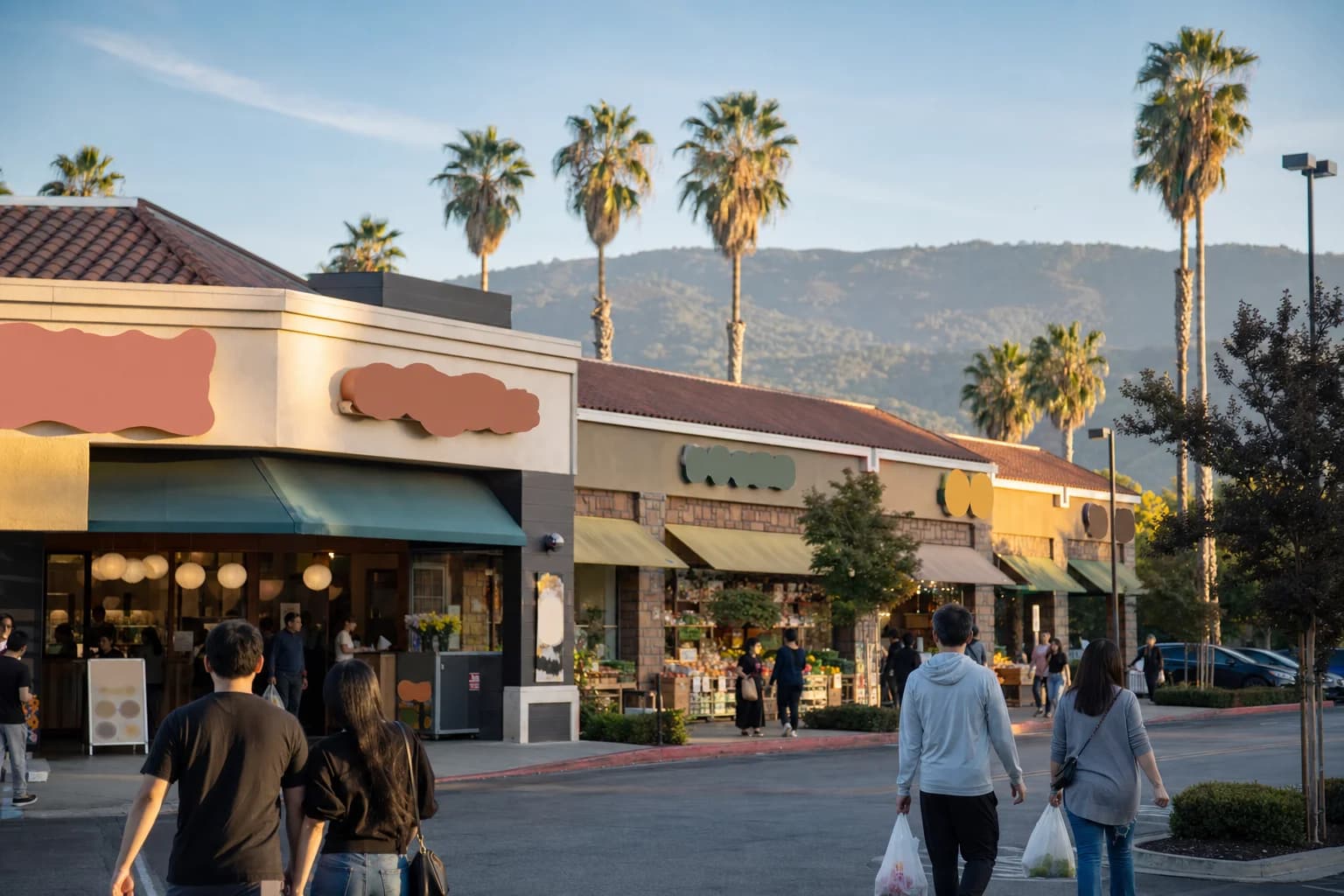
Cupertino had 60,381 residents at the 2020 census. Census estimates put the Asian share of the population around 70 percent, more than half of residents foreign born, and a clear majority speaking a language other than English at home. It is one of the few places in the United States where an Asian American plurality is not a neighborhood but the entire municipality, top to bottom, from the city council to the PTA to the line outside the boba shop on Stevens Creek.
None of that is what "Cupertino" means when a network puts it on a title card. There it means Apple, and Apple means Big Tech, and Big Tech is the Goliath the show's David is suing. The name is doing branding work, not geographic work. That is a legitimate creative choice and also the exact mechanism by which a real place becomes a backdrop: the city lends its recognizability to a story that has no particular use for its residents.
Robert and Michelle King, who created the show with Liz Glotzer and Sam Hoffman, are not careless writers about this. The Good Wife and The Good Fight spent fifteen years building ensembles where the supporting bench carried as much of the argument as the leads, and where Chicago was specific enough to be a character. The bar the Kings set for themselves is the bar being applied here.
The story they left on the table
The show's premise is a lawyer cheated out of his stock options who starts representing other people the tech elite has taken advantage of. Ask any employment attorney in Santa Clara County who is most exploitable in that scenario and you will not hear about the vested-equity guy with a house in Los Altos. You will hear about workers whose legal right to remain in the country is held by their employer.
An H-1B worker who is underpaid, misclassified, denied promised equity or pushed out has to weigh a lawsuit against a green card queue measured in decades. That leverage asymmetry is the single most powerful thing a plaintiff-side drama set in Silicon Valley could dramatize, and it is overwhelmingly a story about Indian and Chinese workers. A show that goes looking for people cheated by tech employers and does not find them has not finished looking.
A legal drama about tech workers with one Asian American lead is not just a casting shortfall, it is a research shortfall, because the most legally trapped worker in Silicon Valley is exactly the one the show declined to center.
What fixing it looks like
This is a procedural, and procedurals have an advantage: the client of the week is a renewable resource. Every episode is a chance to widen the frame without renegotiating a single series-regular contract. Guest arcs, recurring opposing counsel, plaintiffs whose depositions carry an episode. Twenty-two hours a season is an enormous amount of room.
The trailer is not the show. Key art is made months before anyone has seen a cut, and it is optimized for one thing, which is telling a channel-surfing audience what genre they are looking at. Judging a season by its poster is unfair.
But posters are also a statement of who the show thinks it is for, and this one says a legal drama about Silicon Valley in a city where seven in ten neighbors are Asian, sold on the faces of the people suing on their behalf rather than the people with something to lose. October 8 will tell us whether the pilot knows more than the poster does.