OUT Museum Opens in Chinatown as a Chinese LGBTQ+ Archive
Explore neutral, data-driven coverage of the Chinese LGBTQ+ Museum in San Francisco's Chinatown, highlighting its cultural significance and impact.
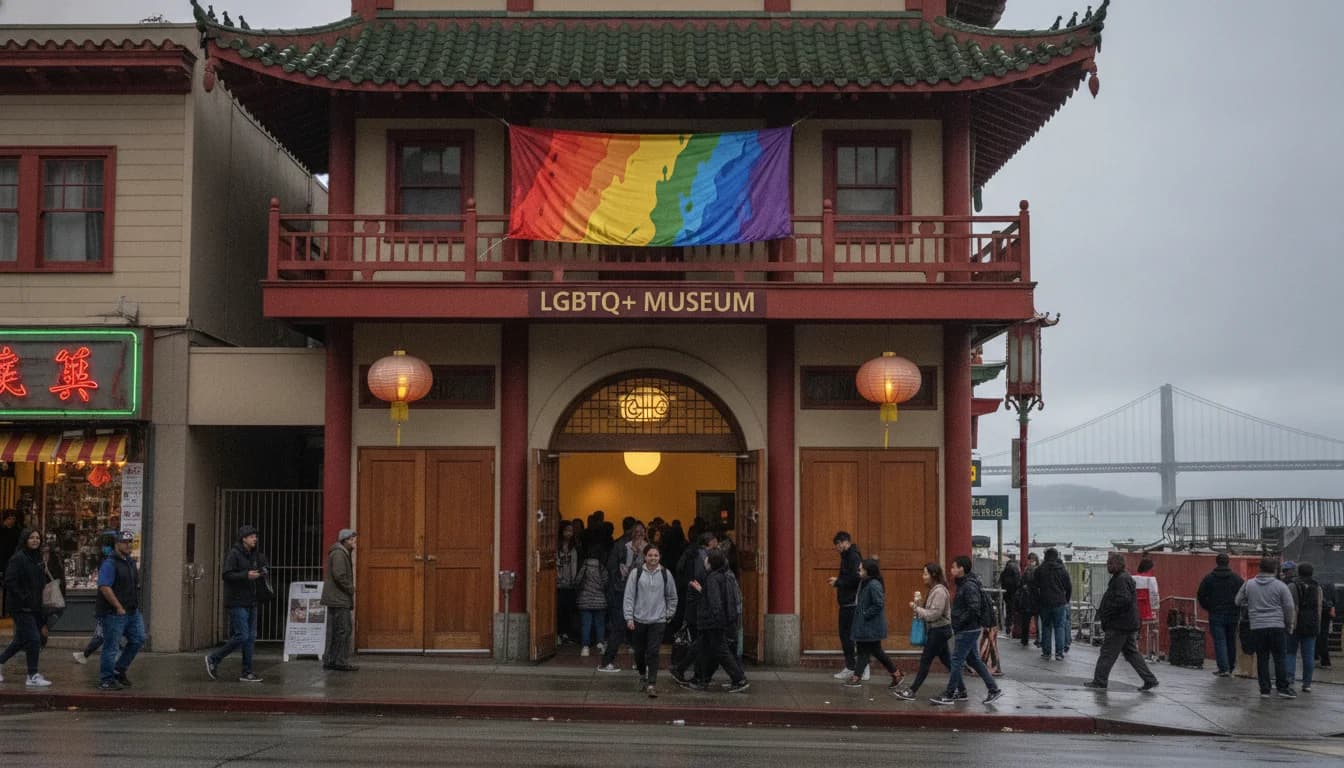
In San Francisco’s Chinatown, the landscape for Chinese-speaking LGBTQ+ history and art shifted with the opening of the OUT Museum, widely described as the world's first Chinese LGBTQ+ museum and archive. The museum’s debut took place on May 29, 2026, in a hillside corner of Chinatown, with a rainbow ribbon-cutting led by Mayor Daniel Lurie that drew community members, artists, and allies. This moment represents more than a single exhibition; it signals a lasting platform for Chinese-speaking LGBTQ voices in a neighborhood long celebrated for its history, culture, and civic life. The Out Museum’s presence in Chinatown underscores a broader commitment to visibility and memory within the Bay Area’s diverse LGBTQ+ communities, and it comes at a time when conversations about LGBTQ+ history and diaspora identities are increasingly prioritized in public programming.
The founder, Xiangqi Chen, is internationally recognized for years of advocacy and artistic work aimed at elevating queer visibility in China before moving to the United States in 2023. Her team positions OUT Museum as both a showcase and a living archive, dedicated to collecting and safeguarding queer art, zines, and personal histories from Chinese-speaking communities. The museum’s official materials describe it as more than a venue; it is a journey through memory, art, and creativity for a constituency that too often remains on the margins of mainstream cultural narratives. The museum’s opening is tied to Chinatown’s ongoing civic life and to collaborations with local cultural institutions, including the Chinese Culture Center of San Francisco, helping incubate ideas that began with the 2024 prototype and expanded into a formal, public project. The initial programming emphasizes a mix of visual art, interactive installation work, and documentary material designed to invite visitors to trace the evolution of Chinese LGBTQ+ communities across borders. This milestone was covered by multiple outlets, including local public radio and regional press, highlighting the event’s significance for both culture and community.
Section 1 — What Happened
Opening Date and Location
- The OUT Museum opened its doors to the public on May 29, 2026, marking a highly anticipated milestone for the Chinese LGBTQ+ arts landscape in the United States. The ribbon-cutting ceremony, attended by city officials and community leaders, occurred in Chinatown at the neighborhood’s hillside corner near 949 Clay Street. The event was described by observers as a landmark moment for the Chinese-speaking LGBTQ+ community in diaspora communities, and it connected the museum to Chinatown’s historical role as a cultural hub. This opening, positioned between Asian American Pacific Islander Heritage Month and Pride Month, was widely described in reports as a first of its kind in the country. (kalw.org)
Founding and Mission
- OUT Museum was founded by Xiangqi Chen, an artist and LGBTQ advocate who spent more than two decades pushing for queer visibility in China before relocating to the United States. The museum identifies itself as the world’s first Chinese-language queer museum and archive, built to collect and showcase queer art, zines, and personal histories from Chinese-speaking communities. The project emerged from a 2024 prototype exhibition at 41 Ross Alley and is supported by ongoing collaboration with the Chinese Culture Center of San Francisco, which helped incubate early concepts and provided a pathway to a formal public opening in 2026. (kalw.org)
Exhibitions and Programs
- The inaugural program centers on the exhibition “The Ongoing: Mapping the Chinese LGBTQ Community,” featuring works from five artists that depict the history and present-day experiences of Chinese LGBTQ communities. Initial offerings include photography, zines, and an interactive installation that invites visitors to trace journeys of gender and sexuality through touchpoints and personal narratives. Opening programming also included film screenings, artist talks, and community-led events aligned with Asian American and Pride month observances. The main opening activities were scheduled for the Chinatown venue at 949 Clay Street, with free general admission during the opening period. (hoodline.com)
Practical and Organizational Details
- OUT Museum presents itself as a nonprofit organization operating under a 501(c)(3) status, with plans to grow into a permanent archive in addition to rotating exhibitions. The museum’s site notes ongoing advisory input from Chinatown arts organizations and emphasizes community-driven storytelling that crosses borders, generations, and languages. Founding membership programs and related donor opportunities were highlighted as part of the opening phase, with early messaging inviting community support as a foundation for future cultural work. (hoodline.com)
Section 2 — Why It Matters
Cultural Significance
- The emergence of the OUT Museum in San Francisco’s Chinatown—often described in national outlets as the first Chinese-language queer museum and archive—represents a significant moment for LGBTQ+ visibility within Chinese-speaking communities. The project foregrounds voices that have historically faced erasure or marginalization within both mainland Chinese contexts and diaspora communities, aligning with broader efforts to safeguard marginalized histories while expanding public access to diverse artistic practices. The museum gained national attention as a landmark project, described as a pioneering platform for Chinese-speaking LGBTQ+ artists and historians. (outmuseum.org)
Community and Civic Impact
- The opening of the OUT Museum in Chinatown is being framed not only as an arts initiative but also as a civic milestone for San Francisco’s Chinatown—one of the city’s oldest neighborhoods—where the museum sits across from the Chinese Historical Society of America Museum. Observers and participants note the project’s potential to deepen relationships among Chinatown’s residents, artists, and cultural organizations, reinforcing a sense of shared memory and ongoing cultural production. The event’s proximity to other Chinatown institutions underscores a broader trend of public programming that centers Asian American LGBTQ voices within established cultural ecosystems. (kalw.org)
Broader Context and National Dialogue
- The OUT Museum’s opening comes at a moment when LGBTQ+ history and diaspora narratives are increasingly foregrounded in national conversations. Reporting on the museum highlighted how the project sits at the intersection of Pride Month and Asian American advocacy, reflecting shifts in attitudes toward queer visibility within multiethnic urban centers. The Associated Press coverage emphasizes the museum’s role in elevating Chinese LGBTQ+ voices while acknowledging the complex political and social contexts that LGBTQ+ activists navigate both in the U.S. and in China. This broader context underscores the museum’s potential to influence public discourse, arts funding, and museum curation practices for Chinese-speaking LGBTQ communities. (washingtonpost.com)
Who It Affects
- For local residents and Chinatown visitors, the OUT Museum offers a new cultural destination that intersects with existing heritage institutions, community organizations, and public programming. For artists and historians in the Chinese LGBTQ+ diaspora, the museum provides a dedicated space for presentation, archiving, and collaboration with other regional arts institutions. Observers also note that the museum’s presence may affect nearby businesses and neighborhood activity by increasing foot traffic during opening weeks and subsequent programming windows, contributing to a broader narrative about how culturally specific institutions influence urban economies and cultural capital. (hoodline.com)
Broader Context within LGBTQ History in San Francisco
- The museum’s arrival complements San Francisco’s long-standing role as a national hub for LGBTQ+ history and culture. The city is home to established institutions that document LGBTQ+ life, including archives and museums with a broader Bay Area scope. The OUT Museum’s Chinatown location adds a new layer to the city’s LGBTQ+ landscape by centering Chinese-language storytelling and cross-border experiences within the city’s most historic neighborhood. This alignment with existing regional conversations about inclusion and representation helps readers understand how a single new museum can influence the broader field of LGBTQ+ history in San Francisco. (washingtonpost.com)
Section 3 — What’s Next
Upcoming Programs and Expansion
- The initial weeks of programming at the OUT Museum have been framed as a launchpad for a longer-term strategy. Organizers have signaled plans to expand exhibitions and programming beyond the first week’s offerings, with anticipated growth in days of operation and content. The AP and Washington Post reports indicate the early days of operation focus on a one-room encounter with a rotating set of works and materials, with aspirations to broaden access over time as the collection grows and partnerships deepen. The museum’s official materials also point to ongoing partnerships and the potential for archival development in collaboration with regional cultural institutions. (washingtonpost.com)
Long-Term Ambitions
- In the long term, OUT Museum aims to build a permanent archive and a sustained program that can host rotating exhibitions, talks, performance pieces, and film screenings. The foundation’s stated goal is to safeguard and present narratives that cross linguistic and cultural boundaries, ensuring that Chinese-speaking LGBTQ histories remain legible and accessible for future generations. While the opening phase focuses on the immediate program, the institution’s ongoing mission and nonprofit structure suggest a commitment to continuity, institutional partnerships, and community-led governance as it scales. (outmuseum.org)
Next Milestones to Watch
- Watch for enhanced partnerships with local arts organizations and educational programs that connect the OUT Museum’s exhibitions to schools, libraries, and cultural centers across the Bay Area. The proximity to Chinatown’s broader cultural ecology could yield joint programming with the Chinese Culture Center, the Chinese Historical Society of America Museum, and other regional institutions, creating a network for sustained LGBTQ+ heritage education. National and international coverage will likely reference the OUT Museum as a case study in diaspora-based museum initiatives and language-specific queer archival practices. (kalw.org)
Closing
The opening of the OUT Museum marks a new chapter for both Chinatown’s public life and the national conversation around Chinese-speaking LGBTQ+ histories. By centering Chinese-language voices at a time of expanding visibility for LGBTQ+ communities, the museum in San Francisco’s Chinatown invites audiences to explore a history that has too often been kept out of the mainstream narrative. The museum’s early program—anchored in a single room with a rotating combination of art, zines, and personal histories—gleams with potential, while the founder’s longstanding commitment signals a durable, evolving project that could reshape how diaspora histories are collected, preserved, and presented. As the initial weeks unfold, observers will be watching not only for what is on the walls, but for how the institution sustains its mission and how Chinatown’s neighbors and visitors respond to a Chinese LGBTQ+ museum San Francisco Chinatown that treats memory as a catalyst for contemporary dialogue.
To stay updated on future exhibitions, talks, and archival initiatives from OUT Museum, readers can follow coverage from local outlets and national arts press, along with the museum’s official communications channels and partner organizations. The project’s trajectory will likely continue to intersect with broader conversations about inclusive curation, minority histories, and the evolving role of museums in diasporic communities.
In short, the story of the OUT Museum in San Francisco’s Chinatown is not just about a single opening; it is about a growing commitment to tell and preserve the stories of Chinese-speaking LGBTQ+ people in public, accessible ways. The museum’s work—rooted in memory and art, built in collaboration with a vibrant network of cultural partners—will be watched closely by researchers, students, and readers seeking a clearer view of how LGBTQ+ histories are being shaped in the 21st century.
Notes and context for this report
- Opening date and venue details are drawn from KALW’s reporting on the museum opening on June 1, 2026, which confirms the May 29, 2026, ribbon-cutting in Chinatown and identifies 949 Clay Street as a central location. The AP and Washington Post follow-up coverage provides broader context on the founder, the projects, and the museum’s reception. (kalw.org)
- The project’s foundation as a Chinese-language queer museum and archive is documented by the OUT Museum site, which states the institution will officially open in 2026 in San Francisco’s Chinatown and positions the museum as a journey through Chinese-speaking LGBTQ history and creativity. (outmuseum.org)
- Additional reporting highlights the museum’s inaugural exhibit, its collaboration with Chinatown’s cultural ecosystem, and the role of notable advocates in amplifying its mission. (hoodline.com)