
Bay Area Transit Measure Approved for November 2026 Ballot
The Connect Bay Area Transit Measure has been certified for the November 2026 ballot after proponents submitted 235,503 valid signatures, exceeding the…
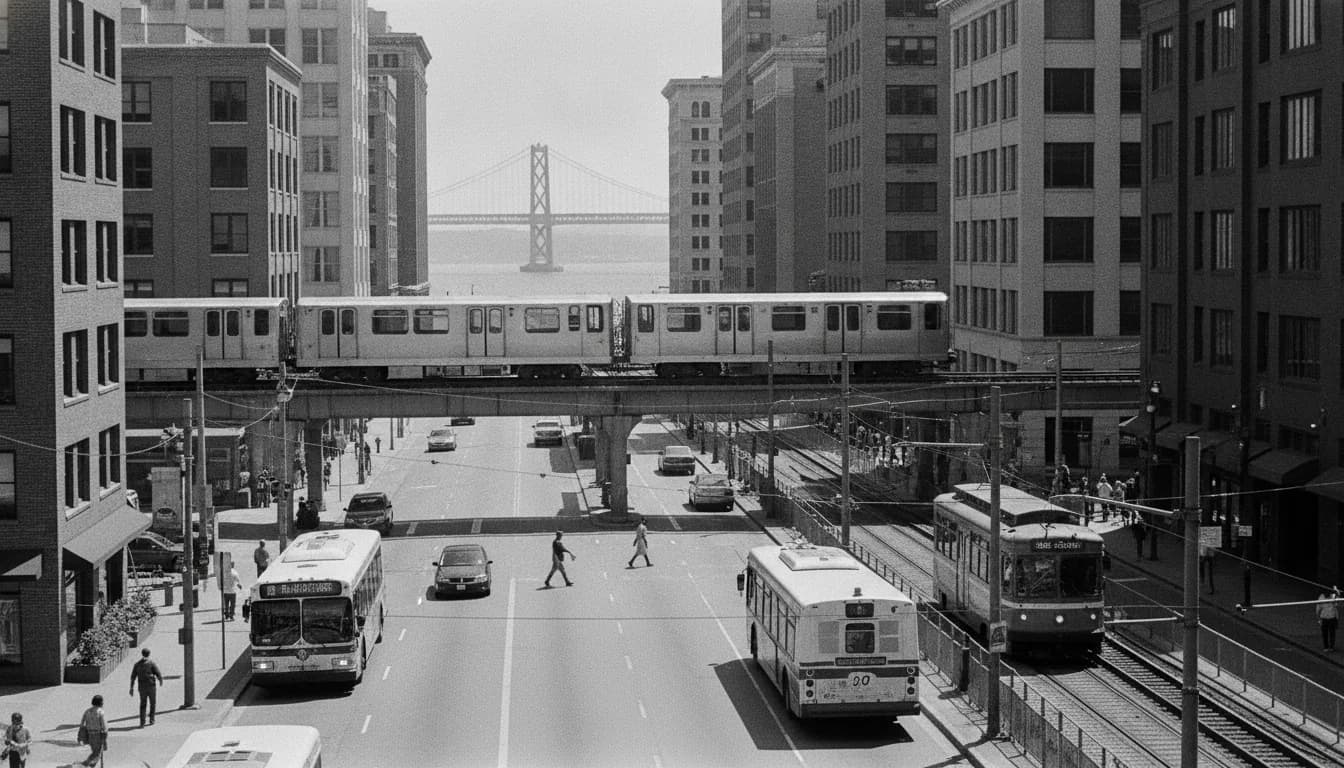
Connect Bay Area Transit Measure Certified for November 2026 Ballot
The Connect Bay Area Transit Measure is now certified for placement on the November 2026 ballot across Alameda, Contra Costa, San Francisco, San Mateo, and Santa Clara counties. On June 30, 2026, the District Elections Official certified that proponents submitted 235,503 valid signatures, well above the 205,831-signature threshold required to qualify for the ballot, according to Metropolitan Transportation Commission (MTC) reporting. This certification clears a path for a regional sales tax initiative that, if approved by voters, would fund rider-focused improvements and sustain Bay Area transit operations across five counties. The development matters for riders who rely on BART, Muni, Caltrain, AC Transit, SamTrans, VTA, and other regional services, and it sets the stage for a high-stakes, data-driven policy decision in a diversified, multi-agency network. The official confirmation, issued just days before formal ballot placement discussions, underscores the region’s shift toward a centralized funding mechanism designed to stabilize service amid a period of structural funding pressures.
Opening lines of inquiry crowd the newsroom as regional officials prepare for a formal decision on the ballot. By late June and into July 2026, local governments and transit operators will be parsing what the Connect Bay Area Transit Measure would mean in practice, including how revenue would be raised, allocated, and overseen. The Bay Area’s transportation planning machinery has long wrestled with balancing maintenance needs, service levels, and affordability, and this measure represents one of the most significant, regionally scoped fiscal moves in recent years. SF Bay Area Times has been tracking the path from the initial legislative framework to signature collection, certification, and now ballot placement, aiming to translate complex policy design into a data-driven story that readers can cite in analysis, coverage, and public discussion.
What Happened
Certification of Signatures and Ballot Qualification
On June 30, 2026, the District Elections Official certified that Connect Bay Area Transit Initiative proponents submitted 235,503 valid signatures, surpassing the 205,831-signature threshold required to place the measure on the November 3, 2026 statewide general election ballot. The official certification was reported by MTC on July 1, 2026, with the article noting that the filing exceeded the 110% threshold needed for ballot qualification. This is the core, verifiable fact anchoring the story: a multi-county, rider-focused transit revenue measure advanced from signature collection to formal ballot placement consideration. The official notice and the subsequent update from MTC confirm the date-based sequence: certification occurred in late June 2026, followed by public disclosure in early July. The primary source documenting the certification provides the exact numeric figure and the date context: 235,503 total valid signatures, verified under a random-sample signature validation framework, exceeding the stated threshold. See the MTC page detailing the certification and the associated signature count. (mtc.ca.gov)
From the same batch of official materials, the threshold context is summarized: proponents needed 205,831 valid signatures to qualify, representing a 110% threshold within the district’s framework, and the certified total comfortably exceeded that mark. The numerical detail about 235,503 signatures and the threshold figure are central to understanding the validation step that allowed the measure to advance toward ballot placement. This establishes a concrete, date-stamped milestone that reporters, policymakers, and readers can verify against the district’s official release. For readers seeking the raw language of the certification and the official numbers, the district’s newsroom posting provides the line-item context and a direct link to the underlying documents. (mtc.ca.gov)
Timeline and Ballot Placement Action
Following certification, the district moved to seek formal placement of the Connect Bay Area Transit Measure on the November 3, 2026 ballot. A separate MTC news item, published on July 24, 2026, describes the district’s approval of a resolution that authorizes county boards of supervisors across Alameda, Contra Costa, San Francisco, San Mateo, and Santa Clara counties to call a special election and to consolidate it with the statewide general election. This step marks the administrative transition from signature validation to political integration, mapping out the procedural pathway to voter consideration in the actual election. The resolution and its accompanying materials outline the ballot question, timing, and the county-specific deadlines for public input and legal filings. The date-anchored action: the resolution was approved and circulated in late July 2026 as the district prepared for ballot placement. The primary document confirms both the authorization and the broader fiscal framework, including the proposed tax structure and the accountability provisions that would accompany the measure. (mtc.ca.gov)
The legislative scaffolding for Connect Bay Area taps into Senate Bill 63 (SB 63), which, after signing into law in 2025, authorized the regional transit revenue measure and established the governance and oversight mechanisms that would apply if the voters approve the measure in 2026. SB 63 outlines a two-path placement—either via a district board action or through citizen initiative—and specifies the geographic scope, tax rates, and rider-focused investments that the measure would fund. This backdrop is critical for readers to understand not just the mechanics of certification and ballot placement, but also the policy design that would come with voter approval. (mtc.ca.gov)
Legal and Legislative Backdrop
To understand the policy architecture behind Connect Bay Area, it is essential to consider SB 63, known as the Connect Bay Area Act, and the accompanying fiscal plan. The act envisions a 14-year regional sales tax across five Bay Area counties to support transit operations and rider-focused improvements while maintaining a strong accountability apparatus. The act permits a half-cent tax in Alameda, Contra Costa, San Mateo and Santa Clara counties and a full cent in the City and County of San Francisco, designed to stabilize operations for BART, Muni, Caltrain, AC Transit, Golden Gate Transit, and other operators. If approved, the funding package would be allocated to preserve existing service, fund rider-oriented initiatives, and enable capital and operational improvements that improve reliability and accessibility. This policy design is complemented by an oversight framework intended to ensure funds are spent aligned with legislative intent, including a binding adjudication mechanism for cross-county consistency and a requirement for agencies to maintain certain baseline levels of funding. The Governor’s signing of SB 63 in October 2025 and the subsequent framework released by MTC and partner agencies provide a clear, date-stamped legislative scaffold that reporters can reference when evaluating the significance of the certification and the ballot placement. (mtc.ca.gov)
The Connect Bay Area Act also includes rider-focused improvements designed to deliver tangible, near-term benefits to transit users. Among these are fare-reduction and transfer options, expansions of discounts through programs like Clipper START, and enhancements to accessibility and wayfinding. The October 2025 governor’s signing press release enumerates several rider-focused interventions and the projected impact on ridership, accompanied by statements from agency leaders describing how the measure could preserve and improve essential services across the five-county footprint. These programmatic commitments are critical when readers assess the potential practical implications of the measure if it survives the ballot. The press release also emphasizes governance features, including an independent oversight committee tasked with ensuring funds are used in accordance with the statute and that agencies undergo third-party financial efficiency reviews. (mtc.ca.gov)
Why It Matters
Financial Stability for Bay Area Transit
The Connect Bay Area Act, as conceived and advanced through SB 63, represents a structural approach to stability in a transit ecosystem that has long wrestled with cyclical funding gaps. The financing model centers on a multi-county tax that would create a dedicated revenue stream intended to reduce the risk of large service cuts during economic downturns or state funding volatility. In the governor’s SB 63 signing release, MTC and partner agencies highlighted the fiscal stabilization benefit of a shared, regional fund that avoids a patchwork approach where one county bears a disproportionate share of service reductions. This matters to riders who rely on predictable service levels and to employers seeking reliable commutes that support regional economic activity. The proposed distribution framework—tens of millions in rider-focused investments, service preservation, and the potential for capital improvements—is designed to address both near-term operational needs and longer-term strategic goals. (mtc.ca.gov)
Rider-Focused Improvements and Equity
A persistent theme in the Connect Bay Area Act discourse is rider equity and affordability. The act’s rider-focused expenditure plan includes significant provisions for fare reductions and targeted assistance for low-income riders, seniors, and people with disabilities. The Clipper START program expansion and potential broadening of free or reduced-fare transfers speak directly to equity objectives in a region where mobility costs can be a barrier for essential workers, students, and vulnerable populations. The plan’s emphasis on affordability aligns with a broader, data-driven aim to grow transit ridership by reducing price barriers while maintaining essential service levels. These elements are highlighted in the governor’s SB 63 release and subsequent programmatic materials that detail the rider benefits, potential ridership gains, and the importance of stable funding for maintaining and expanding access. (mtc.ca.gov)
Oversight, Accountability, and Public Confidence
Accountability has been a central selling point for SB 63 and the Connect Bay Area Act. The governance provisions are designed to reassure voters that funds will be dedicated to approved purposes and that agencies operating under the measure will be subject to independent scrutiny. The reporting framework includes a detailed oversight mechanism, the possibility of binding adjudication to address cross-county funding and service disparities, and the authority to withhold funds if agencies fail to meet defined standards. These features aim to foster public trust at a time when voters are asked to adopt a durable, regional funding mechanism. The legislative and oversight provisions, as summarized in the SB 63 materials and MTC press materials, are a critical piece of the policy’s legitimacy in the eyes of the public and the press. (mtc.ca.gov)
Market and Technology Context for Transit Funding
Beyond the policy architecture, the Connect Bay Area initiative intersects with broader technology-enabled efficiency efforts in public transit. The Bay Area’s transit agencies increasingly rely on data-driven scheduling, real-time traveler information, fare integration, and performance dashboards to optimize operations. A stable financial backbone—such as the proposed regional tax—supports not only the maintenance of existing systems but also investments in digital tools that improve reliability, accessibility, and rider experience. While SB 63 itself is a tax-and-spend framework, the policy’s rider-focused commitments and accountability measures create a favorable environment for technology-enabled improvements that can be scaled across multiple operators and counties. The combined effect is a more predictable funding atmosphere for smart initiatives, pilot programs, and cross-agency integrations that can better serve riders in a large, diverse metropolitan region. The policy context and rider commitments are described in the SB 63 materials and MTC summaries that accompany the legislative action. (mtc.ca.gov)
What This Means for Stakeholders
From a stakeholder perspective, Connect Bay Area’s certification and anticipated ballot placement carry implications for riders, transit operators, local governments, and business communities. For riders, the measure could translate into more reliable service, expanded fare assistance, and better access to information and wayfinding. For operators, the stable funding stream could cushion annual operating budgets, reduce service volatility, and enable targeted investments in fleet modernization, signal priority, and safety upgrades. For counties and municipalities, the governance framework provides a mechanism for cross-jurisdictional accountability and alignment of goals toward a rider-centered transit system. For policymakers and analysts, the event signals a turning point where regional collaboration becomes a core instrument for maintaining and improving mobility in a complex, rapidly evolving urban region. The combination of a clear legal framework, rider-benefit commitments, and a formal ballot path makes the Connect Bay Area Transit Measure a focal point for public debate, policy analysis, and local journalism. (mtc.ca.gov)
What’s Next
Ballot Timing and Next Steps
With the certification in late June/early July 2026, the Connect Bay Area Transit Measure enters a new phase centered on voter outreach, public hearings, and formal ballot placement logistics. The district’s July 24, 2026 meeting—where the Board considered and approved the resolution to place the measure on the November 3, 2026 statewide ballot—sets a concrete timeline for arguments for and against the measure, public comment periods, and county-level operational deadlines. The next major milestone is the statewide general election on November 3, 2026, when voters in all five counties will decide on the regional transit tax and the rider-focused program. The MTC communications and the district’s resolution documents provide the procedural details—deadlines for ballot arguments, rebuttals, and the designation of the ballot language. For readers and reporters, the dates offer a framework for tracking future developments and cross-referencing legislative and local actions. (mtc.ca.gov)
The Significance of SB 63 in 2025–2026
The policy arc leading to the November 2026 ballot is anchored in SB 63—the Connect Bay Area Act—and the adoption of the public transit revenue measure as a mechanism to stabilize funding across five counties. The Governor’s signing of SB 63 in October 2025 signaled the legislature’s intent to unlock a multi-jurisdictional funding approach and to codify the governance, oversight, and rider-focused provisions that would accompany a successful ballot measure. The 2025 signing event and the subsequent implementation details have provided local agencies with a clear, time-bound pathway to public consideration, which reporters and analysts can track through the 2026 election cycle. The press materials from October 2025 and the SB 63 policy documents illustrate the legal and administrative steps needed to move from concept to ballot, and then to potential funding and program execution if approved by voters. (mtc.ca.gov)
How Local and Regional Entities are Preparing
Local agencies across the five counties are preparing for how Connect Bay Area will be implemented if approved. The SB 63 materials lay out the operational framework, including how money would be allocated among BART, Muni, Caltrain, AC Transit, SF Bay Ferry, and other operators, and how capital and rider-improvement projects would be sequenced to align with a multi-year funding program. The local planning and governance processes are designed to ensure that once the measure passes, agencies can move quickly to translate the revenue into service improvements, fare programs, and cross-county coordination initiatives. The district and agency planning aligns with a broader push toward data-driven investment decisions and performance-based oversight that readers may see reflected in quarterly reports, independent reviews, and public dashboards in the months following any potential ballot victory. (mtc.ca.gov)
Public and Media Attention
As the November 2026 ballot approaches, journalists, researchers, and civic organizations are likely to scrutinize the specifics of revenue allocation, the independence and scope of oversight, and the measurable outcomes promised by the rider-focused programs. The presence of tangible numbers—235,503 signatures, 205,831 threshold, and the proposed tax rates—provides concrete reference points for analysis, comparisons with past local measures, and assessments of how the region’s transit system might evolve under a long-term funding framework. The MTC’s communications and the district’s resolution offer primary source material that reporters can quote directly, with appropriate citations, to ground coverage in verifiable facts rather than speculation. This is precisely the intersection where data-driven journalism can help readers understand the potential implications of a high-stakes regional policy decision. (mtc.ca.gov)
The Role of the Public’s Voice
Ultimately, the Connect Bay Area Transit Measure will be judged by voters. The legislative framework provides a structure where accountability, rider benefits, and stable funding are embedded in the measure’s design, while the ballot process gives the public a direct role in determining whether the region commits to a long-term, regional funding mechanism. The dynamic between policy design, political process, and public sentiment will shape not only the outcome in November 2026 but also how transit agencies plan and communicate about service levels, reliability, and rider experience in the years that follow. The primary sources—from the SB 63 background to the district’s certification and ballot-placement actions—offer a reliable evidentiary trail that reporters can reference when assessing the measure’s trajectory and potential impact on the Bay Area’s transportation landscape. (mtc.ca.gov)
What’s Next (Expanded Timeline and Watchpoints)
Late June 2026: Signature verification completes; 235,503 valid signatures confirmed, exceeding the 205,831 threshold to qualify for the ballot (as reported by MTC). This moment establishes a procedural gravity for the subsequent ballot placement process. Source: MTC certification notice. (mtc.ca.gov)
July 1, 2026: News release and coverage summarize the certification and outline the next steps toward ballot placement, including the upcoming district meeting to discuss ballot placement options. This publication marks the transition from signature collection to formal political action. (mtc.ca.gov)
July 24, 2026: District action to place Connect Bay Area Transit Measure on the November 3, 2026 statewide general election ballot; the district approves a resolution and outlines administrative deadlines for the consolidated election across five counties. This step anchors the measure’s path toward voter consideration. (mtc.ca.gov)
October 13, 2025 (contextual anchor): The Governor signs SB 63, authorizing the ballot measure and detailing the structure, funding, and rider-focused features that would become political and policy touchpoints during the 2026 campaign. This pre-ballot legislative action provides the policy backbone for what voters are invited to approve. (mtc.ca.gov)
November 3, 2026: Ballot election date for the Connect Bay Area Transit Measure, subject to voter approval, with potential multi-county implications for transit funding and operational stability across the Bay Area. The ballot’s language and the measure’s fiscal projections will be informed by the SB 63 framework and the district’s governance mechanisms. The exact ballot details and the results, once available, will be reported by SF Bay Area Times and corroborated by primary documents from MTC and the district. (mtc.ca.gov)
Post-Election: If approved, a multi-year program will begin to mobilize rider-focused investments, performance improvements, and cross-county coordination, with oversight and accountability provisions guiding spending and governance. The published materials spell out the oversight architecture, including potential adjudication mechanisms and the possibility of withholding funds to enforce standards, providing a transparent pathway for monitoring post-election performance. Readers can track progress through official MTC dashboards, district announcements, and independent reviews described in the SB 63 materials. (mtc.ca.gov)
Closing
The Connect Bay Area Transit Measure represents a watershed moment in Bay Area transit policy—a rare alignment of voter-driven authority, rider-centered program design, and robust accountability that could stabilize service across a five-county corridor. As the November 2026 ballot approaches, SF Bay Area Times will continue to report with a data-driven lens, layering the official documents and numbers from MTC and the Public Transit Revenue Measure District with independent analysis to help readers understand what this measure could mean for daily commutes, long-term planning, and the region’s broader economic resilience.
For readers seeking the primary sources that anchor this coverage, the district’s certification and ballot-placement actions, along with SB 63’s legislative framework, are essential references. The certification of 235,503 valid signatures (June 30, 2026) and the district’s July 24, 2026 resolution to place the measure on the November ballot are documented in MTC’s newsroom releases, with the Governor’s SB 63 signing and rider-focused provisions explained in the governor’s release. Readers are encouraged to review:
- Certification and ballot-qualification details: Connect Bay Area Transit Measure Certified for November 2026 Ballot (MTC) — https://mtc.ca.gov/news/connect-bay-area-transit-measure-certified-november-2026-ballot.
- District action to place the measure on the ballot: District Resolution Asks Counties to Put Connect Bay Area Transit Measure on November Ballot (MTC) — https://mtc.ca.gov/news/district-resolution-asks-counties-put-connect-bay-area-transit-measure-november-ballot.
- SB 63 and rider-focused framework: Governor Signs Bill Authorizing Bay Area Voters to Consider 2026 Transit Measure (MTC) — https://www.mtc.ca.gov/news/governor-signs-bill-authorizing-bay-area-voters-consider-2026-transit-measure and Fact Sheet materials on SB 63.
Readers seeking further corroboration can also consult the legislative Legistar attachments and the Contra Costa Transportation Authority’s overview of Connect Bay Area local implementation plans for context on how counties are aligning with the Act’s provisions. These sources provide the granular details behind the headline numbers and the policy design that will shape the Bay Area’s transit landscape in the years ahead. (mtc.ca.gov)