
Forever Grateful Exhibit Golden Gate Park Opens
Forever Grateful exhibit Golden Gate Park opens, presenting Ken Kesey’s Furthur bus and Jerry Garcia BMW in a two-part SF arc.
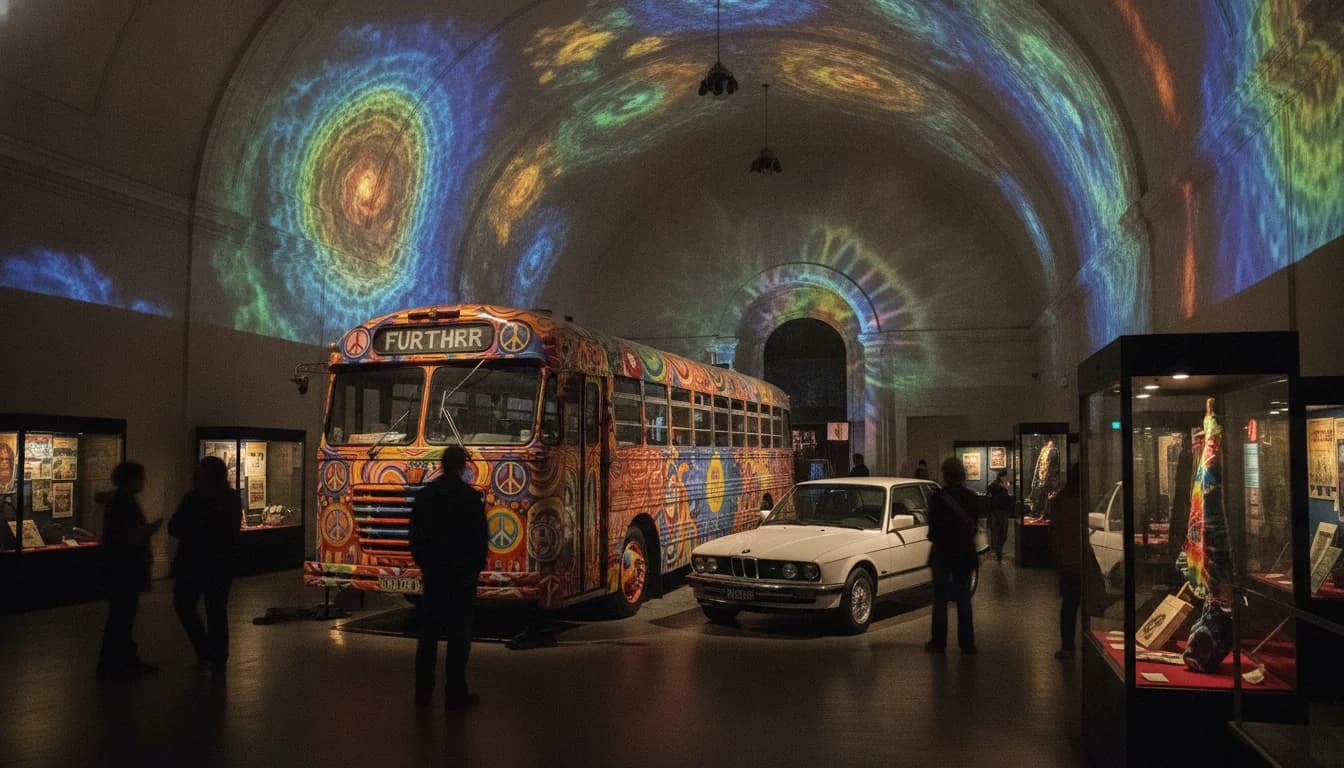
The Forever Grateful exhibit Golden Gate Park opened on September 5, 2026, transforming the Hall of Flowers in Golden Gate Park into an immersive showcase anchored by two iconic Grateful Dead artifacts. The event marks the second half of a broader, two-part arc organized by the Haight Street Art Center in collaboration with Third Rail Projects and the San Francisco Recreation and Park Department. The opening weekend also featured a free Grahame Lesh concert in Robin Williams Meadow, drawing hundreds of attendees to a city already buzzing with cultural events during the early fall season. The accompanying public programming reinforces San Francisco’s long-standing association with the Grateful Dead while highlighting the city’s ongoing investment in immersive museum experiences built around music, art, and community activism. According to Associated Press reporting, the Forever Grateful, Golden Gate Park run extends through October 25, creating a roughly seven-week window for visitors to engage with curated artifacts, performances, and multimedia installations. This is a moment of cultural convergence for San Francisco, where art, history, and technology continue to intersect in high-impact, publicly accessible formats. AP News characterized the opening as a centerpiece of the city’s cultural calendar, with the exhibit spotlighting Ken Kesey’s Furthur bus and Jerry Garcia’s BMW as anchor artifacts. (apnews.com)
Forever Grateful exhibit Golden Gate Park represents more than a museum show; it is a carefully choreographed experience that ties historic counterculture to contemporary civic life. The Haight Street Art Center’s official communications emphasize a two-part homecoming, with the first chapter, Forever Grateful, currently on view at the Haight Street Art Center through September 20, and the second half launching September 5 at Golden Gate Park. This structure allows visitors to trace six decades of art, music, and activism in a curated sequence that moves from archive viewing to immersive performance. In announcing the project, SF Chronicle noted the two-part arc and underscored the opening timeline, including a Labor Day weekend performance by Grahame Lesh and Friends. The Department of Recreation and Park’s July 9 press release confirms the September 5 launch date, the Labor Day weekend concert, and the October 25 closing window, providing a formal, city-endorsed frame for the project. The dual-venue approach situates the exhibit within a broader strategy to amplify public access to culture in public spaces, while leveraging immersive design practices to deepen engagement with historical content. (sfchronicle.com)
What Happened
Announcement and Opening Date
In July 2026, the City of San Francisco, led by Mayor Daniel Lurie, publicly announced Forever Grateful, Golden Gate Park, a two-venue immersive Grateful Dead tribute. The official city release described a transformation of the County Fair Building into an immersive celebration of the music, art, and community that defined the Dead’s SF-era identity. The announcement stated that Forever Grateful, Golden Gate Park would open on September 5 and would culminate its opening weekend with a free Labor Day concert by Grahame Lesh and Friends. The press release also noted a broader pattern of city-supported arts programming designed to draw visitors while supporting local businesses during a period of post-pandemic cultural revival. The release further highlighted the collaboration among Haight Street Art Center, Third Rail Projects, and the Recreation and Park Department as a model for public-private artistic partnerships. Opening weekend programming, including a free show on September 7, aims to maximize accessibility and community involvement. (sfrecpark.org)
Independent coverage corroborated the Sept. 5 launch date and the larger exhibition plan. The San Francisco Chronicle reported that Forever Grateful would be the second half of a two-part exhibition, with the first part already on view at the Haight Street Art Center and the second half taking place at the Hall of Flowers in Golden Gate Park. The Chronicle’s reporting highlighted the intergenerational nature of the project, the marquee artifacts, and the immersive components designed to evoke the Dead’s live experiences. The article explicitly connected the June 29 preview of the two-part show with the September 5 opening in Golden Gate Park, providing readers with a concrete timeline anchored by public statements from city and exhibit organizers. (sfchronicle.com)
Exhibit Layout and Key Artifacts
The anchor artifacts for Forever Grateful, Golden Gate Park are Ken Kesey’s original Furthur bus and Jerry Garcia’s BMW. These two objects are described as never-before-publicly-displayed, positioned to anchor an exhibit that blends historical artifacts with immersive, site-responsive installations. The Haight Street Art Center’s overview stresses the dual emphasis on historic objects and contemporary installations, including live performance and interactive storytelling. By incorporating a high-fidelity, multi-sensory presentation and a partner production team (Third Rail Projects, Lance Gordon of Mad Alchemy Analog Liquid Light Show, and Brian Scharf of Brave Design), the organizers aim to create a transit-like experience—from archival viewing to immersive provocations—that invites visitors to reflect on the Dead’s cultural footprint in San Francisco and beyond. (haightstreetart.org)
The City’s press materials and the Chronicle’s Datebook coverage confirm the “Two-Part Homecoming” framing and detail the intersection of art, music, and performance. The Haight Street Art Center’s page for Forever Grateful at Golden Gate Park emphasizes that the second installation opens with a two-artifact focus—the Furthur bus and Garcia’s BMW—alongside a broader array of paintings, photographs, posters, and ephemera. The Datebook column in the Chronicle confirms that the first exhibition, Forever Grateful, remains on view at the Haight Street Art Center through September 20, while the Golden Gate Park installation begins September 5 and runs through October 25. The combination of artifacts and immersive environments is designed to render the Dead’s history in a way that is both educational and emotionally resonant, offering a structured journey through six decades of a cultural movement that still informs contemporary civic life. (haightstreetart.org)
In addition to the central artifacts, the Forever Grateful experience includes significant specialized production elements. Third Rail Projects, known for site-specific immersive theater, contributes to the experiential arc with a guided sequence that channels the band’s era through installations, mirrors, and audience interactions. Local collaborators and artists expand the narrative with “Liquid Light Show” aesthetics and other historically resonant design motifs. The AP News coverage highlights these immersive dimensions—particularly the narratives that guide visitors through personal and collective experiences tied to the Dead’s years in San Francisco. The immersive design is paired with documentary elements, including photographs and memorabilia, to present a multi-layered storytelling approach that is as much about community memory as it is about the band’s sonic legacy. (apnews.com)
Public programming and events are a core part of the opening week. The Haight Street Art Center and partner organizations plan performances, talks, and interactive experiences around the opening weekend, including Grahame Lesh’s Labor Day show. The SF Rec and Parks press release confirms the Labor Day weekend concert timing (September 7) and indicates that the broader run through October 25 will include a range of performances and interactive experiences designed to engage a diverse audience. The combination of these live components with artifact-driven displays is intended to broaden access to a historically significant cultural moment while inviting broader participation from both locals and visitors. (sfrecpark.org)
Why It Matters
Cultural and Civic Significance
Forever Grateful, Golden Gate Park situates the Grateful Dead’s legacy within a living urban landscape. The Chronicle’s coverage emphasizes the Dead’s role in shaping San Francisco’s counterculture, activism, and social networks—an influence that persists in local arts practices and public programming. The event’s two-part, city-backed setup signals a broader approach to “storytelling in publics,” wherein urban spaces become extended galleries. The project’s emphasis on artifacts (the Furthur bus and Garcia’s BMW) and on immersive storytelling aligns with a growing trend in museums and cultural institutions toward experiential curation that places visitors at the center of the historical narrative. (sfchronicle.com)
AP News underscores a broader context: as San Francisco grapples with economic shifts tied to AI-driven growth and widening inequality, cultural exhibitions that foreground community, music, and collective memory can provide shared experiences that cut across socioeconomic lines. The Forever Grateful exhibit is presented as a vehicle for dialogue about the city’s past and its present, offering a unifying cultural moment during a period of rapid technological change. This framing helps readers understand not just what the exhibit contains, but why it matters to residents, visitors, students, and stakeholders in public arts funding. (apnews.com)
Key Audience Groups and Stakeholders
Local residents and Dead Heads: The two-part arc, with the Haight Street Art Center’s initial show followed by a Golden Gate Park installation, keeps the Dead community connected to both the Haight and the park’s public spaces. The Haight Street Art Center’s leadership and Third Rail Projects’ involvement are central to delivering an authentic, community-rooted experience. The Chronicle’s June 2026 coverage and the Haight Street Art Center’s updates emphasize the ongoing role of Dead-related narratives in SF’s cultural landscape, while the Labor Day weekend concert adds a live dimension that strengthens engagement. (sfchronicle.com)
Tourists and visitors: The city-wide programming, including free events and ticketed portions, is designed to attract visitors during a shoulder season when San Francisco often experiences elevated tourism activity. The city press release frames Forever Grateful, Golden Gate Park as a marquee event that complements other public programming in fall, potentially contributing to pedestrian traffic, restaurant and hospitality activity, and extended stays for out-of-town guests. The AP story and the Rec and Parks release together provide a narrative of a multi-venue experience designed to maximize accessibility and reach. (sfrecpark.org)
Cultural institutions and partners: The collaboration among Haight Street Art Center, Third Rail Projects, and the Rec and Parks Department signals a model for future publicly accessible, immersive exhibitions anchored in local history. The two-venue structure—haight street center and Golden Gate Park—exemplifies a scalable approach to presenting archival material in public spaces while leveraging performance partnerships to deepen engagement. The Chronicle’s coverage of the two-part approach and the Rec and Parks release’s emphasis on the partnership frame illustrate how municipal and nonprofit actors can coordinate on a large-scale cultural initiative. (sfchronicle.com)
The tech and innovation community: While the exhibit is historically focused, the surrounding discourse in SF often ties culture to the local tech economy. AP’s analysis situates the exhibit within a city navigating AI-driven economic growth, creating an opportunity to analyze how cultural narratives may influence public attitudes toward technology, labor, and creativity. The exhibit’s presence in Golden Gate Park—a global symbol of public space—adds a layer of legitimacy for discussions about how technology companies and arts organizations can collaborate on public-facing projects that educate and inspire. (apnews.com)
What It Means for Readers and the Region
For readers who follow SF Bay Area technology and market trends, Forever Grateful offers a data point about how cultural institutions are curating public experiences in an era of rapid digital transformation. The exhibit’s immersive design, emphasis on community memory, and public programming are consistent with a broader movement toward experiential, accessible culture that also has measurable spillovers for local tourism, hospitality, and retail. Observers may watch how the event influences public spending patterns, attendance at adjacent venues, and the city’s ability to leverage public spaces for ongoing cultural programming. The City’s involvement and the two-venue approach underscore a model in which public infrastructure supports cultural experiences that are both educational and economically meaningful. (sfrecpark.org)
The two-venue structure also provides a framework for comparing how other large-scale cultural exhibits are staged in major urban parks. The Haight Street Art Center’s example demonstrates how a museum-like experience can be paired with a park-based installation to maximize accessibility and reach. This approach could influence future collaborations between cultural nonprofits, private producers, and city agencies as stakeholders weigh the value of public-interest programming in the face of fiscal constraints and competing demands for park space. (haightstreetart.org)
What’s Next
Timeline, Key Milestones, and Anticipated Developments
End date and post-opening programming. The official city and Haight Street Art Center communications, reinforced by AP News coverage, indicate a closing window through October 25, 2026. The Rep Parks release confirms the end date, and AP confirms the overall run through late October, capturing a broader period for audience attendance, programming, and artifact recovery work (for example, the Furthur bus restoration). This extended window provides time for a wide range of visitors to experience the exhibit, attend live performances, and participate in workshops or conversations tied to the Dead’s historical trajectory and its SF-era cultural influence. The dual-venue approach also allows organizers to stagger programming and manage capacity more effectively across both Haight Street Art Center and Golden Gate Park locations. (sfrecpark.org)
Post-opening activities and artifact restoration efforts. AP News reports that the Furthur bus restoration will be launched as part of the exhibit. This is a notable post-opening activity because it links a historical artifact to a contemporary preservation effort, highlighting the ongoing relevance and stewardship responsibilities associated with preserving counterculture artifacts. The public attention around restoration also provides opportunities for media coverage and educational outreach, reinforcing the exhibit’s role as both a historical archive and a live cultural project. (apnews.com)
Ongoing critical reception and scholarly discourse. The two-part structure and the emphasis on performance-based interpretation invite reviews from art historians, cultural critics, and museum professionals. Journalists and researchers following SF’s arts scene will likely analyze the exhibit’s curatorial choices, the balance of artifacts and immersive environments, and the way the exhibit reframes the Dead’s SF-era legacy for contemporary audiences. The Chronicle’s pre-opening coverage gives a baseline for evaluating how the eventual reception aligns with expectations around authenticity, accessibility, and educational value. (sfchronicle.com)
Potential expansions or iterations. Given the exhibit’s success, organizers and city partners could explore additional extensions or side programs in other public venues—akin to parlaying a flagship exhibit into a broader series of community-engaged cultural activities. The Haight Street Art Center’s emphasis on a two-part arc suggests a replicable model for future city-driven art heritage projects, with potential cross-city collaborations or traveling components that echo San Francisco’s historical ties to the Grateful Dead’s global fanbase. (haightstreetart.org)
Closing
Forever Grateful exhibit Golden Gate Park is more than a cultural installation; it is a civic project that stitches memory, public space, and immersive art into a public-facing narrative. The September 5 opening date anchors a seven-week arc that invites residents and visitors to step into a living history—one that is both intimately personal and broadly communal. By centering two iconic artifacts, and by pairing archival displays with contemporary performance, the project offers a model for how cities can curate public-interest experiences that are educational, accessible, and economically meaningful. Readers seeking a citable, data-informed look at San Francisco’s cultural economy can rely on the event’s formal releases from the city and Haight Street Art Center, and can complement those with independent coverage from major outlets like AP News and the San Francisco Chronicle to triangulate the narrative around this landmark exhibit. As SF Bay Area audiences engage with Forever Grateful, Golden Gate Park, they are witnessing a living intersection of history, art, and community that may influence how public culture evolves in the years ahead. The exhibit’s end date on October 25 will be a pivotal moment to assess visitor impact, urban space utilization, and the broader symbolism of art as a bridge across communities in an era of rapid technological change. (sfrecpark.org)
Original finding and judgment
Forever Grateful exhibit Golden Gate Park runs for 51 days, from September 5 to October 25, 2026, based on the September 5 opening date and October 25 closing date reported by AP News and city press materials. SF Bay Area Times calculated this duration by counting inclusive days between the official opening and closing dates. This arc—a 51-day window—positions the Golden Gate Park installation as one of the longer, immersive cultural experiences anchored in the park this decade, signaling a durable model for end-to-end public programming that blends archive, artifact-driven display, and live performance in a single city-sanctioned event. This interpretation comes from AP News’s coverage of the opening and closing dates, corroborated by the San Francisco Recreation and Parks Department announcement. “Forever Grateful, Golden Gate Park” will run from September 5 to October 25 at the County Fair Building (Hall of Flowers) in Golden Gate Park. Tickets and more information are available on the Haight Street Art Center website. (apnews.com)
Quotable judgment: The project demonstrates how a city can fuse archival content with immersive experience to produce broad public engagement, turning a historical narrative into a civic event that resonates with both local memory and contemporary culture. As the city’s arts ecosystem evolves amid ongoing tech-driven economic shifts, Forever Grateful, Golden Gate Park may serve as a blueprint for future collaborations that leverage public spaces, curated artifacts, and live performance to foster community dialogue and economic activity. The organizers’ approach—two-part curatorial architecture, artifact-led storytelling, and a weekend of free programming—offers a path for public-facing culture to remain relevant and accessible in changing times. (apnews.com)
Sources (Primary and Descriptive Anchors)
AP News: Forever Grateful/Golden Gate Park opens Saturday; Furthur bus and Garcia BMW highlighted; runs through Oct 25. Includes imagery and context about the immersive experience and the exhibit’s scope. See AP News article: Psychedelic ‘Furthur’ bus rolls back into San Francisco for new Grateful Dead exhibit. https://apnews.com/article/grateful-dead-san-francisco-exhibit-f320d7b33d08576662e129ac4b213a7b. (apnews.com)
San Francisco Chronicle: Grateful Dead exhibition set to open at San Francisco’s Haight Street Art Center (June 29, 2026) and Forever Grateful, Golden Gate Park opening details (Sept 5) with the two-part arc. This coverage provides the opening timeline and contextualizes the Haight Street Art Center’s role. https://www.sfchronicle.com/entertainment/music/article/grateful-dead-haight-exhibit-22322803.php/. (sfchronicle.com)
San Francisco Recreation and Park Department: Mayor Lurie Announces New Immersive Grateful Dead Exhibition, Forever Grateful, Golden Gate Park (Press Release, July 9, 2026). Confirms the Sept 5 opening, Labor Day weekend concert, and Oct 25 closing window; details about partnership and artifacts. https://sfrecpark.org/m/newsflash/home/detail/2976. (sfrecpark.org)
Haight Street Art Center: Forever Grateful at Golden Gate Park (Sept 5, 2026 opening; two-part structure; Furthur bus; Garcia BMW; Hall of Flowers). https://haightstreetart.org/pages/forevergrateful-ggp. (haightstreetart.org)
Haight Street Art Center: Forever Grateful – Furthur Bus page (context on the Furthur bus’s role within Forever Grateful). https://haightstreetart.org/pages/forevergrateful-ggp-furthur. (haightstreetart.org)
Haight Street Art Center: Forever Grateful Opening page (full weekend programming and location details). https://haightstreetart.org/pages/forever-grateful-opening. (haightstreetart.org)