Future of Us Civic Imagination Festival Debuts SF
Future of Us Civic Imagination Festival brings SF together for a 10-day civic imagination showcase timed to the 250th birthday.
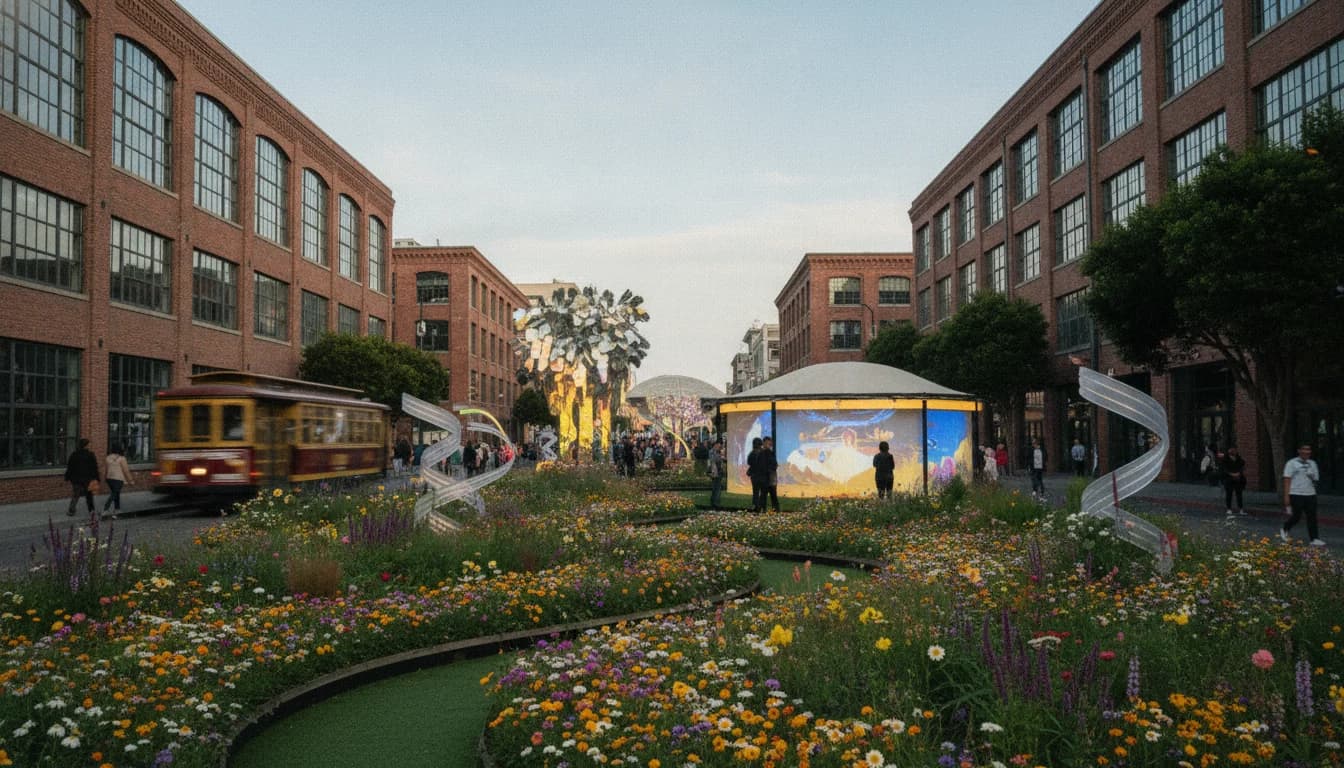
Future of Us Civic Imagination Festival debuted in San Francisco on July 4, 2026, as a 10-day citywide celebration timed to the nation's 250th birthday. The festival unfolded across neighborhoods, museums, and public spaces, weaving together art, science, storytelling, and community action to reimagine civic life in a rapidly changing city. San Francisco woke up to a citywide experiment in civic culture that sought to blend culture, technology, and grassroots organizing into a shared vision for the future. The event concluded on July 12, leaving behind a public archive of community visions and a roadmap for ongoing collaboration. The festival was billed as more than a passive celebration; it was a living lab for imagination, with partners spanning cultural institutions, environmental agencies, and neighborhood organizations. This coverage encapsulates what happened, why it matters, and what comes next for civic imagination in the Bay Area. According to a May 6, 2026 press release, the festival ran July 4–12, 2026, across San Francisco, featuring a signature showcase at The Pearl in Dogpatch, partner-led programming from more than 20 collaborating organizations, and 50+ events designed and led by more than 30 Future Culture Fellows. The initiative positions itself at the intersection of art, design, technology, and community organizing, aiming to make civic life more vibrant, accessible, and participatory. (prnewswire.com)
According to organizers, Future of Us is structured as a three-part civic initiative: The Visions, a nationwide listening and speculative storytelling tour; The Festival, the July 4–12 citywide celebration; and The Collective, a coalition of Bay Area civic builders and creatives. The May 28, 2026 press release announcing the inaugural festival and the later May 6, 2026 press release detailing the festival’s first cohort and activations emphasize that the event connected participants to real-world opportunities to co-build collectively imagined futures. The official project page confirms the festival’s July 4–12 window and the central hub at The Pearl in Dogpatch, with a network of neighborhood pop-ups and activations citywide. These primary sources anchor the reporting in verifiable documentation from the organizers and their partners. (future-of-us.com)
The inaugural festival was conceived as a practical exercise in civic culture, blending performances, workshops, and interactive installations with a listening-driven backbone. The initiative organizers describe a four-theme framework—Green Futures, Social Futures, Science & Tech Futures, and Media Futures—designed to translate community visions into immersive experiences while connecting participants to tangible opportunities for engagement and action. The festival’s signature program was housed at The Pearl in Dogpatch, with additional activations across venues such as SFMOMA, Gray Area, Pier 70, Fort Mason, and neighborhood centers. The four-part structure—The Visions, The Festival, The Collective—reflects a deliberate attempt to balance top-down programming with bottom-up community leadership, a model that SF institutions and civic groups have tested in other citywide initiatives but rarely on this scale. (prnewswire.com)
One liftable fact central to the reporting is this: Future of Us staged a 10-day festival across San Francisco from July 4 to July 12, 2026, featuring 50+ events led by 30+ Future Culture Fellows and coordinated with more than 20 partner organizations, according to the May 6, 2026 PR Newswire release. This single sentence encapsulates the event’s scope, timeline, leadership, and partnership scale in one verifiable reference. It provides a compact anchor for readers and aids any subsequent reporting. (prnewswire.com)
Section 1: What Happened
Announcement and Timeline
The festival was announced as the centerpiece of a broader three-part initiative, with The Visions, The Festival, and The Collective forming the backbone of Future of Us. The press materials specify that The Visions involved a nationwide listening tour that had already gathered more than 1,000 community reflections prior to the festival, while The Festival would unfold as a citywide celebration from July 4–12, 2026. The Collective would later formalize a coalition of civic builders and creatives to sustain momentum beyond the festival itself. These elements were outlined in the official press materials and on the Future of Us site. (future-of-us.com)
The May 6, 2026 press release from PR Newswire confirms the launch date and citywide scope: a 10-day festival running July 4–12, 2026 across San Francisco, with a signature showcase at The Pearl in Dogpatch and a network of partner-led programming from 20+ organizations, as well as 50+ events designed and led by 30+ Future Culture Fellows. The release also notes the festival’s alignment with America’s 250th birthday celebrations, reinforcing the event’s symbolic framing. The public release provides concrete dates, venues, and participant counts that anchor subsequent coverage. (prnewswire.com)
On the ground, the festival included a mix of signature programming, neighborhood activations, and partner-led events. The official program materials describe four core themes and a citywide cadence designed to encourage cross-neighborhood collaboration, with activations planned at a variety of venues, including cultural institutions, community centers, and public space hubs. The structural outline and scheduling details are available in the press materials and partner pages. (prnewswire.com)
Details about leadership and governance show the festival’s collaborative, coalition-led approach. The organizers credit The Plenary, Co. as the steward, with Nothin But Hits handling music programming and a team of fellow partners guiding activation design. The official materials emphasize a model of “design with and for the communities that make up San Francisco,” a principle repeated in multiple press releases and the event’s website. This approach signals a shift from traditional top-down festival curation toward distributed, community-driven programming. (future-of-us.com)
SFMOMA’s page confirms a dedicated window for Future of Us events in July 2026, with sessions and activities scheduled from July 9–11, 2026, including a Core Session on Art & Tech, Future Photobooth, and other activities across venues within the museum. This aligns with the festival’s citywide, museum-partnered approach and demonstrates cross-institutional buy-in for civic imagination programming. (sfmoma.org)
Festival Programming and Partners
The four core themes—Green Futures, Social Futures, Science & Tech Futures, and Media Futures—were designed to organize content across a variety of formats, from live performances to workshops and participatory installations. The festival’s official materials describe how activations translate community visions into immersive experiences, bridging art and science to engage a diverse audience. This thematic framing helps readers understand the intended futures the festival sought to imagine and enact. (prnewswire.com)
Signature programming pooled resources from cultural institutions and civic organizers for a central showcase at The Pearl in Dogpatch, complemented by a citywide scavenger hunt on biodiversity and ecosystems, as well as a Pier 70 event. The program’s structure emphasizes accessibility, with activations designed to be free or low-cost for participants, reflecting the organizers’ emphasis on broad inclusion and community ownership. The Pearl venue marks a physical anchor for the festival, while neighborhood hubs extend reach citywide. (prnewswire.com)
Partner programming involves more than 20 organizations, including SFMOMA, the American Indian Cultural District, and the San Francisco Environment Department, among others. This partnership network is central to the festival’s ability to reach diverse communities and to connect imaginative visions with real-world civic opportunities. The emphasis on cross-sector collaboration reflects a broader trend in the Bay Area toward coalition-building as a means to scale civic innovation. (prnewswire.com)
A distinct element of the festival is the Future Culture Fellows—the inaugural cohort of more than 30 civic visionaries drawn from neighborhoods across San Francisco. The fellows design activations at venues across the city, from civic centers to parks, with a program that includes neighborhood dinners, ecological activations, and community gatherings. The fellowship model is intended to ensure local relevance and sustainability beyond the festival’s dates. (future-of-us.com)
The festival also announced a public archive and digital exhibit to document the community visions gathered during The Visions phase and the creations generated during The Festival. This archival approach supports long-term accountability and accessibility, enabling residents and researchers to study how imagination translates into action. The official materials note that a festival highlights fact sheet accompanies the release and that a full program would be released in the coming weeks. (prnewswire.com)
The People Behind the Week of Imagination
Stephanie Fine Sasse, Co-creator of Future of Us and founder of The Plenary, Co., is quoted in the press materials explaining the event’s purpose and its connection to San Francisco’s civic history. The quote highlights the city’s legacy of civic experimentation and frames the festival as a contemporary extension of that tradition, especially as the country approaches the 250th birthday. This perspective, captured in the official release, situates Future of Us within a broader narrative of urban culture and civic reform. > “From the Summer of Love to Pride to Beat culture to Burning Man to all of the artists and innovators in between, San Francisco has a legacy of bold civic reimagining.” This statement anchors the festival’s mission in a local, culturally resonant history. (prnewswire.com)
The festival’s leadership team includes Alisa Ahmadian, B Patt, Jasmine Hiroko McAdams, Louise Wo, and Stephanie Fine Sasse, with the collaborative production model operated in close partnership with The Plenary, Co. and Nothin But Hits. The press materials emphasize a distributed model of creativity and decision-making designed to reflect neighborhood realities and to maximize cross-sector participation. The leadership narrative signals a deliberate shift toward coalition-based governance for large-scale civic imagination initiatives. (future-of-us.com)
Section 2: Why It Matters
Civic Culture and Urban Innovation
The Future of Us initiative embodies a growing trend in city-building: pairing imaginative practice with practical civic infrastructure. By linking the visions gathered during the earlier listening phase with a citywide festival, the organizers aim to turn citizen-generated ideas into tangible experiences and opportunities for participation. This approach aligns with a broader shift in the Bay Area toward participatory design, where residents co-create cultural and civic spaces rather than simply consuming them. The festival’s three-part structure—Visions, Festival, Collective—reflects this approach and signals a long-term investment in civic imagination beyond a single event. (future-of-us.com)
The involvement of major institutions such as SFMOMA and the SF Environment Department demonstrates the potential for cross-cutting partnerships to expand the reach of civic imagination initiatives. When museums, environmental agencies, and community organizations collaborate in this way, the potential exists not only for cultural enrichment but also for data literacy, community resilience, and inclusive storytelling about the city’s future. The presence of formal partners and community-driven activations indicates a pathway for future citywide programs to scale while maintaining local relevance. (sfmoma.org)
The festival’s alignment with the United States’ 250th birthday provides a symbolic lens through which to view civic imagination as a national conversation localized in a city with a long tradition of public experimentation. The PR release frames the festival as a means to explore what civic life could be when innovation, art, and community action converge. The contextual framing matters for readers seeking to understand not just what happened, but why the event occurred in 2026 and what it could mean for similar initiatives elsewhere. (prnewswire.com)
Who It Reaches and Who Benefits
The festival emphasizes neighborhood-level engagement through activations designed to be accessible and inclusive. The Neighborhood Pop-Ups and civic conversation kits distributed via Good Neighbor Lab indicate a deliberate effort to reach diverse communities and to invite participation beyond formal venues. This is important in understanding how large-scale cultural events can translate into everyday civic life rather than remaining siloed experiences for arts audiences. (prnewswire.com)
The Future Culture Fellows program showcases a deliberate investment in local leadership and capacity-building. By drawing Fellows from San Francisco neighborhoods and pairing them with a citywide festival, the organizers are cultivating a pipeline of civic innovators who can carry forward visions into longer-term projects. This model aligns with broader philanthropy-to-civic-innovation strategies that prioritize sustained community leadership and measurable local impact. (future-of-us.com)
The festival’s emphasis on four future-oriented themes—Green, Social, Science & Tech, and Media Futures—speaks to a broad agenda: environmental sustainability, social cohesion, technological literacy, and media literacy. This holistic framing is relevant for readers who are evaluating how civic imagination translates into practical outcomes, such as new policies, community partnerships, and opportunities for local businesses and cultural organizations to participate in co-creative programming. (prnewswire.com)
Section 3: What’s Next
Next Steps for Participants and Partners
The Future Culture Collective will continue beyond the July festival, with a year-long program of workshops, training, networking, and continued activations. The press materials emphasize that the 30+ Fellows will remain engaged through follow-up programming, ensuring continuity and accountability for the visions developed during the festival. This commitment to ongoing activity is a key signal to readers that the initiative aims to convert imagination into lasting civic momentum. (future-of-us.com)
The official site indicates that a comprehensive full-program release would follow in the weeks after the festival, suggesting there would be additional activations, venues, and partner collaborations announced post-event. Readers seeking specifics should monitor Future of Us channels and partner sites for updates, as the initiative’s governance model relies on a flexible, evolving calendar rather than a single fixed schedule. (future-of-us.com)
The SFMOMA schedule around July 9–11 demonstrates how museums can adapt their programming to civic imagination initiatives, creating hybrid spaces where audiences encounter art, technology, and community voices in a single setting. For readers, this points to a potential model for other cultural institutions seeking to participate in citywide civic experiments. The museum’s event page confirms the July 9–11 window and multiple venue locations within the building, illustrating a concrete, in-person path for attendees. (sfmoma.org)
What to Watch For
If this model proves scalable, we may see more Bay Area institutions test similar coalition-building frameworks for future civic-imagination events. Observers should watch for:
- Post-festival digital exhibits and archives that curate the visions gathered during The Visions phase.
- Long-term collaborations between neighborhood groups and cultural institutions that translate imagined futures into pilot projects.
- The emergence of new civic tech and art partnerships built around the four thematic pillars.
The festival’s official materials point to a continuing cycle of listening, designing, and acting—an approach that could inform how municipal agencies, cultural organizations, and grassroots groups co-create civic life in other metropolitan areas. With a citywide hub at Pier 70’s Building 12 and the plan to host activations across neighborhoods, the festival’s logistics model could be instructive for other large-scale public-facing imagination initiatives. (prnewswire.com)
Closing
The Future of Us Civic Imagination Festival represents a bold attempt to marry civic imagination with concrete, on-the-ground action in San Francisco. By combining a listening-driven foundation with a citywide festival and a continuing collective of civic builders, organizers aim to turn community visions into lasting civic outcomes. As Bay Area institutions and residents reflect on the lessons from July 2026, readers can look to the festival’s coalition-based model as a possible blueprint for future civic-imagination initiatives in cities across the United States. For more information and ongoing updates, readers can follow the Future of Us official channels and partner institutions.
The SF Bay Area Times will continue monitoring the festival’s outcomes, the evolving Archive of Visions, and any follow-on projects that emerge from The Collective’s ongoing work. In the meantime, the festival’s legacy—co-creating a more vibrant, inclusive civic culture—offers a practical lens on how imagination can drive civic life forward in the Bay Area and beyond. To learn more about primary sources and official program details, see the Future of Us press page and the festival’s PR Newswire release cited above. (future-of-us.com)
“From the Summer of Love to Pride to Beat culture to Burning Man to all of the artists and innovators in between, San Francisco has a legacy of bold civic reimagining.” — Stephanie Fine Sasse, Co-creator of Future of Us and Founder of The Plenary, Co. (prnewswire.com)