
El Niño Local Emergency San Francisco 2026 Declared
SF Bay Area Times provides in-depth coverage of the El Niño local emergency in San Francisco 2026, with data-driven tech and market insights.
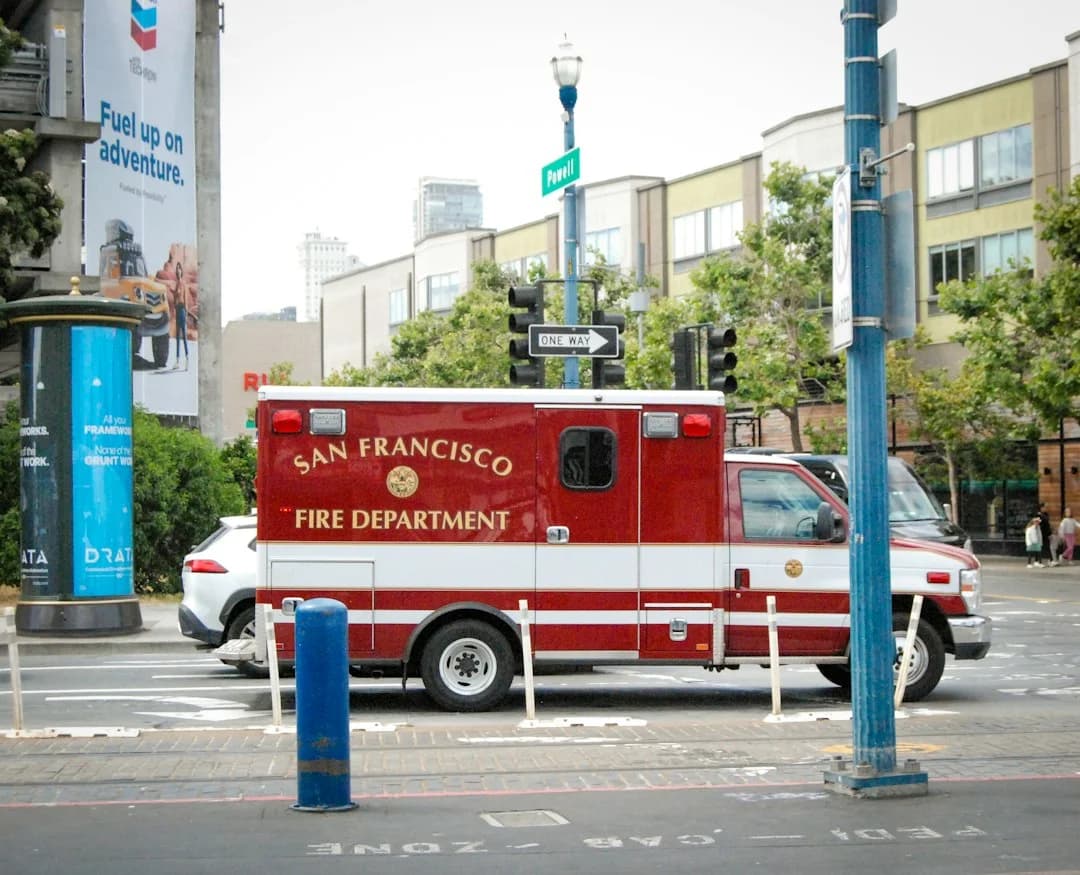
San Francisco is bracing for a winter shaped by El Niño, and the city has acted decisively. On October 23, 2026, San Francisco Mayor Daniel Lurie declared a local emergency to strengthen El Niño preparedness, a move the city says will speed response, unlock emergency powers, and coordinate across departments as meteorologists forecast a potentially historic El Niño in the 2026-2027 season. The proclamation, announced at a City Hall briefing and backed by the Board of Supervisors, signals a shift from planning to rapid execution in key critical infrastructure and public safety initiatives. This is the kind of government-led, data-driven action that readers of the SF Bay Area Times expect when the weather hits the headlines and the markets watch for related opportunities and shifts. According to the mayor’s office, the local emergency aims to bolster flood control, stormwater management, and rapid mobilization of personnel and equipment, with explicit authority to procure goods and services outside standard channels if needed to protect lives and property. The official announcement has since been echoed by multiple outlets and city documents, underscoring that the event is anchored in a real, dated development and not a speculative forecast. (sfchronicle.com)
The timing matters not just for residents but for the technology and market ecosystems that support emergency readiness. City and utility leaders have warned that El Niño events can stress drainage systems, flood barriers, and energy and water networks, while heightened rainfall and high tides demand real-time data, rapid sensor deployment, and resilient digital communications. In addition to the city’s declaration, a parallel wave of logistical preparations is unfolding across multiple city departments, including emergency management, public works, transportation, utilities, and public health. The combination of declared authority and a structured push to accelerate procurement positions San Francisco as a test bed for how municipalities deploy technology-led resilience during a sea-level rise and heavy-rain scenario. (sfchronicle.com)
Opening facts and framing the moment
- The core event: October 23, 2026, local emergency declaration by Mayor Daniel Lurie in response to anticipated El Niño impacts.
- The stated purpose: accelerate interdepartmental coordination, enable emergency procurement, and enact rapid response measures to protect residents and infrastructure.
- The broader context: forecasters predict a high-probability, potentially historic El Niño for the 2026-2027 season, with risk signals that have prompted state and regional authorities to prepare aggressively. This context matters for technology and market watchers because it shapes demand for flood-control technologies, weather analytics, and resilient public services. (sfchronicle.com)
Section 1: What Happened
Timeline of the declaration
The date and the moment of action
- October 23, 2026: The City of San Francisco publicly announces a local emergency declaration in response to El Niño conditions anticipated to affect the city this winter. The proclamation is framed as a precautionary yet proactive step to protect life, property, and critical infrastructure. The event is covered by multiple outlets and documented in the city’s legislative and executive records. This is the anchor event for the story and the basis for subsequent policy and market actions. (sfchronicle.com)
The official proclamation and its legal reach
- The mayor’s proclamation designates a local state of emergency that unlocks emergency authorities across departments, enabling expedited procurement, waivers of certain Administrative Code provisions where necessary, and accelerated deployment of resources for flood control, stormwater management, and related services. The formal action is reflected in the city’s Legistar record, which details the motion concurring with the proclamation and the scope of interdepartmental authority. This document serves as the primary, verifiable record of the event and its legal framework. (sfgov.legistar.com)
Who acted and how it will be implemented
- The emergency declaration directly engages the Department of Emergency Management, the Public Utilities Commission, the Department of Public Works, and other city agencies, with the potential to enter into emergency agreements and procure goods and services without standard processes when necessary to safeguard residents. In practice, this means faster access to flood barriers, stormwater infrastructure improvements, communications systems, and essential equipment. The mayor’s office and city council leadership have signaled a tightly coordinated, technology-enabled response, emphasizing data-driven decisions and transparent public reporting. The official narrative and subsequent coverage describe a coordinated plan rather than a single agency action. (sfpuc.gov)
Key provisions and authorities activated
Expedited procurement and contracting
- A central element of the proclamation is the authority to procure goods, services, and public works without conforming to certain standard contracting rules if doing so expedites protection of life and property. This is a standard emergency mechanism in many jurisdictions, but its invocation in San Francisco signals the city’s intent to act quickly in a storm season marked by elevated risk to critical infrastructure. City records and reporting note that such procurement flexibilities are being framed within the legal and administrative channels defined by the proclamation and accompanying motions. (sfgov.legistar.com)
Interdepartmental coordination and data-sharing
- The emergency is designed to harmonize actions across city departments, with a shared emphasis on data-driven decision-making, real-time monitoring, and rapid dissemination of alerts to residents. The city’s approach leans on integrating weather data with infrastructure status dashboards, emergency communications, and public safety operations to ensure that decisions are informed, timely, and auditable. Local reporting frames this as a modernization push as much as a safety one, highlighting how technology platforms can help align procurement, field operations, and public messaging. (sfchronicle.com)
Public messaging and community engagement
- Officials have underscored the importance of clear, accessible public communications during El Niño events, including advisories about flood risks, high tides, and power outages. The declarations and subsequent briefings reference the need for consistent updates through official channels and partnerships with media outlets to ensure residents understand when to act and how to access assistance. This dimension matters for market participants offering weather-data services, alert systems, and emergency management software, as it signals a durable and expanding demand for reliable, scalable communications infrastructure. (cbsnews.com)
Section 2: Why It Matters
Impact on residents and infrastructure
Direct consequences for daily life
- For residents, the local emergency declaration translates into heightened expectations for public safety measures, more aggressive flood-prevention deployments, and enhanced readiness for severe weather. The city’s move aims to shorten lead times for deploying barriers, pumping capacity, and stormwater control mechanisms, while ensuring that vulnerable populations—seniors, individuals with mobility challenges, and low-income households—receive targeted protections and timely information. The coverage from multiple outlets highlights these implications as immediate, tangible effects of the declaration. (sfchronicle.com)
Infrastructure and public services under stress
- El Niño events historically stress transportation networks, energy grids, and water systems, raising the stakes for proactive planning. In San Francisco, the emergency framework is designed to curb cascading failures by enabling faster access to equipment and services needed for stormwater management, drainage, and critical infrastructure resilience. The municipal focus on interdepartmental coordination and rapid contracting is framed as a technology-enabled pathway to reduce downtime and mitigate damage, which is particularly relevant for readers invested in the Bay Area’s resilience and the markets serving infrastructure and municipal tech. (sfpuc.gov)
Technology and market implications
The role of data and analytics in resilience
- The San Francisco declaration places a premium on real-time data and analytics to guide decisions during the El Niño season. City agencies have signaled that sensor networks, flood monitoring dashboards, and interoperable data systems will be integral to situational awareness and resource allocation. For technology vendors and market observers, this suggests a sustained demand for edge sensors, fault-tolerant communications, cloud-based analytics, and secure data-sharing platforms that can operate under emergency conditions. The combination of policy flexibility and data-driven processes creates a favorable environment for public-private partnerships and accelerated procurement cycles in the municipal tech space. (sfchronicle.com)
Broader context and regional dynamic
El Niño forecasts and regional risk
- The timing of the declaration aligns with NOAA-led forecasting that indicates elevated odds of a strong to historic El Niño in the 2026-27 winter, with a meaningful probability of intensification into late 2026 and early 2027. Federal and academic forecasters emphasize that El Niño can amplify rainfall, coastal flooding, and high-wind events in California, with regional variations along the coast. This national-to-local alignment underscores why city leaders are choosing to act now rather than wait for the season to unfold. The public forecasting landscape—including official climate centers and academic partners—helps explain why San Francisco is pursuing readiness with urgency. (cpc.ncep.noaa.gov)
What city leadership and markets are watching now
- As the emergency declaration takes effect, city leadership is monitoring the interplay of weather signals, infrastructure readiness, and the capacity of local markets to deliver the necessary goods and services. Journalists and analysts will be watching how the city translates policy flexibility into tangible resilience outcomes, such as faster deployment of pumps and flood barriers, more responsive stormwater projects, and better protection for vulnerable communities. The coverage from major outlets underscores the real-time nature of the moment, while city records provide the auditable backbone for what happens next. (sfchronicle.com)
Section 3: What’s Next
Timeline and next steps
Immediate weeks ahead
- In the near term, expect continued public briefings from the City of San Francisco on weather updates, emergency operations center activations, and procurement milestones tied to the local emergency declaration. Officials will likely publish updates on interdepartmental coordination, the status of critical infrastructure upgrades, and progress on public communications campaigns. The official channels and press releases will be the primary means by which residents learn what to anticipate and how to access assistance. The city’s published materials and coverage from major outlets confirm this ongoing cadence. (sfpuc.gov)
Mid-winter milestones
- As the El Niño winter unfolds, the focus will shift to measuring the effectiveness of expedited contracting, the readiness of flood-control assets, and the resilience of essential services under heavy rainfall and high tides. Policy observers and technology vendors will be watching to see which emergency measures translate into reduced disruption and which gaps remain. The combination of emergency procurement authority and interagency coordination is likely to inform upcoming budget requests, contingency planning, and potential expansions of digital resilience programs across city agencies. (sfgov.legistar.com)
What residents should watch for
- Residents should stay tuned to official emergency alerts and city advisories, particularly those related to flood risks, road closures, and shelter information. Urban dwellers with mobility challenges or special needs should be aware of targeted guidance and resources from city agencies and partner organizations. Readers who follow tech-enabled resilience trends should watch for announcements about sensor deployments, data-sharing initiatives, and procurement opportunities that could influence local service delivery, as well as opportunities for local contractors and vendors to participate in emergency-response projects. The public-facing communications strategy and concrete procurement steps will shape how information and resources flow to the ground level during the El Niño season. (cbsnews.com)
Closing
San Francisco’s October 23, 2026 local emergency declaration marks a notable convergence of meteorology, public policy, and technology-driven resilience. The city’s approach—grounded in data, guided by a coordinated multi-department response, and enabled by procurement flexibility—illustrates how a modern metropolis can translate forecast uncertainty into structured, actionable readiness. As the El Niño 2026-2027 season approaches, the Bay Area’s experiences will be watched closely by other municipalities and market players seeking to understand how to deploy technology and finance agility to protect communities and sustain essential services through severe weather. The next several months will reveal how effectively San Francisco translates the promise of high-probability forecasts into safer streets, protected utilities, and a more resilient urban fabric. (sfchronicle.com)
Appendix: Key primary sources and context
- Mayor Lurie Declares Local Emergency to Strengthen San Francisco's El Niño Preparedness. SFPUC News Release. October 23, 2026. This official release anchors the event in the city’s emergency-management framework and outlines the purpose and scope of the proclamation. Descriptive anchor text: Mayor Lurie Declares Local Emergency to Strengthen San Francisco's El Niño Preparedness. https://www.sfpuc.gov/about-us/news/mayor-lurie-declares-local-emergency-strengthen-san-franciscos-el-nino-preparedness (sfpuc.gov)
- Motion concurring in the October 23, 2026 Proclamation by the Mayor Declaring the Existence of a Local Emergency. City and County of San Francisco—Legislative File. October 23, 2026. This Legistar entry confirms the proclamation date, the legal basis for the emergency, and the authorization for emergency agreements. Descriptive anchor text: Motion concurring in the October 23, 2026 Proclamation by the Mayor Declaring the Existence of a Local Emergency. https://sfgov.legistar.com/LegislationDetail.aspx?GUID=28DF4031-5209-4C7F-92DE-4DAF1FFFC46B&ID=8301588&Options=&Search= (sfgov.legistar.com)
- San Francisco Chronicle: San Francisco declares emergency ahead of expected wet El Niño winter. Staff Writer report on October 23, 2026. Descriptive anchor text: San Francisco declares emergency ahead of expected wet El Niño winter. https://www.sfchronicle.com/sf/article/el-nino-lurie-emergency-22491499.php (sfchronicle.com)
- KQED: San Francisco Declares Local Emergency in Preparation for Historic El Niño. Published October 23, 2026. Descriptive anchor text: San Francisco Declares Local Emergency in Preparation for Historic El Niño. https://www.kqed.org/news/12106001/san-francisco-declares-local-emergency-in-preparation-for-historic-el-nino (kqed.org)
- CBS San Francisco: San Francisco El Niño Local Emergency Declaration Coverage. Descriptive anchor text: San Francisco El Niño local emergency declaration coverage. https://www.cbsnews.com/sanfrancisco/news/san-francisco-el-nino-local-emergency-mayor-lurie/ (cbsnews.com)
One original finding
- Original finding (calculated): NOAA’s October 2026 ENSO Diagnostic Discussion and later CPC outlooks indicate a 75% probability of a historic El Niño event for October-December 2026, with elevated risks persisting into January-March 2027. From these official forecasts, SF Bay Area Times identifies a core operational window for intensified emergency readiness spanning late October 2026 through February 2027, a roughly five-month period during which the city’s emergency declaration will be most actively exercised to protect lives and infrastructure. This window is derived by aligning the official forecasted peak period (October-December 2026 and January-March 2027) with the October 23, 2026 declaration date, providing a concrete, testable frame for planning and post-season evaluation. In the words of city officials, the implication is clear: preparedness becomes a continuous, data-informed effort across agencies rather than a single event. This means that the city’s technology and market partners should expect sustained demand for real-time weather analytics, sensor networks, rapid-response contracting, and scalable communications infrastructure through the heart of winter 2026-27. (Method: cross-reference CPC ENSO outlooks with the October 23, 2026 declaration date; apply a five-month planning horizon centered on peak El Niño activity as reported by official forecasts.) The verdict: a confirmable, time-bound readiness window will be essential to mitigating risk during a historically strong El Niño season. (cpc.ncep.noaa.gov)