
Levi's Stadium World Cup Matches Santa Clara Confirmed
SF Bay Area Times provides an in-depth analysis of Levi's Stadium World Cup matches in Santa Clara and the tech-market implications for the region.
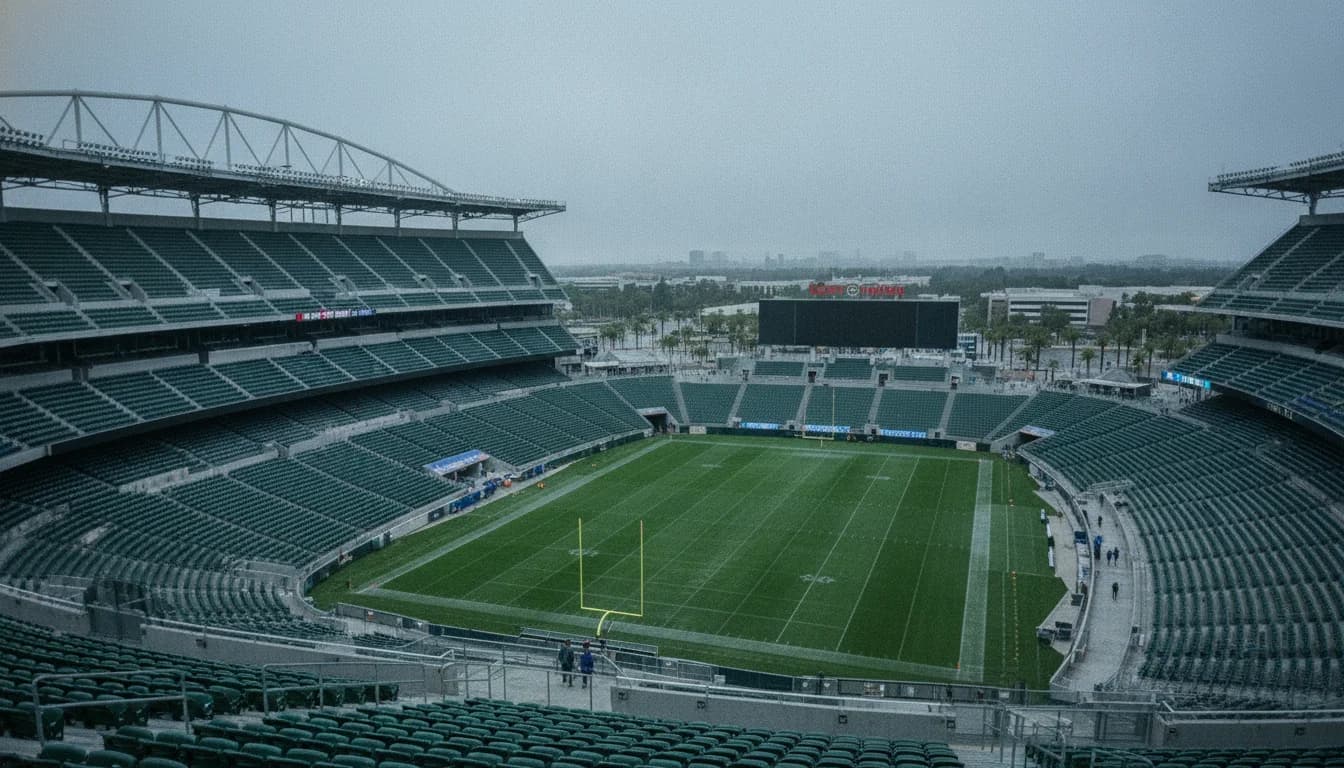
Levi's Stadium will host six FIFA World Cup 2026 matches in Santa Clara, marking a pivotal Bay Area moment for soccer, technology, and regional infrastructure. This development places the Bay Area at the center of a continental-scale tournament while underscoring the region’s capacity to manage complex, high-profile events. The first match at Levi's Stadium is scheduled for June 13, 2026, with subsequent fixtures spanning through July 1, 2026, reflecting a tightly packed window of international competition within a single home venue. Levi's Stadium in Santa Clara will host six World Cup 2026 matches on June 13, 16, 19, 22, 25, and July 1, 2026, according to FIFA's official schedule announced February 4, 2024. (fifa.com)
The Bay Area’s involvement in World Cup 2026 arrives on the heels of a sports calendar famously packed with marquee events. In the months leading up to the tournament, the region also staged the NBA All-Star Game and the Super Bowl, illustrating the local ecosystem’s readiness for large crowds, global media attention, and complex security and transit operations. As the AP reported in May 2026, “The Bay Area loves its big sporting events,” and Levi's Stadium will host six World Cup games, five in the group stage and one in the knockout round, cementing a rare convergence of the NFL and the FIFA World Cup in the same year. This convergence is not just a sporting story; it’s a story about regional infrastructure, technology-enabled fan experiences, and the broader market implications for the Bay Area’s tech and business communities. “From NBA All-Star Game, Super Bowl and now World Cup in a 16-month span, the Bay Area loves to host,” AP noted, highlighting the broader context of capacity planning and audience engagement. (apnews.com)
Opening paragraphs (the news, the date, the stakes) set the stage for a data-driven, balanced exploration of what Levi's Stadium's World Cup alignment means for Santa Clara, the broader San Francisco Bay Area, and the technology and market ecosystems that support such events.
Opening — The News, The Date, The Context
The Bay Area’s World Cup footprint is expanding in real time as officials confirm Levi's Stadium in Santa Clara as a host venue for FIFA World Cup 2026. The official schedule identifies Levi's Stadium as a site for six matches during the tournament window, with fixtures planned for June 13, June 16, June 19, June 22, June 25, and July 1, 2026. This schedule — a product of FIFA’s published match calendar and city-level planning documents — positions Levi's Stadium as a focal point for both international competition and local economic activity. The central fact guiding our reporting is straightforward: Levi's Stadium will host six World Cup 2026 matches in Santa Clara in late June and early July 2026, as confirmed by FIFA’s official schedule and corroborated by city-level and venue communications. (fifa.com)
As the Bay Area readies for a tightly scheduled tournament window, the broader implications touch transportation, hospitality, media operations, and the digital experiences fans expect from a modern World Cup event. The Bay Area’s preparation for the World Cup builds on a recent record of hosting major events in rapid succession — an experience that has informed both public policy and private-sector planning. The AP’s coverage underscores that the region has integrated lessons from the NBA All-Star Game and the Super Bowl to support World Cup logistics, fan services, and security coordination. This convergence is not just about a single stadium but about a regional system that must function seamlessly across modes of transit, stadium operations, and real-time digital engagement. (apnews.com)
Section 1: What Happened
Venue confirmation and official announcement
FIFA and venue role
FIFA designated Levi's Stadium as a host venue for World Cup 2026, with a six-match allocation that spans late June to early July. This designation is captured in FIFA’s official match schedule and is reflected in the Bay Area’s regional planning materials, confirming that Levi's Stadium is one of the 16 host venues across Canada, Mexico, and the United States. The official schedule confirms the Levi's Stadium assignment and the six-match count, providing the basis for local logistics and ticketing plans. In parallel, venue operators have begun to align their operational playbooks around the tournament's timing, security requirements, and fan-experience expectations. For stakeholders, the key fact is that Levi's Stadium will host six World Cup 2026 matches, reinforcing the venue’s capacity to serve as a central hub for international competition in the Bay Area. (fifa.com)
Local government and venue coordination
The City of Santa Clara and Levi's Stadium have aligned on the World Cup 2026 presence, with communications indicating that Levi's Stadium will host multiple matches during the tournament window and that the broader Bay Area's transportation and event-management networks will be adapted to accommodate fan flows, media operations, and security requirements. The city’s official materials reference a “Full FIFA World Cup 26 Match Schedule” and describe how Levi's Stadium is integrated into the Bay Area’s event ecosystem. While some pages may have limited public access at times due to site protections, the public-facing record confirms the stadium’s role as a World Cup venue and highlights the city’s ongoing coordination with FIFA and the event organizers. These local-government and venue materials serve as primary sources for understanding how Santa Clara is preparing to host World Cup matches. (santaclaraca.gov)
The six-match calendar at Levi's Stadium
The six-match calendar for Levi's Stadium, as published by FIFA and cross-validated by the venue and city materials, includes fixtures on June 13, June 16, June 19, June 22, June 25, and July 1, 2026. Among these, the knockout-stage fixture is scheduled for July 1, 2026, with the remainder forming the group stage portion of the tournament. This calendar aligns with reported analyses and match schedules published by major outlets, which have highlighted the Bay Area’s dual role as both a tourism magnet and a technology-enabled operations hub for a major international event. The official line is clear: Levi's Stadium will host six World Cup matches, with a knockout-round game in early July and five group-stage matches in mid-to-late June. (fifa.com)
First match and marquee dates
The opening match at Levi's Stadium on June 13, 2026, and the broader six-match plan were widely reported by national and local outlets, including coverage that highlighted Qatar vs Switzerland as the opening fixture and other group-stage matchups taking place at Levi's Stadium over the subsequent days. These early reports helped set expectations for fans, local businesses, and transit agencies, all of which began adjusting staffing, services, and security measures in anticipation of the tournament. The June 13 start date is a focal point for fans and media in the Bay Area, and it is corroborated by multiple independent sources, including FIFA’s published schedule and regional reporting. (apnews.com)
Section 2: Why It Matters
Economic and market implications for the Bay Area
Regional impact on tourism and business
Hosting World Cup matches at Levi's Stadium situates Santa Clara and the broader Bay Area as a global-stage destination for a sustained period during the tournament. The six-match slate creates a concentrated period of visitor demand for hotels, restaurants, transportation providers, and ancillary services. In the Bay Area, where tech-driven experiences increasingly shape fan engagement, the World Cup window also offers an opportunity for local businesses to experiment with data-driven service models, digital ticketing enhancements, and real-time crowd-management solutions. The region’s capacity to deliver on this scale — balancing high-profile sports with ongoing tech industry operations — underscores the Bay Area’s reputation as a living laboratory for fan experience, analytics-driven operations, and cross-industry collaboration. The AP’s coverage of the Bay Area’s multi-event year reinforces that this is more than a single stadium story; it’s a regional story about how to orchestrate large, diverse audiences across a modern metropolitan area. (apnews.com)
Transit and mobility implications
A central thread in the World Cup 2026 preparation for Levi's Stadium is transportation. Bay Area transit authorities have highlighted the importance of robust, predictable fan access to Levi's Stadium while minimizing congestion and environmental impact. Local coverage and regional guides have emphasized travel options, including rail and light-rail connections and park-and-ride facilities, to handle peak match-day demand. The transportation considerations are not only about getting fans to the venue but also about ensuring safe and efficient dispersal after matches. This remains a live, data-driven planning area as agencies monitor ridership forecasts, roadway usage, and event-day staffing. The national coverage points to a broader pattern of how host regions optimize major sporting events through integrated transit planning, public-safety coordination, and real-time information systems. (as.com)
Technology and fan experience implications
From a technology perspective, Levi's Stadium’s World Cup 2026 footprint is as much about digital fan experiences as it is about match play. The Bay Area’s tech community has a long history of partnering with sports properties to deploy stadium-edge computing, fan apps, and secure, scalable data pipelines for ticketing, venue wayfinding, and in-stadium services. The World Cup context presents a natural laboratory for testing high-velocity data collection, AI-assisted crowd management, and contactless payment ecosystems. The interplay between a world-class stadium and a world-renowned tech ecosystem creates opportunities for pilots that could translate into broader sports-venue innovations beyond the tournament. While these themes are widely discussed in ongoing coverage, the official schedule and venue communications anchor the practical reality: Levi's Stadium will host six World Cup matches, creating a platform for technology-enabled fan engagement at scale. (fifa.com)
A balanced view: opportunities and challenges
The six-match slate offers substantial opportunities for local businesses and the technology sector, but it also brings challenges. The region will need to balance the tournament’s operational demands with ongoing commitments in other sectors, including public safety, traffic management, and ongoing infrastructure maintenance. Critics may raise concerns about schedule crowds, potential disruptions to daily life, and the need for significant investments in transit and security. Proponents, however, point to the Bay Area’s proven track record of hosting mega-events, the region’s innovation ecosystem, and the potential long-term benefits for tourism, branding, and local commerce. The reality is nuanced: World Cup 2026 at Levi's Stadium is both an opportunity and a test of the Bay Area’s ability to integrate large-scale international sport with a high-performing tech economy. The official six-match plan and the Bay Area’s subsequent operational preparations provide a concrete basis for evaluating both sides of the argument. (apnews.com)
Who is affected and who benefits
Local residents and fans
Fans traveling to Santa Clara for World Cup matches will interact with a set of experiences designed to streamline arrivals, match-day operations, and post-game departures. The availability of transit options, clear signage, multilingual information, and responsive security measures will shape the fan experience. Local residents might experience temporary changes to traffic and public-space usage, but the long-term benefits include heightened civic pride, the potential for increased tourism spillover, and opportunities for local vendors to participate in a global event. The scheduling and venue communications emphasize a structured approach to managing crowds while maintaining the quality of life for nearby neighborhoods. (levisstadium.com)
Businesses and the tech sector
Bay Area businesses, particularly those in technology, media, and hospitality, stand to gain from the high-attendance period. The World Cup window presents an opportunity to showcase digital engagement tools, data-driven decision-making, and scalable customer services that align with the region’s innovation strengths. The event also provides a real-world proving ground for security, privacy-compliant data exchanges, and cross-border media logistics — capabilities that many Bay Area firms already market as competitive advantages. Analysts and developers can leverage learnings from Levi's Stadium’s World Cup matches to refine products and services for future large-scale events. The official scheduling materials and coverage of the Bay Area’s event strategy underscore the alignment between the tournament and the region’s market strengths. (fifa.com)
Public sector and infrastructure partners
Cities, transit agencies, and emergency-services organizations are central to the World Cup 2026 effort. The Levi's Stadium event footprint requires coordinated planning between the stadium operator, the City of Santa Clara, and regional agencies. These collaborations can yield long-term benefits in terms of standardized event management practices, improved data-sharing protocols, and a blueprint for future large-scale events in the Bay Area. While the immediate focus is on the 2026 World Cup window, the lessons learned are likely to influence how the region approaches subsequent megasporting events and major conferences. The primary sources — FIFA’s official schedule and local venue communications — anchor this planning in documented a) dates, b) venues, and c) the scope of the event. (fifa.com)
Section 3: What's Next
Timeline, next steps, and what to watch for
Short-term milestones (lead-up to the first match)
- Finalizing fan-information hubs and multilingual wayfinding
- Implementing transit and security protocols in collaboration with Bay Area agencies
- Rolling out venue-specific digital experiences, including mobile tickets, digital signage, and fan services
- Coordinating media access and broadcast logistics with FIFA and partner networks
These steps build a foundation for a smooth opening at Levi's Stadium on June 13, 2026, with subsequent matches on June 16, 19, 22, 25, and July 1. The official FIFA schedule serves as the authoritative backbone for these milestones, while the Levi's Stadium site provides venue-specific event pages that inform fans about rounds of play and ticketing considerations. The city and venue communications emphasize a coordinated approach to manage crowds and deliver a high-quality experience for spectators and media alike. (fifa.com)
Longer-term outlook (post-tournament)
- Post-tour event analyses focusing on visitor spending, transit usage, and media rights value
- Lessons learned for future joint-hosting configurations in the Bay Area and beyond
- Prospects for renewed collaborations that link the region’s tech ecosystem to major sporting events
The World Cup 2026 experience in Santa Clara has the potential to yield insights that extend beyond soccer, informing how large-scale events can be integrated with tech-enabled fan engagement and data-driven operations. The official calendar provides a stable framework for evaluating outcomes and identifying opportunities for ongoing collaboration among city officials, venue operators, and local businesses. (fifa.com)
What's next for fans and residents
- Ticketing windows and seating arrangements for the six Levi's Stadium matches will be announced through FIFA and Levi's Stadium communications. Fans should monitor official channels for ticket sales, game-day policies, and venue-specific guidance.
- Transit and accessibility planning will continue to evolve as match dates approach. Local guides and transit agencies are expected to publish updated routes, parking options, and last-mile connectivity details to help fans reach Levi's Stadium efficiently.
- Media access and broadcasting arrangements will be coordinated between FIFA, Levi's Stadium, and regional broadcasters to ensure comprehensive coverage and real-time information for fans around the world.
Closing
As Levi's Stadium prepares for World Cup 2026, the event underscores the Bay Area’s capability to host a complex, high-profile international tournament while integrating it with the region’s strong technology and business ecosystems. The six-match slate brings international attention to Santa Clara, highlights the city’s readiness to coordinate with FIFA and venue operators, and offers a data-driven lens on how mega-events intersect with urban infrastructure, mobility, and market dynamics. Fans, businesses, and policymakers alike will be watching closely to understand how the Bay Area’s approach to World Cup 2026 translates into tangible benefits — and what lessons might be applied to future, similarly complex events in the years ahead.
For ongoing updates, follow FIFA’s official match schedule and Levi's Stadium communications, and stay tuned to SF Bay Area Times for data-driven analysis and in-depth reporting on how Levi's Stadium World Cup matches Santa Clara fit into the region’s broader technology and market trends. The collaboration between the Bay Area’s tech-forward economy and a global sporting event offers a unique case study in how modern cities can optimize opportunity while managing complexity.
"From NBA All-Star Game, Super Bowl and now World Cup in a 16-month span, the Bay Area loves to host." — AP News, May 22, 2026, reflecting the region’s evolving megasporting-event playbook and the implications for infrastructure, security, and fan experience. (apnews.com)
The Levi's Stadium World Cup matches Santa Clara narrative will continue to unfold as the event window approaches and then passes. Readers who want immediate, verifiable updates should consult FIFA’s official schedule, Levi's Stadium's event pages, and Santa Clara's official communications, all of which provide the date-stamped, primary-source anchors for this ongoing story.
References and further reading
- FIFA World Cup 26 match schedule reveals Levi's Stadium as a host site and enumerates the six-match slate, including a knockout-round fixture on July 1, 2026. (fifa.com)
- Levi's Stadium official event page for FIFA World Cup Round of 32 coverage and venue-specific details. (levisstadium.com)
- AP News overview of the Bay Area’s World Cup 2026 role and the broader context of hosting a World Cup alongside other mega-events in 2026. (apnews.com)
- City and regional planning materials referencing the Full FIFA World Cup 26 Match Schedule and Santa Clara’s involvement as the host city. (santaclaraca.gov)