
Oakland AI Data Center Proposal Sparks Community Discussion
Behring Companies plans to transform a former lab into an AI data center in downtown Oakland, raising concerns about energy use and neighborhood impact.
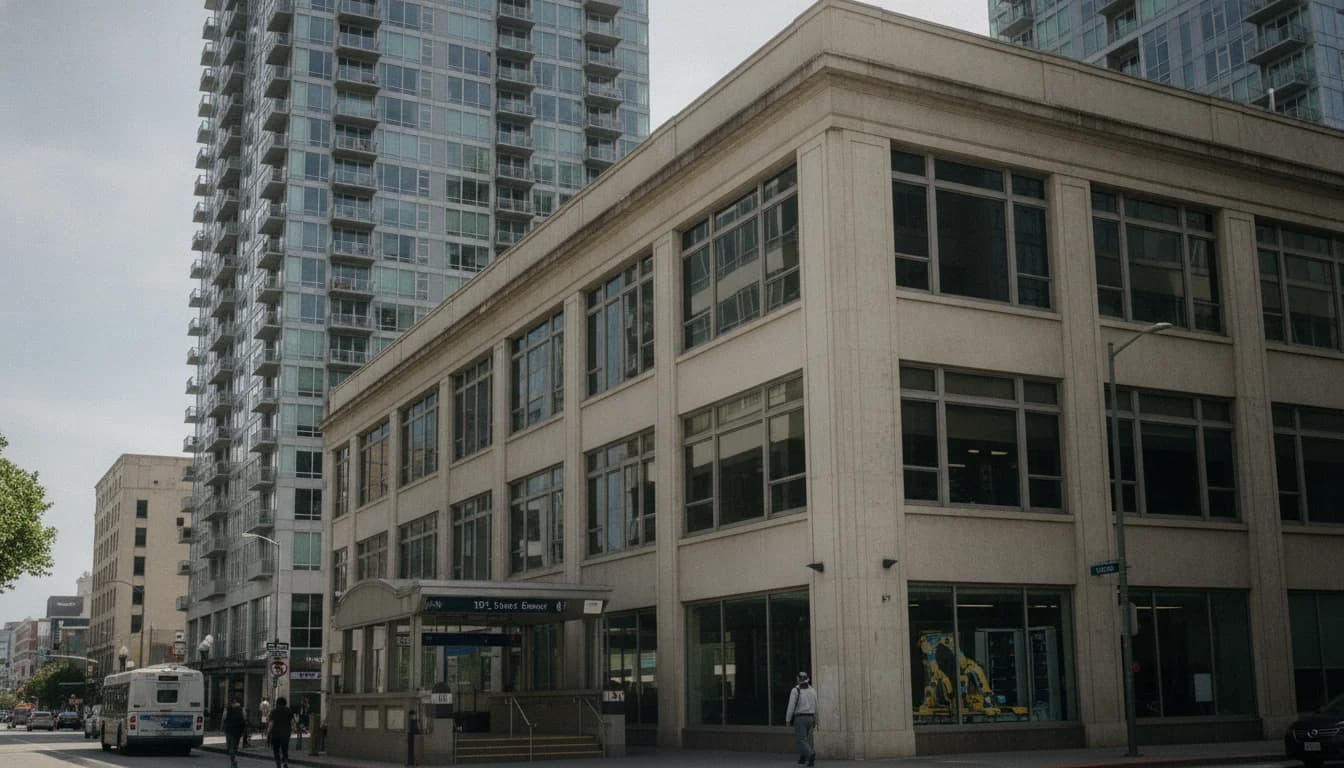
Downtown Oakland is again in the national spotlight as Behring Companies unveiled an AI campus concept centered on a data center at 415 20th Street. The project, described as part of a broader Uptown Oakland campus, would redeploy a four-story, roughly 83,000-square-foot building that previously housed Lawrence Berkeley National Laboratory’s Oakland Scientific Facility. The plan includes a dedicated data center footprint of about 20,000 square feet within the ground floor, while the remainder of the structure would support Behring’s expanding AI and innovation ecosystem. Behring’s announcement has immediately energized conversations about how Oakland can balance cutting-edge technology infrastructure with neighborhood livability and energy considerations. Behring's Oakland AI data center proposal is the latest example of the Bay Area’s ongoing scrutiny of AI hardware facilities and their urban footprints, and it has prompted both praise for potential economic benefits and concern over energy and water usage, noise, and aesthetic impact. According to Behring’s August 14, 2026 press conference, as reported by KQED, the campus design would integrate data infrastructure with office and residential components within a single, walkable district. (kqed.org) (bizjournals.com)
Behring Companies plans to convert the former Lawrence Berkeley National Laboratory Oakland Scientific Facility at 415 20th Street into an AI-focused data center with up to 20 megawatts of computing capacity in an 83,000-square-foot building, according to Behring's Aug. 14, 2026 press conference, as reported by KQED. The site, located in downtown Oakland, is part of Behring’s broader Uptown Oakland campus strategy that leverages multiple adjacent properties to create an integrated live-work-play-tech environment. The four-story facility was historically associated with NERSC operations at LBNL, a detail Behring highlighted as it framed the project as a continuity of a long-running high-performance computing hub rather than a new, isolated data center. The company acquired the building in December 2025 and has described the plan as repositioning the space to support “AI and robotics” workloads within a connected campus. These boundaries—historic power infrastructure, proximity to transit, and a mixed-use vision—are central to how Oakland officials and residents are evaluating the project. (datacenterdynamics.com)
Section 1: What Happened
Announcement specifics and site
- The proposal centers on 415 20th Street, a four-story building that Behring acquired in December 2025. The site is described as part of an “innovation campus” that includes office, residential, and parking components arranged to support AI and other advanced technologies. Public reporting indicates the data center portion would occupy about 20,000 square feet on the ground floor, with the remainder of the building and the adjacent parcels contributing to the campus’s mixed-use footprint. Behring’s communication frames the project as adding high-performance computing capability in a walkable, transit-accessible setting near Oakland’s 19th Street BART station. (bizjournals.com)
Timeline and regulatory steps
- The Behring team publicly disclosed the project in August 2026, with a press event at the 415 20th Street site on August 14, 2026, and reporting on the plan following shortly thereafter. Local media noted that city staff had received Behring’s proposal in the preceding week as part of the early-stage review process, laying the groundwork for potential planning and zoning considerations as the project moves through the city’s review channels. A related timeline element emphasized that the site’s power capacity—historically supporting up to 20 megawatts—fits the targeted AI compute use case described by Behring. The reporting also highlighted that Behring’s framing distinguishes the project from traditional data centers by embedding it within a broader innovation campus, a nuance that will be relevant for any regulatory framing. (kqed.org)
Public and political reactions
- Reactions have been mixed and reflective of Oakland’s broader experience with ai data-center proposals. Supporters point to potential revitalization of downtown and the creation of high-skill jobs through the campus ecosystem, while opponents raise concerns about energy demand, water usage, noise, and possible environmental or aesthetic impacts. The plan has drawn attention from city council members and labor and community groups, with ongoing dialogue about what responsible AI development looks like in a dense, urban setting. In the coverage, Behring’s leadership emphasized that this project is not a “mega-facility,” and council members stressed the need for clear standards to guide AI deployments in the city. (kqed.org)
Section 2: Why It Matters
Economic and employment implications
- Behring’s projection of a sizable data-center footprint within the Uptown Oakland campus has immediate implications for the local economy. The site’s 20-megawatt capacity suggests a substantial compute capability, which could attract AI and robotics tenants seeking proximity to research ecosystems and a transit-rich urban core. Local reporting indicates the broader plan contemplates job creation tied to both the data center and ancillary campus activities, with Behring positioning the project as a driver for related business activity across surrounding storefronts and service sectors. While Behring has offered optimistic job-creation figures in public remarks, observers are likely to weigh these projections against the city’s capacity to provide the needed infrastructure and the community’s concerns about displacement and quality-of-life changes. (datacenterdynamics.com)
Urban development and infrastructure implications
- The proposed site’s downtown Oakland location is intentionally proximate to transit and residential/office growth in Uptown Oakland. The data-center footprint occupying ground-floor space in a building that also hosts office and residential components aligns with a growing trend to cluster compute infrastructure near transportation hubs to reduce transit and logistics frictions for high-velocity AI workloads. The multi-building campus concept—comprised of 415 20th Street and adjacent properties—reflects a strategy to distribute ancillary activities (housing, offices, lab/innovation spaces) across a compact footprint, potentially enabling synergies with nearby retail and services. City reviewers will likely scrutinize how this density interacts with traffic, utilities, and flood or heat-minking concerns, as well as how it aligns with downtown Oakland’s broader planning objectives. (bizjournals.com)
Policy and governance context
- Oakland’s regulatory framework and public policy environment are shaping the contours of this proposal. The city has been active in exploring AI use cases and partnerships through formal channels such as the City of Oakland’s information-technology initiatives and requests for AI use-case pilots, signaling a cautious, structured approach to AI deployments that intersect with public services and utilities. The presence of a formal city process for reviewing development proposals—paired with public commentary about responsible AI and environmental safeguards—suggests this project will be evaluated within a broader policy context that seeks to balance innovation with resident protections and infrastructure resilience. (oaklandca.gov)
Section 3: What’s Next
Next steps for Behring and the city
- With the August 2026 disclosures, Behring and Oakland city staff will likely move into a more formal planning phase. Key next steps typically include refining the campus design, conducting environmental and infrastructure reviews, and presenting the project to relevant planning commissions or city council committees. Observers will be watching for updates on zoning conformance, traffic studies, energy/water-use plans, and neighborhood engagement efforts. The primary public-facing challenge will be translating the innovation-campus narrative into concrete regulatory recommendations and measurable safeguards for community well-being. Behring’s leadership and city staff have signaled a willingness to engage with residents and to develop policies around responsible AI use as part of the evolving framework. (kqed.org)
What readers should watch for
- In the weeks ahead, readers should monitor city planning communications for PLN20042-related materials and any amended project descriptions that specify the data-center footprint, power upgrades, or site-access considerations. Local coverage suggests that public meetings may address environmental and energy-use questions, as well as how the campus will integrate with BART access and nearby neighborhoods. Watch for statements from city officials detailing the criteria that will govern AI deployment within the campus, as well as any community briefings that outline safeguards for noise, water efficiency, and flood mitigation in an urban setting. The City of Oakland has documented a formal approach to AI pilots and use cases, underscoring that any AI-instantiated infrastructure in the public realm will be subject to scrutiny and accountability measures. (oaklandca.gov)
Closing
Oakland’s emergence as a test case for AI-driven campus concepts underscores a broader moment in which forward-looking technology projects intersect with urban planning, resident concerns, and public policy. The Behring proposal at 415 20th Street, anchored by a 20-megawatt data-center footprint within an 83,000-square-foot building, stands as a concrete example of how cities are attempting to curate AI infrastructure—balancing the promise of high-skill job creation and innovation with the need for environmental safeguards and community voices. As the city moves through its review processes, observers will look for clear, evidence-based assessments of how this and similar projects fit into Oakland’s long-term strategy for sustainable growth, reliable utilities, and vibrant neighborhoods.
Readers who want to stay updated can follow official Oakland planning notices, Behring’s public disclosures, and independent reporting from neutral outlets that cover technology infrastructure and urban policy. This story will continue to evolve as regulators, residents, and developers engage in constructive dialogue about the future of AI-driven workplaces within dense urban cores.
References and context
- 415 20th Street site background and campus concept: Behring’s 415 20th Street page and related campus materials; Groundwork’s innovation-campus listing; coverage by the San Francisco Business Times detailing the downtown Oakland transformation plans. (41520thst.com)
- Former LBNL facility and announced capacity: DatacenterDynamics report (Aug. 12, 2026) and KQED reporting (Aug. 15, 2026) detailing the 20 MW capacity and the data-center footprint. (datacenterdynamics.com)
- Public and regulatory context: City of Oakland RFI on AI Use Case Pilots and PLN-related staff memos and attachments that provide the governance framework for AI-related infrastructure in Oakland. (oaklandca.gov)