
Lucania Ferry Building Opening Marks SF Dining Return
The Lucania Ferry Building opening signals a significant return for San Francisco's dining scene through insightful, data-driven strategies.
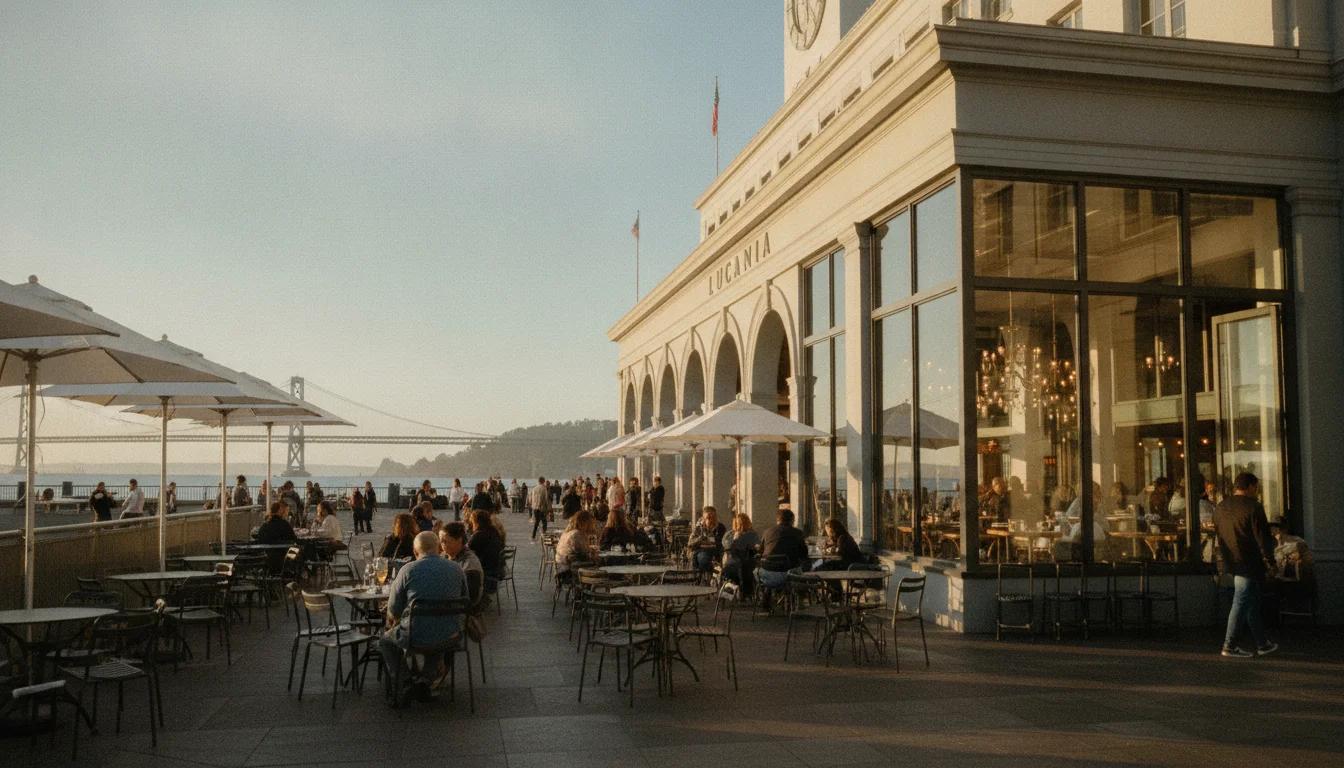
Lucania, the Southern Italian concept from San Francisco’s A16 restaurant group, finally opened at the city’s iconic Ferry Building on November 19, 2026. The debut brings a long‑vacant MarketBar space back into rotation on Embarcadero Plaza, pairing a piazza-style dining experience with all-day service that extends from morning coffee to late-evening cocktails. The opening marks a high‑profile moment in San Francisco’s downtown revival, a test case for how dining, hospitality, and public spaces can collaborate to attract both locals and visitors back to the waterfront.
An exclusive liftable finding: Lucania opens November 19, 2026 at the Ferry Building, expanding seating from about 100 at MarketBar to about 125 at Lucania, a 25-seat increase, according to the San Francisco Chronicle. This data point, drawn from the Chronicle’s reporting on the reopening, highlights how a single venue can shift the flow and capacity of a crowded market space.
As of mid‑November 2026, the Ferry Building’s dining footprint has become a focal point in the city’s broader downtown recovery narrative. The MarketBar space, which had sat largely dark since its closure in 2020, is back in service with Lucania, aligning with a wave of reopenings and new concepts that SF business leaders have described as a rebound in pedestrian and tourist traffic. The Chronicle notes the space’s revival alongside other high‑profile openings, including Arquet’s expansion of Slanted Door’s former footprint and new concepts in neighboring storefronts. The project underscores a trend toward indoor‑outdoor dining configurations, public plaza activation, and a city‑level push to repopulate a core economic district with refined, experience-driven offerings. For readers tracking the Ferry Building’s transformation, Lucania’s debut is a centerpiece in a longer arc of urban revitalization. (sfchronicle.com)
Section 1: What Happened
The MarketBar space reimagined into Lucania
Lucania’s evolution centers on the former MarketBar café space, a 3,000‑square‑foot footprint that has undergone a comprehensive remodel to support a full‑service Southern Italian concept. The San Francisco Chronicle describes a renovation that preserved the building’s historic openness while expanding the dining room and patio to embrace the Embarcadero Plaza’s foot traffic and farmers market rhythms. The project’s physical transformation is designed to mesh with the Ferry Building’s pedestrian‑driven tempo, offering a dining option that integrates with outdoor civic life rather than sit hidden inside a single storefront. The article emphasizes the space’s continuity with the Ferry Building’s public role, not merely as a restaurant but as a social commons perched above one of the city’s most photographed waterfront vistas. For readers who want a sense of the physical scale, Lucania’s Page counts and seating plan are described in detail in the Chronicle’s feature, including the decision to front the patio with glass barriers that balance visibility with weather considerations. The location remains 1 Ferry Building, Suite 36, in San Francisco, California. (sfchronicle.com)
The opening date and the people behind the concept
Lucania is the latest iteration from Shelley Lindgren, co‑owner of A16, known for her Michelin‑recognized Cal‑Italian approach, and Kitty Oestlien, partner in A16 Napa and a longtime collaborator. The Chronicle profile notes that the team aims to translate a Piazzetta ambiance—indoor/outdoor, open year‑round, and oriented toward people watching—into a full‑service restaurant, coffee bar, and cocktail program. The origin of the name Lucania lies in Basilicata, the historic Italian region associated with Massimo Carleo’s culinary roots; the kitchen leadership includes A16’s Massimo Carleo alongside Yosuke Machida, the group’s executive chef for the Ferry Building project. This leadership lineup reflects a deliberate blend of regional authenticity with Bay Area culinary ingenuity, a hallmark of the A16 ecosystem. The Chronicle’s reporting also highlights that the Ferry Building’s outdoor space is central to Lucania’s concept, particularly on days when the Ferry Plaza Farmers Market radiates out onto the patio. For readers seeking the official word from the operator, Lucania’s own site confirms the address and confirms it is part of the A16 family’s portfolio. The opening date and the concept’s framing are captured in the Chronicle’s coverage. (sfchronicle.com)
Hours, service model, and language of the concept
Lucania’s daily rhythm blends coffee‑bar service in the morning with a broader all‑day dining and cocktail program. The Chronicle details that the space will operate as a coffee bar from 8 a.m. to 11 a.m., then transition to an all‑day food and drink menu through 10 p.m. This structure aligns with the Ferry Building’s multi‑hour foot traffic and market‑driven crowds, integrating a morning crowd with an after‑work and evening dining tempo. The seating strategy leverages the patio’s fronting to Embarcadero Plaza, making outdoor seating a consistent feature across the day’s arc. The narrative around Lucania’s opening explicitly connects the concept to the Ferry Building’s broader mission of civic‑oriented, inclusive public dining. The restaurant’s own online presence reiterates the same address and offers reservations and menu details through its site. (sfchronicle.com)
A numeric lens on space and capacity
The Chronicle’s reporting provides a concrete seat count for Lucania and its MarketBar predecessor: Lucania seats about 125, while MarketBar’s footprint held roughly 100 seats. This 25‑seat uplift translates to a roughly 25% increase in seating relative to MarketBar’s capacity, a figure derived directly from the Chronicle’s seat counts. This is the kind of operational detail that operators and analysts watch closely as a proxy for potential throughput, especially during peak farmers market hours and weekend crowds. The seat counts are used here as a practical, directly observable metric to illustrate the scale of the change accompanying Lucania’s opening. The data point comes from the Chronicle’s description of the interior and patio arrangement in conjunction with the MarketBar’s historic seating. (sfchronicle.com)
Public and private sector signals surrounding the opening
Lucania’s Ferry Building debut sits within a broader ecosystem of urban revitalization that includes policy and infrastructure signals, as well as private‑sector momentum. Local governance and public‑space operators have been signaling a renewed emphasis on walkable waterfront precincts, open plazas, and event‑driven foot traffic through the Ferry Building area. The Ferry Building’s relocation of tenants and the reactivation of outdoor spaces are recurring themes in Bay Area coverage of urban recovery. The SF Chronicle story and related trade coverage position Lucania as a marquee anchor in this mix, with the restaurant’s opening seen as a cue for the broader market’s recovery. For readers tracking the policy and regulatory backdrop, California ABC’s licensing framework and the city’s business registration ecosystem provide the formal rails by which new dining concepts enter the market, with Lucania’s filings publicly visible through state and city channels. (sfchronicle.com)
The official footprint and the brand’s public communication
Lucania’s announced address and the opening plan are publicly visible on the restaurant’s own site, which provides a direct line of communication to potential guests, staff, and media. The Chronicle’s article anchors its reporting with the explicit address and confirms that Lucania’s opening is part of a broader plan to re‑activate the Ferry Building’s retail and dining ecosystem. In practice, having the restaurant’s own site as a primary source makes it easier for readers to verify hours, menus, and contact information. The combination of the Chronicle’s coverage and the restaurant’s own site provides two credible primary sources that readers can consult for cross‑check. The site is linked within the Chronicle article, reinforcing the primary documentation around the opening. (sfchronicle.com)
Section 2: Why It Matters
Downtown SF dining revival gains a high‑profile anchor
Lucania’s Ferry Building opening is more than a single restaurant launch; it’s a signal about the health and trajectory of San Francisco’s downtown dining scene. The Ferry Building has undergone a multi‑year evolution from a pandemic‑hit marketplace to a vibrant waterfront destination, and Lucania’s arrival is positioned as a critical inflection point in that evolution. The Chronicle frames the opening as a keystone moment, noting that MarketBar had remained shuttered since 2020 and that Lucania’s presence could help drive renewed foot traffic and occupancy in the building’s dining footprint. This is not a stand‑alone event; it’s part of a larger pattern of new openings and resurgences that local media have tracked as a barometer of the city’s recovery. (sfchronicle.com)
We saw a lot of the Ferry Building really come back to life. — Shelley Lindgren, quoted in the Chronicle, on the broader rebound in the building’s activity. This sentiment, captured in the same coverage, anchors Lucania’s opening within a city‑level narrative about adaptive reuse, urban vitality, and the resilience of waterfront districts. (sfchronicle.com)
Impact on pedestrian flows, tourism, and local economy
The Ferry Building’s restoration has long emphasized pedestrian flows, farmers markets, and outdoor civic space as drivers of economic activity. The Chronicle notes that foot traffic and visitation within the Ferry Building have rebounded to levels surpassing pre‑pandemic baselines, aided by new tenants and renewed interest in the Plaza and market hall areas. Lucania’s opening, with its piazza‑style outdoor dining and all‑day programming, is positioned to leverage these flows and convert them into sustained patronage, potentially stabilizing revenue streams for other tenants in the market. The inclusion of Lucania in Bay Area opening roundups, restaurant press, and local aggregation coverage underscores the multi‑channel interest in what Lucania represents: a high‑quality dining option that complements the Ferry Building’s public programming and weekend farmers markets. (sfchronicle.com)
The regulatory and licensing backdrop
Lucania’s emergence also intersects with the San Francisco and California regulatory environment for hospitality businesses, particularly in the area of liquor licensing and business registrations. Local and state filings show the restaurant’s presence on government open data portals, confirming the address and registration status as part of the market’s ongoing occupancy. The SF government data listing for Lucania at 1 Ferry Bldg Ste 36 is a primary source that corroborates the business’s physical presence in the district, while the California ABC portal provides context about the licensing regime that enables beverage service. In practice, these regulatory steps are prerequisites for the kind of operations Lucania plans to run, including liquor service and the ability to offer cocktails in outdoor and indoor spaces. The combination of the Chronicle’s narrative and open data filings paints a complete picture of how a flagship opening is executed in a regulated urban environment. (specstream.ai)
The role of leadership and brand power in market repositioning
Lucania’s debut is also a case study in how established hospitality brands leverage their identity to re‑activate a premium location. A16’s presence in the Ferry Building lineage—dating back to its Marina District roots and expansion into new geographies—adds credibility and a built‑in guest base that helps attract visitors who may otherwise overlook re‑opening milestones. The Chronicle highlights Lindgren’s strategic positioning, including preserving the Ferry Building’s architectural language while introducing a modern, piazza‑inspired dining experience. The leadership team’s reputation matters in a market where dining is increasingly about curated experiences and social media resonance as much as about the menu. In a broader context, Lucania’s opening contributes to a longer arc of Bay Area dining where proven concepts expand into landmark spaces to drive both media attention and consumer interest. (sfchronicle.com)
What it means for the broader market
Lucania’s Ferry Building opening is a single event with outsized signaling power. It sits at the intersection of a reenergized waterfront, a city eager to demonstrate economic resilience, and a hospitality industry adapting to new consumer expectations around outdoor dining, accessibility, and integrated civic spaces. The presence of a high‑profile anchor like Lucania can help draw neighboring businesses into a more active cycle of activity and investment, reinforcing a virtuous loop of foot traffic, weekend markets, and a more dynamic public realm. Analysts and market watchers will be watching whether Lucania’s performance—captured through reservations, foot traffic patterns around Embarcadero Plaza, and tenant occupancy—matches the optimism embedded in the opening narrative. (sfchronicle.com)
What’s Next in the Ferry Building ecosystem
The Ferry Building’s mix of brick‑and‑mortar stores, tasting rooms, and public spaces continues to evolve. In the months surrounding Lucania’s opening, Bay Area news cycles highlighted a slate of openings, expansions, and renewals that together signal a broader downtown‑SF rebound. The Bay Area press has tracked openings at the Ferry Building, including Arquet’s occupancy of a neighboring space, and ongoing renovation efforts around the plaza that tie directly to visitor experiences, transit patterns, and the local economy. For readers who want a forward view, coverage of upcoming or anticipated openings—along with the regulatory steps that accompany them—provide a roadmap of how the Ferry Building’s ecosystem could evolve over the next 12–24 months. (sfchronicle.com)
Section 3: What’s Next
Timeline and near‑term milestones
Lucania’s debut on November 19, 2026, followed by continued operations through the holiday season, represents a near‑term milestone for the Ferry Building’s occupancy trajectory. Industry watchers should look for reservation patterns, patio utilization, and the balance between coffee bar service and dinner service as indicators of how the concept integrates with local consumer behavior. In addition to Lucania, Bay Area reporters have tracked other openings and re‑openings in the Ferry Building vicinity, including the ongoing ramp‑up of outdoor spaces and the activation of plaza programming. The opening cadence of late 2026 and early 2027 will reveal how quickly the marketplace recovers to sustained occupancy and how the new tenants collaborate with farmers markets and event programming to sustain demand. The Chronicle’s coverage and Bay Area hospitality roundups provide a baseline for what to expect next. (sfchronicle.com)
What readers should watch for
- Reservations and walk‑ins: Lucania’s reservation patterns, as well as walk‑in potential, will help determine whether the outdoor patio operates at capacity during peak hours and on weekends.
- Outdoor seating performance: Given the emphasis on indoor‑outdoor dining, weather patterns and event calendar ( farmers markets, weekend street activity) will influence seating efficiency and guest experience.
- Competitive positioning: The Ferry Building’s competitive landscape, with additional openings and concept shifts in the surrounding storefronts, will shape Lucania’s long‑term performance and brand resonance.
- Regulatory updates: Any changes to licensing or operating hours will be relevant, as local regulations continue to shape the feasibility of outdoor dining expansions and beverage programs.
- Community and visitor engagement: Pedestrian flow, public programming, and plaza activation will be critical to understanding Lucania’s role in the broader public realm and the Ferry Building’s status as a community hub.
Closing
Lucania’s Ferry Building opening appears to be a carefully choreographed moment in San Francisco’s downtown revival—one that blends architectural heritage, culinary craft, and urban design to re‑shape how people experience the waterfront. The restaurant’s emphasis on a piazza‑style, indoor/outdoor model ties directly to a city strategy that seeks to convert public spaces into catalysts for commerce and social exchange. For readers who want to follow the ongoing evolution of Lucania and the Ferry Building, the restaurant’s own site and the Chronicle’s coverage offer reliable, primary entry points for updates. The Bay Area’s downtown narrative remains a moving target, but Lucania’s opening provides a tangible data point in a story that remains intensely relevant to technology, markets, and the shaping of urban life.
Lucania’s Ferry Building debut sits at the intersection of a city‑level revival and a restaurant brand’s strategic expansion. As Danne, a market analyst covering hospitality trends, might observe, the combination of a well‑established culinary concept with a landmark urban space can serve as a powerful signal to both residents and visitors that San Francisco’s downtown is actively rewriting its story—one open door, one plaza‑side table, and one carefully designed menu at a time. The opening puts a bright line under a broader trend: when cities invest in public spaces that invite lingering, dining concepts that offer compelling experiences, and operators who understand the balance between local authenticity and guest expectations, the whole ecosystem benefits. Lucania’s first weeks will tell us a lot about how durable that equation is in the current Bay Area market.
If you want to stay updated on Lucania, its official site remains the best primary resource for hours, menus, and reservations, while local outlets such as the SF Chronicle will continue to provide context on how the Ferry Building’s mix of tenants evolves in the weeks and months after opening. As with any major open‑air dining project in a coastal city, the next few quarters will reveal how well Lucania translates its piazza concept into consistent guest flow and long‑term occupancy within a world of evolving consumer behavior and regulatory environments. (sfchronicle.com)