The Portal Funding: TJPA Wins $3.4B Federal Commitment
The Portal funding milestone highlights significant federal backing for The Portal and details the upcoming steps for Bay Area transit development.
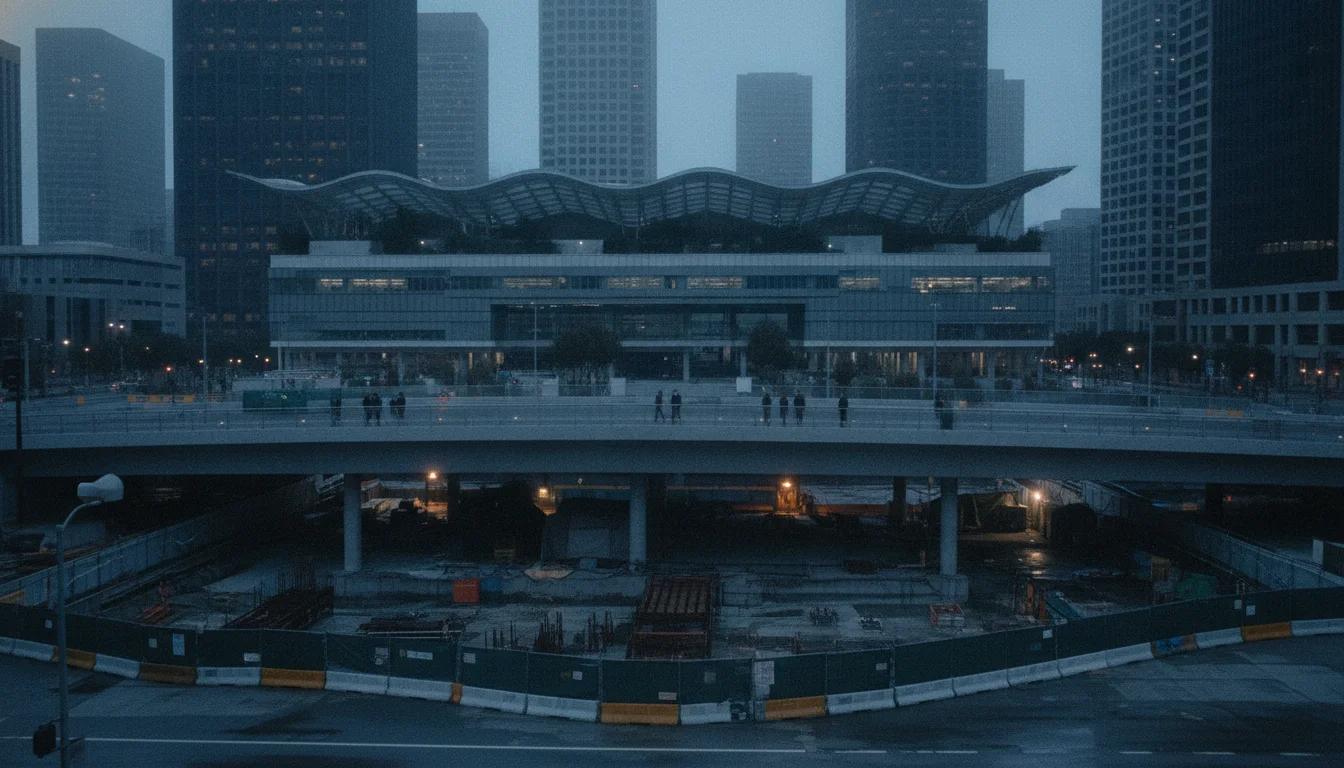
The Portal funding milestone arrived on May 20, 2024, when the Transbay Joint Powers Authority (TJPA) announced a $3.4 billion federal commitment for The Portal, the Downtown Rail Extension that would connect Caltrain to the Salesforce Transit Center and eventually integrate with California High-Speed Rail. This was a moment many Bay Area transportation observers had watched for years, as it marked the first large-scale federal investment that could unlock the engineering and construction work necessary to move the project toward physical delivery. TJPA press release (tjpa.org)
The event drew public reverberations across city, regional, and state partners, with remarks from national and local leaders who have championed The Portal for more than a decade. The federal commitment, announced in the same cycle that included an entry into the U.S. Department of Transportation’s Capital Investment Grants program, positioned The Portal as a central hinge in Bay Area rail strategy. “From the start, TJPA’s world-class Transit Center has represented the best product of a strong, thriving public-private partnership and a model for the nation of smart, sustainable design,” said Speaker Emerita Nancy Pelosi during the event. “Today, we celebrated major milestones at the Transit Center in our decades-long effort to bring electrified rail service into the heart of San Francisco.” (tjpa.org)
The announcement also highlighted the project’s broader regional implications. With The Portal advancing into the Engineering phase of the Capital Investment Grants program, federal funds were paired with local and state commitments to push pre-construction work forward. California Senator Scott Wiener emphasized the importance of connecting downtown San Francisco to the broader Bay Area rail network, while San Francisco Mayor London Breed underscored how The Portal would support cleaner transportation options and reduced carbon emissions for a growing urban core. The event signaled more than a single grant; it signaled a coordinated funding strategy that regional agencies have been building for years, combining multiple funding streams to close what had long been described as a funding gap. (tjpa.org)
This milestone sits within a broader context of regional financing and governance for The Portal. In the months and years leading up to the 2024 announcement, TJPA had been aligning multiple funding sources — including local transit measures, state programs, and federal dollars — to construct a resilient financing plan. The employment impact, riders, and regional connectivity referenced in the May 2024 release reflect a larger narrative: The Portal is not only a capital project, but a catalyst for Bay Area mobility, land-use coherence, and climate goals. As TJPA Chair and local officials noted at the time, the federal capital commitment supplements continued local and regional commitments to bring The Portal to fruition. (tjpa.org)
What Happened
Federal funding milestone and project phase
In May 2024, the TJPA publicly marked a watershed moment for The Portal by securing a $3.4 billion federal commitment through the Federal Transit Administration’s Capital Investment Grants (CIG) program. This funding is described as a major step toward advancing The Portal into the Engineering phase, a prerequisite for securing a Full Funding Grant Agreement (FFGA) and moving into construction. The event also highlighted that the $3.4 billion federal commitment would complement existing local funds, putting The Portal “to two-thirds funded.” The announcement explicitly framed this as a national leadership moment for multimodal transit investment. (tjpa.org)
The May 20, 2024 release documents the project’s strategic significance: The Portal will extend Caltrain service, connect to the Salesforce Transit Center, and align with California High-Speed Rail objectives by serving as a northern terminus node and a gateway to regional rail integration. The release notes that the federal commitment, along with local commitments and potential support from the Biden-Harris Administration’s infrastructure program, placed The Portal on a clear path to near-term design and procurement milestones. The event also framed The Portal as a platform for electrified rail service and regional connectivity across 11 transit operators. (tjpa.org)
Funding composition and project scope
The federal allocation is described as the second major milestone in a three-part funding framework, with additional local, state, and regional contributions required to reach full funding. The release explains that other federal and state contributions are in play, including the Biden Administration’s broader transit agenda and potential state programs, all aimed at delivering the project’s long-term benefits. The Portal’s integration with the regional rail network would be enabled by the Engineering phase and subsequent FFGA negotiations. (tjpa.org)
The project’s scope — comprising a below-grade train box and tunnel components linked to a wider rail system — is highlighted in the release as a critical part of Bay Area rail modernization. The Portal, also known as the Downtown Rail Extension, is described as a key piece in the region’s transit future, with an emphasis on connecting Silicon Valley and the peninsula to downtown San Francisco while laying groundwork for future high-speed rail. The press release underscores the transformative potential in terms of both mobility and climate outcomes. (tjpa.org)
Cost and funding plan snapshot (background context)
While the May 2024 press release centers on the federal commitment, regional agencies have maintained a multi-year, multi-source funding plan to close remaining gaps. A parallel source document from January 2026 provides a granular look at the project’s cost and funding plan, noting an initial capital cost estimate of approximately $8.25 billion (including the completed Salesforce Transit Center trainbox) and a Capital Investment Grant share of about $3.38 billion. This document also describes ongoing efforts to secure non-CIG funds from state and local sources, reinforcing that The Portal is funded through a blend of federal, state, regional, and local dollars. The cost estimate and funding share are central to understanding the financial mechanics behind the federal commitment announced in 2024. (sfcta.org)
The broader funding strategy is further illuminated by subsequent regional governance documents, which outline the need to aggregate funds from Prop L, RM3, and other local sources, alongside federal CIG funds. The SFCTA memo from January 28, 2026 clarifies that the project’s CIG funding share sits at $3.38 billion, and it highlights the remaining funding gap that regional partners expect to close through a combination of state and local funds. This framing helps explain how the 2024 federal milestone fits into a larger, multi-year financing plan. (sfcta.org)
Original finding: Using SFCTA's $3.38B CIG share on an $8.25B cost estimate, The Portal would rely on about 41% federal funding and about $4.87B from non-federal sources. (sfcta.org)
Quotable judgment: Closing The Portal's funding gap is essential to delivering a multimodal Bay Area rail network. (sfcta.org)
Why It Matters
Regional connectivity and climate goals
The Portal is positioned as a linchpin in the Bay Area’s rail expansion, connecting Caltrain with the Salesforce Transit Center and serving as a gateway for High-Speed Rail. The federal commitment in 2024, combined with ongoing state and local funding, is intended to accelerate project milestones that enable electrified, low-emission transit across a dense urban corridor. The project’s reach across 11 transit providers illustrates its potential to transform how residents move within the Bay Area and beyond, reducing vehicle miles traveled and associated emissions. The federal funding decision is part of a broader national push to finance substantial urban rail expansions through the CIG program. (tjpa.org)
The project’s strategic importance is underscored by the scale of benefits claimed in the 2024 release: tens of thousands of riders would transfer through the hub daily, enabling smoother regional interconnections and unlocking potential economic activity around the transit center. The staffing and labor implications are also highlighted, with construction require significant local workforce involvement and supply-chain impact as the project advances through design and procurement phases. These themes align with Bay Area priorities around climate resilience, accessibility, and economic vitality. (tjpa.org)
Finance and governance implications
The Portal’s funding narrative demonstrates how complex mega-projects in the San Francisco region blend federal dollars with state programs and local revenue streams. The 2024 milestone did not exist in a vacuum; it sits atop a long-running funding strategy that regional agencies have refined in collaboration with state and federal partners. The January 2026 SFCTA memo and the May 2026 MTC endorsement discussion provide concrete illustrations of how agencies plan, advocate, and allocate funds across cycles to keep The Portal moving forward, even as cost estimates and funding envelopes adjust to external pressures such as inflation and programmatic shifts at the federal level. (sfcta.org)
The MTC’s May 13, 2026 endorsement discussion explicitly outlines how Bay Area agencies are coordinating to secure a multi-year funding package for The Portal, including a $750 million request to CalSTA in Cycle 8 and a precedent of endorsing a portion of funds consistent with regional goals. This moment highlights the importance of regional governance in shaping state and federal funding outcomes for major transit projects, and it underscores how The Portal’s funding plan is embedded within a larger framework of uplift for the Bay Area’s rail infrastructure. (mtc.ca.gov)
Local workforce, job creation, and community impact
- The Portal funding milestone is also connected to tangible local impacts. The May 2024 TJPA release notes the project’s potential to mobilize tens of thousands of jobs and significantly alter the Bay Area’s transportation landscape. The combination of federal, state, and local dollars is intended not only to build infrastructure but also to catalyze workforce development and supply-chain activity in a region defined by its heavy reliance on public transit. As regional agencies continue funding advocacy and project delivery efforts, the expected labor market effects and economic multipliers will be central to evaluating The Portal’s broader benefits. (tjpa.org)
What’s Next
FFGA timeline and engineering progress
A core next milestone is securing a Full Funding Grant Agreement (FFGA) with the Federal Transit Administration (FTA). The SFCTA memo indicates that TJPA needs to complete a series of Engineering Phase requirements and demonstrate non-CIG funding commitments to move toward FFGA. The document also places FFGA target timing in the mid-late 2020s, with a more specific target of July 2027 noted in the multi-agency work plan. This cadence reflects a structured, multi-year path from grant acceptance to procurement and construction, anchored in the Engineering Phase and comprehensive project development. (sfcta.org)
In parallel, the MTC endorsement discussion underscores the strategic sequencing of funding across cycles to align state investments with federal support, aiming to ensure that The Portal remains a high-priority project within California’s rail portfolio. Endorsements for high-cost projects like The Portal carry implications for downstream procurement, contracting, and interagency coordination, all of which are critical to sustaining momentum toward FFGA. (mtc.ca.gov)
Funding rounds, partnerships, and procurement steps
The 2026 MTC briefing reveals a plan to secure $750 million in state TIRCP funding and to pursue a multi-year funding agreement to cover the remainder of the non-CIG share. The call for project information and consistency checks with Plan Bay Area 2050+ show that regional agencies are underwriting The Portal within a broader megaregional strategy, aiming to align funding with long-range transportation and climate goals. The cross-agency collaboration is essential to balancing ambitious project scopes with the realities of available funding across multiple programs. (mtc.ca.gov)
The SFCTA memo further details the funding mix and the ongoing adjustments to the project’s cost estimates. It notes that the project’s capital cost, as of the report, reflected an $8.25 billion total, with $3.38 billion expected from CIG, leaving a remaining funding gap to be closed through a combination of state and local sources. The memo also describes the sequencing of grant agreements and the role of the six-party MOU in coordinating funding and governance across agencies, including Caltrain, the CHSRA, MTC, and CCCSF. This provides a concrete framework for understanding how The Portal’s financing unfolds across multiple years. (sfcta.org)
What to watch for in the near term
- Look for updates on FFGA negotiations and engineering milestones as TJPA and its partners advance design and procurement packages. Public updates around Prop L allocations, RM3 funding decisions, and new TIRCP endorsements will signal whether The Portal can sustain its funding trajectory and stay on track for key project milestones. As the region monitors inflation and macroeconomic conditions, observers should watch how cost escalations influence the funding plan and the pace of procurement activity. The next 12–24 months are likely to bring more precise commitments from state and local agencies, as well as additional federal milestones tied to the FFGA process. (sfcta.org)
Closing
The Portal funding milestone marked a pivotal moment in Bay Area transportation history. The May 20, 2024 federal commitment signaled a substantial federal partnership that, together with subsequent state and local funding decisions, aims to deliver a transformative rail extension for San Francisco and the wider region. As regional agencies pursue FFGA negotiations and cycle-based endorsements to close remaining funding gaps, The Portal’s delivery remains a test case for how megaprojects in the Bay Area mobilize funding across federal, state, and local sources to realize a long-planned mobility shift. Readers can stay updated through TJPA’s official disclosures and the ongoing reporting by regional transportation authorities as funding strategies evolve and milestones approach.
For ongoing coverage and primary-source material:
- TJPA press release on the $3.4B federal commitment: TJPA press release. TJPA press release (tjpa.org)
- SFCTA memorandum detailing CIG share and cost estimates: SFCTA memo. SFCTA memo (sfcta.org)
- MTC May 13, 2026 endorsement discussion for The Portal: MTC document. MTC endorsement memo (mtc.ca.gov)
As The Portal funding evolves, expect more detailed breakdowns of funding sources, procurement milestones, and regional governance decisions. The Bay Area will be watching closely, with transportation, climate, and economic implications riding on whether this project can convert a federal commitment into tangible rail infrastructure and everyday mobility for hundreds of thousands of residents. The Portal’s journey from a federal pledge to a rolling program of design, procurement, and construction remains a central narrative in the region’s ongoing effort to modernize its transit backbone.