
VTA World Cup Ridership Surges in Bay Area
VTA reported a major ridership increase during the 2026 World Cup matches at Levi's Stadium.
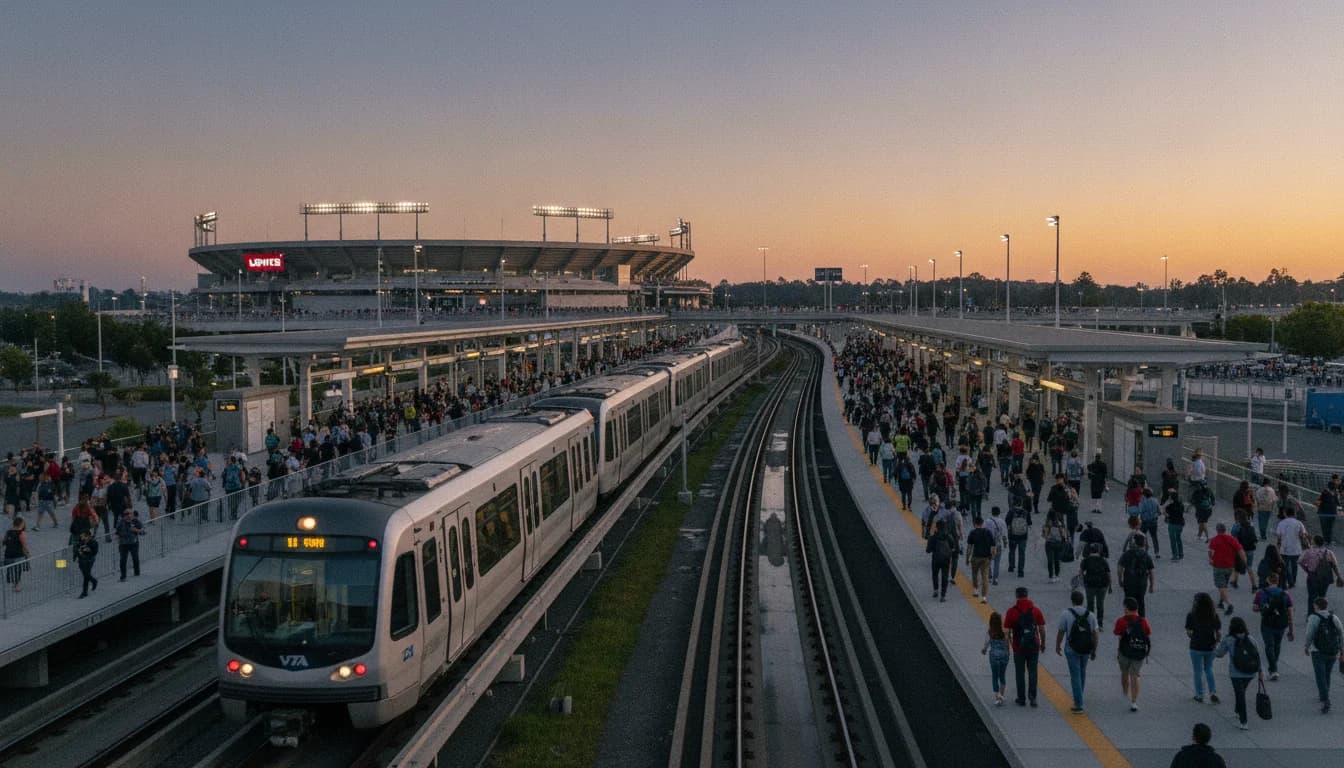
The FIFA World Cup 2026 brought a surge in VTA World Cup ridership as fans converged on Levi’s Stadium and surrounding Bay Area venues. In a tightly coordinated effort with BART, Caltrain, ACE, and Capitol Corridor, transit agencies mobilized thousands of riders to and from nearly a dozen World Cup matches and related events across June and July 2026. The Santa Clara Valley Transportation Authority (VTA) is playing a central role in this regional effort, integrating light rail and feeder services with regional rail to move attendees efficiently while balancing regular weekday service for local riders. Early results indicate a pronounced spike in ridership on match days, underscoring both the region’s appetite for major international events and the logistics required to move large crowds safely and quickly. The headline for readers in the SF Bay Area Times is simple: VTA World Cup ridership surged, alongside a broader Bay Area network, as the World Cup staged games at the Santa Clara venue.
This coverage follows a data-first approach to public transit during a major global event, highlighting what worked, where bottlenecks occurred, and how the Bay Area’s transit ecosystem adapted. Across June and July 2026, the Bay Area hosted six FIFA World Cup matches at the Levi’s Stadium site and hosted fan events throughout the region. The Bay Area’s transit coalition emphasized real-time crowd management, coordinated dispatch, and proactive passenger communications to handle peak flows. As the event unfolded, VTA officials and partners provided regular briefings, sharing numbers on single-day ridership records, overall tournament performance, and the accompanying revenue picture. Readers will find a detailed timeline, context, and forward-looking analysis grounded in official statements and independent reporting. The conversation surrounding VTA World Cup ridership is not just about volume; it’s about how a regional network sustains reliability during a high-profile, high-pressure event.
What Happened
World Cup Event Crowds and Opening Day Traffic
The FIFA World Cup 2026 Bay Area footprint included crowd movements that trialed the capacity and responsiveness of the region’s transit system. On the opening FIFA World Cup match day at Levi’s Stadium, a coordinated network comprising VTA, BART, Caltrain, and other partners moved a substantial number of fans to and from the venue. Independent reporting captured a record-level turnout for that opening match in terms of rail and bus trips tied to the event, underscoring the Bay Area’s willingness to rely on public transit for major sporting events. In particular, Bay Area media and transit blogs noted that the opening matchup generated ridership that exceeded typical weekday volumes, illustrating the scale of participation for World Cup-capable transportation. (blog.bayareametro.gov)
Specific Ridership Milestones by Match Day
As the tournament progressed, VTA and its partners reported multiple single-event ridership milestones during World Cup match days. A Silicon Valley Business Journal report highlighted a single-game ridership figure exceeding 39,500 passenger trips for a World Cup match at Levi’s Stadium, illustrating the extraordinary demand placed on the regional network. That milestone was part of a broader pattern of spike days as fans traveled from across the Bay Area and beyond to attend match events and related fan activities. Another high-water mark documented by SFGate cited 39,592 riders on a Tuesday night match, signaling the high-volume, late-evening travel that World Cup crowds generated in the Bay Area. Taken together, these figures point to a sustained, event-driven uplift in VTA World Cup ridership across several dates in June 2026. (bizjournals.com)
Coordinated Regional Network and Operational Notes
The Bay Area’s World Cup operations were framed as a regional partnership involving VTA, BART, Caltrain, and other rail and bus operators. Reports from Bay Area transit outlets and official agency blogs describe a coordinated approach designed to channel fans efficiently between fan zones, stadiums, and lodging hubs. This collaboration was intended not only to handle peak influx on day-of-game schedules but also to facilitate post-event dispersal within a two-hour “clear-out” window at Levi’s Stadium precincts, a benchmark cited by regional transportation stakeholders. The Bay Area’s network emphasized schedule alignment, cross-agency passenger information, and shared platform and track access to minimize delays and crowding. (blog.bayareametro.gov)
Revenue and Economic Context
Public reporting on the World Cup ridership surge also touched on economic aspects of event-driven transit use. Media coverage and agency briefings noted that even as ridership climbed, fare recovery remained a challenge for a major event of this scale. A data-focused piece from KQED quantified the revenue picture, reporting that net revenue per trip was around a dollar, reflecting the broader funding pressures transit agencies face when operating large-scale event services alongside routine daily operations. This revenue context is important for policymakers evaluating the cost-benefit balance of delivering high-capacity service for World Cup crowds and other large crowds in the Bay Area. (kqed.org)
Real-World Outcomes and Stakeholder Feedback
Multiple outlets captured the real-world outcomes of the World Cup ridership surge, including operational feedback on passenger experience, crowd management, and the end-to-end journey from parking, transit, and the stadium experience. NBC Bay Area documented that World Cup-related transit activity yielded record ridership on certain days and highlighted the resulting wait times and crowding that fans encountered, signaling areas for improvement in future large-event operations. Meanwhile, SFGate’s on-the-ground reporting noted both the high turnout and the friction points that can accompany rapid crowd influx, particularly late in game windows when post-match dispersal dynamics intensify. These reports collectively emphasize that while the Bay Area’s transit coalition achieved notable ridership milestones, there are concrete resilience and service-quality considerations to address as events of this scale recur. (nbcbayarea.com)
A Broader View: Total Tournament Ridership
Beyond individual match-day totals, Bay Area transit analytics have begun to piece together a broader picture of World Cup-related movement. Reports and transit blogs indicate multi-day and multi-agency totals for the tournament, with hundreds of thousands of rider movements estimated across the entire World Cup match window. Although precise, system-wide counts vary by source and methodology, the prevailing narrative across credible outlets and agency communications points to a pronounced uplift in regional public transit usage tied to the World Cup, reinforcing the Bay Area’s role as a major international-event host region when it comes to mobility demand, crowd management practices, and cross-agency coordination. (blog.bayareametro.gov)
Timeline Snapshot: Key Dates and Facts
- June 13, 2026: FIFA World Cup opening match at Levi’s Stadium draws a large crowd; contemporaneous reporting notes substantial transit activity connected to the event. Attendance for that game was recorded at 67,966 at the stadium, underscoring the scale of the spectacle and the corresponding movement of fans via public transit. (bizjournals.com)
- Opening World Cup match day: Reports indicate more than 37,000 passenger trips supported by the coordinated regional network to move fans to and from Levi’s Stadium. This served as a early indicator of the World Cup ridership uplift in the Bay Area. (blog.bayareametro.gov)
- Subsequent match days: Single-game ridership figures climb past 39,000 on several occasions, reflecting sustained demand and the complexity of managing crowds across multiple modes of transportation. (bizjournals.com)
- July 2026 window: Media coverage highlights ongoing ridership growth and operational learnings as the tournament progresses, with transit agencies analyzing crowd flow, dwell times, and after-event dispersal. (nbcbayarea.com)
- In-year context: VTA and Bay Area partners referenced World Cup-related planning in board communications and agency blogs, signaling continued attention to large-event mobility planning beyond the tournament itself. (vta.gov)
Why It Matters: Impact Analysis and Context
Operational Reliability and Crowd Management
The World Cup ridership surge tested the Bay Area’s capacity to deliver reliable service under unusual demand conditions. The coordinated network model—connecting VTA light rail with BART regional rail and Caltrain corridors—demonstrated that a well-aligned, multi-agency approach can move tens of thousands of fans efficiently on peak days. Yet the same coverage also exposed constraints around post-event dispersal and platform crowding, with some reports noting wait times or infrequent services at certain times. The experience offers concrete lessons about scheduling headways, platform readiness, and the value of real-time passenger communications during major events. This is precisely the kind of feedback that Bay Area transit planners will study as they prepare for future high-profile events and as agencies coordinate with local venues and event organizers to optimize staging and routing. (blog.bayareametro.gov)
Economic Implications for Public Transit
Ridership surges during large events can buoy short-term fare revenue but also place strain on long-term budgets and operating budgets. The KQED reporting on revenue per trip illustrates the tension between delivering high-capacity event transit and recovering operating costs in the broader funding environment. VTA and Bay Area transit authorities frequently rely on a mix of fare revenue, regional funding, and policy-driven support to sustain service levels during and after major events. The World Cup scenario provides a live case study for evaluating funding models, fare policy decisions, and capital investments tied to event-driven mobility needs. (kqed.org)
Equity and Access Considerations
Large-scale events like the World Cup highlight equitable access to reliable transit for residents and visitors alike. The Bay Area’s approach—emphasizing cross-agency collaboration, extensive feeder services to venues, and clear passenger information—speaks to a commitment to broad access during peak demand periods. The public discussion around funding measures and ongoing improvements to service reliability will also influence how transit agencies address equity questions, such as affordable fare options, service levels in lower-density neighborhoods, and accessibility for fans with disabilities. While the available reporting centers on rider volumes and operational performance, the underlying policy debates reflect the region’s broader commitment to inclusive mobility as a fundamental public service. (kqed.org)
Comparisons and Regional Context
The Bay Area’s World Cup experience sits within a broader national and international context of transit agencies planning for mega-events. Bay Area outlets and regional blogs consistently positioned VTA, BART, and Caltrain as a collaborative model for event-driven mobility, drawing on the multi-agency approach seen in other major events and sporting spectacles. Authorities noted that this is part of a broader trend in public transportation where event-driven ridership surges require robust coordination, flexible staffing, and adaptive operations. Readers can compare the Bay Area approach with other regions hosting World Cup-related events to understand the strengths and gaps in different mobility ecosystems. (blog.bayareametro.gov)
What It Says About Bay Area Transit Readiness
The World Cup ridership surge in the Bay Area underscores both the region’s capability to marshal a large, multi-modal transit response and the ongoing need to refine post-event dispersal and dwell-time management. The experience aligns with a broader narrative: the Bay Area’s transit system can flex to serve major international events, reinforcing the region’s appeal as a global event host. At the same time, it candidly reveals areas where service refinement and crowd-control improvements can yield smoother conversions from game-day crowds to normal daily travel. In short, VTA World Cup ridership is not just a number; it’s a test bed for mobility resilience and regional collaboration that will influence planning for future events. (nbcbayarea.com)
What’s Next
Ongoing Operations, Scheduling, and Capacity Planning
As the World Cup window closes, VTA and partner agencies will conduct post-event reviews to quantify per-game ridership, peak-hour loads, and queuing dynamics at key transfer points. The focus will be on deriving actionable insights—such as identifying platforms with the highest dwell times, optimizing train headways around game times, and ensuring feeder bus schedules align with rail arrivals for smoother passenger transfers. Agency communications have repeatedly stressed a data-informed posture, leveraging the World Cup as a real-world stress test for scheduling flexibility and inter-agency coordination. Expect detailed after-action reports and public briefings in the weeks following the tournament’s conclusion, with a view toward applying lessons to future large-scale events. (vta.gov)
Funding, Policy, and Long-Run Implications
Public discussion around World Cup-related ridership has touched on funding and policy implications, including the broader economics of fare recovery and capital improvements needed to sustain elevated service levels during major events. For Santa Clara County and the broader Bay Area, 2026 is a pivotal year in which regional agencies may revisit funding mechanisms, capital investments, and service models that balance event-driven demand with day-to-day mobility needs. This is especially relevant as voters consider sales tax measures and policy proposals intended to stabilize transit funding in a fluctuating ridership environment. The KQED reporting and related coverage frame these policy questions as central to sustaining a high-quality transit network capable of hosting marquee events. (kqed.org)
What to Watch For in Subsequent Months
- Updated ridership tallies and per-event breakdowns across additional World Cup matches, with a focus on peak-day performance versus mid-week fixtures.
- Post-event operational reviews by VTA, BART, Caltrain, and other partners to identify bottlenecks and operational successes.
- Public communications from Bay Area transit agencies outlining improvements in crowd management, signage, and real-time passenger information based on World Cup learnings.
- Funding announcements and policy considerations tied to future event readiness and long-term transit sustainability in Santa Clara County and the broader Bay Area.
- Potential schedules and service tweaks designed to realize more seamless cross-agency transfers between Levi’s Stadium access points and adjacent communities.
What's Next: Timeline and Next Steps
Short-Term: Post-Event Analysis
In the weeks immediately after the World Cup matches, VTA and its regional partners are expected to publish a set of after-action assessments detailing per-game ridership, peak loads, and the efficacy of cross-agency transfer hubs. These documents will likely include recommendations for timetable adjustments, platform staffing, and passenger information enhancements to ease crowd dispersal and reduce dwell times. The immediate objective is to translate the event experience into a clearer playbook for future large events in the Bay Area and similar regions. (vta.gov)
Medium-Term: Operational Adjustments
Based on early reviews, agencies may implement adjustments to feeder services, light rail headways, and connections to Levi’s Stadium. This could involve more robust parking lot shuttles, increased service during post-game dispersal windows, and enhanced communications to reduce confusion for fans arriving from different directions. The Bay Area’s track record for rapid adaptation during World Cup-related movements suggests a strong likelihood of targeted improvements in the weeks following the event. (nbcbayarea.com)
Long-Term: Funding and Policy Trajectory
The World Cup ridership narrative is intertwined with funding and policy discussions in the region. With references to potential sales tax measures and ongoing funding debates, the ultimate trajectory for VTA and partner agencies will hinge on the political and voter context in Santa Clara County and neighboring counties. The broader Bay Area transit community will continue to evaluate how event-driven mobility fits within long-range plans for service expansion, capital investment, and fare policy reform. (kqed.org)
Closing
The VTA World Cup ridership story in the Bay Area is a clear example of how a regional transit ecosystem can rise to the challenge of a high-profile, time-bound event. The numbers reported by multiple outlets show a sharp, event-driven increase in demand, with single-match ridership figures approaching or exceeding 39,000 trips on peak days and total World Cup-related transit usage reaching into the hundreds of thousands across the Bay Area network. At the same time, the event’s operational realities—crowd movement, post-event dispersal, and the need for cross-agency coordination—offer valuable lessons for future large-scale events and the ongoing push to strengthen transit reliability and accessibility for all riders. As the Bay Area continues to host major international events and as VTA and its partners translate this experience into lasting upgrades, readers can expect continued updates, data-driven analyses, and balanced assessments of both benefits and challenges. The region’s transportation future—shaped in part by the World Cup—will likely feature stronger collaboration, sharper scheduling, and a renewed focus on equitably accessible mobility for residents and visitors alike. Stay tuned for official post-event analyses and ongoing coverage from the SF Bay Area Times as new data and policy decisions emerge.
The Bay Area’s experience with VTA World Cup ridership demonstrates the potential of public transit to serve as a backbone for regional events, enabling millions of people to participate in a shared, world-class experience while maintaining city life on a normal track. As officials continue to refine operations, the region’s public transportation system is likely to emerge stronger, more connected, and better prepared for the next wave of large events that will inevitably come to California’s Silicon Valley and the wider Bay Area.