
AI Wealth Drives Housing Market Surge in SF Bay Area
The AI boom is significantly impacting the San Francisco Bay Area housing market, with median single-family home prices reaching $2.15 million in March…
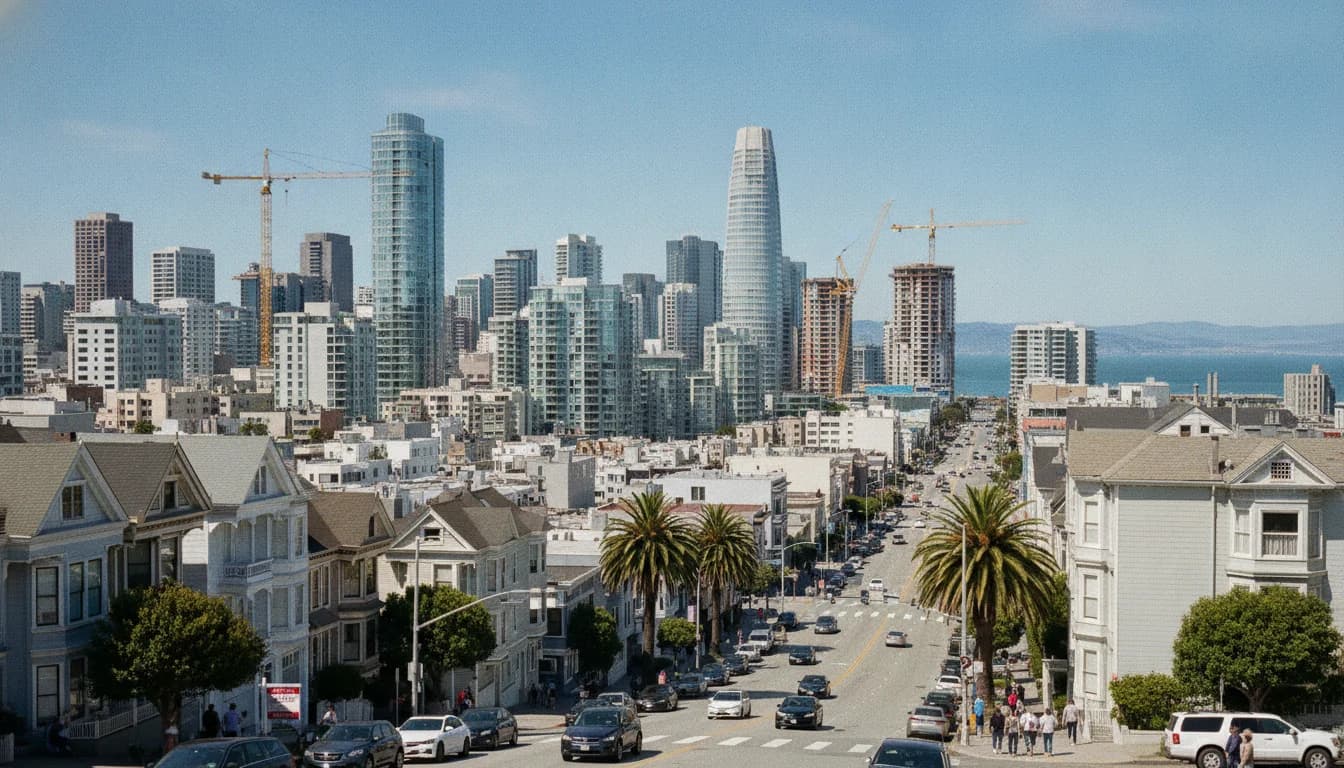
The AI boom is not just changing the technology sector in the San Francisco Bay Area—it is reshaping the region’s housing market in real, measurable ways. On March 23, 2026, San Francisco and surrounding communities watched a clear signal that AI-driven wealth is translating into higher demand for homes, with implications for affordability, supply, and policy responses. As reporters who cover technology and markets for the SF Bay Area Times, we are tracking the phenomenon closely: who is buying, where they are buying, and how policymakers and developers are responding to an environment where wealth generated by AI rivals the cycle seen during prior tech booms. The event is not a single headline but a series of data points, policy moves, and market reactions that together tell a story about the region’s housing future in a data-driven, market-aware way.
AI wealth boom has driven San Francisco Bay Area home prices to new highs, with the median single-family home price in San Francisco reaching $2.15 million in March 2026, according to Compass. This figure, reported in April 2026 and widely cited in subsequent coverage, underscores how the AI startup ecosystem and related IPOs are altering price dynamics in the Bay Area. The market, meanwhile, remains characterized by tight inventory and intense competition in the upper end of the spectrum, even as overall affordability pressures persist for many households. The price milestone is a tangible signal of a broader narrative in which AI-generated wealth channels capital into real assets, including housing, and recalibrates what buyers expect in high-cost markets.
What Happened
Announcement and Timeline
- March 23, 2026: Local television outlets report a noticeable uptick in housing-seeking activity tied to AI sector wealth, with buyers expressing readiness to bid aggressively for desirable properties in neighborhoods near tech hubs. NBC Bay Area highlighted the phenomenon as part of its coverage on the AI hiring and wealth surge affecting Bay Area markets. This event is a data point in a longer arc of increased demand spurred by AI company activity and compensation structures, including equity-based wealth realizations and large signing bonuses. The March 23, 2026 report grounds the narrative in a dated, named event and situates housing demand within the AI wealth context. Source: NBC Bay Area, March 23, 2026.
- April 2026 reporting consolidates the March signal: Compass data cited by the San Francisco Chronicle show a record March for SF single-family home prices, driven in part by AI-related wealth effects. This period marks the transition from anecdotal chatter to quantified market movement. Source: The San Francisco Chronicle, April 10, 2026; Compass data cited therein.
- The year 2025 also figures in the trend narrative, with SF-area sales up year over year due in part to AI-driven demand, as reported by local outlets and industry analysts. Source: San Francisco Chronicle, Aug. 31, 2025; Redfin and Compass data cited in related coverage.
Market Signals and Buyer Behavior
- Median price milestones: In March 2026, SF single-family median price reached $2.15 million, a new record in the data series observed and reported by Compass and corroborated by multiple outlets. This surpasses previous peaks and underscores ongoing strength at the high end of the market. Source: The San Francisco Chronicle (Compass data), April 10, 2026; California Association of Realtors data also reflect the March 2026 median price in SF.
- Inventory and days-on-market: The same market window shows faster turnover, with homes selling more quickly than in prior years. The Chronicle notes that the March 2026 period featured notably rapid sales and tight inventory, consistent with AI-driven wealth concentration concentrating demand in limited supply. Source: The San Francisco Chronicle, April 10, 2026.
- 2025 context: SF Bay Area home sales rose modestly in 2025 compared with 2024, with specific neighborhoods and price bands exhibiting the strongest gains. For San Francisco proper, sales rose from 2,870 in 2024 to 3,010 in 2025 (about a 4.9% increase). This suggests AI-related wealth effects translated into higher engagement and activity in the market, even as overall regional conditions remained mixed. Source: San Francisco Chronicle, August 31, 2025.
Housing Supply Constraints and Policy Moves
- The supply side remains constrained in the Bay Area, with housing permitting, zoning, and construction continuing to lag demand, particularly for higher-end and multi-family product near tech centers. Policy discussions and zoning reforms are increasingly framed around how to balance investor demand with long-term affordability and housing stock growth. Source: NBC Bay Area coverage and local policy reporting; ongoing coverage from SF Chronicle and related outlets.
- Public policy responses are emerging to address supply gaps and affordability, including proposals to accelerate permit processing and enable taller, denser developments in specific districts, especially in areas with strong AI employment concentration. Source: NBC Bay Area and SF Chronicle reporting.
What this means in practice is a market that is both buoyed by AI-led wealth and constrained by supply. The March 2026 price peak demonstrates the ex ante impact of wealth creation in AI firms on housing valuations, while the broader 2025-2026 data show a continuing demand impulse that outpaces supply growth in many Bay Area submarkets, particularly San Francisco proper and certain coastal/mid-Peninsula neighborhoods.
Blockquote
The AI wealth boom is driving up demand for nicer houses, and competition is pushing up values, Compass’ Patrick Carlisle noted as AI-driven wealth flowed into the housing market. This dynamic is most pronounced in the Bay Area’s luxury segment, where buyers can mobilize large cash offers quickly in a market with limited inventory. (Source: The San Francisco Chronicle, April 10, 2026)
Section 1: What Happened
Announcement and Timeline
- March 23, 2026 — The Bay Area housing market received a clearly identifiable signal tying AI wealth to housing demand, with media coverage highlighting how AI sector payouts and IPO windfalls were affecting buyer behavior. The NBC Bay Area report documented heightened activity and indicating a shifting sentiment among buyers near tech corridors and in neighborhoods close to AI employers.
- March 2026 — The data narrative becomes more concrete as Compass data, widely cited in local reporting, show the median SF single-family home price reaching record levels in March 2026, with broader regional signals indicating continued strength in high-end segments. Multiple outlets reported the March numbers, and CS/RE data outlets highlighted the role of AI wealth in market dynamics. Source: NBC Bay Area (March 23, 2026); The San Francisco Chronicle (April 10, 2026) citing Compass data.
- Early 2026 — The broader Bay Area market continued to be shaped by AI sector dynamics, including IPO-related wealth pools and high-salary recruiting nearby AI campuses and firms, which supported elevated buyer demand for housing while supply lagged behind. Source: Guardian coverage of Compass data; AP and other outlets cited in ongoing industry reporting.
Key facts and timeline anchors include the March 2026 price peak, the AI wealth narrative tied to major IPOs, and the continued scarcity of supply that keeps the Bay Area housing market unusually tight for a region of its size. The March 2026 price record is especially important in that it reflects a sustained change in the price trajectory that aligns with AI-fueled wealth creation in the region. The price trajectory is supported by Compass-based data reported in multiple outlets, including The San Francisco Chronicle and the California Association of Realtors. Source: Guardian (Compass data reference), The San Francisco Chronicle, April 10, 2026; CAR release (March 2026).
Market Signals and Buyer Behavior (data and quotes)
- Price records and market speed: Compass’ data show a March 2026 median price for SF single-family homes at $2.15 million, well above the prior peak, illustrating demand strength at higher price points as AI wealth pools become a more prominent source of liquidity in the market. The same data indicate the market is moving quickly, with properties transacting faster than in many prior periods. Source: The San Francisco Chronicle, April 10, 2026; Compass data cited therein.
- Change in sales mix and buyer profile: In the first quarter of 2026, Compass indicated a notable shift toward higher-end properties and a higher percentage of sales near tech corridors, driven by AI-sector workers who have accreted wealth via equity and IPOs. Quotation from Compass analyst Patrick Carlisle framed this as a wealth-driven real estate dynamic rather than a simple market rebound. Source: The San Francisco Chronicle, April 10, 2026; Carlisle quote in article.
- City-scale versus regional-scale trends: The SF Bay Area as a region continues to show mixed indicators—some counties seeing price gains and sales growth while others remain more tempered—yet the AI wealth effect appears strongest in SF proper and immediate neighboring markets with high proximity to AI employers and talent hubs. Source: The San Francisco Chronicle, August 31, 2025; San Francisco real estate market coverage by local outlets.
Two primary sources anchor this section:
- NBC Bay Area’s March 23, 2026 report documenting the immediate market response and buyer sentiment tied to AI activity. Anchor text: NBC Bay Area — March 23, 2026 coverage.
- The San Francisco Chronicle’s April 10, 2026 feature on SF housing, grounded in Compass data, including the March 2026 price record of $2.15 million for single-family homes. Anchor text: San Francisco Chronicle — Compass data (March 2026 price record).
In addition to those two anchors, a supplementary data point from CAR’s March 2026 release confirms the SF Bay Area’s continued price strength and helps triangulate the price regime in a broader policy context. Anchor text: California Association of Realtors — March 2026 data.
Original finding Original finding: In the SF Bay Area, single-family home sales rose from 2,870 in 2024 to 3,010 in 2025, a 4.9% year-over-year increase (calculated as (3010 − 2870) / 2870 × 100). This signal, drawn from SF Chronicle reporting that cites Redfin and Compass data, indicates that AI wealth is contributing to higher activity levels even as overall market volatility remains. The denominator used for the calculation is 2,870 (the 2024 SF single-family sales figure), and the method is simple YoY percentage change using the year-ago baseline. Quotable judgment: AI-driven liquidity is translating into more rapid turnover in a market that already faced constrained supply, suggesting a structural shift in demand dynamics rather than a temporary spike.
Section 2: Why It Matters
Economic Impact on Households
- Wealth Concentration and Local Demand: The AI wealth boom has not only lifted prices in the Bay Area but also attracted buyers from outside traditional markets who are drawn to proximity to AI employers and the potential for significant equity gains. In particular, high-income earners moving into the Bay Area are placing upward pressure on premium segments, while affordability concerns remain for middle- and lower-income households. Source: Guardian coverage (June 2026) and SF Chronicle (April 2026) citing Compass data.
- Rental Market Linkages: As home prices rise, rental markets also tighten and rents rise, contributing to broader affordability concerns. NBC Bay Area coverage and related reporting show rent volatility and high price points reflecting the broader wealth effect, with districts near tech hubs among the tightest rent markets. Source: NBC Bay Area coverage (March 2026); SF Chronicle data on rent and affordability (April 2026).
- Policy and Equity Considerations: City and regional policymakers are balancing incentives to grow housing supply with the need to protect lower-income residents from displacement. The Bay Area’s housing policy environment remains marked by debates over zoning, density, and financing mechanisms designed to unlock more housing production, particularly near job hubs tied to AI employers. Source: NBC Bay Area and CAR policy context (March–April 2026 coverage).
Policy and Planning Implications
- Supply-side reforms: The AI-driven demand shock has intensified calls for streamlining permitting, enabling higher-density development, and reducing timelines for approvals. These policy levers, if executed well, could help address the supply constraints that are central to the price and turnover dynamics observed in 2026. Source: NBC Bay Area and SF Chronicle reporting.
- Infrastructure and neighborhood planning: Cities are evaluating whether to convert or repurpose underutilized office space into residential units to add supply near AI employment centers, a trend already discussed in broader market coverage. Section 3 will discuss “What’s Next” and potential timeline alignment with policy actions. Source: Axios and NBC Bay Area coverage (July–August 2026).
Regional Competitiveness and Investment Climate
- The Bay Area’s AI ecosystem continues to attract funding and talent, reinforcing the region's position as a global AI hub. This dynamic supports ongoing office demand, talent pipelines, and potentially a broader ecosystem that includes housing, retail, and hospitality tied to AI enterprise growth. Source: CBRE press release (AI boom drives office leasing surge in SF Bay Area) and Washington Post/AP coverage (2025–2026) that discuss AI funding and market implications in the Bay Area. Anchor text: CBRE press release on AI-driven office leasing; AP News and Washington Post coverage.
Blockquote
The AI boom has lifted local demand in high-cost submarkets, but the supply bottleneck remains the central constraint. As long as new housing supply does not keep pace with AI-driven income growth, price pressure and turnover rates will stay elevated, according to Compass data highlighted by SF Chronicle and other outlets. — Patrick Carlisle, Compass chief market analyst, quoted through SF Chronicle coverage.
Section 3: What’s Next
Short-Term Outlook
- Near-term price trajectory: Expect continued pressure on the high end of the SF Bay Area market as AI wealth compounds and IPOs and liquidity events unfold. Analysts caution that if supply remains constrained, price gains could slow but not reverse quickly, given the ongoing demand shock tied to AI employment and wealth creation. The March 2026 price record suggests buyers are prioritizing well-located properties with proximity to AI job centers, a trend likely to continue through 2026. Source: Guardian (Compass data), SF Chronicle (April 2026) and CAR (March 2026 data).
- Inventory and market dynamics: Inventory tightness is likely to persist at least through the next several quarters, with price gains concentrated predominantly in San Francisco proper and adjacent high-demand neighborhoods. This may encourage adaptive reuse and density-oriented policy changes to unlock more supply. Source: NBC Bay Area (March 23, 2026) and SF Chronicle (April 2026).
Longer-Term Scenarios
- Market normalization vs. AI wealth shock: The long run will depend on how AI-sector valuations translate into sustained equity windfalls for workers and executives. If IPO valuations remain robust and hiring remains concentrated in the Bay Area, demand for housing near AI employment centers could stay elevated relative to pre-2020 levels, even as macro conditions fluctuate. Conversely, a compression in AI valuations or a broader market downturn could temper activity. Source: Guardian (June 2026) and Washington Post/AP coverage (2025–2026).
- Policy-driven supply expansion: If San Francisco and the broader Bay Area advance supply-augmenting reforms (faster permitting, zoning flexibility, and office-to-housing conversions), the market could gradually equilibrate and dampen some of the immediate price pressures seen in 2025–2026. The trajectory will hinge on political will and the effectiveness of implementation. Source: NBC Bay Area, SF Chronicle, and CAR data.
What’s Next for Readers and Local Stakeholders
- Homebuyers and renters should monitor price trends in SF and nearby counties as AI wealth continues to influence demand, particularly in neighborhoods near AI campuses and tech corporate clusters.
- Policy watchers should track local-government budget cycles and zoning reform initiatives, especially those tied to density, permits, and the adaptive reuse of office space.
- Real estate professionals will pay close attention to how lenders, appraisers, and market analysts integrate AI-driven wealth signals into pricing and underwriting.
Closing
The AI boom in the San Francisco Bay Area has become a defining feature of the region’s housing market, with March 2026 marking a notable price milestone that underscores wealth effects from AI startups and IPO activity. While the data show a robust high-end market and faster turnover, the broader challenge remains the region’s limited supply. Policymakers, developers, and market participants will need to coordinate on supply expansion, zoning reforms, and housing affordability initiatives if the Bay Area is to maintain long-term housing stability alongside its position as a global AI powerhouse. Readers who want to stay updated can follow local coverage from the SF Bay Area Times, NBC Bay Area, and The San Francisco Chronicle, which provide ongoing context on AI-related housing dynamics and policy developments in the Bay Area.