
Embarcadero Plaza Waterfront Park Project Moves Forward
Embarcadero Plaza waterfront park project advances with a $40M budget, private funding up to $20M, and a late-2026 ground breaking.
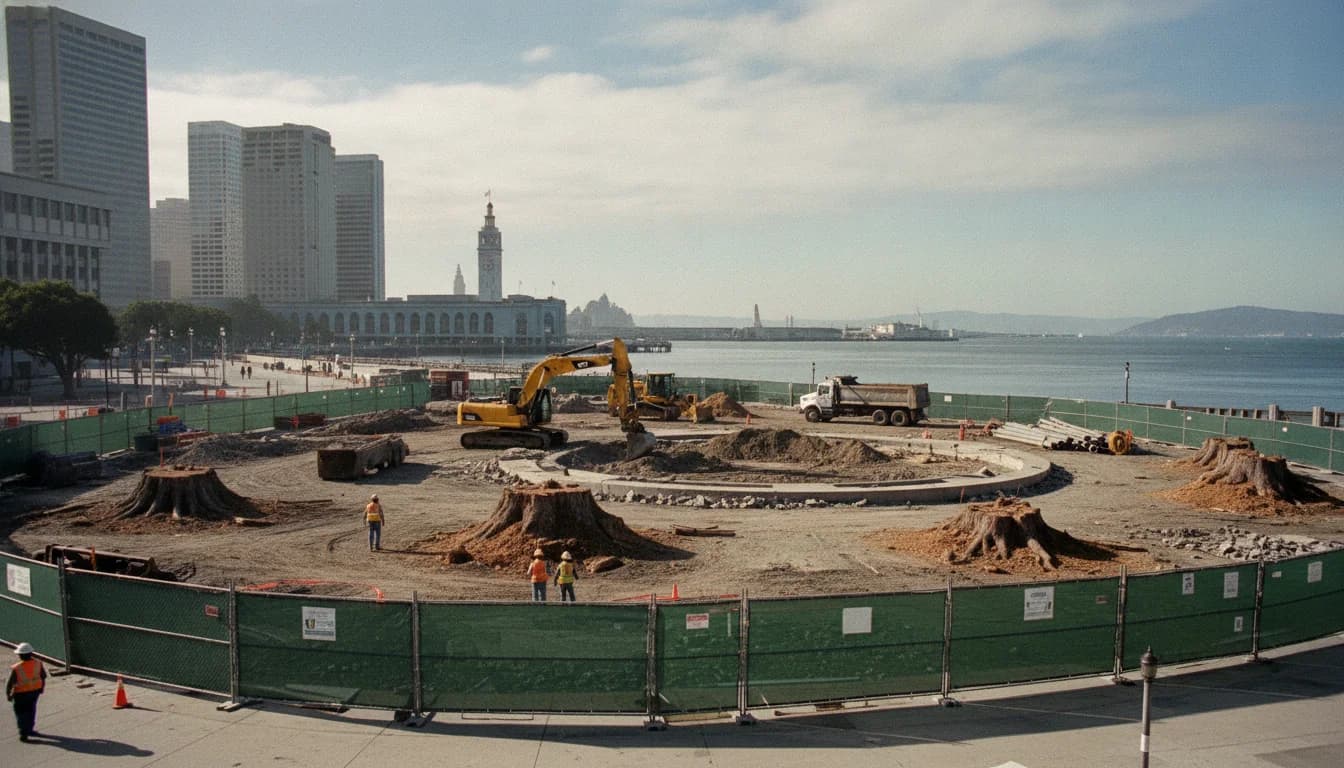
The Embarcadero Plaza waterfront park project is gaining momentum as San Francisco moves to transform a five-acre gateway between downtown and the Bay. On June 18, 2026, the San Francisco Recreation and Park Commission unanimously approved the final concept design for the Embarcadero Plaza and Sue Bierman Park Improvement Project, teeing up a $40 million public-private effort intended to create a cohesive waterfront park at the foot of Market Street. The decision marks a pivotal moment for downtown revitalization and waterfront accessibility, with city leaders framing it as a catalyst for year-round programming, open space, and transformative public space in a key urban corridor. This development matters not just for residents and workers in the heart of the city, but for visitors drawn to San Francisco’s waterfront and its evolving public realm. The event was reported as a pressing, data-informed milestone that sets the stage for a broader reimagining of five acres of public space at the city’s edge. Readers seeking updates should note that the project’s progress is being tracked closely by municipal agencies and private partners alike. For readers following this topic, typical searches include “Embarcadero Plaza waterfront park project,” “Embarcadero Plaza Sue Bierman Park redesign,” and “SF public-private waterfront park funding.” (sfrecpark.org)
According to the San Francisco Recreation and Parks Department, the project is designed to connect downtown to the Bay with a central lawn, performance spaces, and spaces for outdoor dining, markets, and community programming. The announcement highlighted a $40 million total budget, with up to $20 million in private funding and approximately $18 million in identified public funding, and it noted that ground-breaking is expected in late 2026 as detailed in the press release. This funding structure and schedule lay the groundwork for a phased design-to-construction process overseen by the city, private donors, and programming partners. The city’s leadership and project partners emphasize that the park will function as a civic hub, integrating art, culture, recreation, and public events while reinforcing connections to the Embarcadero waterfront. The project’s funding plan and timeline were reiterated in official materials released in June 2026 and reinforced in subsequent updates through late summer 2026. (sfrecpark.org)
Section 1: What Happened
Final Concept Design Approved
In a move that crystallized the Embarcadero Plaza waterfront park project’s trajectory, the San Francisco Recreation and Park Commission voted to approve the final concept design for the Embarcadero Plaza and Sue Bierman Park Improvement Project on June 18, 2026. The approved concept envisions transforming five acres at the foot of Market Street into a cohesive waterfront park that weaves together lawns, gathering spaces, recreation amenities, and year-round programming. The commission’s endorsement followed more than a year of community engagement, design iterations, and input from residents, workers, neighborhood groups, and cultural organizations. The official release described the plan as a “front door” to downtown that will link Embarcadero Center to the Bay, with features designed to host markets, performances, art installations, and sports and fitness activities. The June 2026 press materials also emphasized a broad coalition of public and private partners, including Crankstart, the Downtown Development Corporation (DDC), Boston Properties (BXP), and the Downtown SF Partnership (DSFP), each contributing to the park’s development and programming. The project is planned to break ground in late 2026, subject to final permits and fundraising milestones. For the primary source of this information, see the SF Rec and Parks press release dated June 18, 2026. [San Francisco Recreation and Parks press release, June 18, 2026] (sfrecpark.org)
Funding Structure and Partners
The June 18 release laid out a $40 million total budget, with approximately $18 million identified as public funding and up to $20 million in private funding to be raised through a public-private partnership framework. The announcement named Crankstart as a major private funder contributing $10 million, with the Downtown Development Corporation (DDC) pledging a matching $10 million from additional private donors. The collaboration also highlighted in-kind and direct support from private sector partners, including Boston Properties (BXP), which pledged about $2.5 million in-kind for design and related park facilities, and the Downtown SF Partnership (DSFP), which would provide programming and activation support and was already contributing around $2 million in private funding. This financial mix is described as a catalyst model intended to unlock broader private philanthropy while ensuring a baseline public investment for operations and long-term stewardship. The June 2026 materials also noted the involvement of OEWD (Office of Economic and Workforce Development) in supporting downtown revitalization and economic recovery efforts tied to the park's development. For specifics on the funding composition and partner roles, refer to the June 18, 2026 press release. [San Francisco Recreation and Parks press release, June 18, 2026] (sfrecpark.org)
Groundbreaking and Timeline
The June 18 release also provided a concrete construction horizon: after final designs are completed, the project is expected to break ground in late 2026, with construction activity continuing into 2027 and the park anticipated to reach substantial completion in the 2028 timeframe, aligning with the city’s downtown revitalization goals and programming ambitions. The official materials frame this as a phased effort designed to minimize disruption while maximizing opportunities for public events, activations, and community engagement in the interim. The groundwork for this schedule is anchored in the collaboration between Rec and Park, OEWD, the DDC, BXP, and the DSFP, which collectively outline a path from concept to a reimagined waterfront space. For more details on the schedule, see the June 18, 2026 press release. [San Francisco Recreation and Parks press release, June 18, 2026] (sfrecpark.org)
Reactions from Leaders and Stakeholders
Public officials and project partners framed the Embarcadero Plaza waterfront park project as a transformative moment for San Francisco’s waterfront and downtown experience. Mayor Daniel Lurie described the park as a “front door to downtown” that will anchor a downtown where people live, work, play, and learn, leveraging the park as a driver of economic growth and opportunity for the city. District 3 Supervisor Danny Sauter highlighted the collaboration with private donors and the city as essential to delivering the project on budget and on schedule. The private sector voice, including Shola Olatoye of the DDC and Missy Narula of Crankstart, emphasized the park’s potential to catalyze a broader public-spaces renaissance, blending civic events with everyday recreation and culture. The June 2026 release also included remarks from representatives across building, development, and programming partners who underscored the public benefit and the long-term viability of Embarcadero Plaza as a connected, citywide resource. For the full set of quotes and partner perspectives, consult the June 18, 2026 press release. [San Francisco Recreation and Parks press release, June 18, 2026] (sfrecpark.org)
What’s Next: A Public Process, A Park, A Place
With the final concept design approved, the project entered a detailed design and engineering phase. The administration outlined a two-track approach: finalize private fundraising to meet or exceed the $20 million private funding target and secure public funding appropriations and permits necessary to enable a late-2026 groundbreaking. In parallel, the city and its partners began refining activation programming, park amenities, and accessibility features to ensure the space serves a diverse cross-section of users—from families and pedestrians to event organizers and cultural programmers. The June 18 release also notes that the city’s programming partner, DSFP, will help curate activations and events in the park, signaling an integrated approach to programming from day one. Readers can review the official release for details on the design intent, scope, and partner commitments. [San Francisco Recreation and Parks press release, June 18, 2026] (sfrecpark.org)
Section 2: Why It Matters
Downtown Connectivity and Bayfront Access
The Embarcadero Plaza waterfront park project is anchored in a strategic effort to reconnect downtown San Francisco with its waterfront, a priority echoed by city leaders who view the space as a civic hinge linking commerce, culture, and recreation. The approved concept design foregrounds a large central lawn, a performance space, and edge-edge access for dining and retail, all designed to facilitate easy movement between Market Street, Embarcadero Center, and the Bay. By merging Embarcadero Plaza with adjacent Sue Bierman Park into a single five-acre continuum, the project aims to reduce fragmentation along the waterfront and create a more legible, welcoming public realm. The design intent and the integration of historic interpretation elements—reflecting the Embarcadero Freeway era, the original plaza, and Vaillancourt Fountain—are highlighted in the official materials, underscoring a stewardship approach that blends memory, place, and ongoing public programming. For a detailed description of design intent and portal spaces, refer to the June 18, 2026 press release. [San Francisco Recreation and Parks press release, June 18, 2026] (sfrecpark.org)
Economic and Cultural Impacts
Beyond aesthetics, the Embarcadero Plaza waterfront park project is positioned as a lever for downtown revitalization and regional economic activity. The partnership model—public funding paired with private philanthropy—reflects a broader trend toward leveraging private philanthropy to accelerate public-space improvements in major urban centers. The leadership from Crankstart, BXP, and the DSFP signals an intent to create an ongoing programming pipeline that could attract residents, workers, and visitors to the waterfront, supporting ancillary local businesses and transit-oriented development. In this context, the park may serve as a platform for arts programming, markets, and community gatherings that extend the city’s cultural calendar. The June 2026 materials emphasize the park’s role as a flexible civic space capable of hosting festivals, concerts, art installations, and civic events in a year-round cadence. See the official release for the specifics on programming and partnership roles. [San Francisco Recreation and Parks press release, June 18, 2026] (sfrecpark.org)
Public-Private Partnership Model and Public Space Governance
A notable feature of the Embarcadero Plaza waterfront park project is its governance and funding structure, which foregrounds collaboration among city departments, development corporations, private donors, and programming partners. The June 18 release identifies the following governance nodes: Rec and Park as project steward; OEWD supporting downtown revitalization; the Downtown Development Corporation coordinating private fundraising; Crankstart providing a substantial portion of private funding and in-kind design support; BXP contributing private design and park facilities; and the DSFP handling programming and activations. This multi-actor approach aligns with contemporary urban policy that seeks to leverage private philanthropy to augment public investments in public spaces, while maintaining public accountability and ongoing maintenance responsibilities. For a precise accounting of partner roles and commitments, consult the June 18 release. [San Francisco Recreation and Parks press release, June 18, 2026] (sfrecpark.org)
Section 3: What’s Next
Next Milestones and Scheduling
As the project advances, several milestones will likely shape the pace and public visibility of the Embarcadero Plaza waterfront park project. A key upcoming milestone noted in the August 28, 2026 update is the Capital Committee review slated for September 2, when donor recognition and naming proposals could be considered as part of the park’s long-term development plan. The August update also confirms ongoing fundraising activities designed to complete the funding package, with the city signaling a readiness to move toward final permits and construction documents pending completion of fundraising targets. For the September 2 committee meeting and related donor recognition provisions, see the August 28, 2026 release. [San Francisco Recreation and Parks press release, August 28, 2026] (sfrecpark.org)
Potential Activations and Programming
Programming is central to the park’s long-term vitality. The DSFP’s involvement as the programming and activations partner indicates a commitment to a robust schedule of events, seasonal markets, and outdoor experiences designed to attract diverse audiences. The design plan includes flexible spaces that can host concerts, festivals, community gatherings, and health and fitness programming, all of which contribute to a dynamic urban experience and a stronger sense of place along the Embarcadero. The June 18 release details the envisioned programming framework and the partners responsible for delivering activations, reinforcing the park’s role as a living, adaptable public realm rather than a static monument. [San Francisco Recreation and Parks press release, June 18, 2026] (sfrecpark.org)
What Local Businesses and Residents Should Watch For
Local stakeholders—business owners along Market Street, Embarcadero Center tenants, and nearby residents—should monitor a number of operational and scheduling factors as the project progresses. The late-2026 groundbreaking will require careful traffic management, temporary closures, and phased construction in a dense urban area. While the city emphasizes community engagement and accessibility, ongoing construction activity could impact foot traffic and storefront access during certain periods. Rec and Park, OEWD, and DSFP are expected to release more detailed construction phasing plans closer to groundbreaking, and neighborhood associations will likely seek timely updates on park activations and programming calendars. The official June 18 press release and related updates provide the current baseline for expectations, with further updates anticipated as design refinements proceed. [San Francisco Recreation and Parks press release, June 18, 2026] (sfrecpark.org)
What readers should know about the Embarcadero Plaza waterfront park project is that the momentum comes from a coordinated public-private approach aimed at delivering a high-impact public space, while maintaining a careful rhythm of community input and transparent fundraising. The August 28, 2026 update reinforces the city’s commitment to naming conventions that honor local leaders and the broader public-interest goals that underpin the park’s development, a reminder that public spaces are also vessels of memory and civic identity. For the official naming discussions and donor commitments, view the August 28 release. [San Francisco Recreation and Parks press release, August 28, 2026] (sfrecpark.org)
Closing
San Francisco’s Embarcadero Plaza waterfront park project reflects a deliberate effort to redefine a signature waterfront corridor as a mass-appeal, multi-use public space. With a $40 million budget, a funding mix that blends up to $20 million in private support with roughly $18 million in identified public funding, and a late-2026 groundbreaking on the horizon, the project stands as a case study in contemporary urban park reform. City officials emphasize the park’s role as a civic anchor—one that promises flexible spaces for concerts, farmers markets, family activities, and cultural programming while linking downtown to the Bay. As authorities finalize permits, fundraising, and design refinements, observers should expect a carefully choreographed sequence of public meetings, donor recognitions, and activations that keep the public informed and engaged. The Embarcadero Plaza waterfront park project is not merely a design exercise; it is a living experiment in public space governance, community activation, and urban resilience that will shape how San Francisco’s waterfront is experienced for decades to come. Stay tuned for further updates from Rec and Park and partner agencies as they publish new milestones, schedules, and activation plans.