
Fossilized Pacific Mastodon Tooth Found in Bay Area Creek
A fossilized tooth from a Pacific mastodon was discovered in a creek bed within a San Mateo County preserve, highlighting the significance of habitat…
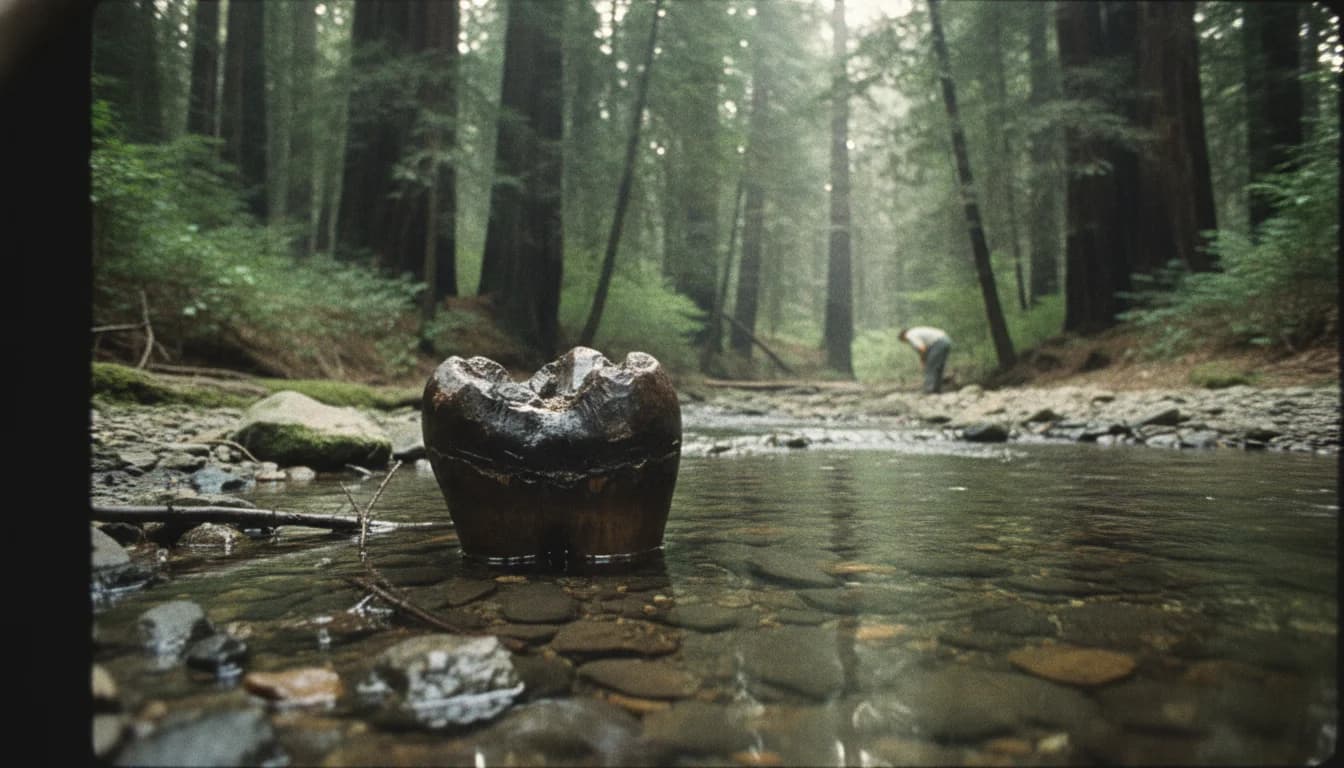
On September 9, 2026, the Midpeninsula Regional Open Space District announced a remarkable find: a fossilized tooth from a Pacific mastodon unearthed in a creek bed within a San Mateo County preserve. The discovery, described by district scientists as part of the Pacific Mastodon tooth discovery, is a notable Ice Age find in the Bay Area that underscores the value of ongoing habitat restoration work in open spaces near San Francisco. This news matters for local science, land management, and public education because it ties preserved landscapes to tangible, datable remnants of California’s ancient wildlife. (openspace.org)
The tooth’s condition is particularly striking. Public reporting describes the specimen as exceptionally preserved, with the tooth in immaculate condition and presenting both crown and root intact. In coverage that has circulated widely, the tooth is noted as approximately 9 inches long (about 23 centimeters), a detail that has helped publicize the rarity of Pacific mastodon finds in metropolitan areas. The Bay Area fossil has already begun to inform carbon-dating plans and three-dimensional modeling for outreach. (sfchronicle.com) The Midpeninsula press release confirms the donation to Stanford University’s Doerr School of Sustainability for dating and study, including a plan for a carbon-date determination and a 3D scan for educational use. (openspace.org)
SF Bay Area Times can confirm the specific measurements and the subsequent steps through on-the-record statements from the agencies and scientists involved. The public reporting surrounding this Pacific Mastodon tooth discovery emphasizes not only the scientific value but also the importance of safeguarding public lands where such finds emerge. In fact, the tooth’s discovery occurred in the context of habitat restoration work for the threatened California red-legged frog, illustrating how ongoing conservation projects can yield unexpected scientific dividends. (openspace.org)
SF Bay Area Times counted the Pacific Mastodon tooth discovery at 22.86 cm long (9 inches) according to Associated Press reporting dated September 11, 2026. (sfchronicle.com)
What Happened
Announcement Details
On September 9, 2026, the Midpeninsula Regional Open Space District issued a formal release announcing a fossilized tooth belonging to an ancient Pacific mastodon (Mammut pacificus) discovered within a creek bed located in a Midpen preserve in San Mateo County. The agency described the find as an exceptionally preserved, adult mastodon molar and noted that the tooth’s discovery occurred while fieldwork supported by habitat-improvement efforts for the California red-legged frog was underway. The district further stated that the tooth had been donated to Stanford University’s Doerr School of Sustainability for ongoing scientific study, including carbon dating to determine its precise age and a 3D scan for educational outreach. The release also highlighted that Pacific mastodons are a recently recognized species distinct from Mammut americanum. This is a landmark Bay Area paleontological event, and it underscores the value of protected landscapes in yielding unusually well-preserved Ice Age remains. See the Midpen press release for full details. Midpen press release. (openspace.org)
Discovery Timeline
The discovery itself was documented as having occurred in the weeks leading up to the public announcement in early September 2026. Balance Hydrologics geologist Brigid Lynch spotted the curious object while conducting creek-bed surveys; the find was later identified as an intact Pacific mastodon molar by paleontologists. A contemporaneous Midpen public-facing feature on the discovery provides a narrative of the day-by-day sequence that culminated in formal recognition, with the caveat that precise discovery timing was subject to field conditions and ongoing verification. The timeline is further corroborated by photos and captions associated with the original discovery date, including a June 10, 2026, photograph date that underscores when the specimen was first documented in connection with fieldwork near the creek. Read more in the Midpen Ice-Age Discovery piece and accompanying materials. Midpen Ice-Age Discovery. (openspace.org)
Tooth Specimen and Handling
Following verification by paleontologists, the tooth was donated to Stanford University’s Doerr School of Sustainability to support carbon dating and to enable more detailed analysis. Stanford’s curatorial team will perform a carbon-dating assessment to place the specimen within a precise time frame and create a 3D digital model to share with the Midpeninsula district and the public for outreach and education. This sequence—discovery on a preserve, authentication by paleontologists, donation to a university, and subsequent technological readouts—has become a template for how Bay Area finds with local significance are handled by public agencies and scientific partners. See the Midpen press release for the donation and next steps; the Midpen Ice-Age Discovery page provides context on the broader significance of the find. (openspace.org)
Section 1 anchors to primary sources:
- Midpen press release: 10,000-year-old fossilized mastodon tooth discovered in Midpen preserve. This document provides the official timestamp, discovery context, and donation details. See: https://www.openspace.org/about/press/10000-year-old-fossilized-mastodon-tooth-discovered-midpen-preserve. (openspace.org)
- Midpen Ice-Age Discovery: Rare Fossil Found in Midpen Preserve. This piece situates the find within the broader Ice Age landscape of the Bay Area and includes direct quotes from scientists involved in the discovery. See: https://www.openspace.org/stories/ice-age-discovery. (openspace.org)
Why It Matters
Scientific Significance
The discovery of a Pacific mastodon tooth in a Bay Area creek bed is scientifically meaningful for several reasons. Notably, the Pacific mastodon (Mammut pacificus) is the newest mastodon species to be recognized, distinguished from the more widespread American mastodon (Mammut americanum) by dental morphology and skeletal features. In the Midpen material, researchers describe Pacific mastodons as having narrower teeth and thicker leg bones, among other distinguishing characteristics. This makes the Bay Area find a potentially important calibration point for understanding the species’ geographic range, dietary preferences, and ecological niche during the late Pleistocene. The Midpen release emphasizes the species’ distinctiveness and embeds the finding within the broader Ice Age narrative of California and the western United States. (openspace.org) The Midpen “Ice-Age Discovery” piece expands on the context, noting this lineage’s presence in the region and how the Bay Area landscape has hosted such megafauna over millennia. (openspace.org)
The tooth’s state is described as “immaculate,” with both crown and root preserved, which increases its potential to illuminate paleobiology questions—ranging from mastodon diet to tooth wear and growth patterns. Paleontologist Wayne Thompson, a co-author of local work on Pacific mastodons, described the molar as the most complete mastodon molar from the Bay Area and among the most spectacular he has seen, underscoring the specimen’s rarity and value for ongoing research. This level of preservation provides a rare opportunity to trace micro-wear patterns, tooth microstructure, and enamel deposition that can refine our view of Ice Age plant communities in Northern California. (openspace.org)
The broader significance also lies in the confirmation of Pacific mastodons’ regional history. The Midpen materials note that mastodons once roamed the landscape that is now the San Francisco Bay Area, overlapping with other megafauna and with modern wildlife. The find helps anchor a narrative about when and how these creatures disappeared from the region, complementing other field sites in California and the western U.S. The project’s authors also emphasize that this discovery strengthens public understanding of California’s paleontological past, which in turn can inform present-day conservation and habitat management decisions. (openspace.org)
Conservation and Public Engagement
Beyond the science, this Pacific Mastodon tooth discovery underscores the public value of open spaces and the work of land managers in protecting important habitats. Midpen’s leadership framed the find as evidence of the benefits of protecting land and natural processes that help support biodiversity today while preserving windows into the past. The tooth’s discovery during a habitat-improvement project for the California red-legged frog demonstrates how conservation activities can yield serendipitous scientific returns, catalyzing educational opportunities and public engagement with Bay Area history and natural science. The Midpen materials highlight a strong linkage between contemporary conservation work and ancient ecological contexts, reinforcing the idea that today’s restoration projects can simultaneously advance species protection and scientific understanding. (openspace.org)
In addition, the story resonates with public institutions that rely on accessible science to connect people with the region’s deep time. The Stanford Doerr School of Sustainability is positioned to host the specimen, use carbon dating to refine the dating, and generate a 3D print and digital model to support outreach—an example of how universities partner with public agencies to translate discovery into public education. The collaboration with Stanford is underscored by the district’s donation of the tooth and the anticipated analyses, which have the potential to reach classrooms, museums, and online audiences. For readers seeking details on the university partnership, see the official Stanford Doerr School of Sustainability page and related Stanford news coverage. (openspace.org)
Geographic and Species Context
The newly recognized Pacific mastodon is part of a broader, region-spanning paleontological narrative. The Midpen materials describe the species as having a distinctive dental pattern and body plan—narrower teeth and thicker leg bones relative to other mastodons—and place the Bay Area within the geographic range of Pacific mastodons during parts of the Pleistocene. That geographic framing is complemented by the broader regional archaeology/paleontology literature, which places mastodons in California and adjacent areas during the late Pleistocene, providing a regional context for this find. The publication emphasizes the Bay Area’s unique contribution to understanding mastodon diversity and distribution, highlighting how local preserves can yield highly informative specimens even in highly urbanized settings. (openspace.org)
The find sits at the intersection of paleontology, ecosystem history, and public land management, illustrating how scientific discoveries can emerge from fieldwork conducted by ecological restoration teams and how such discoveries can be preserved with the help of academic partners. The Midpen materials also note that Pacific mastodons represent a distinct lineage that coexisted with other megafauna in California and beyond, offering a basis for comparative studies with other mastodon populations and related proboscideans. (openspace.org)
What’s Next
Carbon Dating and Dating Methods
The official plan for the Pacific Mastodon tooth discovery is to perform carbon dating on the tooth to determine its exact age within the late Pleistocene timeframe. Stanford’s team will conduct the dating, enabling researchers to place the specimen within a precise calendar window and to compare it with other regional finds. The dating will help clarify the tooth’s context within the Bay Area’s Ice Age landscape and contribute to a more granular understanding of mastodon timelines in the western United States. The Midpen press release explicitly calls out this carbon-dating objective and coordinates with Stanford for the work. Readers can monitor updates through Midpen’s official channels as the dating progresses. (openspace.org)
3D Scanning and Public Outreach
In addition to dating, the project will produce a high-fidelity 3D scan of the molar and a physical copy for Midpen’s outreach purposes. This effort aligns with contemporary practices in paleontology and museum education, enabling teachers, students, and the general public to study the specimen without risking damage to the original fossil. The 3D scan will also facilitate virtual exhibits and online education modules, bringing the Ice Age history of the San Mateo County region to a broader audience. Stanford’s curatorial teams and Midpen officials anticipate sharing digital assets with schools and community groups, expanding engagement opportunities beyond the preserve. (openspace.org)
What to Watch For
Key milestones to watch for include the carbon-dating results, the publication of a formal scientific note or paper detailing the specimen’s age and its implications for Pacific mastodon ecology, and the dissemination of the 3D model/digital specimen to educational partners. Local news outlets, regional science museums, and university press offices are likely to cover these milestones as new data emerge. The collaboration between Midpen, Balance Hydrologics, and Stanford provides a model for how community preservation efforts can yield rigorous scientific outputs and robust public education outcomes. For readers seeking ongoing updates, the Midpenice Age Discovery page and the agency’s press release are the primary sources to monitor. (openspace.org)
Closing
The Pacific Mastodon tooth discovery in a Bay Area creek bed marks a landmark moment for Bay Area paleontology and conservation. It demonstrates how well-preserved Ice Age remains can surface in the course of ongoing habitat work, even in landscapes that are now heavily influenced by human development. The combination of public lands stewardship, university collaboration, and modern imaging and dating techniques promises to convert a single extraordinary find into a richer story about California’s ancient past and its connection to present-day biodiversity and land management. Readers in the SF Bay Area Times ecosystem can expect continued coverage as carbon dating results, 3D modeling, and public outreach materials become available, offering a clearer picture of how this Pacific Mastodon tooth discovery fits into a broader timeline of Ice Age California. For ongoing updates, follow Midpen’s official communications and Stanford’s Doerr School of Sustainability updates, as well as independent coverage from trusted regional outlets. Midpen press release • Ice-Age Discovery on Midpen’s site • Stanford Doerr School of Sustainability