
The Bird Camera That Doesn't Ask You to Replace Your Feeder
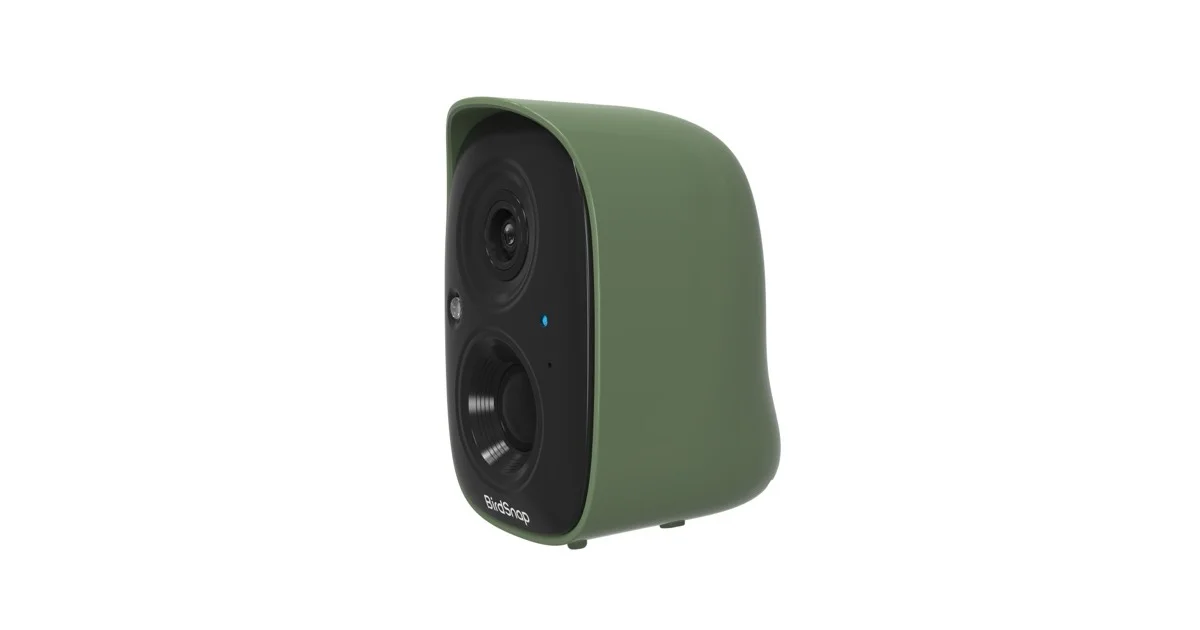
Birdsnap Cam 1 is a standalone bird camera that mounts to the feeder, bird bath, fence or balcony rail already in the garden, rather than replacing it.
There is a specific kind of person who has been feeding birds in the same spot for years. The feeder is in the right place, at the right height, filled with the right seed, and the birds in that yard have learned it. The pole has been moved twice and stayed where it is for a reason.
That person is the reason Birdsnap Cam 1 exists in the shape it does.
The upgrade path, not the replacement
Most smart bird products are feeders with cameras in them, which means adopting one is a decision to throw out a working setup. Cam 1 inverts it: it is a camera that mounts to what is already in the garden. The company lists feeders, bird baths, fences and balcony rails as mounting positions, with additional accessories planned.
For anyone who has assembled a backyard setup piece by piece, this is the difference between an addition and a renovation.
Four places to put it
Birdsnap lists a feeder, a bird bath, a fence and a balcony rail as mounting positions, and the four are genuinely different products in use.
On a feeder, the camera watches a queue: the same dozen species cycling through in a predictable pattern, which is the setup most people picture. On a bird bath, the traffic changes completely, because water draws birds that never touch seed, and it keeps drawing after dark, when the visitors are usually not birds at all. The camera records that night traffic too, in black-and-white infrared night vision. On a fence line, the camera stops being about a fixed point and starts covering a route. On a balcony rail, it turns a flat with no garden into a viable birdwatching position, which for a city apartment is the whole proposition.
Capture is triggered by a PIR infrared sensor with motion detection, and species identification runs through the Birdsnap app on iOS and Android, filing clips by visitor rather than dumping a folder of motion alerts. Bird identification is free, with no subscription tier and no species cap, and the recognition model is updated over time. The practical output is a log of who came by and when.
A garden object, not a surveillance object
The category has an aesthetic problem it rarely acknowledges. A camera aimed at a feeder is usually a small black or white plastic box, and the visual language is security. It reads as surveillance equipment because it descends from surveillance equipment.
Birdsnap's housing is shaped after a bird and finished in green, intended to sit in a planting scheme rather than stand out against it. For a device that is going to be visible in a garden every day for years, this is a more consequential decision than the spec sheet suggests.
Off the grid, in the garden
Cam 1 runs on a 5,200 mAh battery with a solar panel, so it does not need a cable run to the house. The battery covers about 20 days of typical use on its own, and the panel keeps it topped up wherever it gets clear, unobstructed sun. This is what makes bird baths, back fences and the far end of a lawn viable mounting positions rather than theoretical ones.
Availability
Birdsnap Cam 1 launches on Kickstarter this month at the Birdsnap Cam 1 campaign page. The early-bird tier is $69.99, with bundle tiers at $105 and $209, shipping to the United States and estimated delivery in October 2026.
More information: Birdsnap