
iPhone 18 Pro Price: Cheaper Than the iPhone X Was
Apple raised the iPhone 18 Pro to $1,199. Adjusted for inflation it is 11% below the 2017 iPhone X, and the second straight year the real price has risen after eight years of falling.
Apple announced the iPhone 18 Pro and iPhone 18 Pro Max from Cupertino this morning. The headline everyone wrote within the hour was the price: $1,199 for the Pro and $1,299 for the Pro Max, a $100 increase over last year in both cases. Pre-orders open Saturday 12 September; the phones ship Friday 18 September.
A $100 hike is a clean, easy story, and on its own it is a misleading one. Run Apple's Pro launch prices through the US consumer price index and two things become visible at once. Adjusted for inflation, the iPhone 18 Pro costs 11 percent less than the original iPhone X did in 2017. It is also the most expensive Pro in real terms since the iPhone 13 Pro in 2021, and the second consecutive year the real price has risen after eight straight years of falling.
Both facts come out of the same series, and neither one is the headline anybody wrote this morning.
What $999 was actually worth
Apple held the Pro at $999 for eight consecutive launches, from the iPhone X in 2017 through the iPhone 16 Pro in 2024. Over those eight years, US consumer prices rose about 35 percent. A sticker price that never moves in a period like that is a price cut, and a large one.

| Year | Model | Sticker | Real (July 2026 $) | Base storage | Real $ per GB |
|---|---|---|---|---|---|
| 2017 | iPhone X | $999 | $1,352 | 64 GB | $21.12 |
| 2018 | iPhone XS | $999 | $1,321 | 64 GB | $20.65 |
| 2019 | iPhone 11 Pro | $999 | $1,299 | 64 GB | $20.30 |
| 2020 | iPhone 12 Pro | $999 | $1,282 | 128 GB | $10.01 |
| 2021 | iPhone 13 Pro | $999 | $1,216 | 128 GB | $9.50 |
| 2022 | iPhone 14 Pro | $999 | $1,124 | 128 GB | $8.78 |
| 2023 | iPhone 15 Pro | $999 | $1,084 | 128 GB | $8.47 |
| 2024 | iPhone 16 Pro | $999 | $1,058 | 128 GB | $8.27 |
| 2025 | iPhone 17 Pro | $1,099 | $1,130 | 256 GB | $4.41 |
| 2026 | iPhone 18 Pro | $1,199 | $1,199 | 256 GB | $4.68 |
Method: each year's launch price is the base configuration of that year's flagship Pro model, deflated by the US Bureau of Labor Statistics consumer price index for all urban consumers (series CUUR0000SA0) for the September of its launch year, and expressed in the latest published CPI month, July 2026. CPI figures were pulled from the BLS public API on 9 September 2026. The 2026 price is unadjusted because it is already in current dollars. Storage is the advertised base capacity at launch.
Two numbers are worth carrying out of that table.
The iPhone X cost $1,352 in today's money. The iPhone 18 Pro costs $1,199. In real terms the flagship Pro is 11.3 percent cheaper than it was nine years ago, despite two consecutive nominal increases.
Real price per gigabyte of included storage fell 77.8 percent over the same period, from $21.12 to $4.68. This one is not a rounding artefact of the storage bumps: it survives the like-for-like comparison too, because the iPhone 17 Pro and iPhone 18 Pro both start at 256 GB, so this year's $100 buys no additional storage at all.
The line that should worry you
Now read the orange line's shape rather than its endpoints.
The real price of the Pro fell every single year from 2017 to 2024, from $1,352 to $1,058, a real cut of 21.7 percent. Then it turned. The iPhone 17 Pro came in at $1,130 real, and the iPhone 18 Pro at $1,199.
Apple spent eight years quietly cutting the Pro's real price by $294. It has given back $141 of that, roughly half, in two years. At this rate of nominal increase, the iPhone 19 Pro would erase the remainder.
That is the actual story of today's announcement, and it is invisible if you only look at the sticker. Nobody wrote "$100 price hike" in 2019, because there wasn't one, and nobody wrote "real price cut" either. The eight-year hold was a pricing strategy conducted entirely in the space between the nominal number and the real one, and it has now been abandoned in the same space.
What the $100 buys
Apple's answer is silicon, and it is a substantive one.
The A20 Pro is built on a 2-nanometer process. Apple says it carries 50 percent more memory bandwidth than the A19 Pro, a new 6-core CPU with integrated Neural Accelerators, and a 7-core GPU up to 40 percent faster than last year's. The part that matters most for what these phones are being sold to do is the new Dual 16-core Neural Engine: 32 total cores, which Apple states delivers double the AI processing power of the A19 Pro.
Leading-edge process nodes are the most plausible mechanical explanation for the increase. Moving from 3nm to 2nm raises per-wafer cost substantially, and Apple is buying that capacity in a market where it is competing for it. A $100 increase on a phone whose AI silicon doubled is not obviously a margin grab, though Apple does not disclose enough for anyone outside Cupertino to say so with confidence.
The thermal work is the underrated part. Apple has moved to packaging borrowed from its M-series Macs, placing the die beside the memory rather than in its thermal path, and attaching the chip directly to a redesigned vapor chamber with three times the surface area of the iPhone 17 Pro's. The claim is the highest sustained performance in iPhone history, and sustained is the operative word: on-device AI workloads are exactly the kind that turn a benchmark score into a thermal problem.
Elsewhere: a 48MP Fusion Main camera with variable aperture, the first time Apple has put physical aperture control in an iPhone, using six laser-cut blades and a new rotor mechanism, with an API so developers can drive it. A smaller Dynamic Island that now displays up to three Live Activities at once while still handling Face ID. A C2 modem with faster uploads at 15 percent lower energy than the C1X, now supporting mmWave in the US. Four finishes: black, silver, glacier and a new burgundy.
What you will actually pay
The $1,199 figure is a list price, and in the US market list prices for phones are increasingly notional.
Apple is quoting $175 to $885 in instant Apple Trade In credit for an iPhone 13 or later, and up to $1,200 in carrier credits for trading in an iPhone 14 or later in any condition. A leasing option through Klarna starts at $34.99 per month over 24 months. The distribution of what people hand over at the till is therefore very wide and mostly below list, which is the same reason the sticker could sit at $999 for eight years without much complaint.
It is also why the real-price series above is the more honest measure of Apple's intent than any single year's headline. Trade-in credits fluctuate with the used market. The list price is the number Apple chooses.
Why this is a Bay Area story
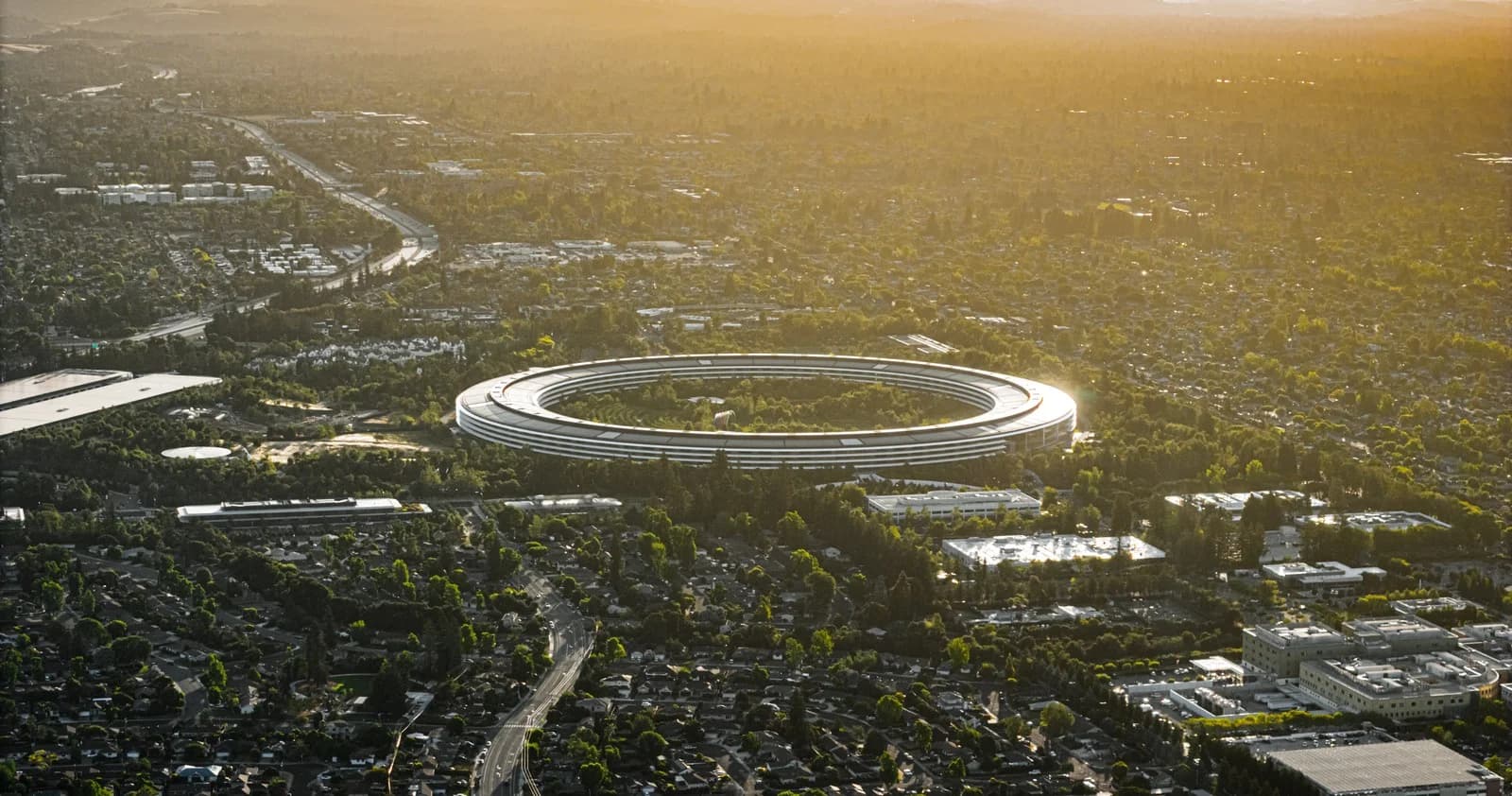
The pricing decision was made here, at a company that employs tens of thousands of people within a few miles of the Apple Park ring, and it is a reasonable proxy for how the most valuable company on earth reads its own customers' tolerance right now.
For eight years the read was that the sticker could not move, and Apple absorbed inflation rather than test it. The read has changed. Two consecutive $100 increases, in a period when Apple is spending heavily on 2nm capacity and on the AI features that justify it, suggest a company that now believes the Pro tier will pay for silicon.
Whether that read is correct is an empirical question with an answer roughly one quarter from now.
What to watch
Three things, all checkable.
First, whether the iPhone 18 Pro sells through at list or whether promotional credits widen quickly after launch. Aggressive carrier deals in October and November would indicate the $1,199 was priced above what the market would bear, and the sticker would be doing work that the discounts then undo.
Second, whether the base storage moves next year. The 17 Pro to 18 Pro jump gave buyers no additional gigabytes for $100, which is the first time in the modern Pro line that a price increase arrived without a capacity increase alongside it. If the 19 Pro repeats that, the trend in the last column of the table reverses.
Third, the real price itself. If Apple takes the Pro to $1,299 next September, the flagship will have returned to roughly its 2019 real price, and the eight-year experiment in holding the line will be fully unwound. The CPI series and the launch price are both public on the day, so anyone can run the number in about a minute.