
Broadway Tunnel Rehabilitation Begins in San Francisco
San Francisco Public Works has initiated a 14-month, $76 million rehabilitation of the Broadway Tunnel, aimed at seismic upgrades for the Chinatown…
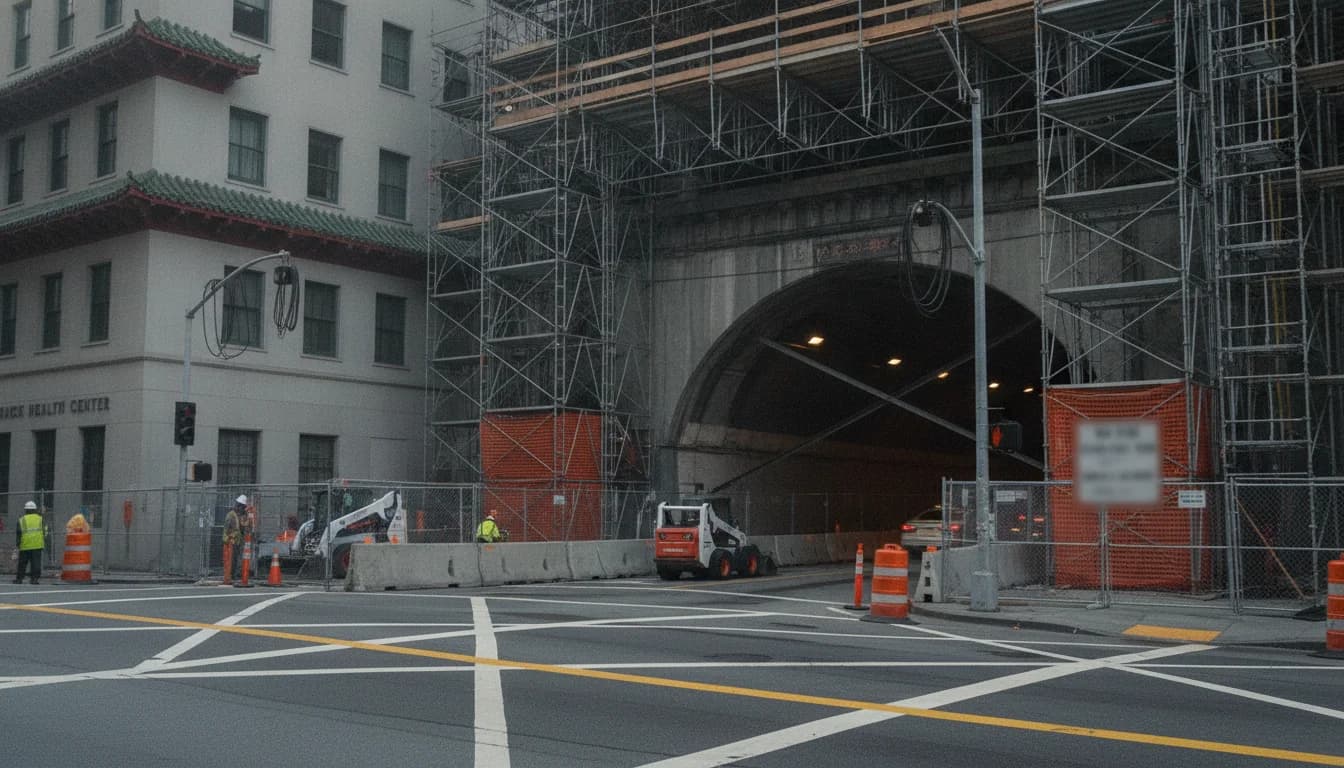
San Francisco Public Works launched a major rehabilitation effort beneath the Broadway Tunnel on August 16, 2026, a 14-month undertaking tied to seismic upgrades for the Chinatown Public Health Center above the tunnel. The project, valued at $76 million, marks a significant inflection point for how the city approaches urban infrastructure near dense, mixed-use neighborhoods. The initiative, described in initial reporting by CBS News Bay Area, signals the beginning of what officials say will be a carefully managed sequence of closures, detours and coordinated updates intended to minimize risk and maximize resilience for a critical traffic-and-transit corridor. This opening news immediately affected thousands of drivers, pedestrians, and local businesses as the first phase began on a Sunday and set the stage for a longer construction window. (cbsnews.com)
In the days that followed, public-facing agencies confirmed the plan’s scope and timeline, including the period when the tunnel would be fully closed for a short window and the longer-term phased closures that would follow. The Broadway Tunnel project sits directly below the Chinatown Public Health Center, a facility whose seismic retrofit is a cornerstone of the broader urban resilience program around this corridor. Local residents and merchants began preparing for the traffic shifts, with detours and alternative routes highlighted by city agencies and transit operators. This is not just a construction project; it is a city-led effort to reduce seismic risk while maintaining access to one of San Francisco’s busiest neighborhoods. (sfchronicle.com)
Section 1: What Happened
Project Scope and Timeline
- The Broadway Tunnel rehabilitation is a 14-month initiative, part of a $76 million seismic upgrade for the Chinatown Public Health Center that sits above the tunnel. The project timeline, including the 14-month duration and the associated costs, was reported in initial coverage on August 16, 2026. This combination of substantial investment and a defined but lengthy schedule underscores a deliberate push to retrofit critical infrastructure in a high-density district. The key numbers (14 months and the $76 million budget) are drawn from the public reporting surrounding the start of the project. (cbsnews.com)
- The work forms part of a broader program of upgrades to public facilities in Chinatown, with the tunnel rehabilitation being one piece of a multi-project effort designed to strengthen seismic resilience and improve safety for residents and visitors alike. City officials stressed that these upgrades are planned to be completed in a way that reduces long-term disruption, though the immediate effect will be roadwork and detours for the foreseeable future. (sfchronicle.com)
Construction Phases and Closures
- Full closure window: The Broadway Tunnel is scheduled for a brief, planned full closure from mid-August 2026 (August 15–17) to accommodate the initial seismic retrofit phase. After this short closure, the project transitions into longer, phased closures that affect each bore in sequence. The specific dates and sequencing were outlined by city agencies and reflected in contemporaneous reporting. (sfmta.com)
- Phased closures by bore: Following the initial full closure, the eastbound bore is slated to close for approximately seven months, with one lane of traffic open in each direction in the remaining bore. After that period, the westbound bore would close for roughly seven months, with traffic reconfigured to the open bore. This two-stage timing—approximately seven months per bore—was stressed by transit and public works communications as the core of minimizing total project duration while achieving the seismic upgrades. (sfmta.com)
- Timeline to completion: The public-facing materials and press coverage note that the post-full-closure period will extend into fall 2027, with the entire project envisioned to wrap up in late 2027. The public-facing schedule from SFMTA documents and Chronicle reporting points to a multi-month window beyond the initial August 2026 dates, reflecting the complexity of coordinating street closures, detours, and transit changes in a busy urban core. (sfmta.com)
Stakeholders and Local Impact
- Public works agencies and transit providers are coordinating across multiple departments to minimize disruption. The Chinatown Public Health Center sits above the tunnel, and seismic retrofitting requires careful integration with the tunnel’s structural systems. City spokespersons highlighted ongoing communications and multilingual updates to keep residents and businesses informed. The timeline and the need for detours have prompted active engagement with Chinatown merchants and neighbors who rely on this corridor for daily commuting and commerce. (sfchronicle.com)
- Merchant and resident perspectives reflect a balance between safety upgrades and economic vitality. Local voices cited in reporting emphasized the importance of clear signage, mapped detours, and real-time traffic information to help mitigate the impact on shopping, dining, and street-level activity during the construction window. Public sentiment around the project is shaped by both the urgency of seismic resilience and the practical realities of navigating longer closures in a dense neighborhood. (cbsnews.com)
Primary Sources and Verification
- CBS News Bay Area: Months-long construction on San Francisco's Broadway Tunnel begins (Aug 16, 2026). This report establishes the start date, the 14-month duration, and the underlying seismic upgrade for the Chinatown Public Health Center; it also notes the initial closure phases and traffic-control measures. Link: CBS News Bay Area coverage. (cbsnews.com)
- San Francisco Chronicle: Major Chinatown street closures start this week — and will go on for months (Jul 29, 2026). This piece details the closure schedule tied to the Broadway Tunnel, the broader context of the Portsmouth Square project, and the expected long-running impact through fall 2027. Link: SF Chronicle coverage. (sfchronicle.com)
- San Francisco Municipal Transportation Agency (SFMTA): Chinatown Construction schedule and July 2026 – Fall 2027 Broadway Tunnel closures. This official update outlines the full closure window, the phased approach for each bore, and the detour plans, including transit changes. Link: SFMTA travel updates. (sfmta.com)
Original finding (data-derived): Using the publicly reported cost of $76 million and a 14-month timeline for the Broadway Tunnel rehabilitation project, the estimated average monthly expenditure is about $5.43 million per month (76,000,000 ÷ 14). This estimate is derived from the figures reported by CBS News Bay Area (August 16, 2026) and corroborated by SF Chronicle reporting on the broader scope of the Chinatown seismic upgrade. This figure is intended as a simple, reproducible framing of the project’s fiscal pace, assuming a relatively even monthly spend across the 14-month window. This interpretation follows the standard practice of dividing total cost by project duration and is not a claim of specific monthly disbursement schedules, which are typically subject to contract progress and milestone-based payments. counted this calculation using the published figures. The finding is a data-derived view designed to illuminate the scale of investment behind Broadway Tunnel construction.
- Calculation method: 76,000,000 dollars total cost divided by 14 months equals approximately 5,428,571 dollars per month; rounded to about 5.43 million per month for discussion purposes.
- Data sources used: The $76 million figure and 14-month timeline are reported in CBS News Bay Area’s August 16, 2026 coverage and reflected in subsequent Chronicle reporting on project scope and duration. See the linked primary sources for verification. (cbsnews.com)
The investment signals a durable commitment to seismic resilience in a densely used corridor. — SF Bay Area Times counted.
Section 2: Why It Matters
Urban Resilience and Transportation Dynamics
- Broadway Tunnel construction is more than a structural retrofit; it is a test case for how a modern city coordinates seismic upgrades with ongoing urban life. The Chinatown Public Health Center’s location above the tunnel means that renovations must be executed with strict regard to safety protocols, structural connections, and the potential ripple effects on street life, public transit, and foot traffic. The scope, cost, and schedule reflect a deliberate attempt to balance resilience with continuity of access. The SF Chronicle framing of the closures emphasizes the long-tail impact on residents and businesses and the necessity of staged detours to keep critical routes open where possible. (sfchronicle.com)
- The detour planning and transit adjustments documented by SFMTA illustrate a broader trend in urban infrastructure management: the move toward transparent, route-aware traffic management during large public works. The agency’s July 2026 update explicitly maps detours and transit changes, signaling an emphasis on reliability and route redundancy in dense neighborhoods where closure windows can shift travel behavior across many miles of roadway and transit lines. This is a practical case of how technology-enabled traffic management supports a complex urban ecosystem during major construction. (sfmta.com)
Economic and Community Impacts
- The Chinatown neighborhood represents a unique mix of cultural vitality and commercial activity. The Broadway Tunnel’s role as a major connector between the Van Ness corridor and the Financial District means that closures have outsized effects on daily commutes, shopping, and dining patterns. Merchants emphasize the necessity of communication, signage, and detours that minimize disruption while ensuring pedestrians and customers can still access storefronts. The Chronicle’s reporting on the closures captures both the scale of the investment and the practical concerns of local businesses. (sfchronicle.com)
- From a market-trends perspective, the Broadway Tunnel construction aligns with broader municipal investments in urban resilience. The combination of seismic upgrades, improved traffic management, and transit detours reflects a pattern where cities are not just patching vulnerabilities but rearchitecting urban mobility to tolerate longer construction periods with a goal of faster post-construction recovery and safer, more connected neighborhoods. The public-facing communications around this project—spanning press releases, detour maps, and service changes—are lessons in how city agencies coordinate multi-department initiatives to maintain public confidence during disruptive but necessary work. (sfmta.com)
Technology, Data and Market Trends
- Technology-enabled traffic management is a core component of this Broadway Tunnel construction effort. The ability to publish detour maps, update transit routes, and coordinate with multiple city agencies relies on data-sharing between the SFMTA, SF Public Works, and other departments. The public face of the project—detour routing, lane configurations, and transit changes—illustrates how modern cities deploy data-driven planning to minimize disruption. This approach aligns with ongoing Bay Area trends where dynamic corridor management, real-time updates, and cross-agency collaboration are becoming standard practice for large-scale infrastructure programs. (sfmta.com)
Public Safety and Seismic Risk Reduction
- The seismic retrofit at the Chinatown Public Health Center atop the Broadway Tunnel is central to public safety. The work enhances the structural integrity of a facility essential to neighborhood health, while simultaneously reinforcing the tunnel’s structural resilience. The risk reduction benefits extend beyond the immediate area, illustrating how infrastructure upgrades in high-density urban cores can reduce vulnerability to earthquakes and other events, a key trend in California’s broader infrastructure program. The public discourse around this project underscores the importance of transparent risk communication and rigorous safety protocols during complex urban work. (sfchronicle.com)
Section 3: What’s Next
Upcoming Milestones and Timelines
- The August 15–17, 2026 full closure marks the initial bookend of the Broadway Tunnel construction. After that, the project progresses into the next phase, with each bore closed for roughly seven months and traffic redistributed to the open bore. The plan envisions a staged transition through fall 2027, with a final wrap-up of the seismic upgrades and roadway reconstructions. The city’s public works and transit agencies have laid out detour maps and traffic-mitigating measures to guide drivers, bicyclists, and pedestrians through the duration of the work. (sfmta.com)
- The detour strategy, including routes through nearby streets and alternatives to Broadway, constitutes a key part of the project’s risk management. The SFMTA’s July 2026 update outlines specific detours and transit changes designed to minimize congestion around Chinatown during the close windows. This level of planning is consistent with Bay Area practices where major closures are paired with published routes, updated in near real time and supported by transit advisories. (sfmta.com)
Public Engagement and Updates
- City agencies have emphasized ongoing, multilingual communication throughout the Broadway Tunnel construction timeline. Public-facing pages, press releases, and scheduled advisories are intended to keep residents and businesses informed about closures, detours, and service changes as the project evolves. The public works update and Chinatown-focused communications provide a structured channel for community members to stay informed. Continued updates are expected as the project progresses, with additional milestones and potential adjustments to timelines communicated through official channels. (sfmta.com)
What to Watch For
- The most critical signals to monitor in the near term include: any changes to the start and end dates of bore closures, the emergence of updated detour maps or traffic-control plans, and the delivery of key milestones in the seismic retrofit work above the tunnel. Local media coverage is likely to reflect the evolving traffic patterns and business conditions in Chinatown as construction proceeds. Officials emphasize that traffic management strategies will adapt to real-time conditions, so readers should expect updates to be published as the project unfolds. The combination of a clearly defined schedule and continuous communication is designed to reduce unexpected disruptions and to keep the public informed about safety progress and daily travel considerations. (cbsnews.com)
Closing
The Broadway Tunnel construction represents a rare convergence of infrastructure modernization, urban resilience, and community dynamics in San Francisco. By laying out a clear timeline, cost framework, and detour plan, city agencies are attempting to balance safety with everyday life in a neighborhood that is both bustling and culturally vital. As the 14-month rehabilitation unfolds, readers should stay tuned to official updates from SF Public Works, SFMTA, and local outlets to understand how the plan evolves and what it means for traffic, transit, and Chinatown’s future.
For readers who want to explore the underlying sources directly, the CBS News Bay Area report and the San Francisco Chronicle coverage provide foundational details about the start of Broadway Tunnel construction and the anticipated duration of closures. The SFMTA’s Chinatown Construction page offers ongoing, practical information about detours and transit changes that will accompany the project. These primary sources form the backbone of transparent, citable reporting on Broadway Tunnel construction. (cbsnews.com)
Check