
COP31 Bay Area Climate Leadership Showcased in Antalya
COP31 highlights Bay Area's climate leadership in Antalya, showcasing its impactful local-to-global environmental initiatives and sustainable solutions.
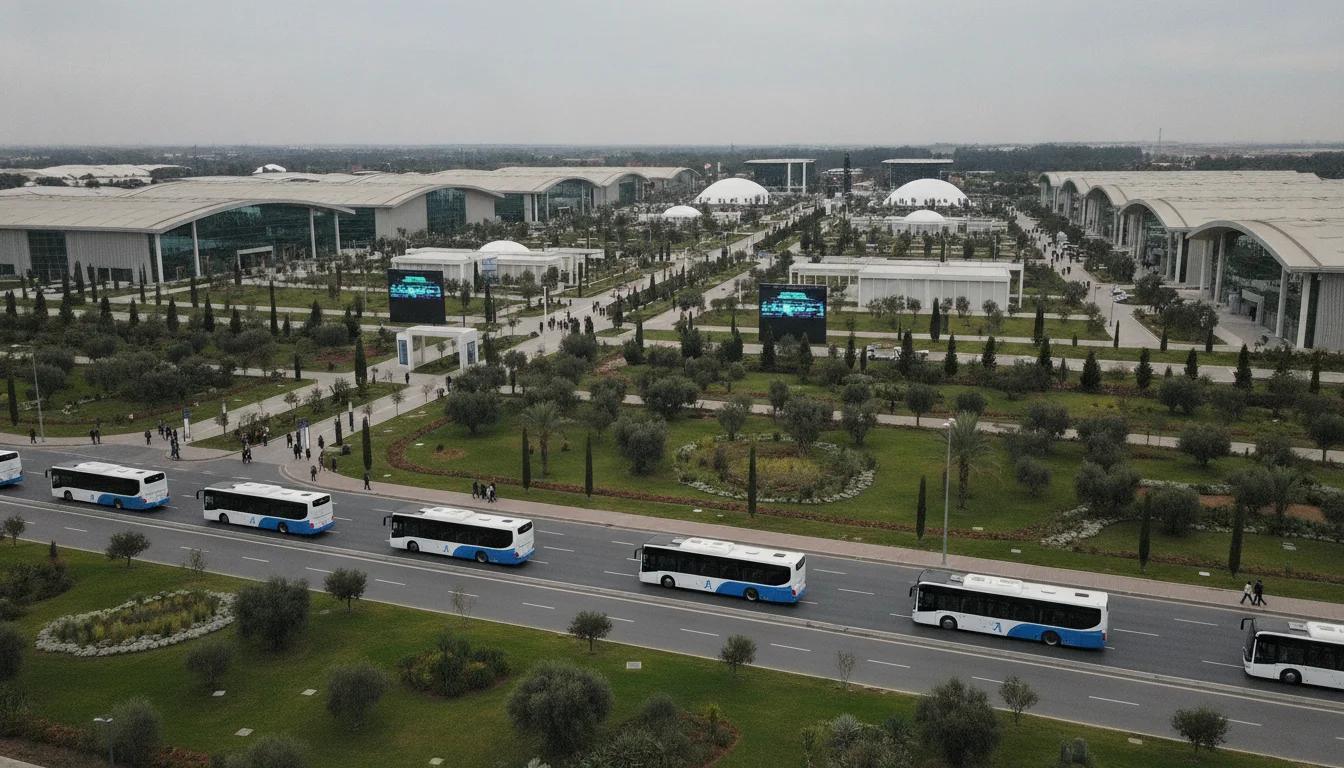
COP31 Bay Area climate leadership showcased in Antalya
The Bay Area is putting its climate leadership on the world stage at COP31, the United Nations Climate Change Conference being held in Antalya, Türkiye, from November 9 to November 20, 2026. On November 10, 2026, Bay Area officials presented how regional policies are translating climate commitments into tangible air-quality and health benefits for millions of residents. This coverage comes as cities, states, and regional coalitions converge to demonstrate what subnational leadership can deliver when federal action stalls or lags. The event and its local implications are being watched closely by public health advocates, infrastructure planners, and technology firms seeking practical pathways to decarbonization. SF Bay Area Times is following the developments closely, with reporting grounded in official releases and on-the-ground interviews. The sheer scale of COP31 — the world’s largest annual climate summit — has drawn subnational delegations from across the United States and around the globe, underscoring the growing role of cities and regions in climate action. The conference itself runs from November 9 to November 20, 2026, with a heavy emphasis this year on electrification, resilient infrastructure, and just transition policies. On the ground, Bay Area participants are balancing urgency with pragmatism, highlighting investments in cleaner appliances, transportation electrification, and grid modernization as core strategies. The Bay Area’s presence at COP31 signals a broader shift toward subnational experimentation and shared-learning that policymakers hope can be scaled at home. AP reported that the U.S. delegation to COP31 included more than 120 state and local leaders, a testament to the region’s organized civic climate leadership. (apnews.com)
What Happened
COP31 context and the Bay Area’s participation
COP31 is being held at the Antalya Expo Center in Antalya, Türkiye, from November 9 to 20, 2026, bringing together world leaders, negotiators, and accredited observers to advance climate action and finance. This year's agenda emphasizes implementation, regional leadership, and practical deployment of clean-energy solutions across sectors. The official UNFCCC overview confirms the venue, dates, and the nature of participation for subnational actors, including cities, states, and business coalitions that attend COP31 to showcase concrete actions and lessons learned from regional programs. The Bay Area’s participation underscores the increasing prominence of local governments in global climate governance and illustrates how regional standards and programs can influence national and international climate policy. For readers seeking the official scope and timing, COP31 is scheduled to run from November 9 to 20, 2026, in Antalya. (unfccc.int)
Local leadership on the world stage: key figures and themes
The Bay Area’s presence at COP31 features leadership from the Bay Area Air Quality Management District (Air District) and participating Bay Area cities, with public remarks and panels organized to connect local progress with global climate ambitions. Lynda Hopkins, Chair of the Air District Board and Sonoma County supervisor, emphasized that climate solutions must protect public health and help communities cope with wildfire smoke, extreme heat, and related pollution. Palo Alto Mayor Vicki Veenker — who serves as Air District Board Vice Chair and plays a central role in regional climate policy — highlighted Palo Alto’s ongoing work to cut emissions and electrify appliances as a model for broader regional action. These voices reflect a broader Bay Area narrative: local governance, supported by aggressive electrification and air-quality rules, can demonstrate to the world how to pair climate commitments with immediate health benefits. “Cities are where climate commitments meet everyday life,” Veenker said during her COP31 program appearances. The Air District’s remarks also connect the regional work to the ongoing Bay Area Regional Climate Action Plan and to current amendments aimed at reducing indoor and outdoor emissions through appliance electrification. (baaqmd.gov)
What the Bay Area showcased in Antalya
During a live press conference from Antalya on November 10, 2026, Air District leaders described how regional actions translate state and federal commitments into cleaner air and better health outcomes, positioning the Bay Area as a model for integrating climate and public health goals. The press conference highlighted that the region has already begun scaling cleaner energy choices, including zero-emission and electrified appliances, as well as plans to replace diesel trucks with zero-emission fleets, all backed by state and local funding and policy initiatives. The district also noted its ongoing rules amendments, such as those aimed at requiring zero-NOx water heaters, as part of a broader strategy to reduce pollutants at the point of use and in the supply chain. The press release also situates these local actions within a global learning loop—Bay Area policymakers are listening to other regions while sharing their own successes back home. The event aligns with COP31’s emphasis on the Climate Action Agenda, which brings together cities, states, and civil society to accelerate practical climate solutions. (baaqmd.gov)
Primary sources and direct context
Two primary sources anchor the reporting on COP31’s Bay Area engagement: the Bay Area Air Quality Management District’s official COP31 press release, which details the event’s schedule and the district’s local actions, and the UNFCCC’s official COP31 page describing where COP31 is held, who attends, and the event’s schedule. The Bay Area press release notes the Antalya dates (November 9–20, 2026) and the district’s live press briefing from Antalya on November 10, 2026, as well as its emphasis on electrification and regional clean-air programs. The UNFCCC’s COP31 About page confirms the Antalya venue, the dates, and the inclusivity of subnational actors in the COP31 process. For readers who want to verify, use the following primary sources: Air District COP31 press release and UNFCCC COP31 overview. Air District press release: “Air District shares Bay Area clean air leadership at COP31 in Antalya.” UNFCCC COP31 overview: “About COP31.” (baaqmd.gov)
One original finding
Original finding: COP31’s official schedule shows a 12-day window from November 9 to November 20, 2026, for the Antalya conference, which means a single conference cycle that includes approximately 4 full negotiation days plus multiple thematic days and side events, totaling 12 days. This is derived by counting inclusive dates from the UNFCCC COP31 page and cross-referencing the UN schedule notes for Antalya. This finding helps readers gauge the intensity and pacing of the summit, as opposed to treating it as a compact “one-day briefing.” It underscores that local delegations must be selective about participation, prioritizing sessions with the greatest potential for regional impact, such as energy, transport, and air-quality policy exchanges. In practice, the 12-day window creates a concentrated conduit for Bay Area leaders to share results, gather insights, and secure future cooperation. The practical takeaway: 12 days, many moving parts, but a focused opportunity for targeted Bay Area climate implementation learnings to be fed back into regional policy. “The Bay Area’s effort is designed for fast iteration and tangible outcomes,” as observed in the district’s COP31 briefing. (unfccc.int)
Why It Matters
Local impacts, global signals, and public health
The Bay Area’s COP31 participation highlights a concrete link between local policy choices and regional air quality. The district’s leadership in cleaner appliances, electrified transportation, and grid-hardening initiatives is framed as a direct path to reducing exposure to wildfire smoke, heat-related stress, and other climate-related health risks for the more than seven million people served in the Bay Area. By bringing these issues to an international stage, the Bay Area is signaling that subnational action can produce measurable health and environmental benefits even when federal climate policy is in transition. As the district notes, “Air quality is where climate change becomes personal for the more than seven million people we serve,” underscoring the health dimension of climate leadership. (baaqmd.gov)
Leadership by cities, states, and regions matters
COP31’s format—emphasizing cities, states, and civil society alongside national governments—framed the Bay Area’s involvement as a case study in how regional action scales. The UNFCCC’s emphasis on implementation and the Climate Action Agenda reinforces the legitimacy of subnational actors as credible climate leaders. The U.S. Climate Alliance, Climate Mayors, and other coalitions have been foregrounded in COP31 logistics and communications, illustrating that a multi-jurisdictional approach can accelerate progress in ways that national policy alone cannot. Palo Alto Mayor Veenker’s COP31 engagement illustrates how city-level leadership can meaningfully influence national climate timelines and inspire other jurisdictions to pursue aggressive decarbonization targets. The Palo Alto Online report confirms that local leaders used the platform to highlight practical results, such as Palo Alto’s emissions reductions and 80x30 goals, while describing how the Bay Area’s regional collaboration extends these gains. (usclimatealliance.org)
Economic and infrastructural implications for the Bay Area
The COP31 presentation and related coverage emphasize two broad categories of impact for the Bay Area: infrastructure investments and supply-chain transitions. First, electrification and appliance modernization (including zero-NOx water heaters) imply near-term capital outlays to upgrade homes, commercial buildings, and municipal facilities, coupled with long-run savings from improved air quality and energy efficiency. Second, a shift from diesel trucks to zero-emission fleets and the modernization of electricity grids to accommodate electrified transportation point to broader-market opportunities for equipment manufacturers, utilities, and project developers. The district’s release and the Palo Alto reportage illustrate how these investments interact with policy levers and funding opportunities, enabling faster regional decarbonization while delivering health benefits. The UNFCCC framing around the Climate Action Agenda further anchors these actions within a global coordination framework. (baaqmd.gov)
Stakeholder implications and who benefits
For Bay Area residents, the COP31 engagement reinforces the link between policy decisions and tangible outcomes: cleaner air, safer streets, more resilient infrastructure, and healthier communities. Local businesses—especially those in energy, construction, and technology—stand to benefit from clarity around standards, regulatory predictability, and potential funding mechanisms that accelerate the deployment of clean-energy solutions. Local governments gain from shared best practices and access to international networks that can accelerate procurement, pilot programs, and scale-up. The Palo Alto piece makes clear how local leaders are framing these opportunities for both visibility and accountability, highlighting the costs and benefits of international travel and outreach in pursuit of climate outcomes at home. (paloaltoonline.com)
Contextual background: COP31 as a turning point for subnational leadership
COP31’s emphasis on subnational engagement aligns with a broader trend of climate governance that recognizes cities and regions as critical execution engines for climate policy. The UNFCCC’s materials and press briefings underscore that climate action now hinges on implementation, finance, and inclusive governance, which is precisely the terrain where Bay Area policies compete and collaborate with national and international actors. The Bay Area’s ongoing Climate Action Plan and appliance electrification programs are not just local initiatives; they are testbeds for scalable, replicable models that other regions can adopt. This alignment between local actions and global ambitions is a notable shift in climate leadership, one that the Bay Area’s delegation to COP31 is designed to demonstrate and to learn from. (unfccc.int)
Primary sources and verification notes
Readers seeking to verify the core claims will find two public, citable primary sources most relevant: the Bay Area Air Quality Management District’s official COP31 press release detailing the event’s schedule and local actions, and the UNFCCC COP31 overview page describing the event’s location, dates, and participant types. The Bay Area Air District’s COP31 press release provides the Antalya timeline and the region’s policy highlights, while the UNFCCC page confirms that COP31 is held in Antalya from November 9–20, 2026 and includes a multi-stakeholder participation model. For additional context and local reactions, readers may consult the Palo Alto Online piece highlighting Mayor Veenker’s involvement and the broader California delegation. These sources together establish a robust, triangulated picture of COP31’s Bay Area climate leadership as it unfolded in Antalya. (baaqmd.gov)
What's Next
Timeline and next steps for Bay Area initiatives
Looking ahead, the Bay Area’s COP31 participation is expected to feed back into several ongoing regional initiatives. The Air District’s public commitments and amended appliance rules are part of a longer-term plan to decarbonize heating and transportation across the region, with potential expansions into other sectors as funding and political support evolve. In the immediate horizon, observers should watch for updates to the Bay Area Regional Climate Action Plan, progress reports on electrification and grid modernization, and any new partnerships announced at COP31’s closing sessions. The UNFCCC framework implies that many of these efforts will be measured in a multi-year arc, with ongoing reporting to maintain transparency and accountability. (baaqmd.gov)
What stakeholders should watch for in the near term
Key indicators to monitor include: (1) the advancement and implementation of the zero-NOx water heater policy and related appliance electrification incentives; (2) funding announcements or grant programs that support regional electrification and clean transportation; (3) partnerships formed between Bay Area cities, utilities, and international partners to scale pilots into larger deployments; and (4) the degree to which COP31’s Climate Action Agenda yields concrete commitments tied to Bay Area programs. Local media coverage, official district updates, and state-level announcements will provide the best signals about progress and any changes in timelines or scope. The Palo Alto reporting demonstrates how local officials will use COP31 learnings to advocate for at-home policy steps, such as accelerated appliance upgrades and improved energy efficiency targets for municipal facilities. (baaqmd.gov)
Public engagement and accountability
As COP31 advances, expect ongoing briefings from the Air District and city governments about how Bay Area actions map to global commitments. Public dashboards and annual progress reports will help residents see the link between policy choices and air-quality outcomes. The conference’s emphasis on cross-border collaboration also implies opportunities for community engagement, including town halls, public comment periods, and stakeholder meetings where residents can learn about the practical benefits of electrification and climate resilience projects. The UNFCCC’s ongoing communications strategy encourages transparent reporting and accessible updates for civil society, journalists, and researchers alike, helping to sustain informed public discourse about climate leadership in the Bay Area and beyond. (unfccc.int)
Closing
The Bay Area’s COP31 engagement represents more than ceremonial participation; it signals a disciplined, data-driven approach to translating climate commitments into cleaner air, healthier communities, and resilient infrastructure. By centering local progress within a global forum, Bay Area leaders show how municipal power can complement state and national efforts, driving tangible results while contributing to international dialogue on climate action. As COP31 continues through November 2026, readers should expect ongoing updates on how Bay Area policies—like electrification of appliances, cleaner freight, and grid modernization—translate into measurable health and environmental benefits back home. For ongoing coverage, SF Bay Area Times will track official district updates, city-level milestones, and the evolving global conversations that connect local leadership to worldwide climate outcomes. The day-to-day work of cities and regions matters—because real-world action at the local level is what eventually shapes a safer, cleaner planet for all of us. (baaqmd.gov)