
Don Horsley County Park Tunitas Creek Beach Opens
San Mateo County proudly opens Don Horsley County Park Tunitas Creek Beach, offering public access and exciting new coastal trails for visitors.
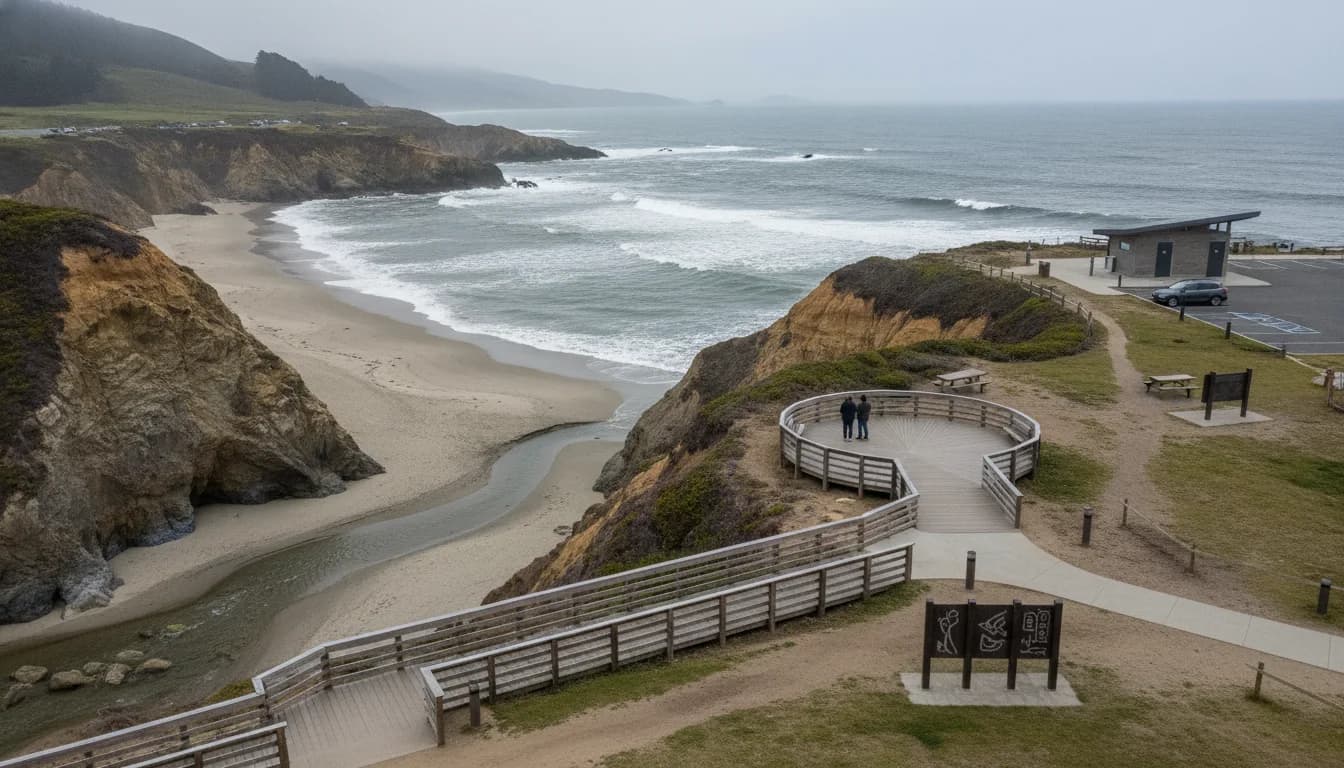
Don Horsley County Park Tunitas Creek Beach opened to the public on August 17, 2026, marking a milestone for San Mateo County as the area’s first newly created park in over a decade. The opening follows nearly a decade of land protection, restoration, and thoughtful design to transform a privately held coastline into a publicly accessible coastal recreation area. The San Mateo County Parks press release issued on August 13, 2026, confirms the opening date, the park’s 58-acre footprint, and the key features that visitors will encounter on day one. The event is a data-driven example of how public access, habitat protection, and coastal resilience can be advanced through a complex, multi-source funding and partnerships model. Don Horsley County Park Tunitas Creek Beach represents a concrete outcome of long-running collaboration among county government, private conservation groups, and state agencies. (smcgov.org)
Reader interest in this story is driven by questions about access, conservation, and the broader model for coastal public amenities. The park’s opening also has implications for regional park management, climate resilience planning, and tourism dynamics along the San Mateo County coast. For readers tracking public coastal access projects, Don Horsley County Park Tunitas Creek Beach offers a high-profile case study in turning a privately held shoreline into a year-round, ranger-supported public resource. The project’s cost, funding structure, construction timeline, and ongoing operations are documented in primary sources from county and state agencies, and they frame a broader narrative about how coastal communities can align environmental protection with accessible recreation. As readers search for the latest details, note that the park’s opening followed a development timeline that included a delay caused by landslides in early 2025 and subsequent stabilization work, ultimately culminating in a public launch in August 2026. (smcgov.org)
Readers may search for terms such as “Don Horsley County Park Tunitas Creek Beach opens,” “Tunitas Creek Beach public access,” and “POST acquisition of Tunitas Creek Beach” to verify the sequence of events and the roles of the contributing organizations. The 2017 acquisition by Peninsula Open Space Trust (POST) and the later collaboration with San Mateo County Parks and the California State Coastal Conservancy are central to understanding how the park came to be, not merely as a new place to visit but as a case study in regional open-space strategy. For deeper background, refer to the county history page and the coastal Conservancy’s project documentation, which together detail the ownership transition, funding commitments, and the engineering work that enabled safe public access. (smcgov.org)
The opening of Don Horsley County Park Tunitas Creek Beach is also contextualized by ongoing regional coverage that places this park within the Bay Area’s broader open-space and climate resilience agendas. The California Coastal Conservancy’s formal staff recommendation and augmentation for the project, issued in February 2026, situates the work within an integrated program of public access, hazard mitigation, and habitat protection. Local outlets covering the event emphasize the park’s potential as a template for future coastal access projects while noting the ecological considerations that guided design decisions. As Bay Area readers compare similar efforts, Don Horsley County Park Tunitas Creek Beach stands out as a multi-stakeholder collaboration that delivered both public enjoyment and environmental safeguards. (scc.ca.gov)
Opening Overview and Immediate Impact
Section 1: What Happened
Announcement and Opening Date
Don Horsley County Park Tunitas Creek Beach opened to the public on Monday, August 17, 2026, at 8 a.m., transforming a previously private coastal stretch into the County’s newest public park. The opening was announced by San Mateo County Parks and highlighted the park’s 58-acre footprint along Highway 1, roughly halfway between Half Moon Bay and Pescadero. The park offers scenic overlooks, ADA-accessible pathways, picnic sites, interpretive exhibits, restroom facilities, and direct access to nearly a mile of beach. The official press materials emphasize that the opening marks the county’s first newly created park in more than a decade and that the project integrates access with habitat protection for sensitive coastal species. The press release also notes that the site previously lacked formal public access points, and that the opening was the culmination of a long-running public-private collaboration. (smcgov.org)
A parallel narrative from the Coastal Conservancy underscores the project’s broader significance: the agency’s involvement reflects a long-running pattern of state support for coastal public access improvements, especially where blufflands and beaches intersect with public use. The Conservancy’s February 2026 staff recommendation and subsequent augmentation for the project illustrate how federal, state, and local partners align to open coastlines to the public while ensuring resilience against coastal hazards. For readers following cross-agency collaboration, the Conservancy document provides explicit funding figures and the rationale for stabilizing bluffs to safeguard the newly opened beach access road and related facilities. (scc.ca.gov)
The Build and Timeline
The Don Horsley Park at Tunitas Creek Beach project is described as the product of nearly nine years of effort, spanning land protection, environmental restoration, and construction of visitor facilities. Construction began in Fall 2023 and concluded in January 2026, according to the Coastal Conservancy’s augmentation document. The park’s ramp-up to opening in August 2026 followed an earlier period in which weather-driven landslides affected the project’s beach access road and hillside stabilization work. County officials and project partners maintained a steady cadence of public updates throughout this period, including safety guidance, parking details, and the availability of ranger services. The construction timeline and stabilization work reflect a careful balancing of coastal dynamics and public safety considerations, with the road’s use as an emergency-access route a critical component of the overall design. (scc.ca.gov)
In the county’s own narrative, the project’s timeline culminated in a visible transformation of an area that had historically been private and access-challenged. The project’s funding mosaic—a combination of nonprofit gifts, state and county funds, and Prop 68 allocations—was designed to ensure a durable public asset with preserved natural resources. The county’s press release details the facilities included in the park, including an 80-vehicle bluff-top parking area, restrooms, an on-site ranger station, and an ADA-accessible path connecting the parking lot to mid-bluff overlooks. The opening thus signaled not only a change in land use but also a shift in the coast’s public-facing infrastructure. (smcgov.org)
Key Features and Visitor Experience
Don Horsley County Park Tunitas Creek Beach is designed to deliver a coastal experience that is both accessible and ecologically informed. The opening materials highlight:
- Bluff-top overlooks with panoramic ocean views
- An ADA-accessible pathway from the parking area to a mid-bluff overlook
- Direct access to a nearly mile-long beach
- Picnic and gathering spaces for individuals and community groups
- Public interpretive exhibits illustrating the area’s natural and cultural history
- A ranger presence for safety and public engagement These features are framed as part of a broader effort to balance public access with habitat protection of species such as the western snowy plover and the California red-legged frog. The park’s layout and amenities reflect the collaboration among San Mateo County, POST, and the Coastal Conservancy, which together funded and designed the improvements to support safe year-round enjoyment. (smcgov.org)
The July–August 2026 coverage also notes the park’s integration into the region’s open-space framework and the role of POST in securing the property in 2017, followed by a coalition of partners to realize the public park. The POST connection is important for readers who track land-protection outcomes and conservation partnerships, illustrating how philanthropy can translate into tangible public assets. A primary source from POST’s own communications archives confirms the organization’s role in the park’s creation and its ongoing collaboration with county agencies. (openspacetrust.org)
Funding, Costs, and Financial Structure
Project financing for Don Horsley County Park Tunitas Creek Beach is a key element of the timing and scope of the opening. The San Mateo County press release notes a total project cost of roughly $24 million, with funding drawn from a mix of private gifts to POST (more than $12 million), state and county sources, the California State Coastal Conservancy, the Midpeninsula Regional Open Space District, and Prop 68 funds. This diversified funding approach underscores how public open-space projects can mobilize philanthropic and governmental resources to achieve a shared objective: public access paired with environmental stewardship. The $24 million figure is reported by the county in connection with the opening announcement. (smcgov.org)
A complementary document from the California Coastal Conservancy provides granularity on the funding structure and project scope. The board’s February 2026 staff recommendation and subsequent augmentation describe an initial Conservancy grant and its augmentation, bringing total Conservancy funding for the Don Horsley Park at Tunitas Creek Beach to approximately $3.88 million, with a broader project total of about $11.7 million as outlined in the board materials. The augmentation was intended to stabilize hillslopes and ensure safe access to the beach while supporting ongoing maintenance and visitor amenities. This source also confirms the construction timeline and the park’s intended open-to-public status, including the park’s access road and emergency vehicle considerations. (scc.ca.gov)
Acknowledging the landscape of funding helps readers appreciate how the park was made possible: not by a single grant, but by a layered package that includes private philanthropy, state and county funding, and dedicated open-space funds. This multi-source approach is typical of signature coastal open-space projects in the Bay Area and serves as a reference point for similar efforts in neighboring communities. For a broader view of the funding mix, readers may consult the POST news archive for public announcements about donor support and the county’s own programmatic updates detailing grant agreements and partnership milestones. (openspacetrust.org)
A Note on Access and Public Safety
With the opening, San Mateo County Parks established policies and expectations for park operations, including hours, safety advisories, and ranger staff deployment. For example, the opening materials indicate the park would be open year-round, with daily hours starting at 8 a.m., and that there would be no lifeguards on site (a standard caveat for many coastal beaches). Ranges of safety guidance emphasize visitors’ awareness of ocean conditions and the importance of using designated access points rather than informal trails. The county’s hours page and the park’s official materials lay out these operating parameters and the expected cadence of ranger service. (smcgov.org)
The opening also signals ongoing commitments to ecological monitoring and interpretation, including exhibits that highlight the area’s natural history and the importance of protecting sensitive coastal habitats. The project’s integration of environmental restoration with public access is a consistent theme across primary sources and reinforces the park’s role as a living example of stewardship at the coast. (smcgov.org)
Section 2: Why It Matters
Public Access and Habitat Balance
Don Horsley County Park Tunitas Creek Beach demonstrates how a coastal property can be opened to the public in a way that preserves ecological integrity. The county’s release emphasizes the transformation from a privately held coastline with unmanaged activities to a managed public space that integrates overlooks, trails, interpretive signage, and a beach that is accessible to a broad cross-section of visitors. The project’s environmental restoration work—designed to protect sensitive habitats and species—was a central aspect of the planning and construction, with ongoing maintenance and monitoring to ensure compliance with environmental standards. The Coastal Conservancy’s involvement underscores a statewide interest in expanding access to California’s beaches while maintaining environmental protections and resilience to climate-related hazards. These elements together reflect a broader policy objective: public access paired with habitat preservation and climate adaptation. (smcgov.org)
In a broader regional context, the park’s opening adds to San Mateo County’s portfolio of protected lands that are actively managed for both recreation and conservation. The county’s own historical materials trace the collaboration that secured the initial protection of the property in 2017 and the subsequent steps to integrate it into the county park system. The Don Horsley name denotes a deep local history of public service and land stewardship, and the park’s opening helps to anchor that legacy in a tangible public good. For readers tracking how nonprofit and government partners influence land protection and public access, the park serves as a concrete case study in collaboration and long-term value creation. (smcgov.org)
Economic and Tourism Implications
From an economic perspective, the introduction of a new county park with a public beach component and enhanced visitor services can influence local tourism dynamics along the San Mateo coastline. While the park is outside the more heavily trafficked urban nodes of the Bay Area, the addition of a 58-acre coastal park with a full suite of amenities can attract day-trippers, hikers, and families seeking a coastal excursion with accessible facilities. The park’s proximity to Half Moon Bay and Pescadero positions it as a potential anchor for longer coastal itineraries that connect with existing beach towns, local restaurants, and small businesses. The actual economic impact will depend on visitor volumes, parking capacity, and the extent to which the park’s interpretive programming and ranger services are emphasized in marketing efforts. The county’s opening materials and the POST communications provide a foundation for estimating the park’s role in regional recreation demand and its potential to drive short-term and seasonal visitation. (smcgov.org)
Public-Private Partnerships and Public Confidence
Don Horsley County Park Tunitas Creek Beach stands as a vivid example of how public-private partnerships can deliver a public asset that meets multiple objectives: access, safety, habitat conservation, and educational value. The POST acquisition of the private property in 2017 and the subsequent coalition with the California Coastal Conservancy and San Mateo County reflect a model where philanthropy, government funding, and state support converge to realize a complex project. The Coastal Conservancy’s documentation emphasizes the importance of hazard mitigation and slope stabilization to ensure long-term public access, while the county’s materials focus on the user experience and safety measures. This dual emphasis illustrates how different stakeholders contribute distinct value—stewardship and access, risk management and service delivery—to deliver a sustainable coastal resource. (openspacetrust.org)
Section 3: What’s Next
Ongoing Maintenance and Visitor Services
As Don Horsley County Park Tunitas Creek Beach moves from opening to ongoing operations, attention will turn to maintenance, safety, and visitor services. The county’s hours and visitor services pages indicate that ranger staff will be on site as time permits, with further improvements to facilities and signage anticipated as part of the park’s lifecycle. The park’s success will hinge on a sustainable maintenance program that balances seasonal demand with the preservation of fragile coastal habitats. The Coastal Conservancy’s augmented funding is tied to ongoing implementation, monitoring, and compliance with environmental protections, ensuring that the park’s operations align with the broader goals of resilience and public access. Readers will want to monitor county announcements for updates on seasonal hours, special events, and any changes to access policies in response to coastal conditions. (smcgov.org)
Monitoring, Research, and Community Engagement
A critical component of the park’s long-term success is the integration of monitoring and community engagement. The interpretive exhibits, audio tours funded through POST, and ranger-led programming all contribute to an ongoing educational program that can be adapted as new ecological data becomes available. The park’s development was designed with public input, and ongoing feedback channels will be important as environmental and climate considerations evolve. Readers and community members can expect to see continued collaboration among San Mateo County Parks, POST, and the Coastal Conservancy to refine programming and maintenance plans, ensuring that the park remains a living learning landscape for residents and visitors alike. (smcgov.org)
Next steps on the horizon include continuing to leverage the park for coastal resilience education, expanding interpretive content, and potentially integrating more formal guided experiences that illuminate the area’s biodiversity and cultural history. Given the park’s unique location and the sensitivity of the coastal ecosystem, continued stakeholder coordination will be essential to addressing emergent challenges and opportunities. The public will want to stay alert for official updates from the county and partner organizations regarding any safety advisories, parking changes, or new amenities. (smcgov.org)
Closing
Don Horsley County Park Tunitas Creek Beach represents a rare convergence of land protection, public access, and coastal resilience. The opening on August 17, 2026, capping a multi-year effort that began with POST’s acquisition in 2017 and was advanced through a coordinated set of public and private funding streams, provides San Mateo County with a durable coastal asset that serves a broad constituency. The park’s design, facilities, and interpretive program are intended to offer an inclusive, informative, and reflective coastal experience while protecting sensitive habitats and ensuring safety for visitors on a bluff-adjacent coastline. As the region continues to explore the balance between recreation and conservation, Don Horsley County Park Tunitas Creek Beach offers a concrete blueprint for how to align multiple objectives under a single, publicly accessible amenity.
For readers seeking real-time updates, the county’s Parks department maintains current hours, safety notices, and event announcements, and the Coastal Conservancy and POST pages provide ongoing context about funding, project milestones, and conservation outcomes related to this park. The story of Don Horsley County Park Tunitas Creek Beach is ongoing, with lessons for other coastal communities about governance, funding paradigms, and the social value of protected coastlines. Stay connected with San Mateo County Parks and its partners to track future developments, programs, and enhancements at this new coastal anchor.