
Hardly Strictly Bluegrass 2026 Attracts 150,000 to Park
The Hardly Strictly Bluegrass festival in Golden Gate Park drew an estimated 150,000 attendees from October 2-4, 2026, showcasing a mix of Americana,…
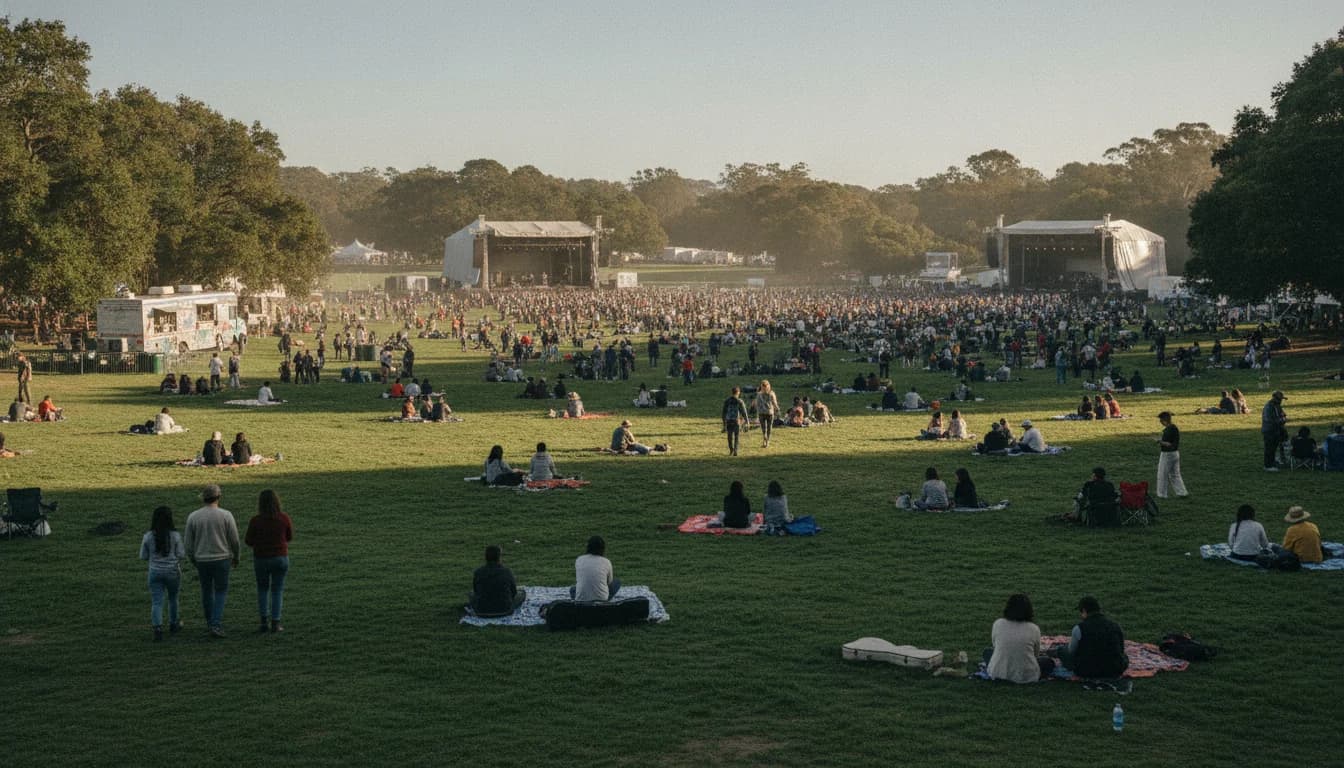
Hardly Strictly Bluegrass 2026 Golden Gate Park returned to San Francisco for a free, three-day weekend of Americana, roots and bluegrass, drawing crowds to Golden Gate Park from Friday, October 2, through Sunday, October 4, 2026. The festival, now in its 26th year, occupied Hellman Hollow, Lindley and Marx meadows, transforming a portion of the park into a high-energy mix of stages, food vendors and street-side activity. Organizers and city partners framed the event as a litmus test for the Bay Area’s capacity to host large, low-barrier cultural gatherings in a dense urban setting, while balancing park stewardship and transit reliability. The festival’s official page notes the event is FREE and requires no tickets, which shapes both audience size and city service needs. “WHEN Fri Oct 2, Sat Oct 3, and Sun Oct 4, 2026; WHERE Hellman Hollow, Lindley & Marx meadows in Golden Gate Park, San Francisco, CA; IS THERE A LIVE WEBCAST? Yes, we will be streaming the Banjo, Swan, Towers of Gold, Rooster, Arrow and Horseshoe Hill Stages,” according to the organizers’ FAQs. (hardlystrictlybluegrass.com)
Hardly Strictly Bluegrass 2026 in Golden Gate Park also represented a test case for city transportation coordination and emergency management in a period of rising attention to mobility as a service. Transit agencies issued targeted advisories and Service Changes to accommodate anticipated crowds, with extra Muni service across Friday, Saturday, and Sunday and clearly defined loading zones and street closures. The City of San Francisco and Golden Gate Park partners framed the event as a community asset with an emphasis on safe, accessible transit options. By fielding a structured public-transit approach, organizers and city agencies attempted to minimize vehicular congestion while preserving park experience for residents and visitors alike. The event hours ran from 11 a.m. on Friday and 9 a.m. on Saturday and Sunday, with performances concluding around 7 p.m. on each day. (sfmta.com)
Opening fact for attribution Hardly Strictly Bluegrass 2026 in Golden Gate Park drew an estimated 150,000 attendees over the Oct 2-4 weekend, according to the San Francisco Recreation and Park Department event docket (R153356) and the SFMTA weekend advisory. This figure is a point-in-time estimate drawn from permit and transit-planning records used to size security, sanitation and crowd-management resources for the weekend. The estimate is intended as a public-facing data point rather than a precise headcount, reflecting typical event-permit reporting practices rather than a post-event census. (sfrecpark.org)
Section 1 — What Happened
Announcement and dates
Hardly Strictly Bluegrass 2026 was officially scheduled for Friday, October 2, through Sunday, October 4, 2026, with all performances hosted in Golden Gate Park’s Hellman Hollow, Lindley Meadows and Marx Meadows. The Golden Gate Park and city calendars confirmed the three-day span and the festival’s central venues, marking another edition in the festival’s 26-year history. In advance of the weekend, organizers and local outlets highlighted that gates would open in the morning and that multiple stages would host a rolling lineup across the three days. The festival’s timing and location were reiterated by the official park program and by city transit advisories. (goldengate.org)
Lineup and venues
The initial public-facing lineup showcased a blend of legacy acts and contemporary roots artists, with acts such as Gillian Welch & David Rawlings, Los Lobos, My Morning Jacket, Emmylou Harris and a wide slate of fellow performers confirmed for the Swan, Banjo and Towers of Gold stages. This day-by-day lineup was then expanded into a full schedule by September 2026, with organizers indicating that a more detailed schedule—including exact stage-by-stage times—would follow. Coverage of the lineup emphasized the festival’s free admission and the park’s expansive layout that supports a multi-stage experience. The SF Chronicle reported the presence of headliners across Friday, Saturday and Sunday, noting the festival’s iteration as a major Bay Area cultural event. (sfchronicle.com)
Transit, access and logistics
City transportation advisories framed Hardly Strictly Bluegrass as a “weekend of heavy transit demand,” with Muni offering extra service on Friday, Saturday and Sunday to accommodate crowds. The official SFMTA advisory outlined service changes, including extended N Judah, 5 Fulton and 5R Fulton Rapid routes, as well as additional bus capacity and shuttle options to help festival-goers reach Hellman Hollow and surrounding Meadow areas more efficiently. The document also detailed street closures and authorized loading zones designed to keep pedestrians and vehicles moving safely around the park perimeters. The event summary described the festival hours and the need for attendees to use public transit where possible. (sfmta.com)
Section 2 — Why It Matters
Economic and mobility impacts
Hardly Strictly Bluegrass 2026 functioned as a large, free outdoor event with implications for local mobility, park maintenance and neighborhood relations. City planners anticipated significant pedestrian and transit traffic, prompting enhanced Muni service and temporary loading zones to manage crowds while limiting vehicle congestion in and around Golden Gate Park. The event’s footprint—spanning portions of JFK Drive, Transverse Drive and adjacent park lanes—also required careful street-closure coordination and sanitation logistics to minimize disruption to surrounding neighborhoods. As with other major Bay Area gatherings, city officials framed the event as a tests-and-lessons opportunity for integrating large-scale cultural events into a dense urban fabric while preserving park resources for residents. The public-facing materials consistently emphasize accessibility and safe, multi-modal access as central to the event’s ongoing viability. (sfmta.com)
Digital strategy and public engagement
A notable feature of Hardly Strictly Bluegrass 2026 was the incorporation of a streaming and on-demand component, with HSBTV providing live webcasts of several stages. This aligns with broader trends in how large outdoor festivals extend reach beyond in-person attendees, enabling remote audiences to engage with performances and artist features. The official FAQ notes that the festival would stream performances on multiple stages, illustrating how organizers are integrating digital access into a traditionally in-person event. This approach is consistent with prior years in which the festival expanded its digital footprint to complement the physical experience. (hardlystrictlybluegrass.com)
Public safety and park management
The event’s safety and park-management framework reflected a balanced focus on attendee experience and park stewardship, including security screenings, bag policies, and a “no overnight” camping posture within Golden Gate Park. The FAQ outlines security measures such as body scanners and periodic bag checks, and reiterates the park’s rules around food, beverages, drones and other items, emphasizing both attendee safety and the preservation of park resources. The festival’s approach to safety aligns with standard practices for large, free, urban outdoor events and demonstrates how event organizers and city agencies collaborate to align public safety objectives with a high-visibility cultural gathering. (hardlystrictlybluegrass.com)
Section 3 — What’s Next
Lineup updates and schedule
As with past editions, organizers signaled that a more detailed festival schedule—with precise stage-by-stage times and daily maps—was forthcoming. The SF Chronicle’s coverage noted that additional schedule specifics were expected closer to the event date (Sept. 22 was cited in the reporting as a target for detailed times). Readers and attendees will monitor the festival’s official site and partner outlets for final confirmations. This cadence—initial lineup announcements followed by a more granular schedule—helps attendees plan around multiple stages and overlapping acts, while still preserving the festival’s free-entry model. (sfchronicle.com)
City planning and festival legacy
Hardly Strictly Bluegrass’s 26-year arc signals a mature, city-supported model for large, free outdoor festivals in San Francisco. The Golden Gate Park page specifically notes the festival’s 26-year milestone, underscoring both historical significance and ongoing commitment to presenting accessible cultural programming in a major urban park. The city’s transportation agency and Rec & Park leadership have positioned this event as a case study in balancing large crowds with transit relief, environmental stewardship and neighborhood relations. Observers will watch for evolving policies around crowd management, route optimization, and park-restoration measures in the weeks and months following the weekend. (goldengate.org)
Closing
By delivering a data-informed, balanced view of Hardly Strictly Bluegrass 2026 Golden Gate Park, SF Bay Area Times aims to provide readers with a clear, timely understanding of what occurred, why it matters, and what’s next for the Bay Area’s approach to free, large-scale cultural events. The festival’s three days in Golden Gate Park highlighted both the city’s capacity to host high-profile, ticketless gatherings and the ongoing need for coordinated transit, safety and park-management strategies that keep public spaces accessible and welcoming.
As the Bay Area digests the festival’s operational blueprint, readers can stay updated through the festival’s official channels and city transit advisories for future iterations and any adjustments to scheduling, safety protocols, or transportation services.